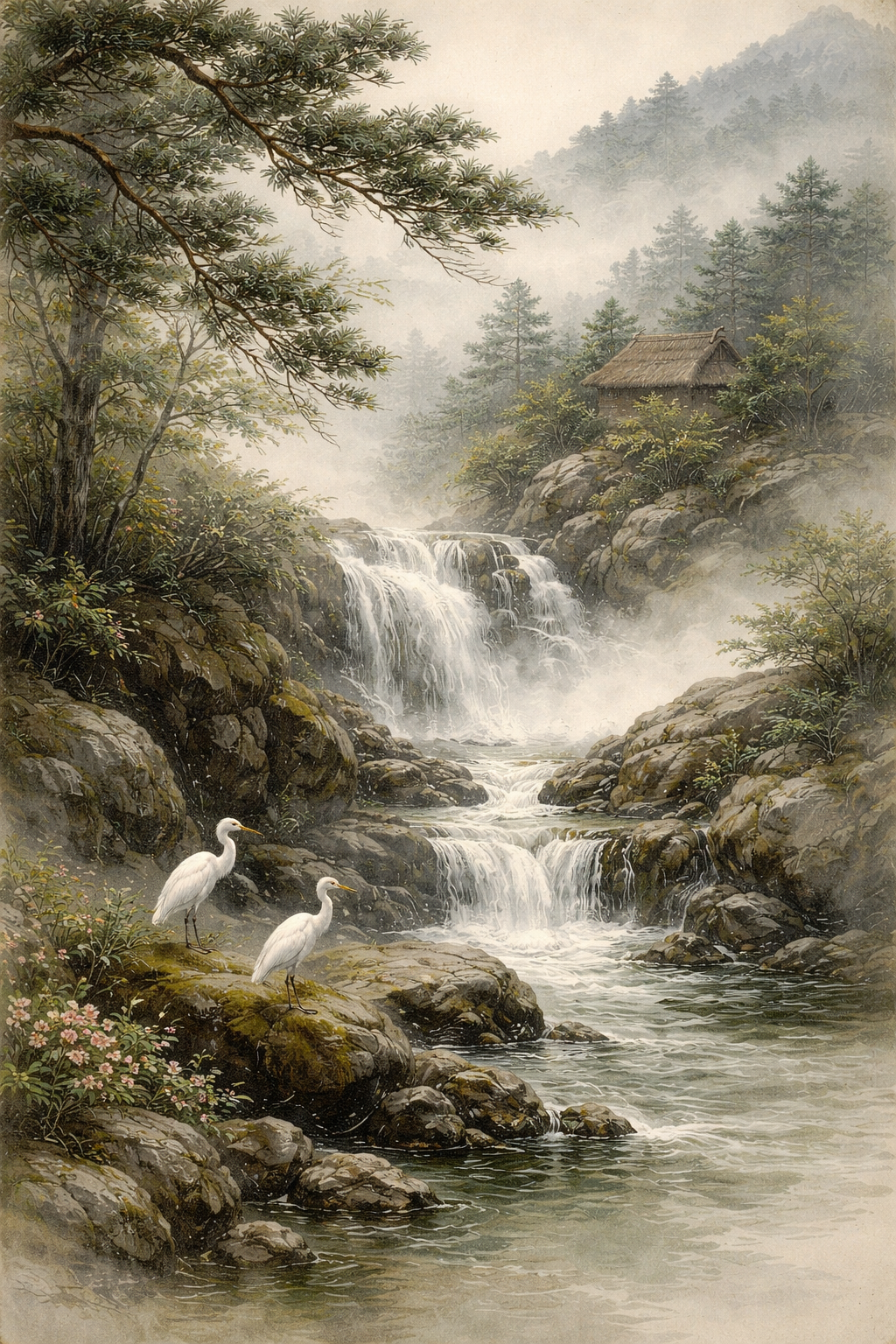
Abyss of Silence
Critique
1. Introduction The artwork presents a serene and meticulously detailed landscape, evoking the classical traditions of East Asian ink and wash painting. It depicts a majestic waterfall cascading through a rocky gorge, surrounded by lush flora and a misty atmosphere. Two white egrets stand prominently on a mossy rock in the foreground, serving as focal points that bridge the natural world with the viewer's perspective. The scene is further enriched by the inclusion of a modest thatched-roof hut nestled on a distant cliff, suggesting a harmonious coexistence between humanity and nature. 2. Description In terms of subject matter, the painting is divided into three distinct spatial planes. The foreground features a cluster of dark, weathered rocks partially covered in vibrant green moss and delicate pink flowers, where two egrets are perched. The midground is dominated by the dynamic movement of the waterfall, which flows in multiple tiers into a clear stream below. To the right, a traditional hut sits amidst dense shrubbery. The background fades into a soft, ethereal mist that shrouds distant pine trees and mountain silhouettes, creating a profound sense of atmospheric depth and tranquility. 3. Analysis The artist employs a sophisticated palette of muted earth tones, greens, and grays, contrasted sharply by the brilliant white of the birds. The composition follows a vertical orientation, guiding the eye upward from the flowing water to the peaks above. Fine line work is evident in the rendering of individual pine needles and the texture of the rocks, demonstrating exceptional technical precision. The use of negative space and soft blending in the misty areas enhances the feeling of moisture and heightens the overall spiritual quality of the environment. 4. Interpretation and Evaluation This piece can be interpreted as a celebration of the sublime beauty and inherent balance of the natural world. The inclusion of the hut implies a retreat into nature, reflecting themes of solitude and contemplation often found in traditional landscape art. The egrets symbolize purity and patience, adding a layer of symbolic depth to the visual narrative. The technical execution is remarkable, successfully blending traditional motifs with a modern clarity of color and form. It achieves a high level of aesthetic harmony, offering a timeless vision of a secluded sanctuary. 5. Conclusion Through its masterful depiction of water, mist, and wildlife, the painting invites the viewer into a state of quiet reflection. My understanding shifted from appreciating the surface-level beauty to recognizing the intricate layers of spatial depth and symbolic resonance. The work stands as a testament to the enduring power of landscape imagery to evoke a sense of peace. Ultimately, it is an evocative and technically accomplished composition that bridges the gap between the mundane and the transcendental within the realm of nature.
Same Subcategory
 Shadows Dancing in the Twilight Earth
Similar Artworks
 A Secret Stream Beneath the Eternal Snow
 Echoes of the Hidden Cascade
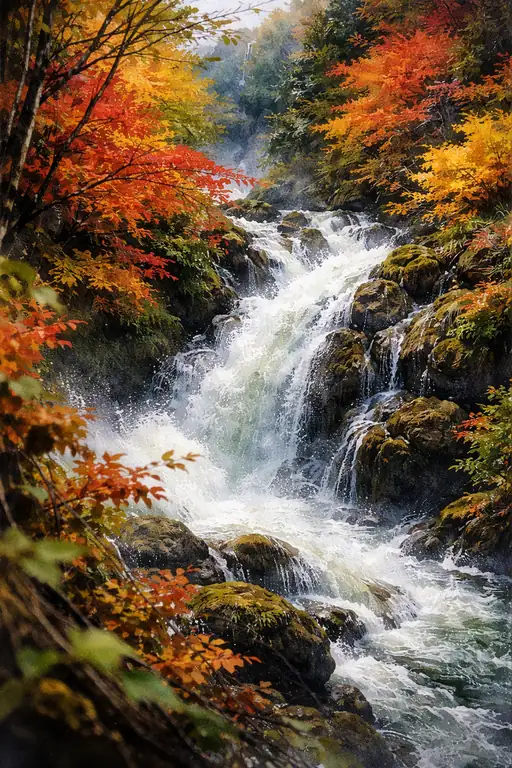 The Crimson Canopy and the Crashing White
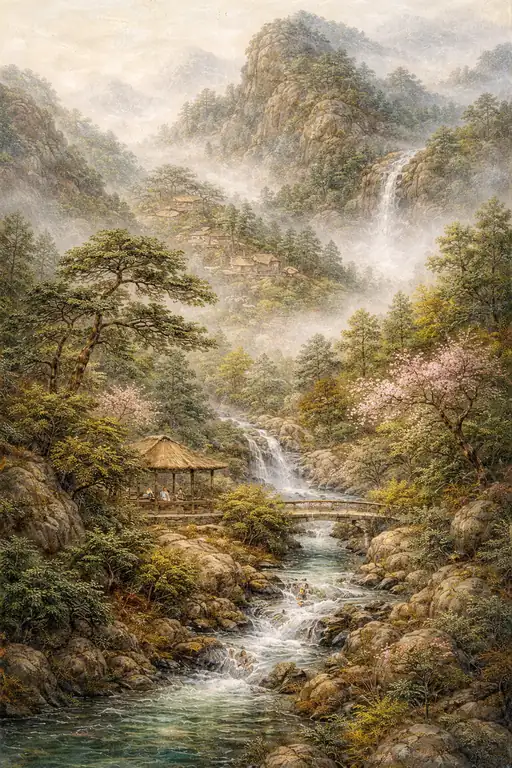 Spring Mountain Stream with a Gazebo
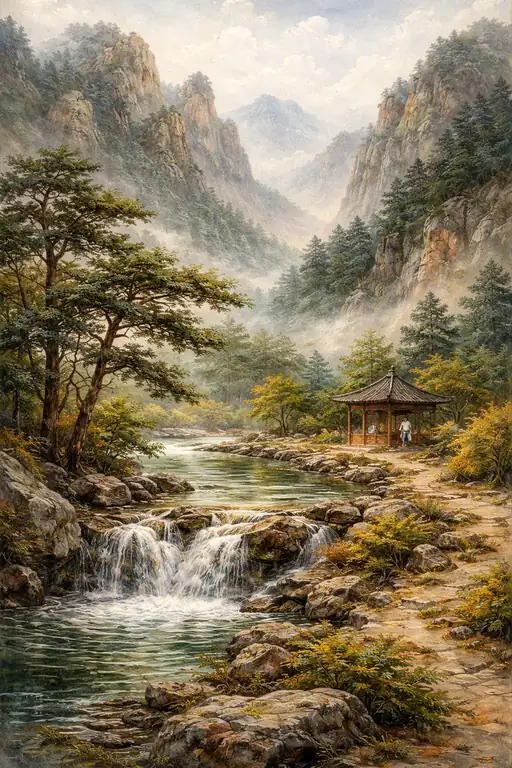 Pavilion by the Waterfall in a Misty Mountain Valley
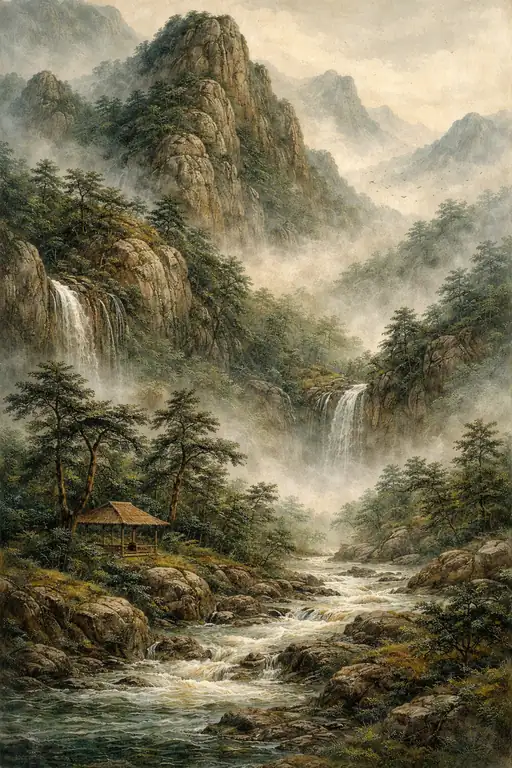 The Serene Pavilion by the Waterfalls
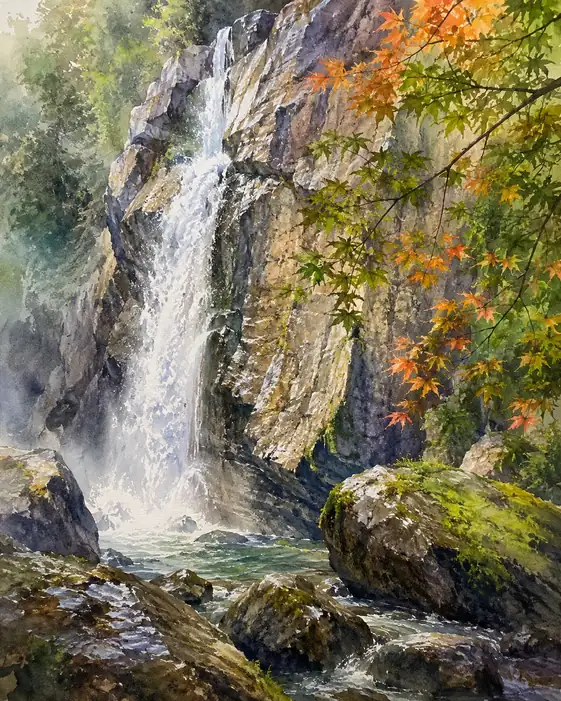 Autumn Whispers Through the Mist
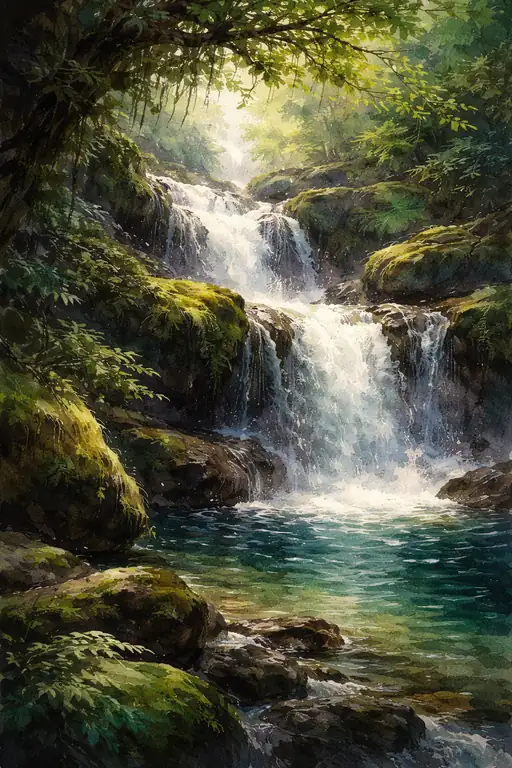 Cascades of a Sunlit Sanctuary
 Tears of the Ancient Pine
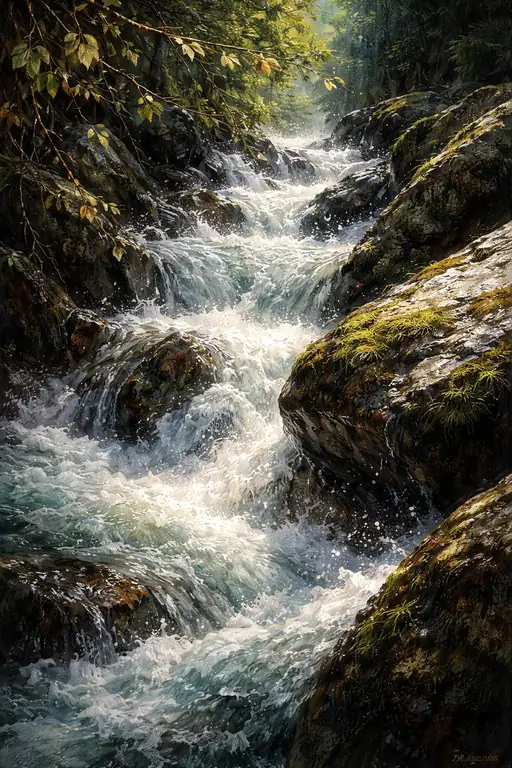 The Eternal Song of the Mountain Stream