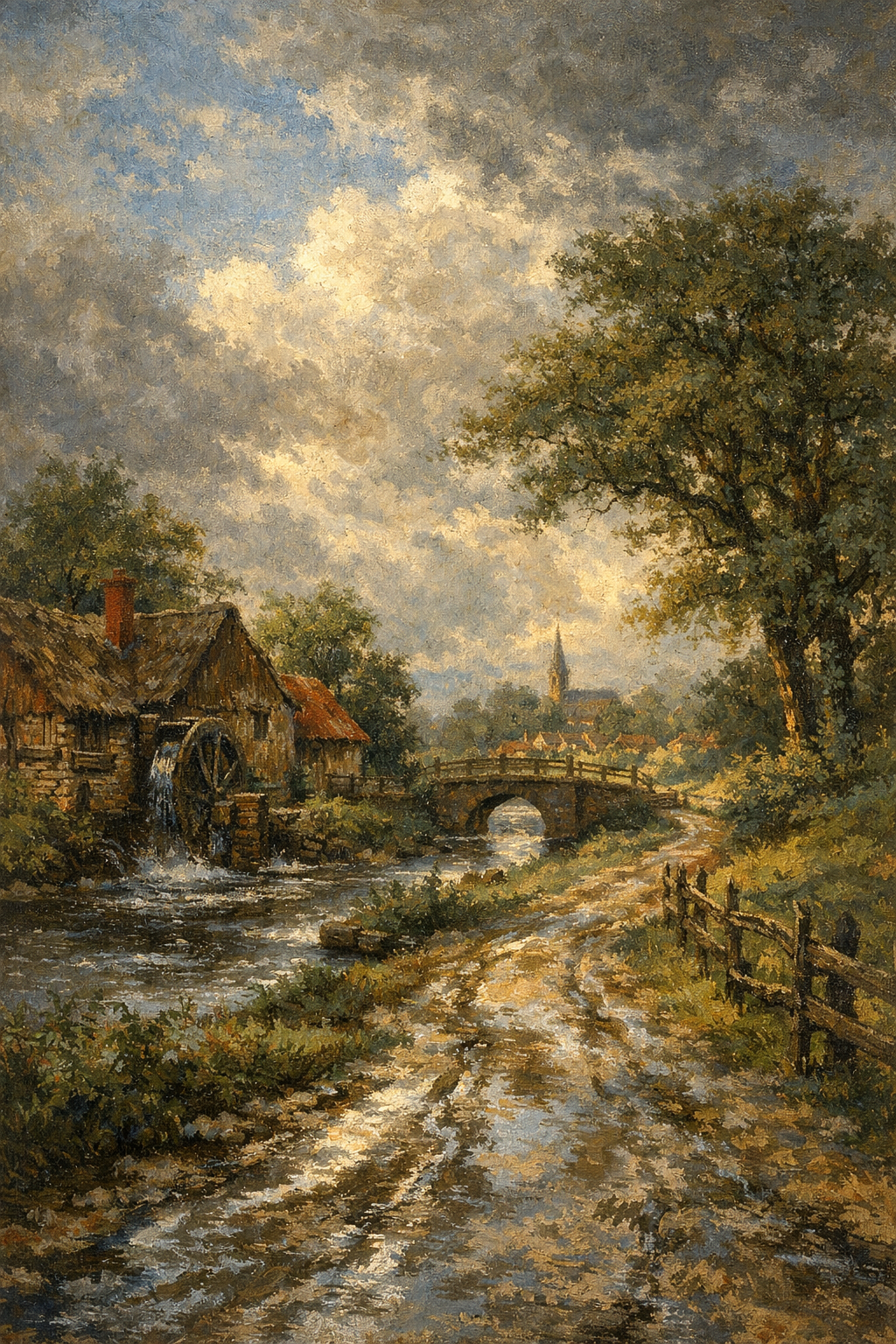
The Old Watermill and the Sunlit Path
Critique
1. Introduction This oil painting presents a lyrical depiction of a peaceful rural landscape. A weathered watermill sits on the left, its wheel churning with quiet motion. In the distance, a village with a church spire emerges through the mist, while dramatic sunlight breaks through heavy clouds to illuminate the path and greenery with a sublime, golden glow. 2. Description In the foreground, a muddy road marked with ruts winds toward the distant village. To the left stands the watermill, its wheel actively splashing into the stream. A small stone arch bridge spans the water in the center. A large tree dominates the right, casting dappled shadows upon the ground beneath a sky filled with complex, layered cloud formations. 3. Analysis The color palette features deep greens and earthy browns, conveying the richness of nature. Meticulous rendering of light, seen in the road's puddles and the glowing edges of clouds, adds life to the canvas. The composition uses the road and stream to lead the eye inward, creating depth. The brushwork remains detailed yet expressive, particularly in the sky and water. 4. Interpretation and Evaluation The work evokes an idealized vision where humanity and nature coexist in harmony. Man-made structures like the mill and bridge appear naturally integrated into the landscape over time. The handling of light suggests a sense of hope and sanctity within everyday scenery. By adhering to classical traditions, the artist achieves an accomplished work that invites a sense of nostalgia. 5. Conclusion Initially perceived as a simple rural scene, the painting reveals the sublime beauty of nature through the shifting play of light. A powerful vitality is felt within the silence, offering inner peace to the viewer. Ultimately, the work stands as a high-quality landscape where deep observation and masterful technique converge to create a truly meaningful artistic experience.
Same Subcategory
Similar Artworks
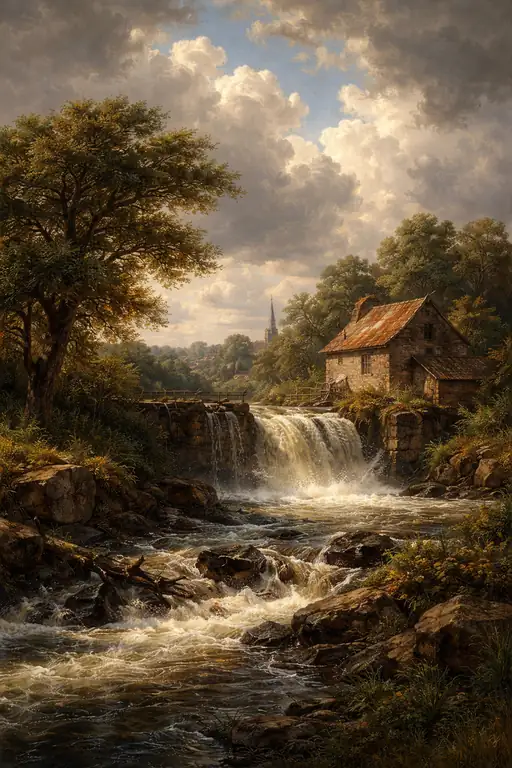 The Timeless Current
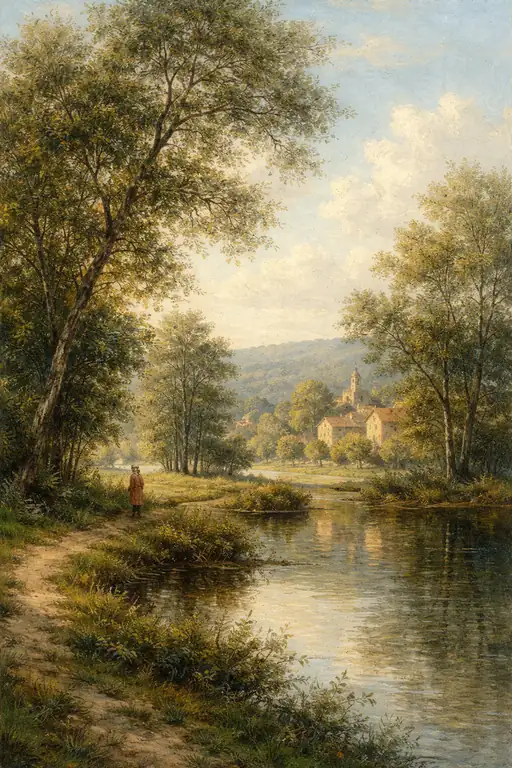 Reflections of a Serene Sanctuary
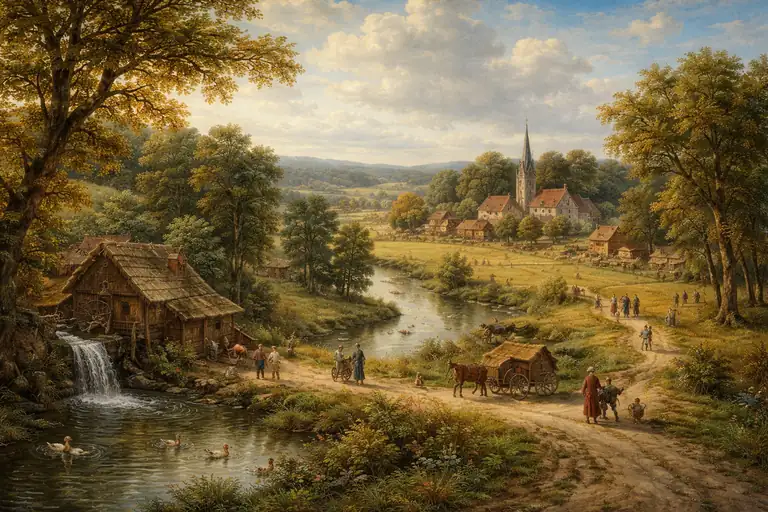 Chronicles of the Idyllic Path
 A Tuscan Lullaby in Stone and Sky
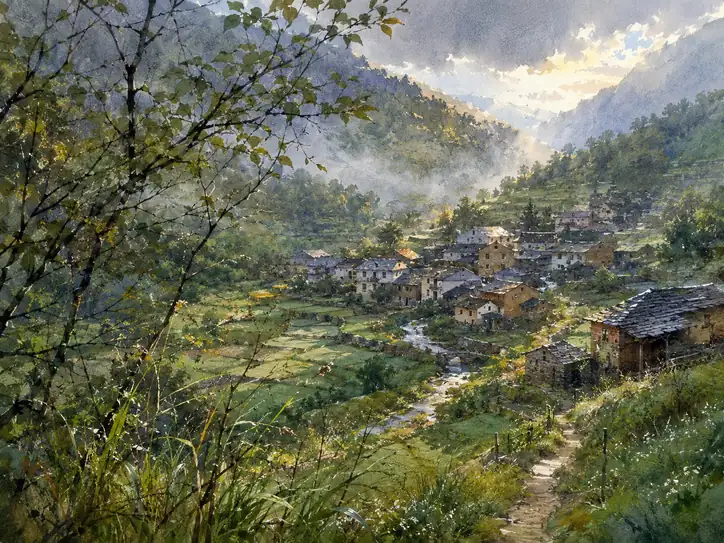 Where the Mist Whispers
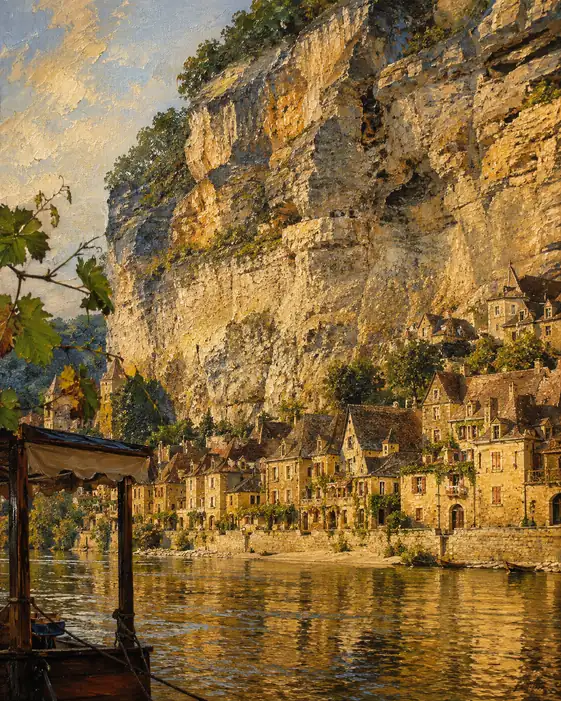 The Haven Under the Golden Cliff
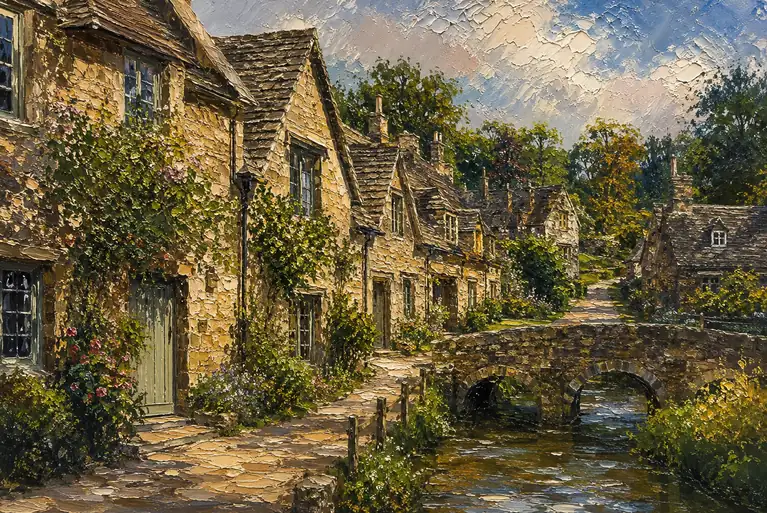 Where Time Flows Gently
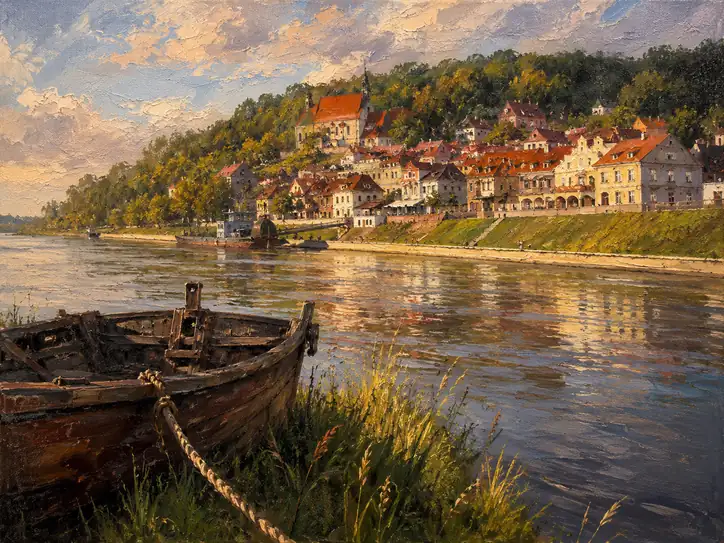 The Quiet Anchor of the River's Flow
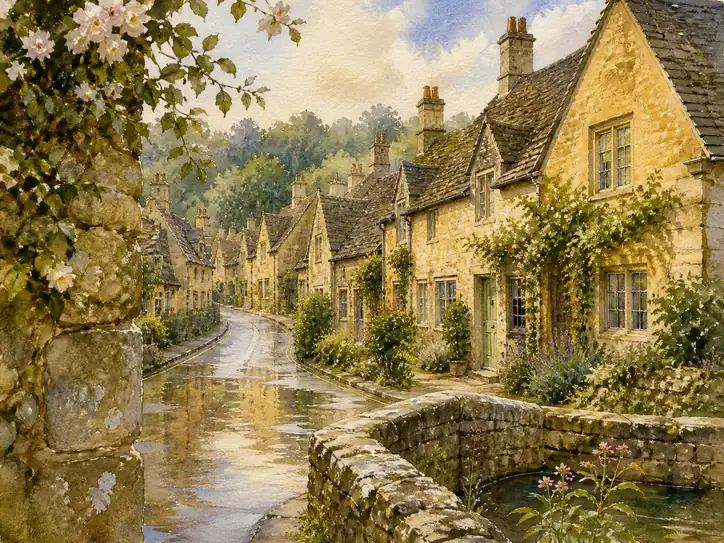 Where the Rain Whispers Peace
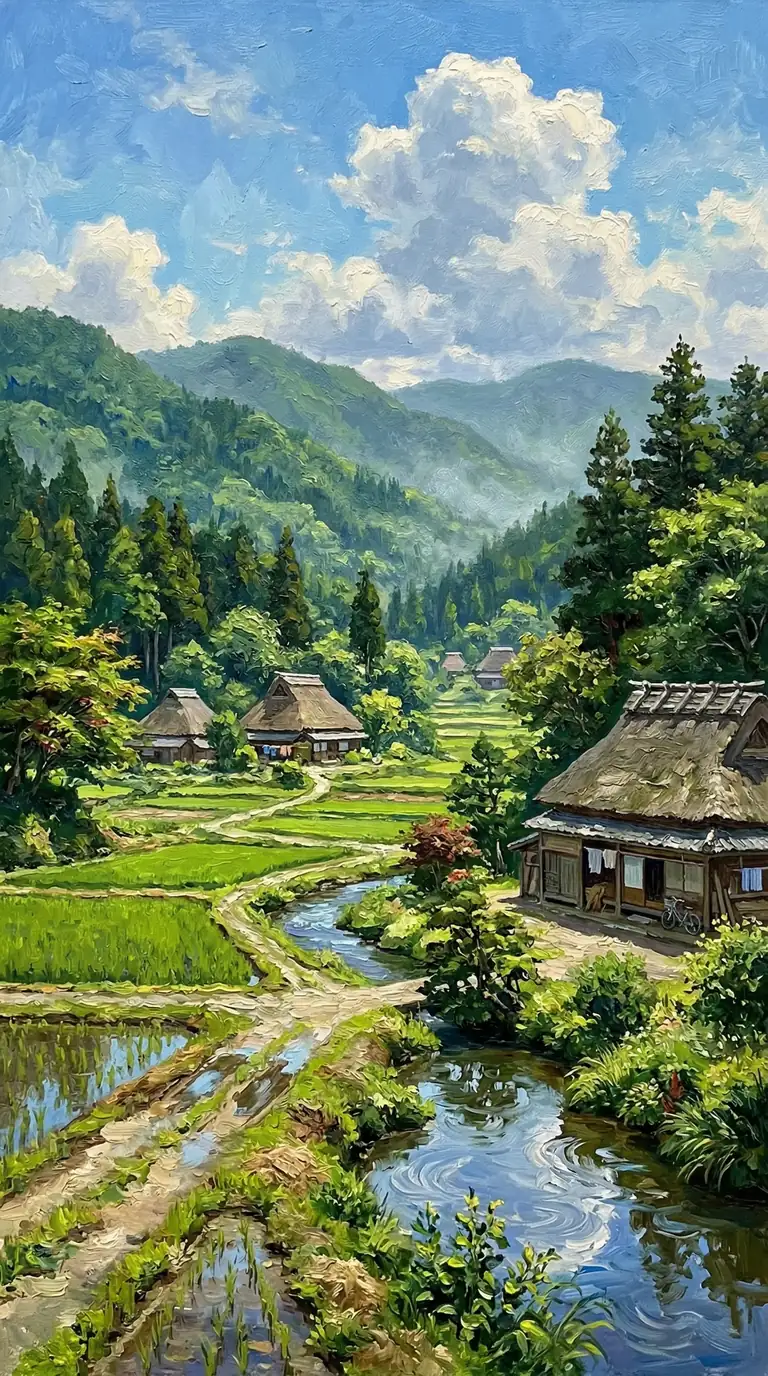 Summer's Grandeur: The Village Under the Clouds