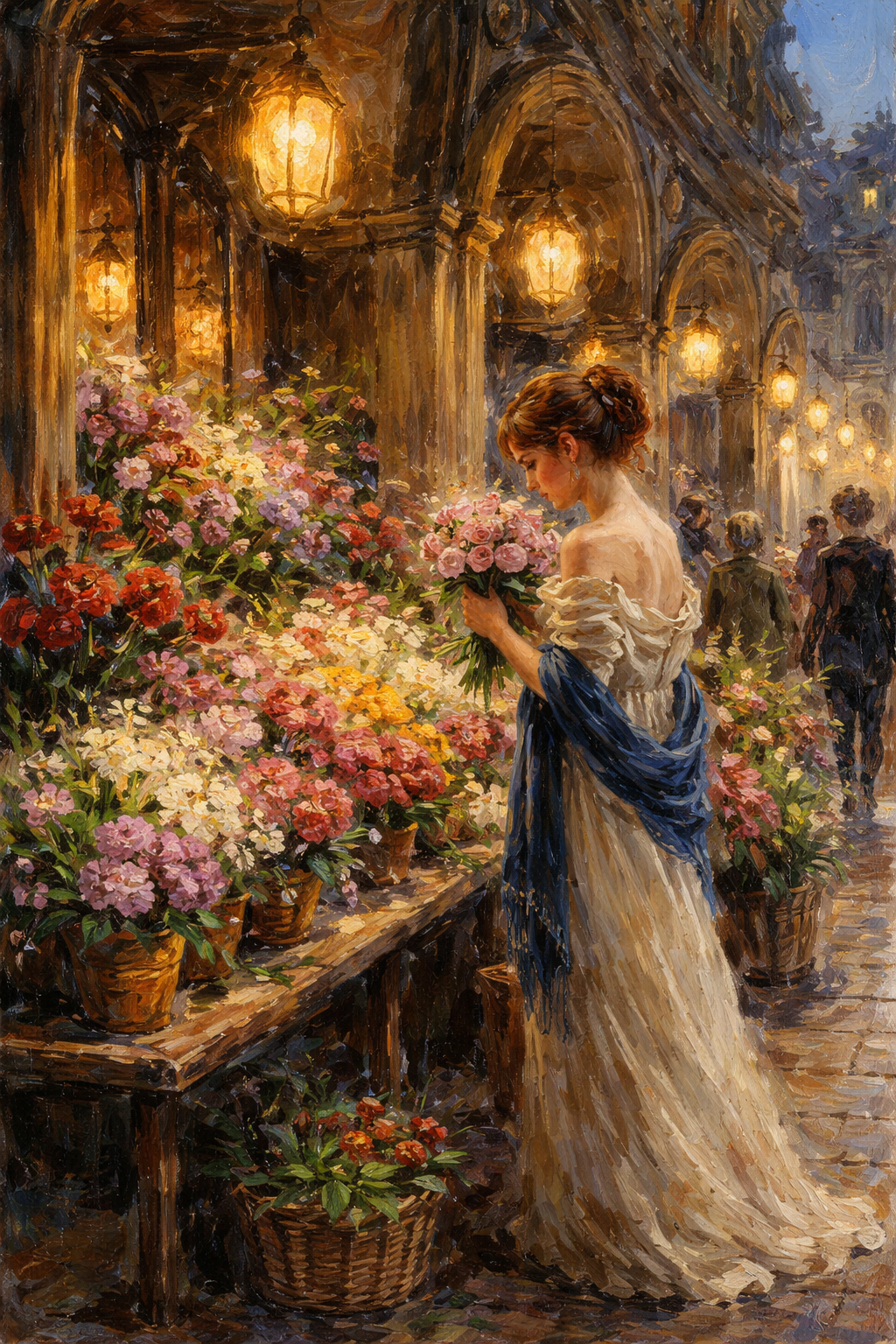
Evening at the Flower Stall
Critique
1. Introduction This oil painting presents a lyrical scene of a flower shop at night, featuring a young woman selecting a bouquet. Set under a stone arcade illuminated by warm street lamps, the composition transports the viewer to a romantic evening in 19th-century Europe. The harmony of colors and the energetic brushwork breathe life into this static moment, creating a vivid atmosphere. 2. Description The central-right portion of the canvas depicts a woman in a cream-colored gown draped with a deep blue shawl, gazing tenderly at a bunch of pink roses. To her left, an abundance of multicolored flowers is displayed on wooden tiers, while vintage lanterns hang from the sturdy stone pillars behind her. In the distance, the silhouettes of passersby are softly blurred, adding a sense of depth to the urban night. 3. Analysis The color scheme is defined by the striking contrast between the golden glow of the lanterns and the vibrant blue of the woman's shawl, which provides a focal point for the viewer. The artist employs quick, impasto brushstrokes to convey the delicate texture of the petals and the solid presence of the stone architecture. The interplay between the vertical columns and the horizontal flower stands creates a stable structure that emphasizes the woman's graceful silhouette. 4. Interpretation and Evaluation The work beautifully captures a transient moment of peace and beauty within the bustling life of the city. The depiction of light reflecting off the cobblestones and the fabric of the dress demonstrates exceptional observational skills and technical mastery. By capturing the intersection of natural beauty and artificial nocturnal light, the painting achieves a high degree of poetic originality and emotional resonance. 5. Conclusion A routine evening errand is transformed into a memorable, artistic vignette through a sophisticated sense of color and composition. Each closer look at the heavy layers of oil paint reveals the subtle brilliance of light caught within the texture. Ultimately, the painting stands as a powerful affirmation of the timeless human affinity for beauty and grace.
Same Subcategory
Similar Artworks
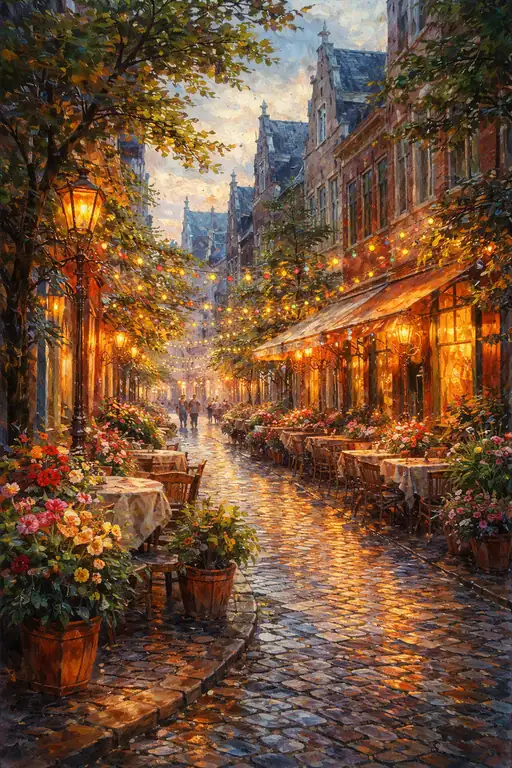 Evening Cafe on a Cobblestone Street
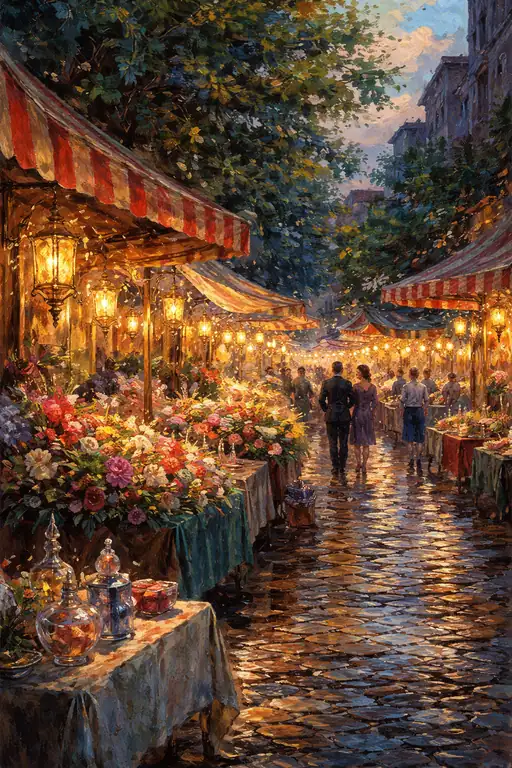 Golden Embers of the Midnight Market
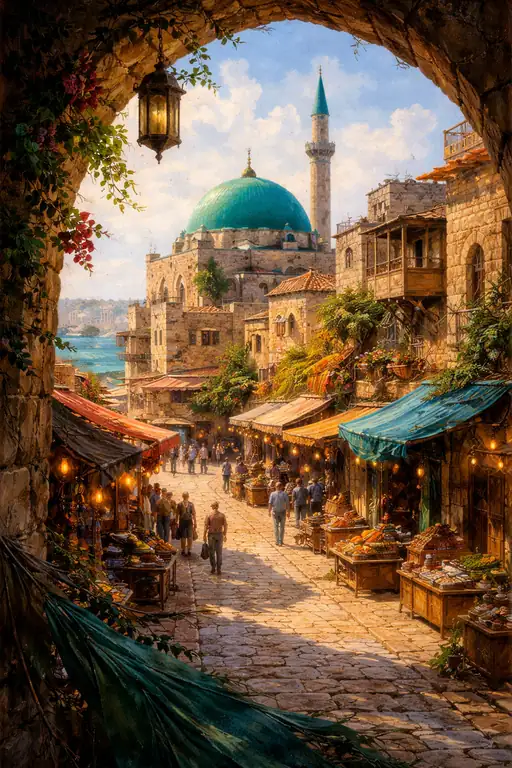 Echoes of Eternity in the Golden Souq
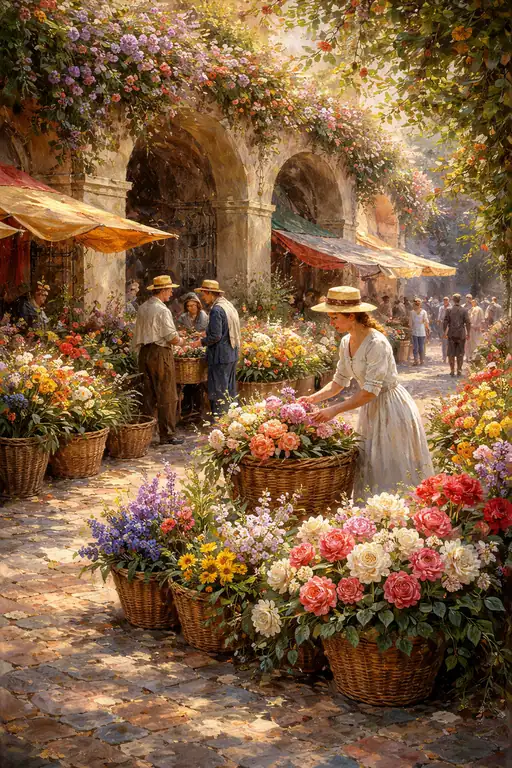 Whispers of the Sunlit Bloom
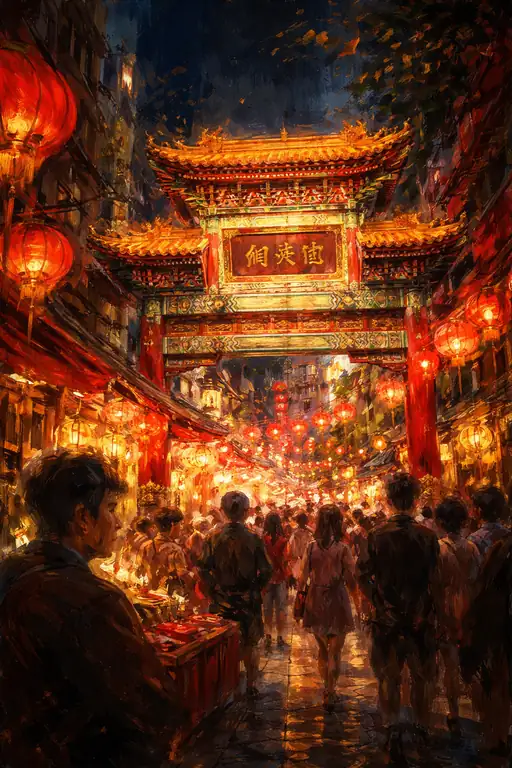 Glowing Crimson Night Market
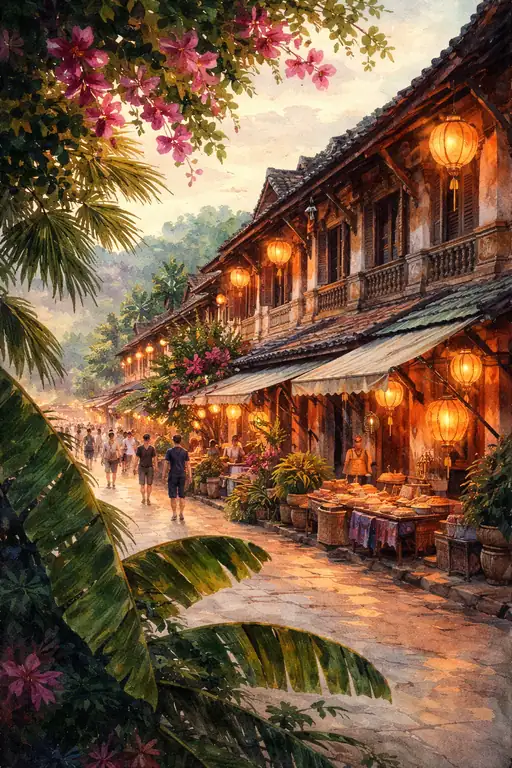 Tropical Twilight Echoes
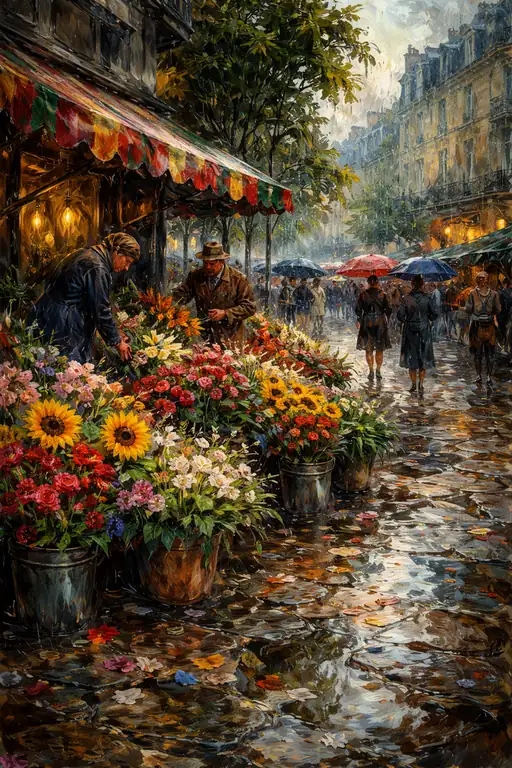 Symphony of Colors in the Rain
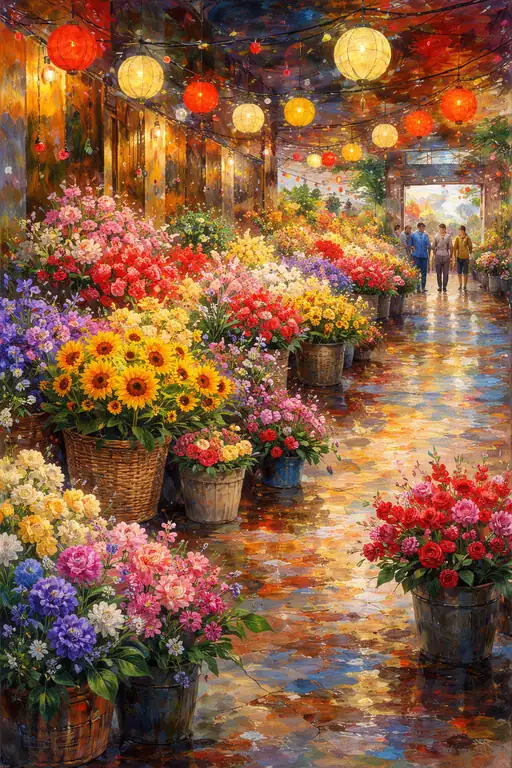 Nocturnal Symphony of Radiant Lanterns and Blooming Souls
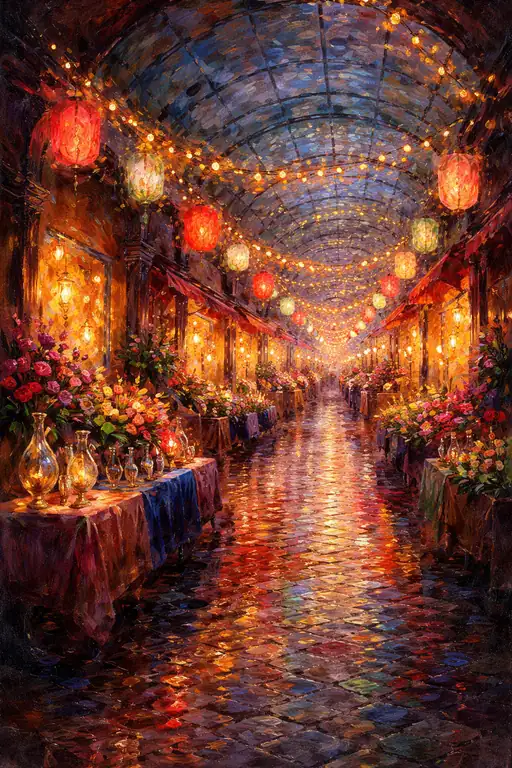 Where Lanterns Dance with Dreaming Flowers
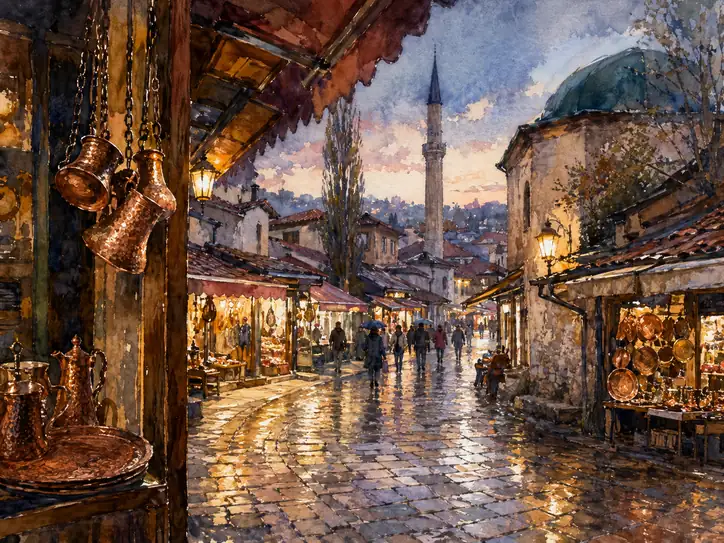 Twilight Reflections in the Gilded Bazaar