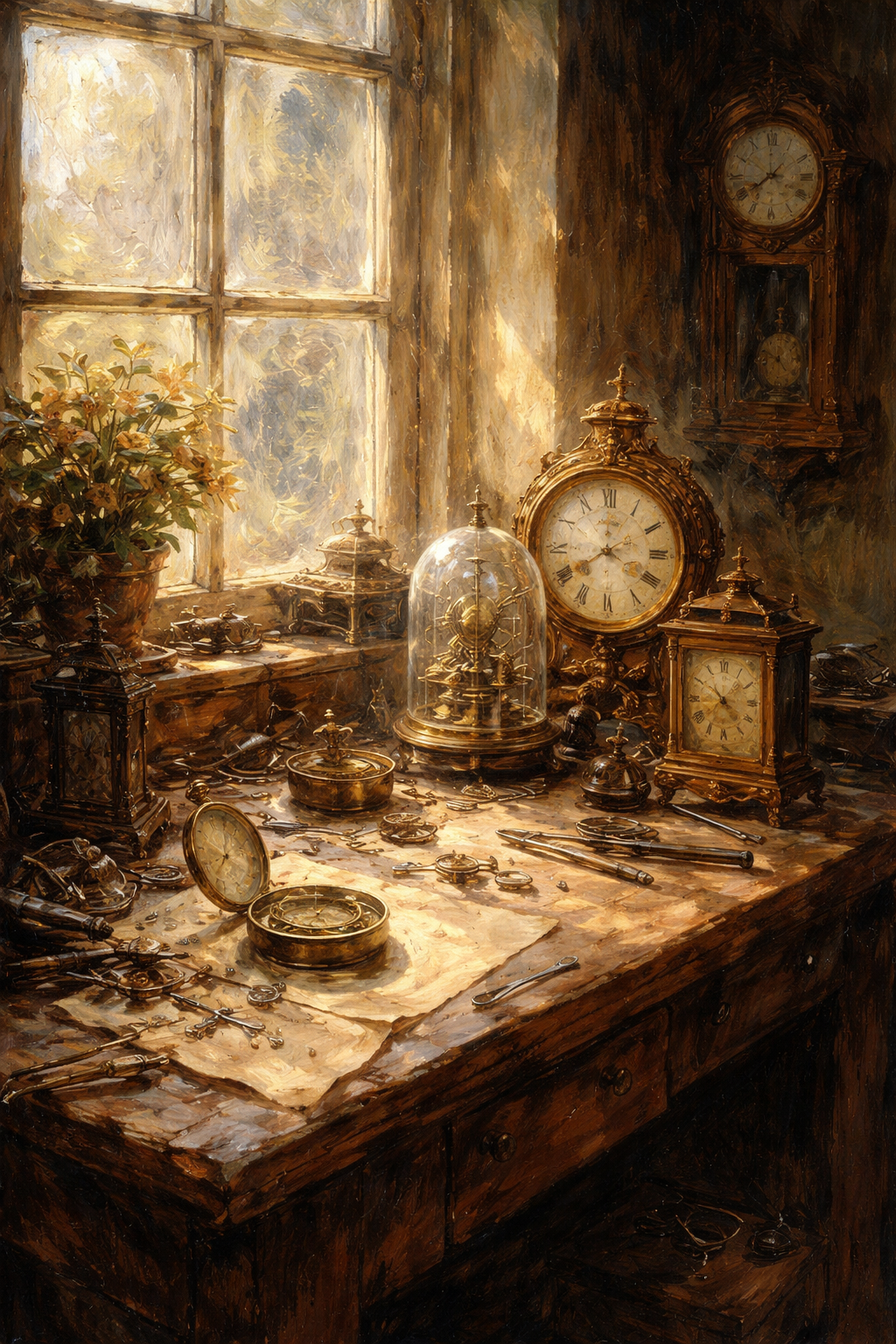
The Clockmaker's Sunlit Workshop
Critique
1. Introduction The painting presents a meticulously detailed interior of a clockmaker's workshop, capturing the quiet essence of a specialized craft. This work focuses on the intersection of science and artistry, emphasizing the precision and dedication required to master the complexities of timekeeping. By arranging a variety of ornate timepieces and tools upon a weathered workbench, the artist invites the viewer into a world of silent, disciplined industry. The overall atmosphere is one of nostalgic warmth, rendered through a sophisticated play of light and shadow. 2. Description A heavy wooden workbench occupies the center of the scene, laden with an assortment of carriage clocks, pocket watches, and intricate mechanical components. A particularly striking clock is housed under a protective glass dome, reflecting the soft light. Scattered across the surface are precision tools such as tweezers and screwdrivers, alongside technical diagrams and worn papers. To the left, a large window pours golden sunlight into the room, illuminating a potted plant on the sill and casting a luminous glow over the metallic surfaces. 3. Analysis The artist utilizes a strong chiaroscuro effect, where the light from the window provides a dramatic contrast to the shadowed recesses of the workshop. The composition is a carefully balanced clutter that draws the eye from the larger clocks to the minuscule gears and springs scattered across the table. A warm, sepia-toned palette dominates the work, reinforcing the sense of antiquity and historical depth. The brushwork is precise yet expressive, successfully capturing the varied textures of polished brass, cold steel, and aged wood. 4. Interpretation and Evaluation This work serves as a profound meditation on the nature of time and the human endeavor to measure it with absolute accuracy. The combination of delicate instruments and heavy furniture symbolizes the weight of tradition and the fragility of mechanical life. The technical execution is masterly, particularly in the artist's ability to render the reflective qualities of glass and metal under natural light. The painting excels in its ability to evoke a sense of reverence for the craftsman's labor, making the inanimate objects feel alive with potential. 5. Conclusion In conclusion, the initial impression of a crowded workshop evolves into an appreciation for the artist's ability to imbue mechanical objects with a sense of soul and history. The harmonious interplay between the source of light and the detailed subject matter creates a powerful narrative of focus and patience. The work successfully captures the timeless beauty of manual skill in an increasingly industrialized world. Ultimately, the painting leaves the viewer with a lasting sense of the quiet dignity found within the meticulous pursuit of precision.
Same Subcategory
 The Silent Ripple
Similar Artworks
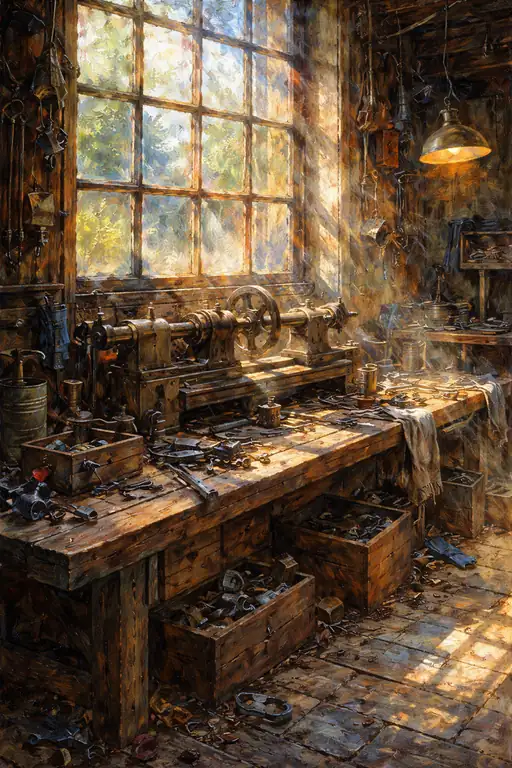 Sunbeams on the Silent Lathe
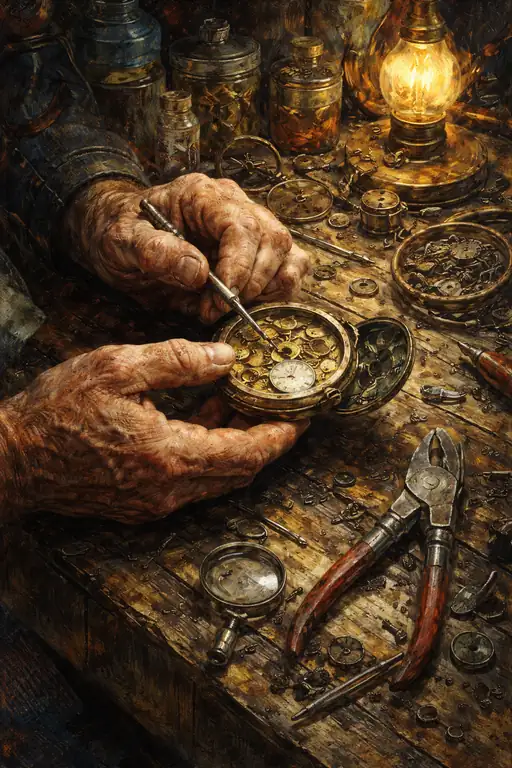 The Watchmaker's Infinite Patience
 Hands That Mend the Hours
 A Luthier's Passion Illuminated in the Workshop
 Brass Lamp and Spring Blossom
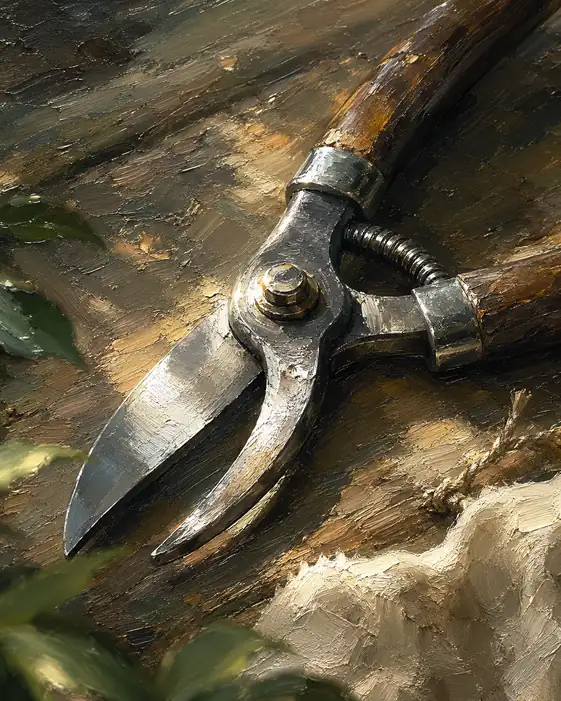 Legacy of the Soil
 The Quiet Symphony of Shadows and Sunlight in the Artisan's Sanctuary
 Pink Cosmos and Brass Desk Lamp
 Morning Sunbeams and Golden Blossom
 Where Light Finds the Wood