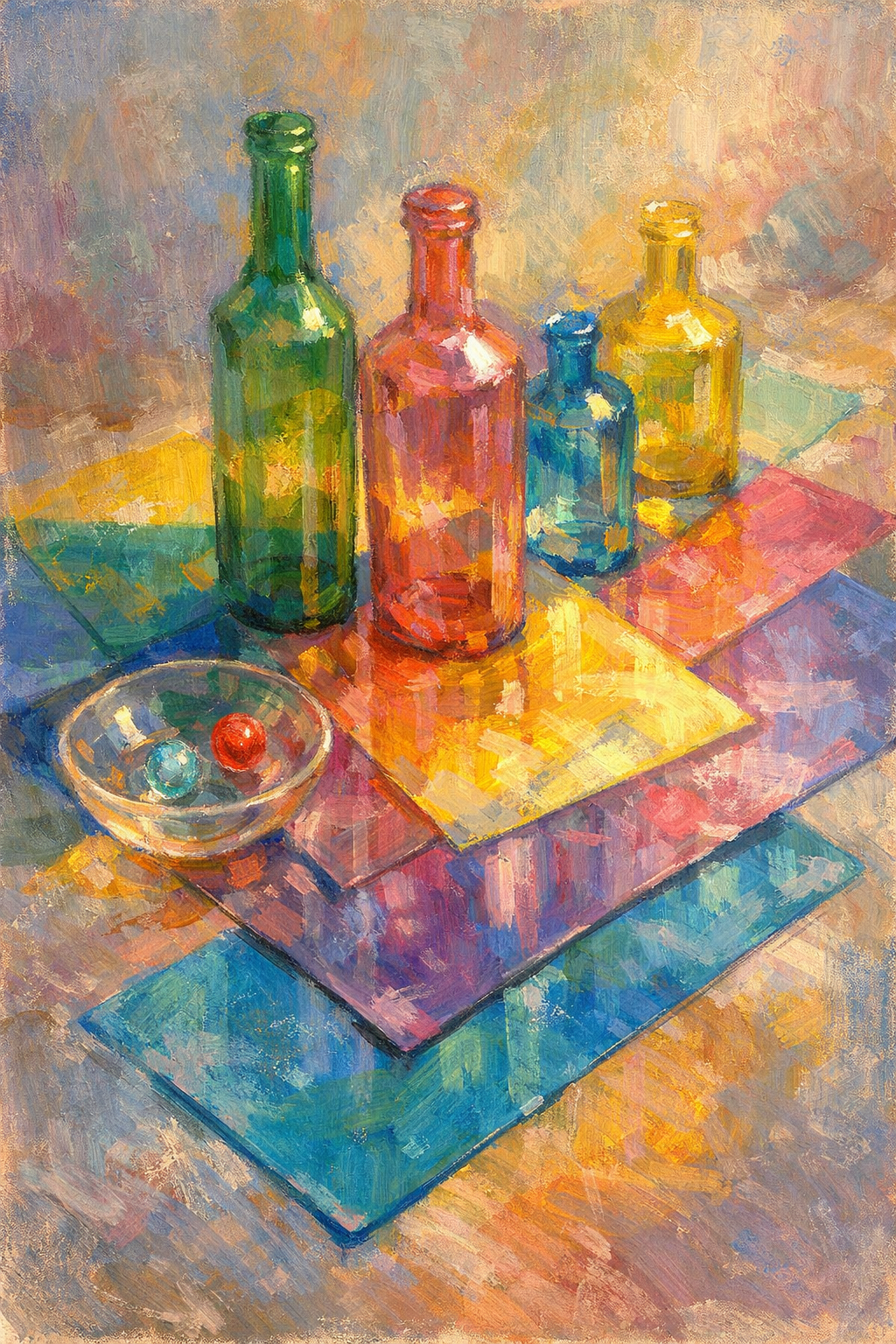
Prismatic Harmony
Critique
1. Introduction This vibrant oil painting presents an impressionistic still life focused on the transparency and luminous qualities of colored glass. The composition features a collection of glass bottles and plates arranged in a dynamic, overlapping manner that challenges traditional perspectives. This work invites the viewer to experience a symphony of light and color, emphasizing the beauty of optical effects over literal representation. The energetic brushwork and bold palette establish a sense of modern vitality and joyful exploration. 2. Description Four glass bottles of varying heights and colors—green, red, blue, and yellow—stand as the primary subjects of the composition. They are positioned atop several rectangular sheets of translucent colored glass in shades of cyan, magenta, and orange, which are stacked unevenly on a neutral, textured surface. To the left, a small clear glass bowl contains two vibrant marbles, one blue and one red. The background is a soft, multi-colored field of broad brushstrokes that echoes the palette of the central objects. 3. Analysis The artist employs an exceptionally bold color palette, utilizing the interaction between overlapping primary and secondary colors to create new, luminous hues. The brushwork is thick and rhythmic, with visible rectangular strokes that create a mosaic-like texture across the canvas. Lighting is handled through internal glows rather than external shadow, making the glass objects appear as if they are self-illuminating sources of energy. The diagonal arrangement of the glass plates adds a sense of structural instability and movement to the overall composition. 4. Interpretation and Evaluation This piece successfully explores the boundaries between representational still life and abstract color theory. The choice of glass as a subject allows for a sophisticated investigation of light refraction and the layering of transparency. The technical execution of the impasto technique is particularly effective, as it gives a physical weight to the otherwise ephemeral quality of light. This portrayal of simple household objects serves as a powerful celebration of visual perception and the transformative power of the artistic lens. 5. Conclusion Initially, the scene appears as a chaotic burst of color, but a closer examination reveals a deliberate and harmonious organization of light. The interplay between the solid forms of the bottles and the thin planes of the glass sheets creates a compelling dialogue of shapes. Ultimately, the painting captures the sheer pleasure of seeing and the endless possibilities of chromatic interaction. It remains a striking example of how traditional still life can be revitalized through a bold, modern focus on the properties of light.
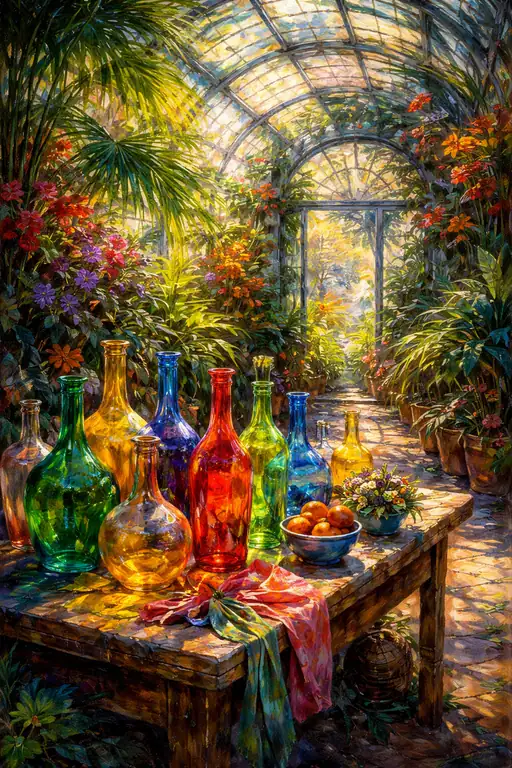 Sanctuary of Light and Glass
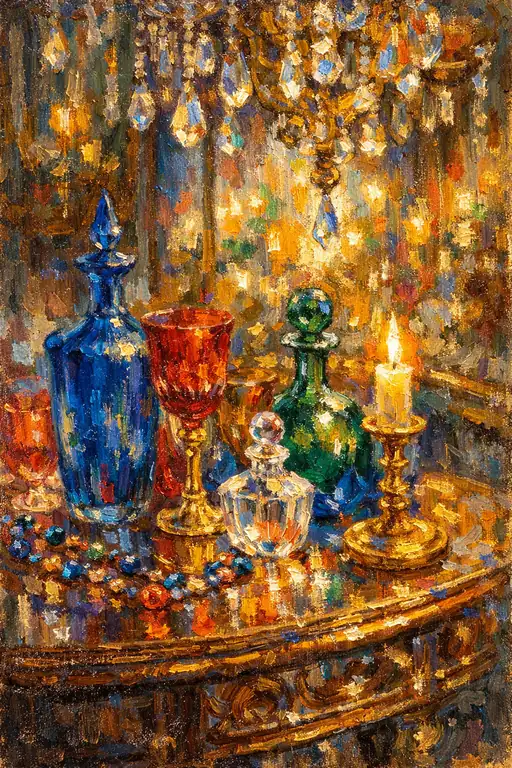 Memories of Sparkle
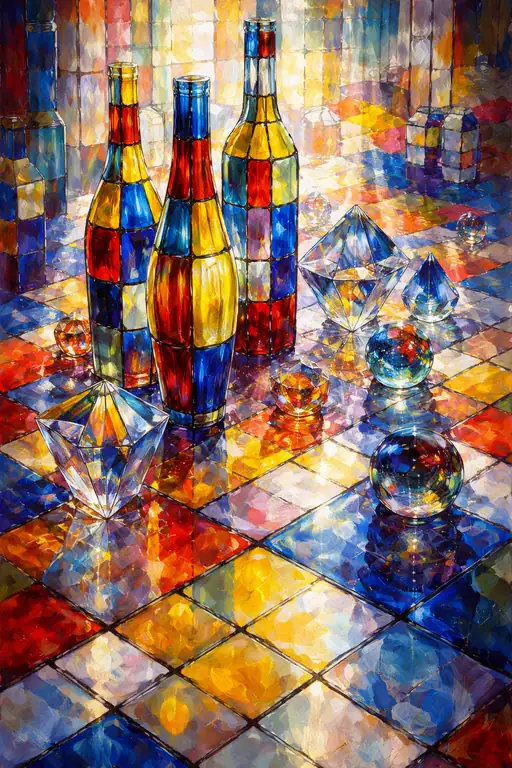 Fragments of Luminous Time
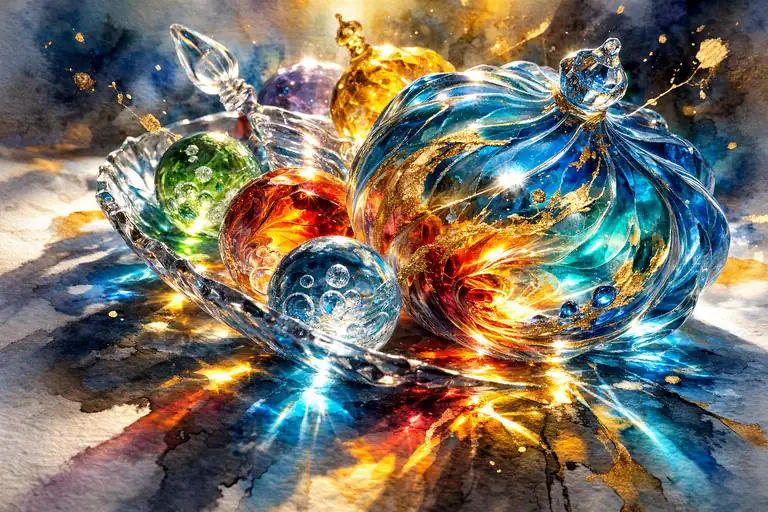 Wisdom of Centuries
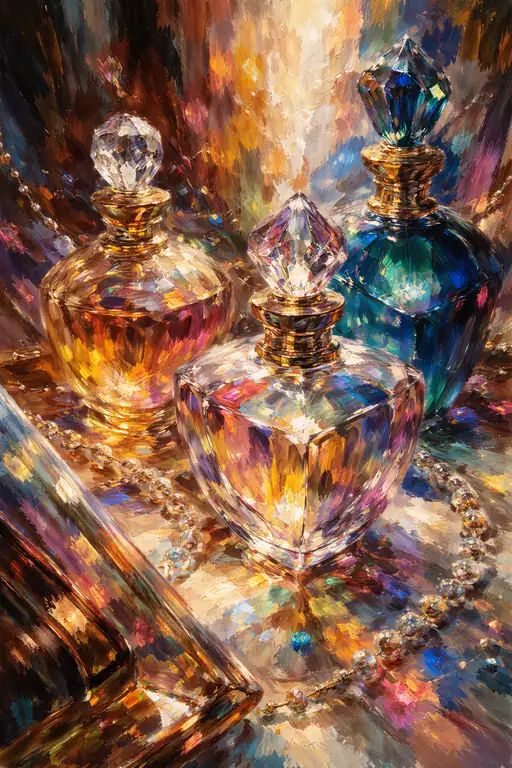 Reflections of Elegance
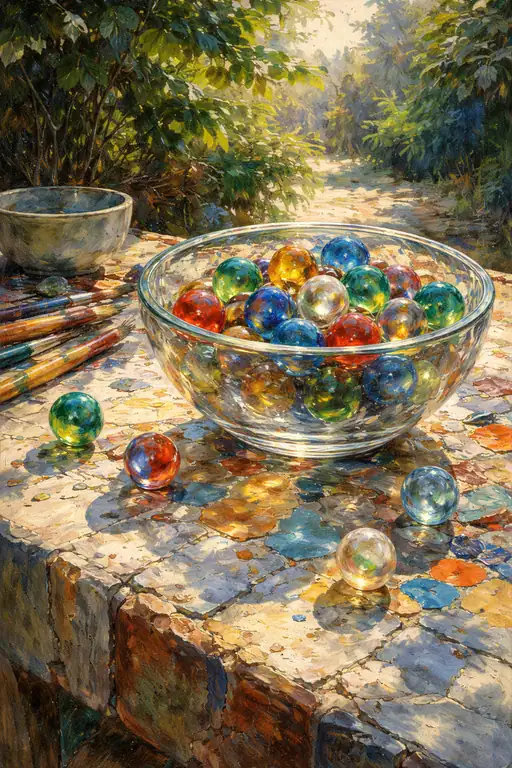 Nostalgic Sparkles in the Summer Sun
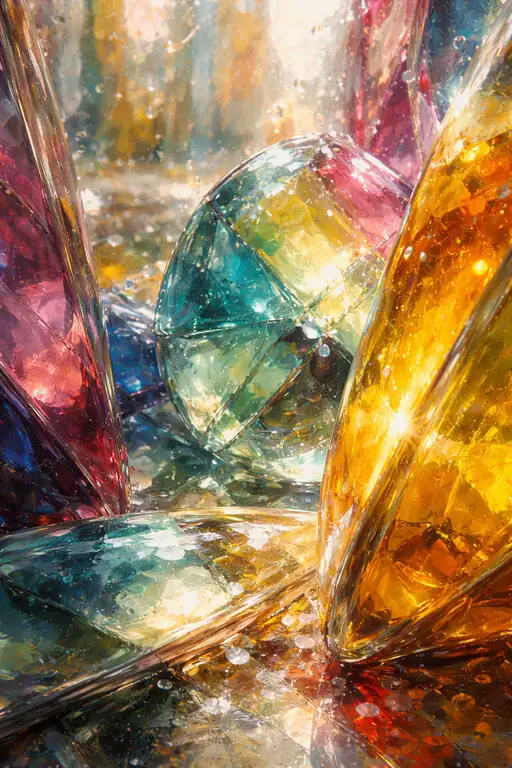 Crimson Threads of Destiny
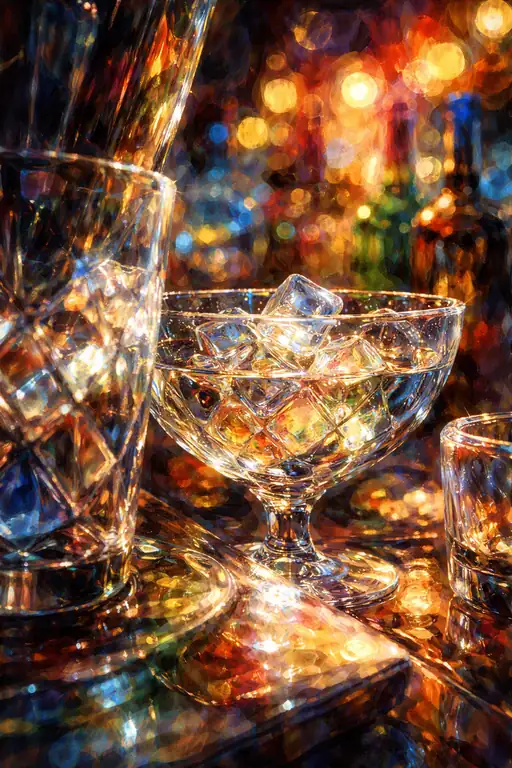 Refracted Celebrations: Amber and Azure
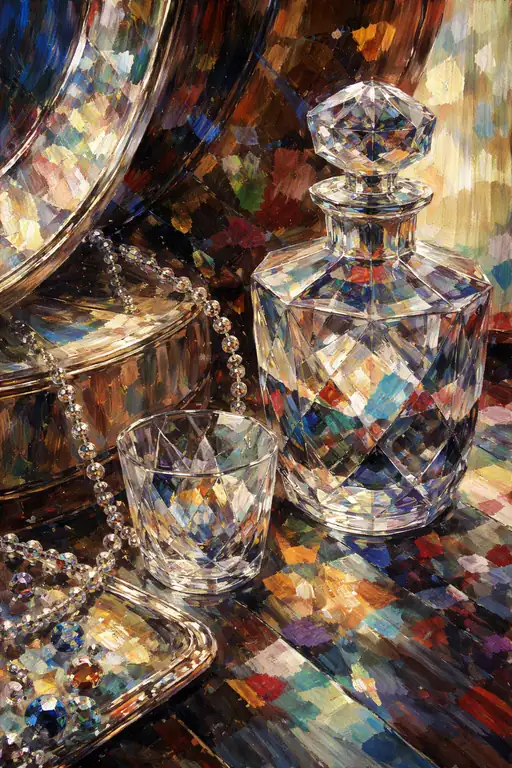 Dancing Light within the Crystal Heart
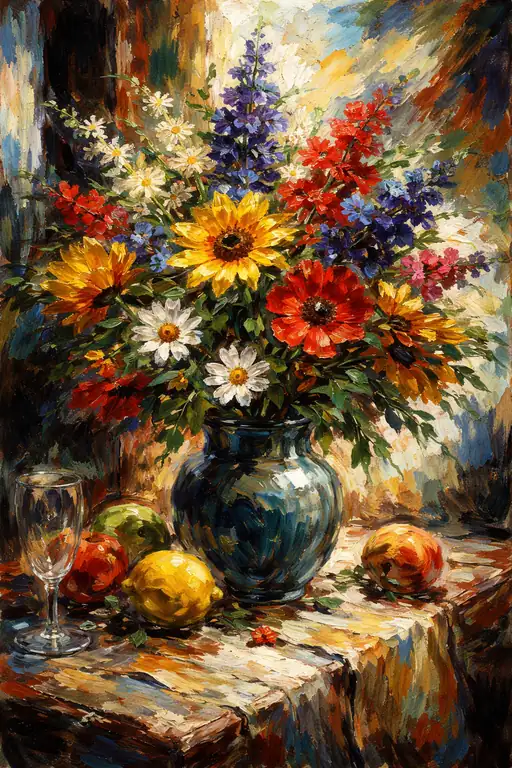 Symphony of the Bountiful Bloom
 Prismatic Echoes in Crystal