
The Soul in the Smallest Parts
Critique
1. Introduction This oil painting provides an intimate look into the life of a craftsman dedicated to the meticulous sorting of small components. Set within a cozy workshop illuminated by both natural window light and the warm glow of a lamp, the scene captures a moment of deep concentration. The artist masterfully balances the quiet intensity of manual labor with a rich, textured atmosphere. This work elevates a routine task into a poetic study of human industry and focus. 2. Description In the center-right of the composition, a man wearing a red cap and matching shawl leans intently over his workbench. He is carefully selecting small, silver metallic pieces from a partitioned wooden tray, his hands moving with practiced precision. The table is filled with various objects, including specialized tools, small jars, and a glowing oil lamp on the far right. A lattice window on the left allows soft, diffused light to enter, casting gentle highlights on the cluttered surface. 3. Analysis The color scheme is centered around the vibrant red of the man's attire, which contrasts effectively with the muted greens and earthy browns of the surroundings. The artist utilizes thick, expressive brushstrokes to create a palpable sense of texture on the wooden table and the woolen fabric. Dual light sources—from the window and the lamp—create a complex interplay of shadows and highlights, enhancing the three-dimensional depth of the scene. The diagonal arrangement of elements guides the viewer's gaze toward the focal point of the man's hands. 4. Interpretation and Evaluation The painting successfully conveys a sense of spiritual satisfaction and narrative depth through the depiction of focused activity. Technically, the artist demonstrates high proficiency in rendering a multitude of small objects while maintaining a cohesive overall composition. The contrast between the internal artificial light and the external natural light can be interpreted as an original metaphor for the craftsman's inner world. This dense and organized arrangement reflects the quiet order found within a life of dedicated work. 5. Conclusion While the vibrant red initially captures the viewer's attention, the true power of the work lies in the palpable sense of silence and dedication it evokes. It is a high-quality artistic achievement that portrays the beauty of labor without resorting to sentimentality or exaggeration. Ultimately, the painting invites the viewer to appreciate the dignity found in small, deliberate actions and the profound peace of a focused mind.
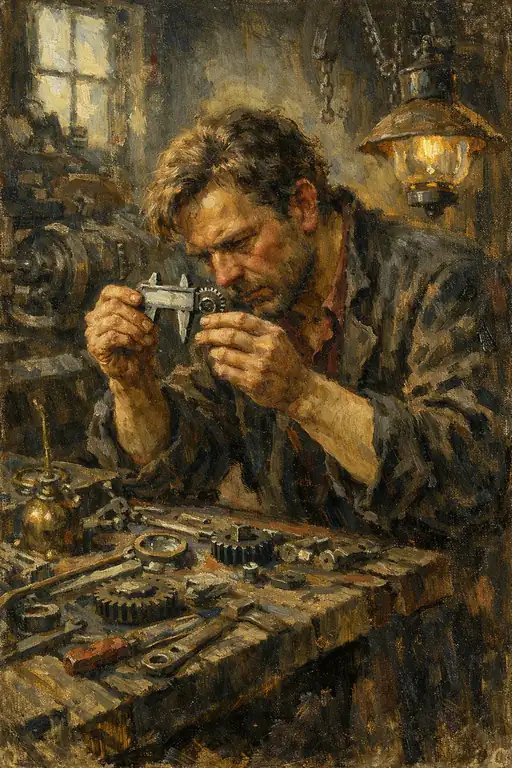 The Artisan's Gaze: Adjusting Gears in an Antique Workshop
 The Artisan's Devotion
 The Artisan's Light
 Geometric Rays in Hand
 The Jeweler's Immersive Focus
 Sailing Seas Within a Glass Bottle
 Sculpting the Sound
 Carving the Silence
 Polishing the Promise of Tomorrow
 Whispers of the Wood
 The Master's Intimate Gaze