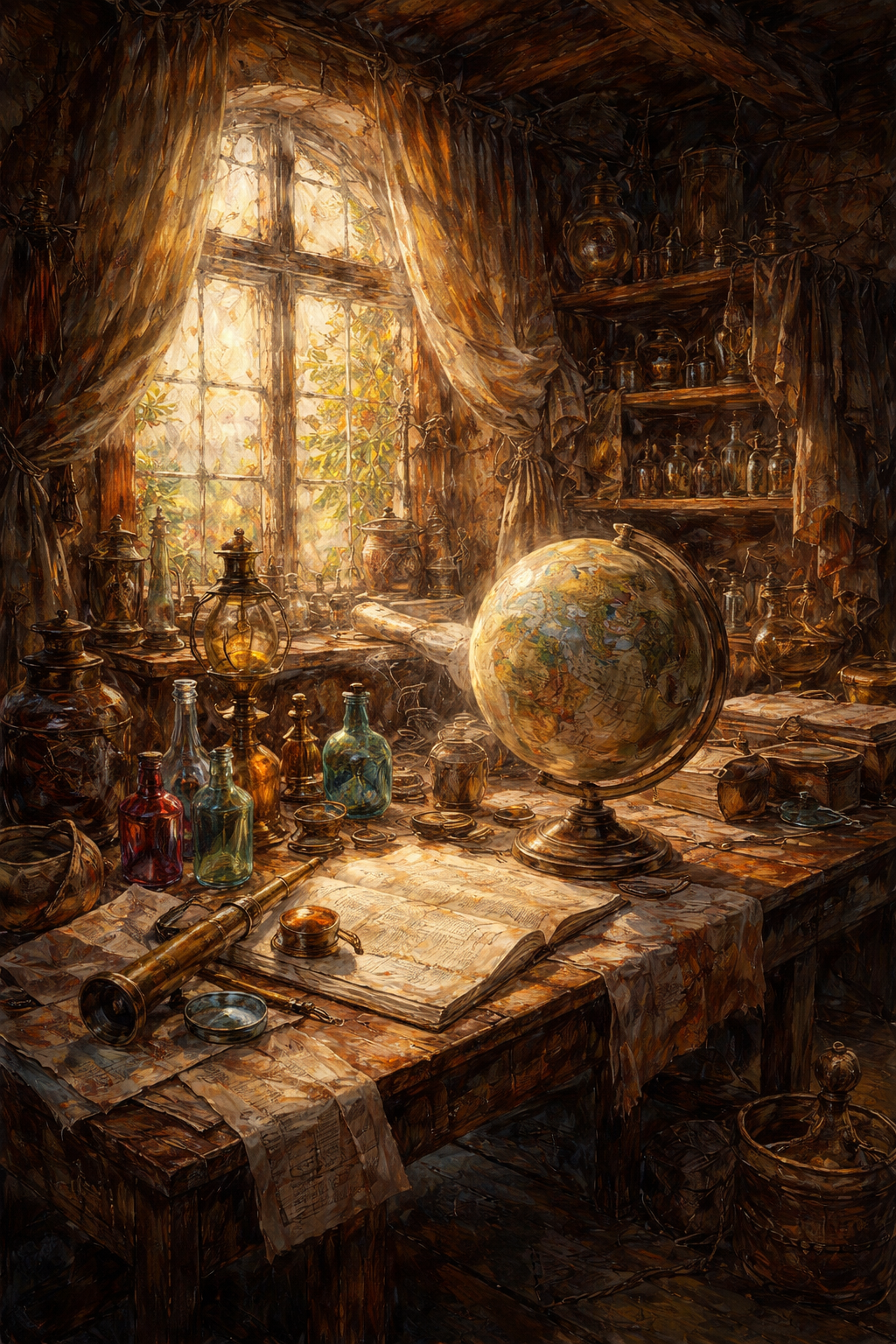
Voyage Beyond the Scholar's Desk
Critique
1. Introduction This elaborate work presents a densely packed interior of a scholar’s study, centered on a desk filled with instruments of scientific and geographical discovery. The artist captures a sense of profound intellectual labor and the pursuit of knowledge through a complex arrangement of objects and atmospheric window light. From an educational and objective perspective, the painting functions as a detailed reconstruction of a historical intellectual environment. The thematic choice emphasizes the meticulous nature of early modern science and the aesthetic appeal of its tools. 2. Description At the center of the weathered wooden desk, an open book is surrounded by a brass telescope, a magnifying glass, and numerous glass vials containing various substances. A large, detailed globe sits to the right, its surface catching a warm, localized glow. To the left, a tall window with arched panes allows soft, golden daylight to stream into the room, filtering through thin curtains and highlighting the textures of the desk. Shelves in the background are crowded with additional jars and scientific equipment, creating a sense of layered history. 3. Analysis The composition is organized around the horizontal plane of the desk, with the vertical elements of the window and background shelves creating a structured framework for the viewer. The artist employs a warm, sepia-toned palette, enriched by the golden light that creates intricate patterns of light and shadow across the cluttered surfaces. The brushwork is precise yet expressive, effectively capturing the varied textures of wood, glass, metal, and parchment. This technique succeeds in creating a unified, slightly dusty atmosphere that suggests long periods of solitary work. 4. Interpretation and Evaluation The painting succeeds in evoking the quiet, dedicated atmosphere of a historical laboratory, emphasizing the tangible beauty of scientific tools through careful light management. The contrast between the bright window and the shadowy corners of the room suggests the ongoing effort to bring light to the unknown through observation and analysis. Technically, the work is highly accomplished, particularly in its management of complex reflections and the subtle play of light through diverse glass containers. The artist's ability to balance high-detail rendering with atmospheric depth is noteworthy. 5. Conclusion While the initial impression is one of a chaotic and overcrowded space, closer examination reveals a deep sense of order and intellectual purpose in the scholar’s instruments. It is a masterful study of light’s interaction with material history, achieving a high degree of artistic merit. The transition from observing the dense collection of objects to understanding the overarching theme of human discovery is handled with great skill. Ultimately, the work leaves the viewer with a lasting impression of the tireless curiosity that drives the advancement of knowledge.
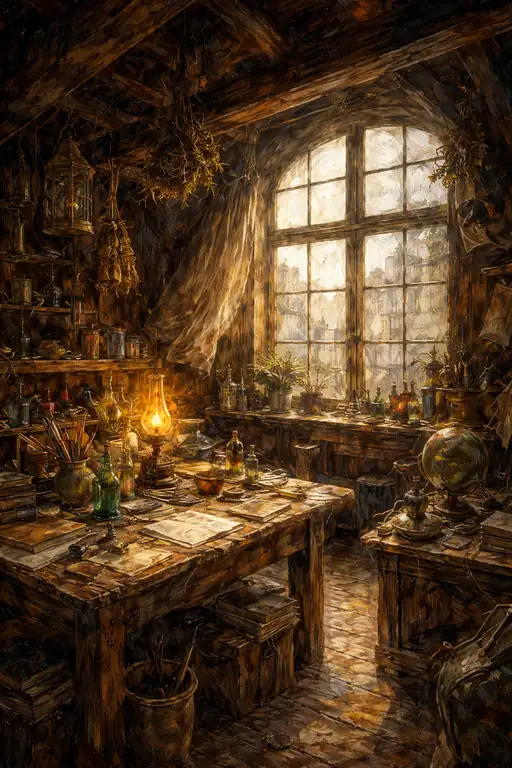 Sanctuary of the Seeking Mind
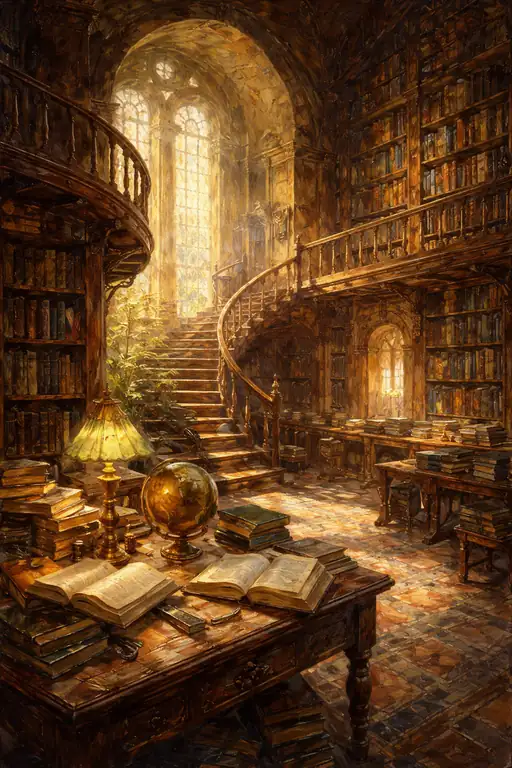 The Golden Spiral of Timeless Knowledge
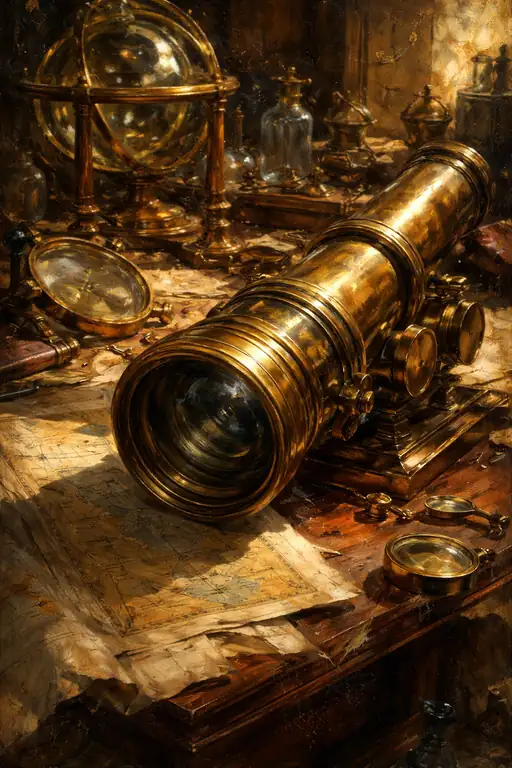 Whispers of the Cosmos in Brass
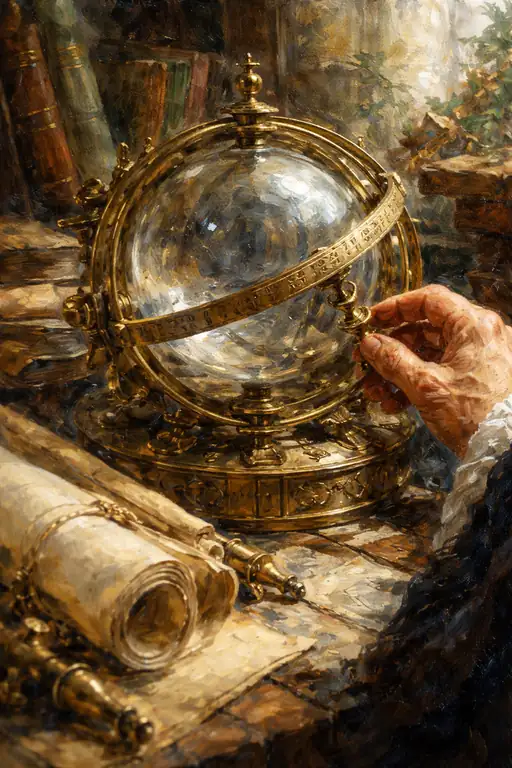 Touch of Time Upon the Stars
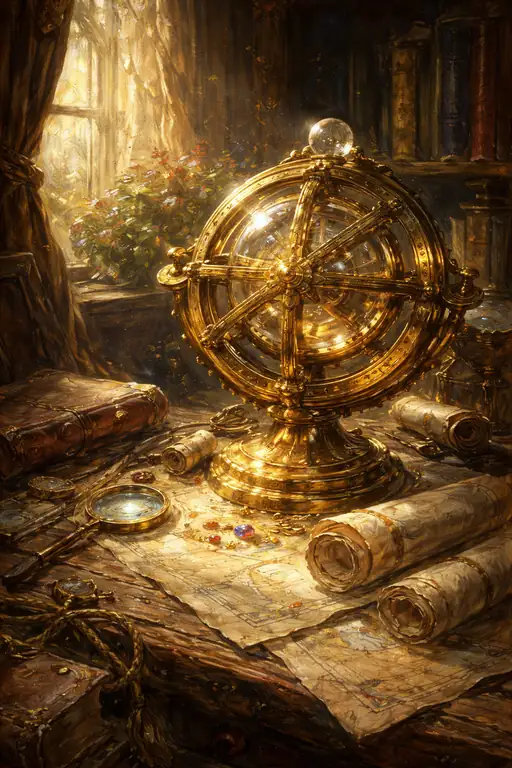 Wandering Through the Celestial Spheres
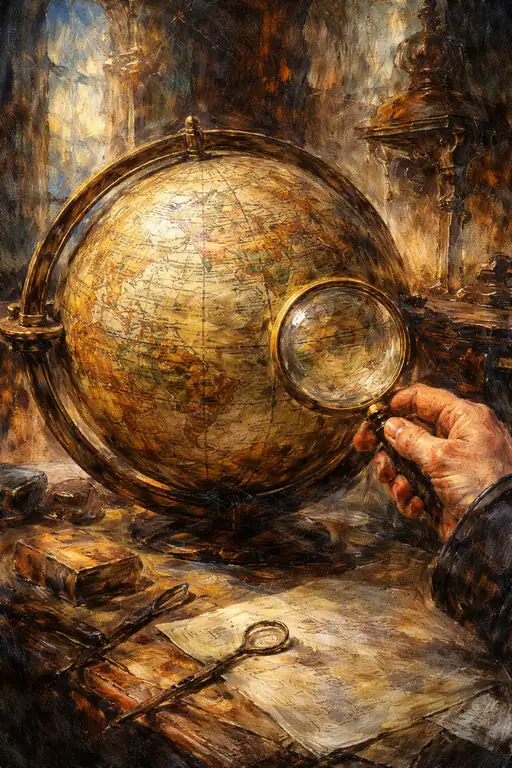 Whispers of the Old Cartographer
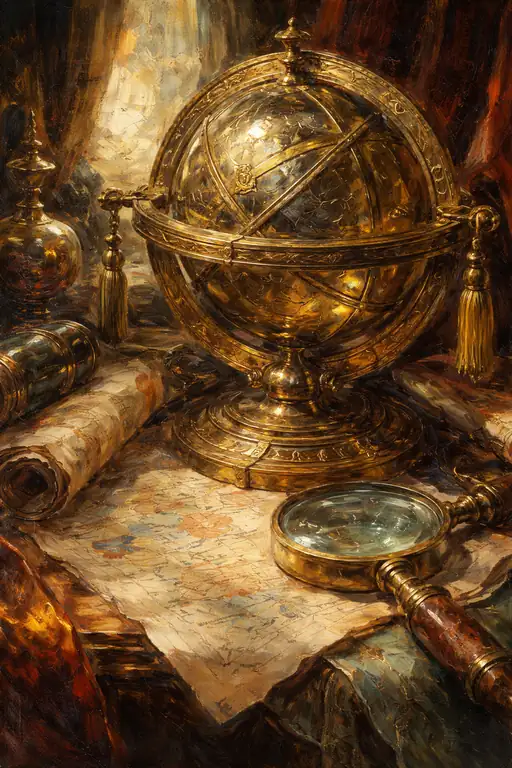 The Golden Map
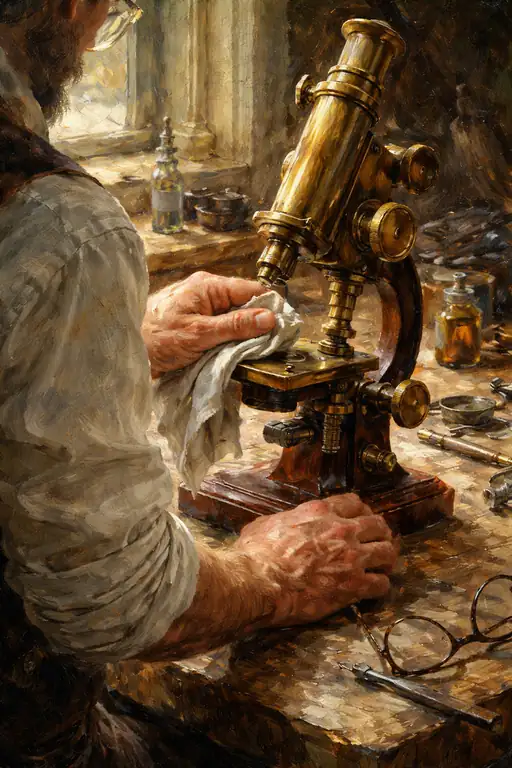 The Artisan's Focus
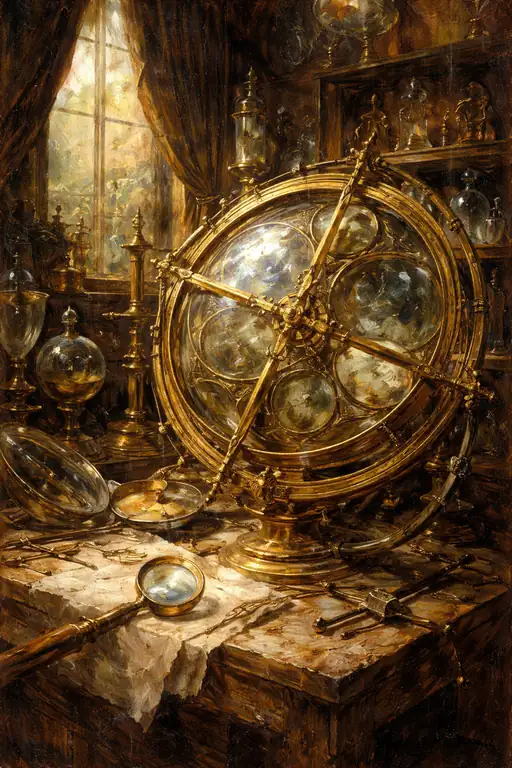 Gleaming Relics of the Astral Study
 Elixir of Illumination
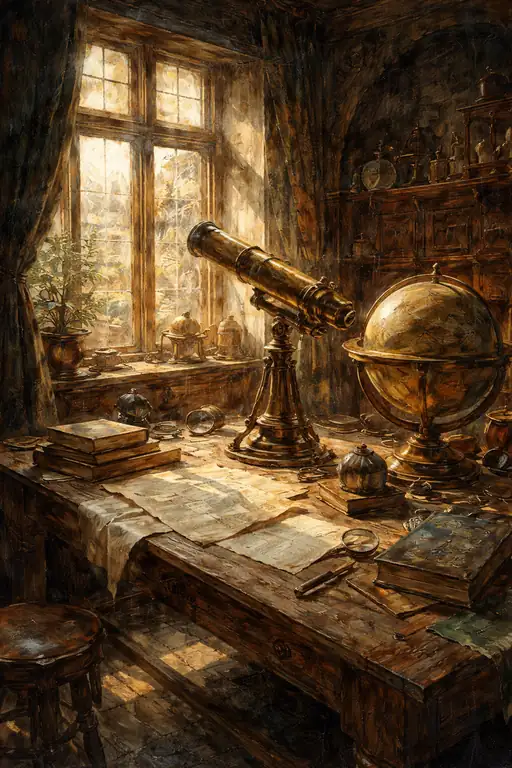 Vigil of the Golden Scholar