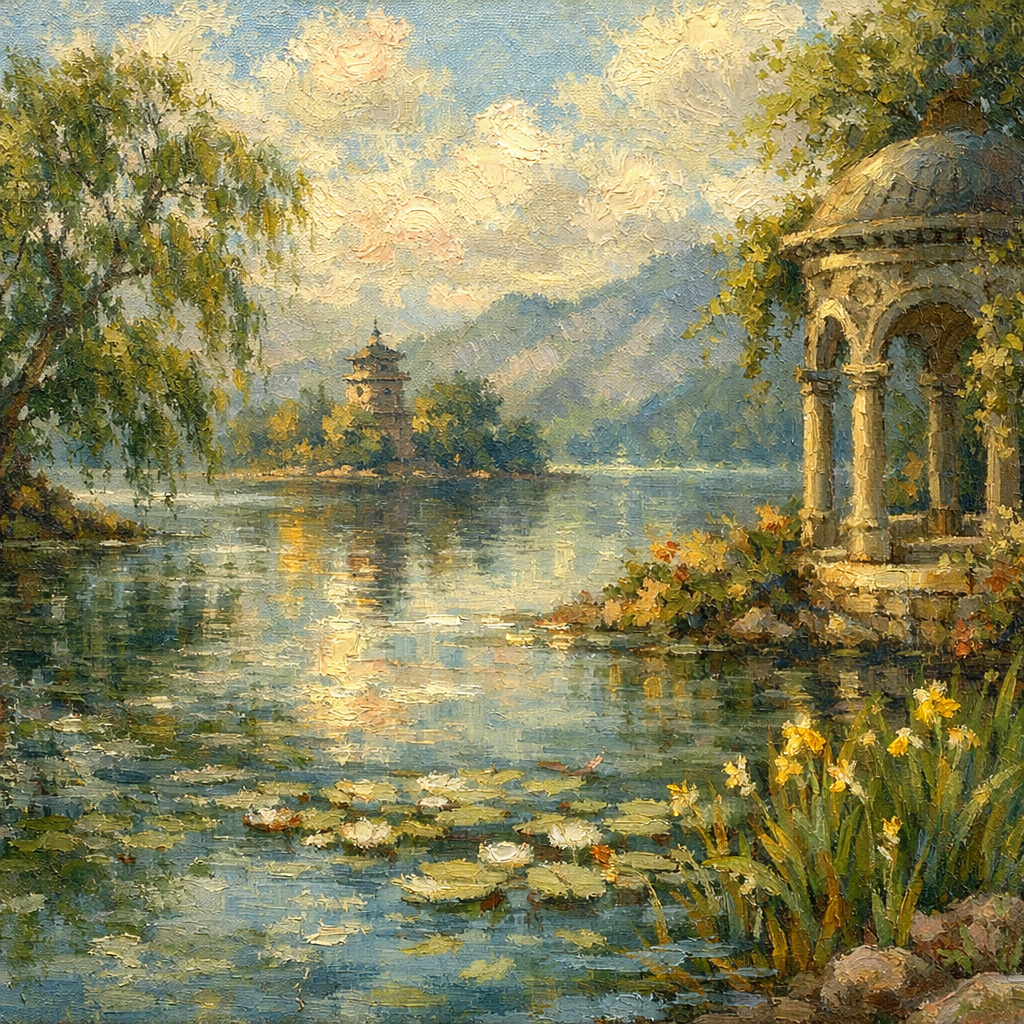
Tranquil Lake with Gazebo and Pagoda
Critique
1. Introduction This oil painting presents a tranquil lakeside scene, capturing a serene moment in nature with a harmonious blend of light and color. The composition exhibits strong Impressionist influences, focusing on the atmospheric qualities of the landscape and the interplay between light and water. It serves as an educational example of how landscape art can evoke a sense of peace and contemplation. 2. Description On the right side of the canvas stands a classical stone gazebo covered in trailing vines, rendered with significant detail. A weeping willow tree on the left provides a vertical accent with its cascading branches, while a distant island features a tall pagoda surrounded by lush foliage. In the foreground, white water lilies dot the reflective surface of the lake, complemented by bright yellow flowers blooming in the lower right corner. 3. Analysis The artist utilizes a vibrant palette, where the blues of the sky and water contrast beautifully with the greens of the vegetation and the warm tones of the structures. Thick, textured brushstrokes created with the impasto technique add a tangible physical quality to the surface, enhancing the sense of light reflecting off the water. The structural elements on the left and right frame the distant pagoda, creating a balanced and stable composition. 4. Interpretation and Evaluation The work explores the idealized relationship between nature and architecture, merging Western and Eastern structural styles within a unified atmospheric setting. This fusion creates a unique cultural dialogue that deepens the emotional resonance of the scene. The execution of light and texture is highly effective, demonstrating technical skill in depicting the subtle shifts of a sunlit afternoon. Overall, the piece successfully visualizes a quiet passage of time and invites imaginative engagement. 5. Conclusion This landscape painting achieves a profound sense of depth through its combination of intricate details and bold, expressive brushwork. While initially appearing as a pleasant vista, closer observation reveals the layered complexity of the light and the heavy textures that define the space. The harmony achieved between shadow, light, and silence marks this work as a significant contribution to the exploration of landscape representation.
Same Subcategory
 Golden Hour's Reflection in the Silent Lake
Similar Artworks
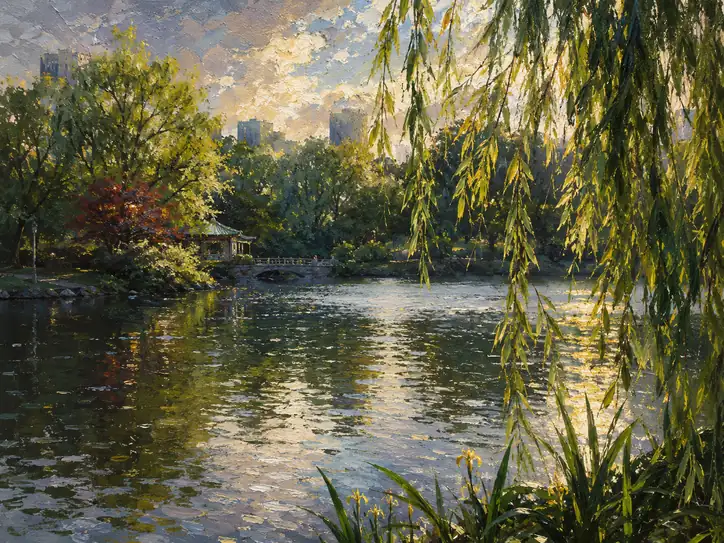 Beyond the Willow's Veil
 Awakening of the Silent Lake
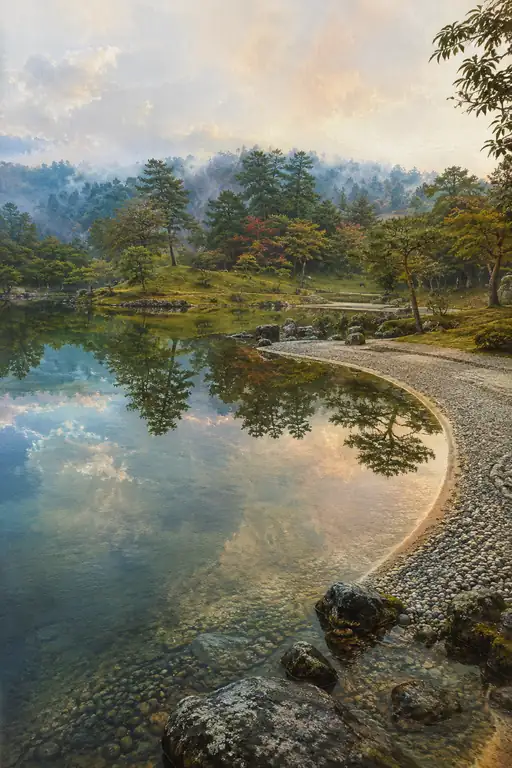 Mirrored Silence
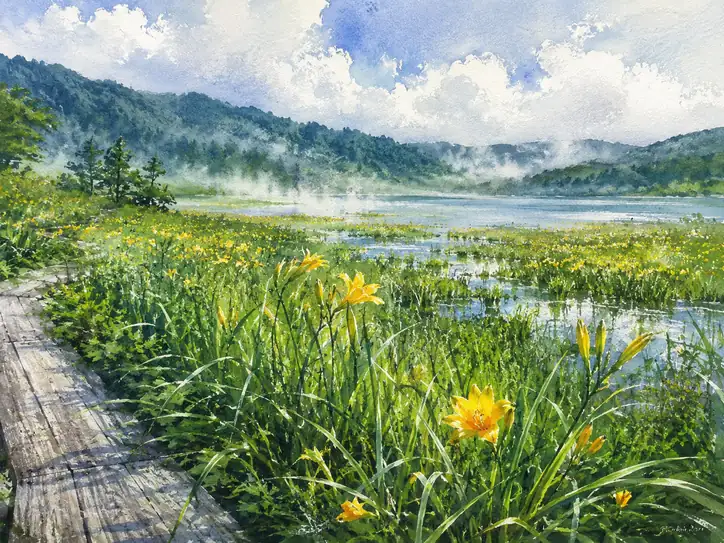 Yellow Symphony on the Summer Marsh
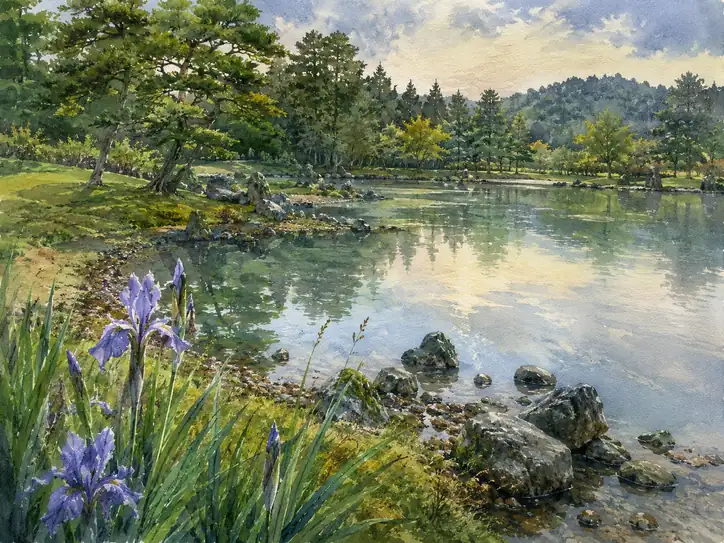 Mirror of the Pine and Iris
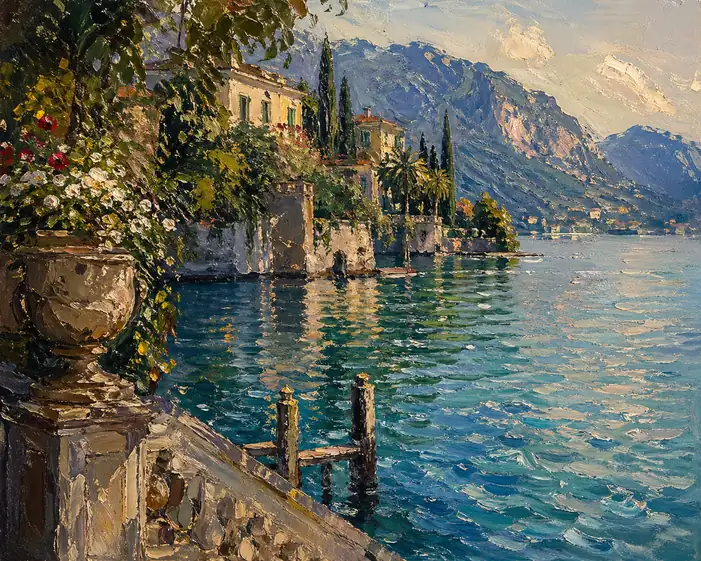 Eternal Resonance of the Sunlit Shore
 Serenade of the Water Lilies
 Moonlight Haven and the River of Lilies
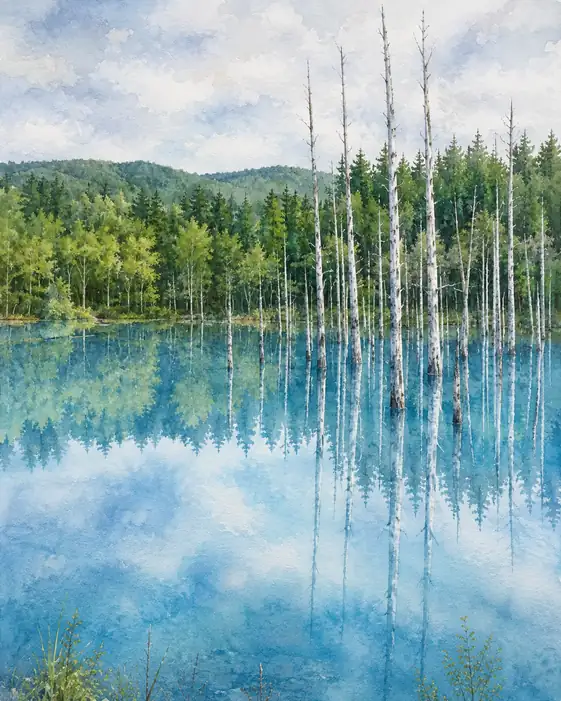 Birch Reflections on the Blue Pond
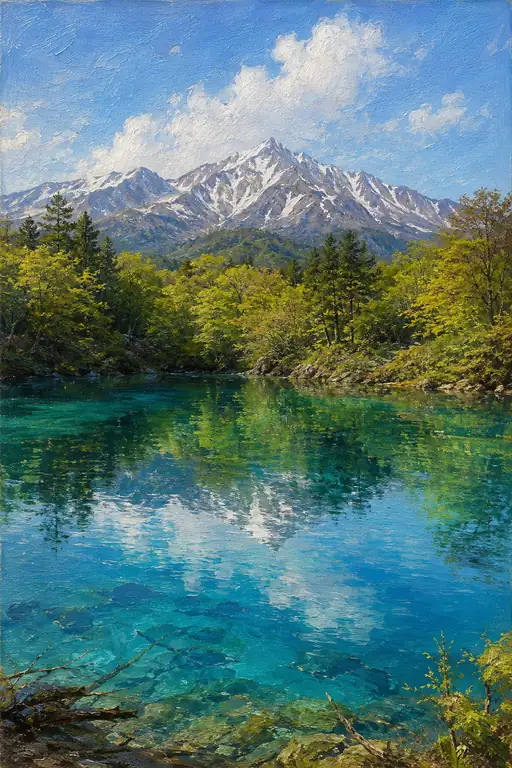 Pristine Mirror of the Alpine Spring