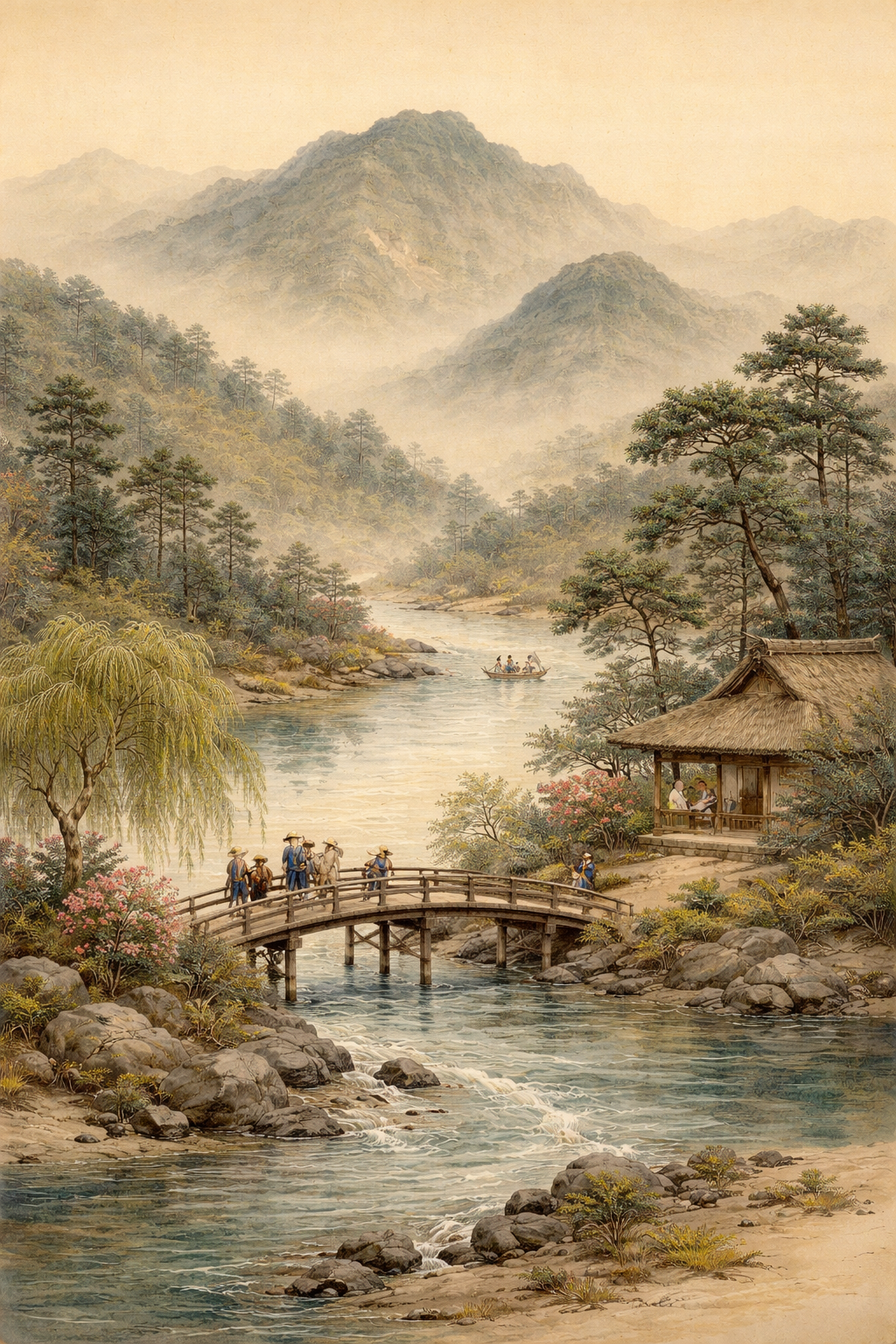
Whispers of a Timeless Valley
Critique
1. Introduction This vertical landscape painting presents a serene and idealized vision of traditional Japan, characterized by a harmonious blend of natural and man-made elements. The scene depicts a winding river valley nestled among misty mountains, with a focal point on human activities such as travel and leisure. It captures the essence of a bygone era through a refined aesthetic that emphasizes tranquility and balance. 2. Description In the foreground, a group of travelers crosses a curved wooden bridge that spans a clear, rocky stream. To the right, a charming thatched-roof pavilion sits near the water, where figures appear to be resting or engaged in conversation. A small boat glides quietly on the river in the middle ground, while the background is dominated by soft, towering peaks partially obscured by a delicate mountain mist. 3. Analysis The artist utilizes a style reminiscent of classic ink-and-wash painting, combined with the subtle color palettes typical of the Shin-hanga movement. Fine, precise line work defines the architectural details and the swaying willow branches, while gentle gradations of blue, green, and ochre create a sense of deep atmospheric perspective. The composition follows a rhythmic S-curve formed by the river, leading the viewer into the distance. 4. Interpretation and Evaluation The work serves as a celebration of the symbiotic relationship between humanity and the natural environment. The presence of the teahouse and bridge suggests a cultivated landscape that respects the inherent beauty of the mountains. Technically, the painting is highly successful in its use of negative space and soft lighting, which evokes a dreamlike quality. The attention to minute details, such as the blossoms and individual pine needles, reflects a deep appreciation for nature. 5. Conclusion Initial focus on the lively figures on the bridge eventually expands to an appreciation for the vast, silent landscape that contains them. This transition mirrors the meditative quality of the work itself, inviting a slow and thoughtful viewing experience. Ultimately, the painting stands as a beautiful testament to the enduring appeal of traditional Japanese motifs and the peaceful coexistence of culture and nature.
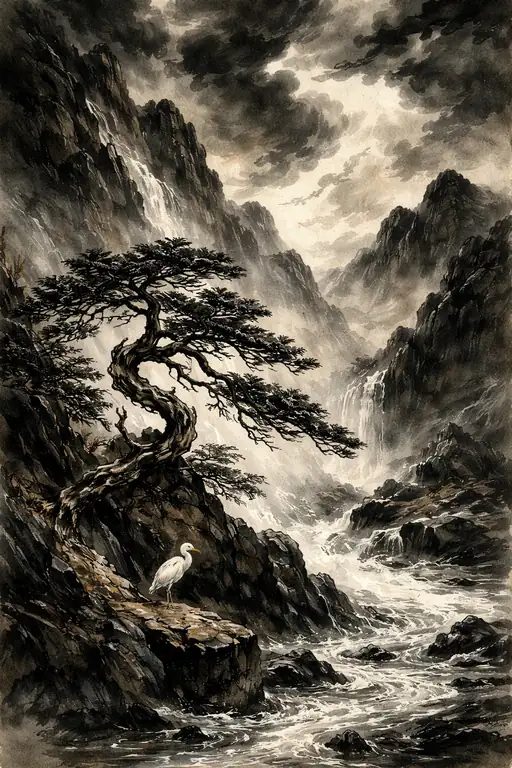 Mystic Peaks and Flight
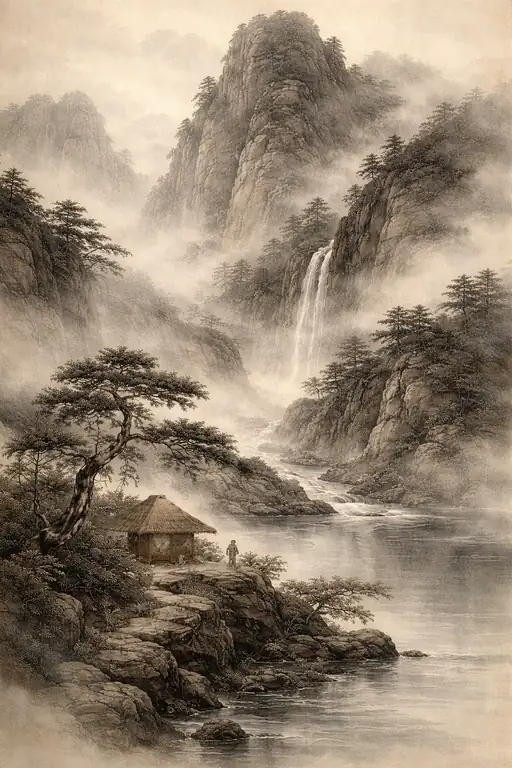 Echoes of the Ink Peaks
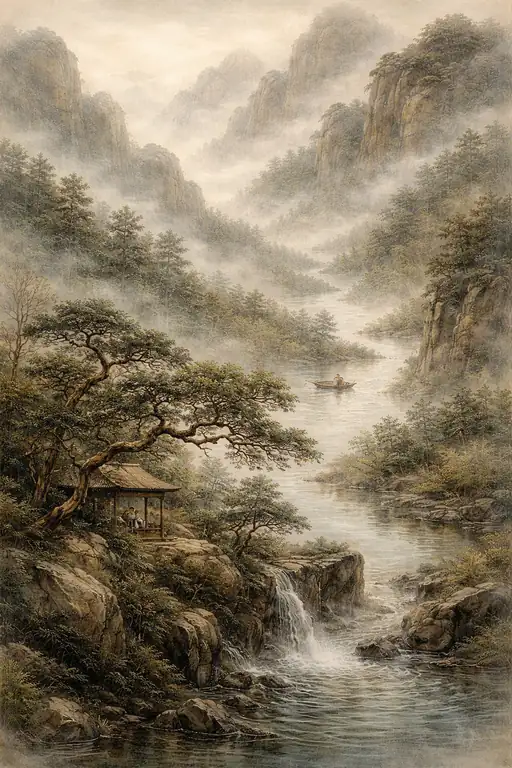 Sanctuary of the Drifting Mist
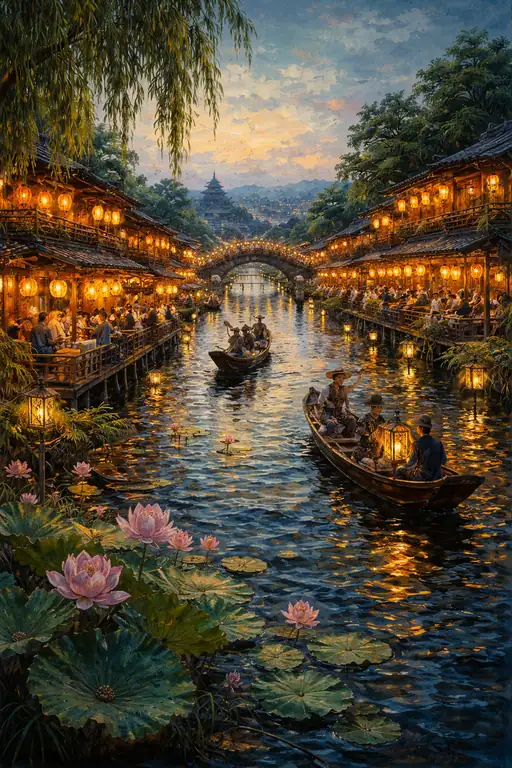 Reflections of the Silent Ryokan
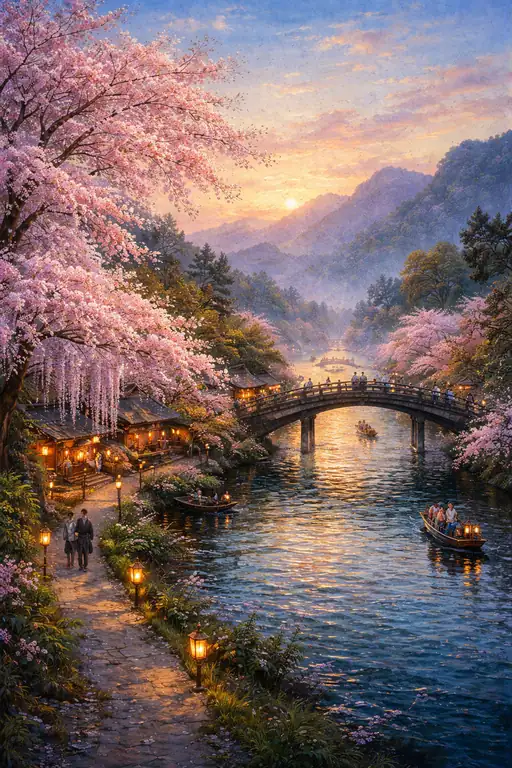 Golden Hour on the Cherry River
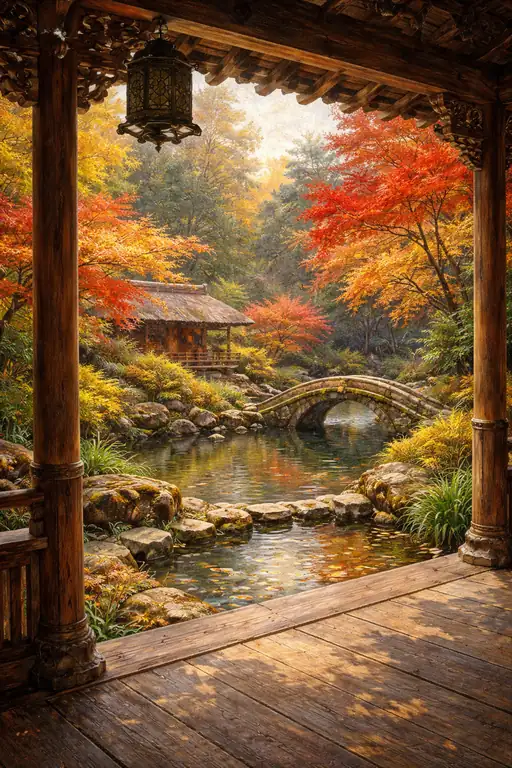 Crimson Reflections
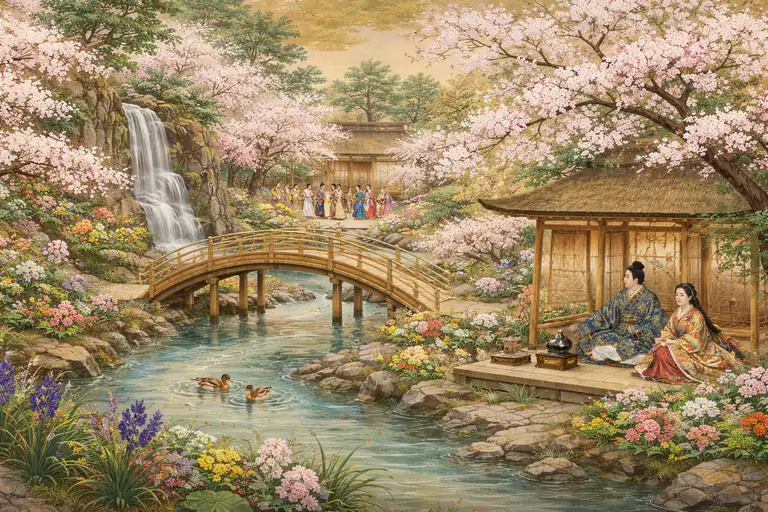 Spring's Gentle Embrace
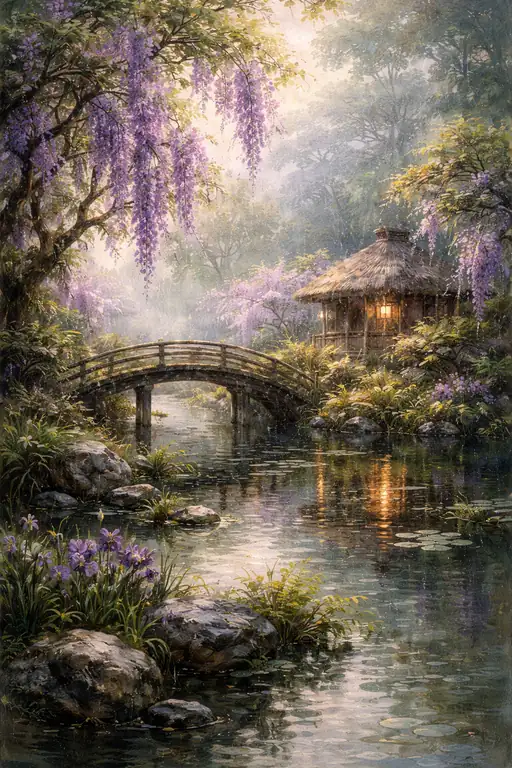 Sanctuary of the Dreaming Wisteria
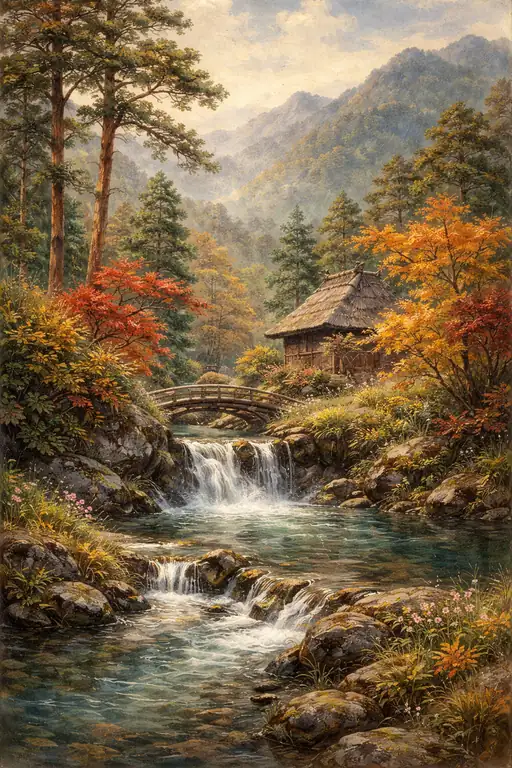 The Song of the Hidden Valley
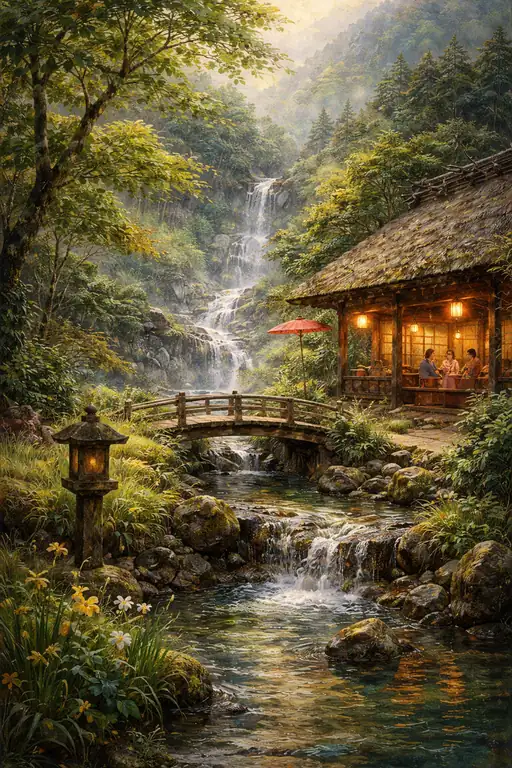 Whispers of the Waterfall
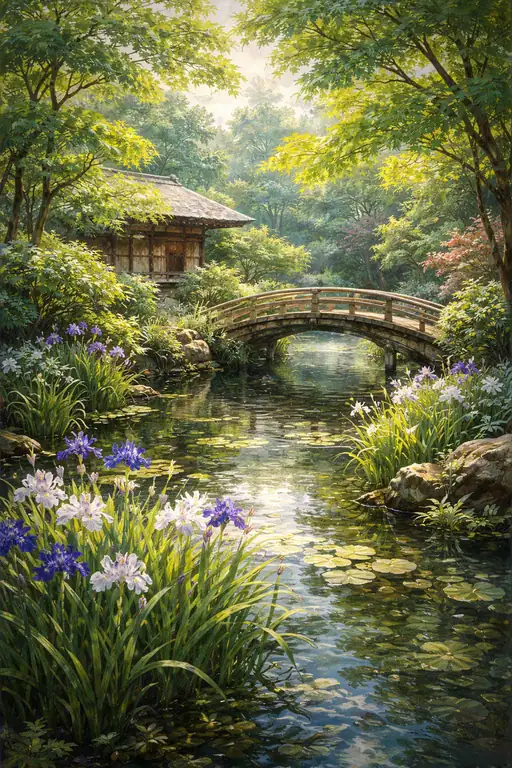 Morning Reflection on the Wooden Arch