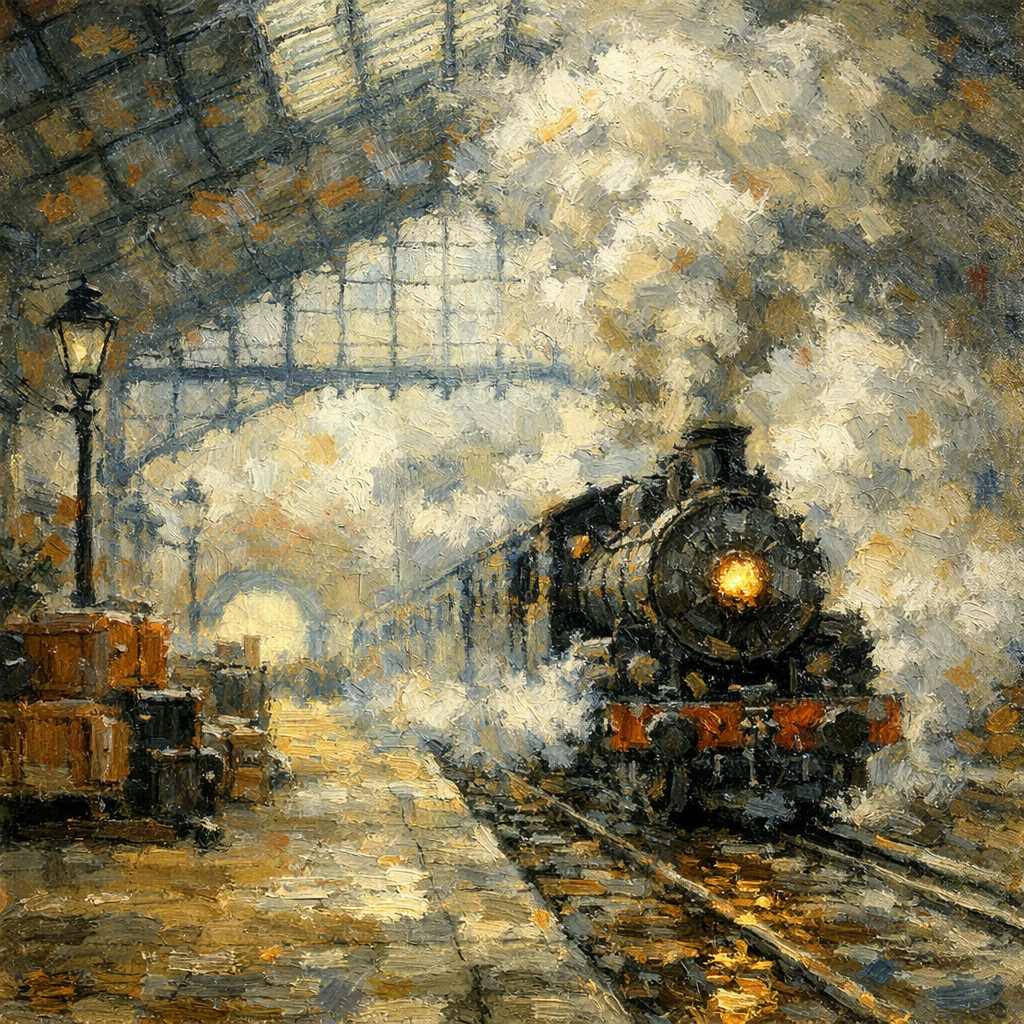
The Iron Breath of a New Dawn
Critique
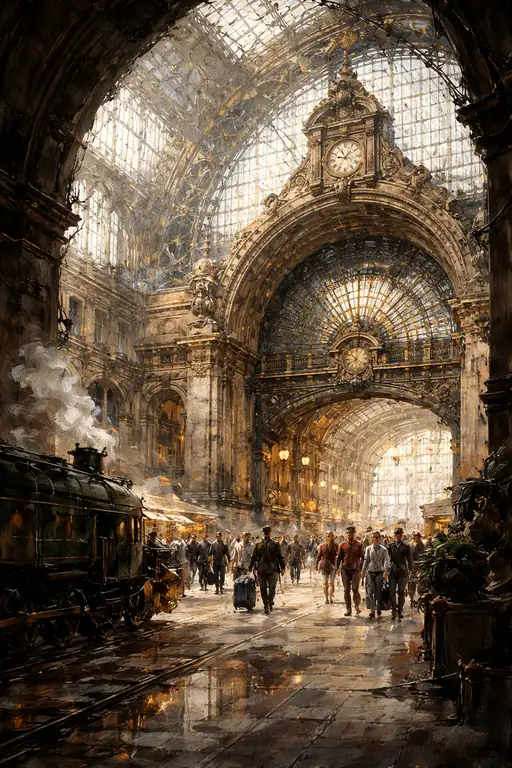
1. Introduction This dynamic painting captures the powerful atmosphere of a nineteenth-century railway station, where a steam locomotive is the central focus. The work is executed in a vigorous impressionistic style, emphasizing the movement of light and the tactile quality of the atmosphere. It conveys the industrial energy and the sensory experience of a bustling transportation hub. 2. Description The composition is dominated by a dark steam engine positioned on the right, emitting thick plumes of smoke that billow toward the glass-and-iron roof. On the left, a lamp post and wooden crates line the platform. Dappled light filters through the vaulted ceiling, illuminating the wet tracks and the misty air in shades of ochre and charcoal. 3. Analysis The artist utilizes a heavy impasto technique, where thick layers of paint create a textured surface that mimics the grit of a train station. The color palette is primarily monochromatic, punctuated by the brilliant orange-yellow glow of the train’s headlight. The diagonal lines of the tracks and platform edges create a strong sense of depth and momentum. 4. Interpretation and Evaluation This work reflects the fascination with modernization and industrial progress characteristic of the Impressionist era. The locomotive is portrayed not just as a machine, but as a monumental force merging with the elements of steam and light. Technically, the artist’s ability to render the weight of the metal alongside the ethereal smoke is highly commendable and effective. 5. Conclusion In summary, the painting is a masterful exploration of light and industrial power. The initial impression of chaotic motion is grounded by the solid form of the engine and the structured perspective of the station. It stands as a vibrant tribute to the age of steam, capturing its physical presence and atmospheric essence in an immersive manner.
Same Subcategory
Similar Artworks
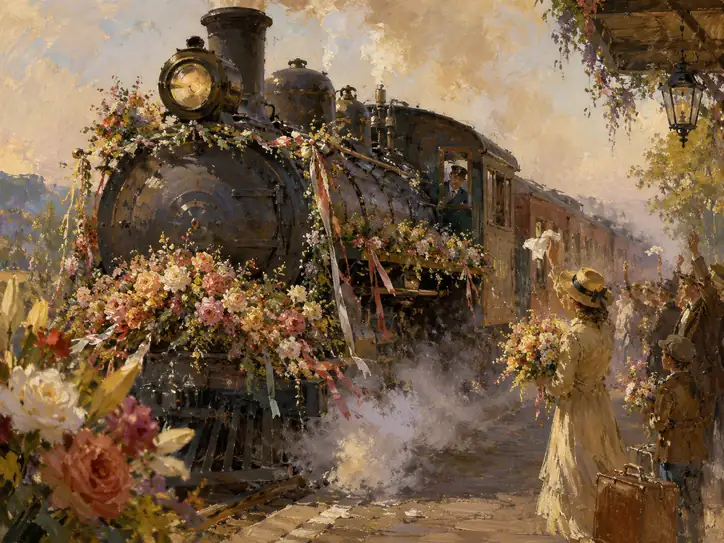 Whispers of a Flowering Journey
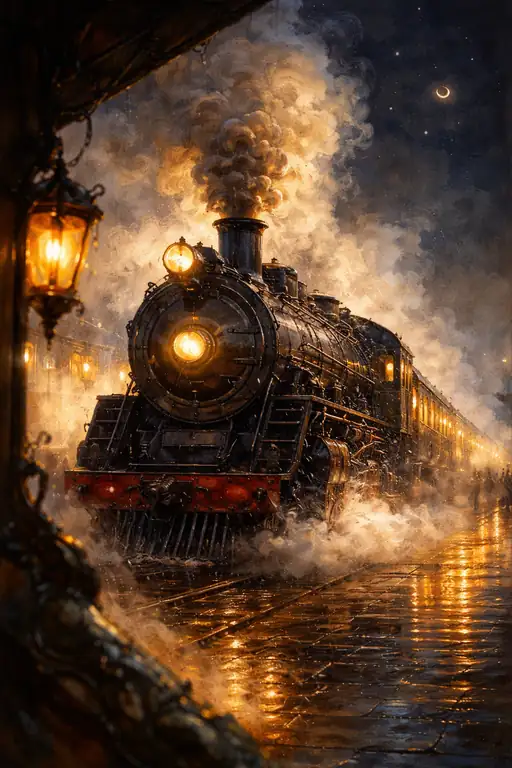 Slumbering Giant Beneath the Stars
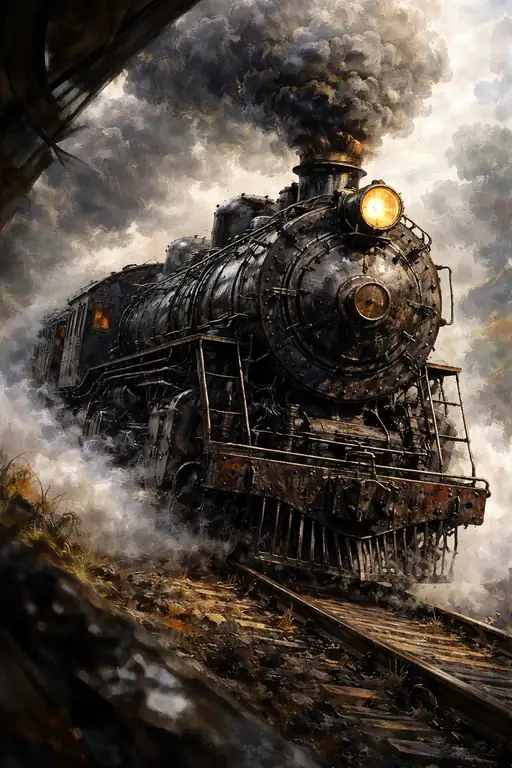 Breath of the Iron Behemoth
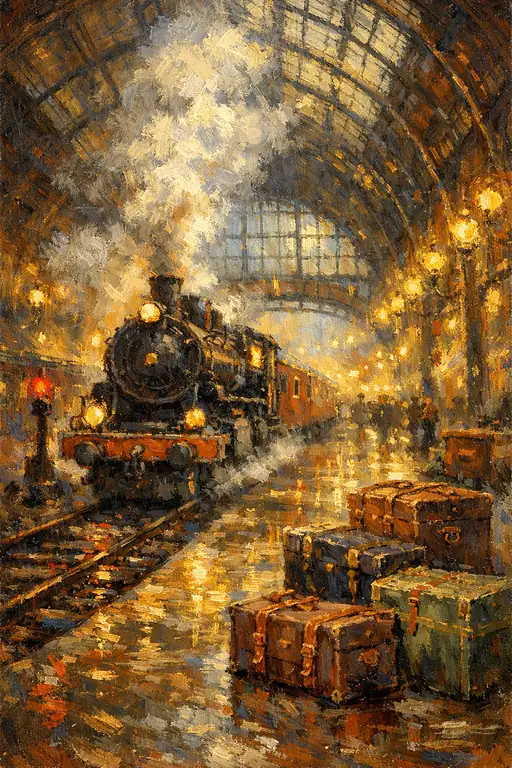 A Fleeting Farewell Amidst the Steam
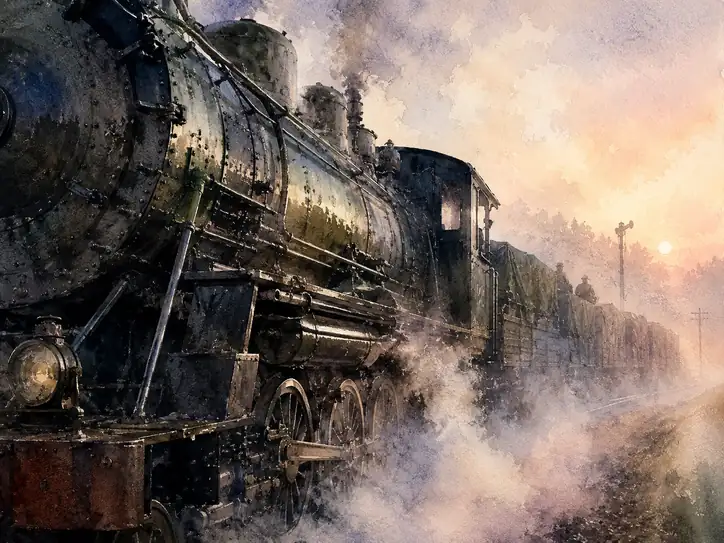 The Iron Pulse in Lavender Mist
 Steel Heart Dressed in Roses
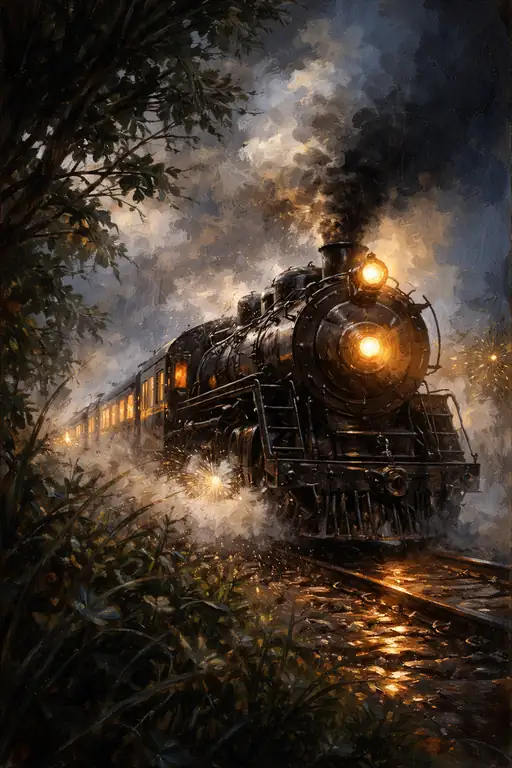 Midnight Momentum: Fire on Iron
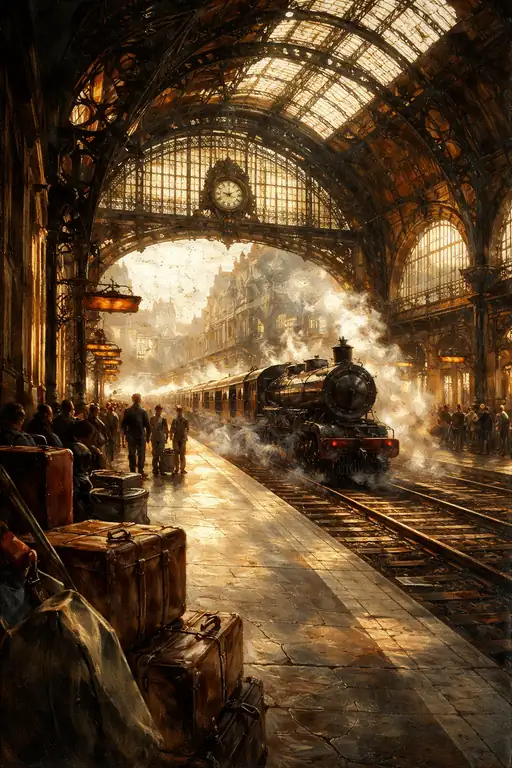 The Golden Age of Steam and Light
 Eternal Departures in the Golden Light
 The Steam Engine's Breath: An Era of Departures