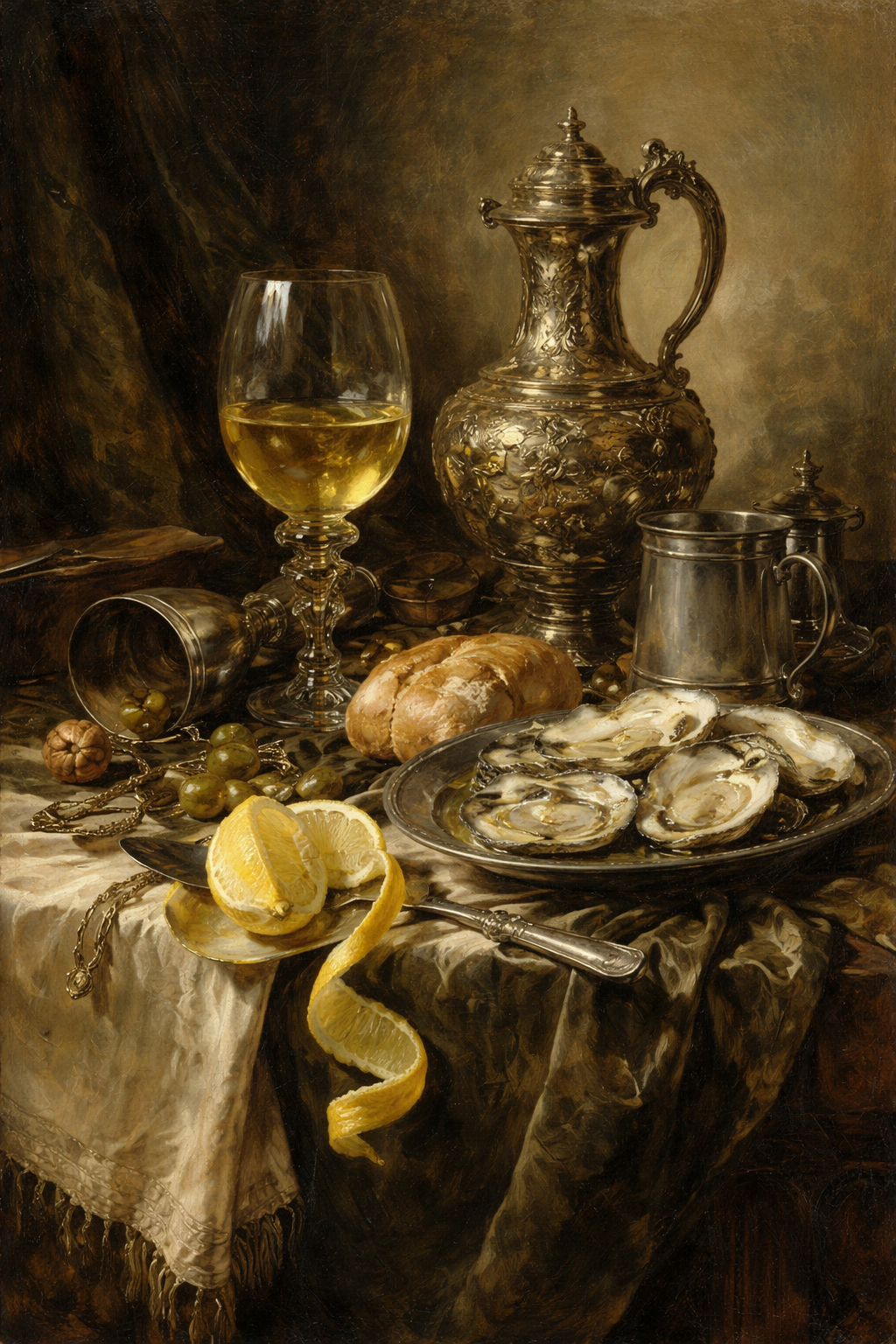
The Fleeting Feast
Critique
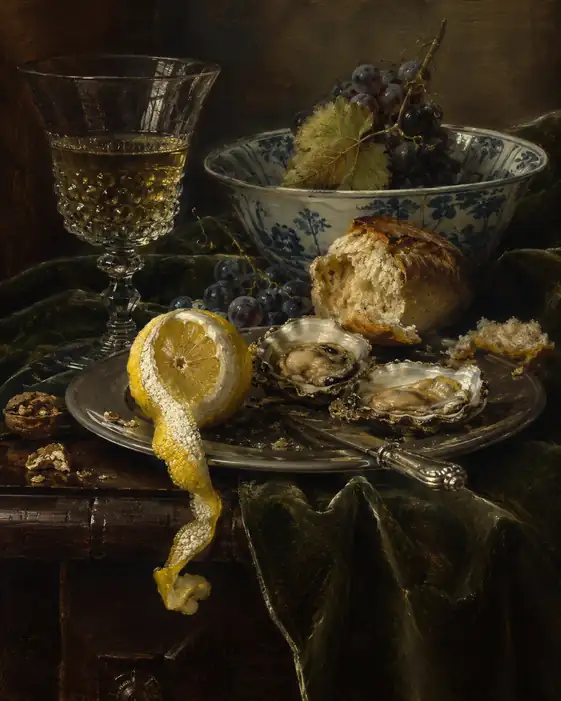
1. Introduction This opulent still life painting masterfully revitalizes the 17th-century Dutch tradition of "pronkstilleven" through its exquisite realism and sophisticated composition. The cool luster of silverware and the vibrant textures of various delicacies are condensed within the intimate space of a dining table. By balancing intellectual restraint with sensory abundance, the work commands the viewer's attention with an overwhelming descriptive power that defines the pinnacle of the genre. 2. Description The composition features a pewter platter of freshly opened oysters, flanked by an intricately decorated silver ewer and a tall glass partially filled with white wine. In the foreground, a partially peeled lemon displays its bright yellow flesh, its zest cascading in a dramatic spiral toward the viewer. Accompanying these are a crusty loaf of bread, scattered olives, a single walnut, and a polished silver knife, all resting upon a finely textured white tablecloth. 3. Analysis The color palette is anchored by the monochromatic tones of the metalware and the deep umber of the background, with the lemon's yellow and the wine's amber providing vital chromatic accents. Light descends from the upper left, meticulously capturing the diverse material qualities of the objects. The contrast between the smooth silver, transparent glass, porous bread, and moist oysters evokes a tactile reality. The stable triangular arrangement is enlivened by the dynamic movement of the lemon peel. 4. Interpretation and Evaluation The depiction of oysters and the cut lemon serves as a traditional symbol of sensory pleasure and luxury, while simultaneously hinting at their ephemeral nature. This reflects a contemporary engagement with the "vanitas" theme, prompting a reflection on the transience of worldly wealth and the inevitability of time. The artist's technical excellence transcends mere mimesis, reaching a depth that seems to capture the very essence of matter. The precision in rendering light and texture is of exceptional quality. 5. Conclusion This work successfully honors the formal rigor of classical still life while offering a universal beauty that resonates with modern sensibilities. The harmony produced by meticulous observation and extraordinary skill breathes life into the static world of inanimate objects. Through the seamless integration of technique and philosophy, the painting offers both profound insight and immense visual pleasure. It stands as a highly accomplished masterpiece that embodies a truly timeless aesthetic.
Same Subcategory
Similar Artworks
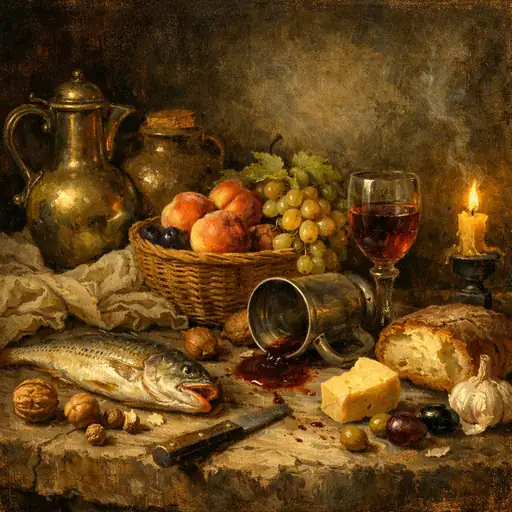 Fish, Fruit, and Spilled Wine
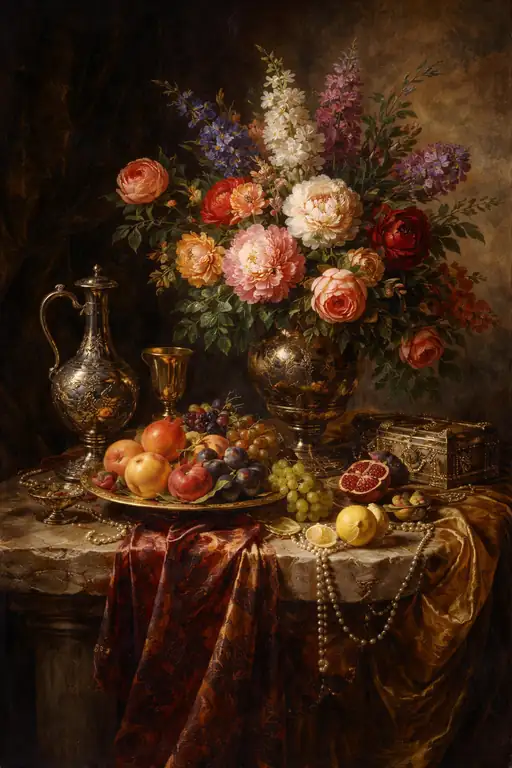 Flowers, Fruits, and Precious Objects
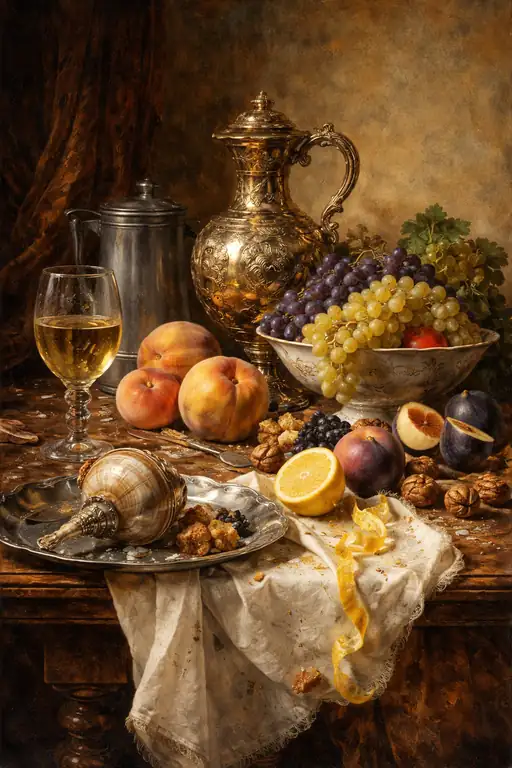 Classical Still Life with a Golden Ewer, Fruit, and Wine
 Fragile Pleasures on Pewter
 Elegance Flowing: A Quiet Luxury of Wine and Silver
 Tears of Time in the Silver Silence
 Sunlight Spilled in Crimson Seeds
 Amber Slumber, A Sated Silence
 Echoes of a Forgotten Bounty
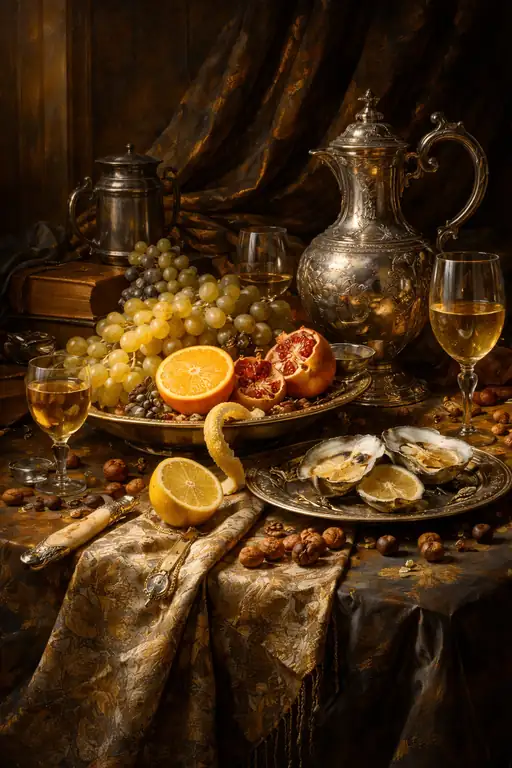 Vanitas in Silver and Crimson