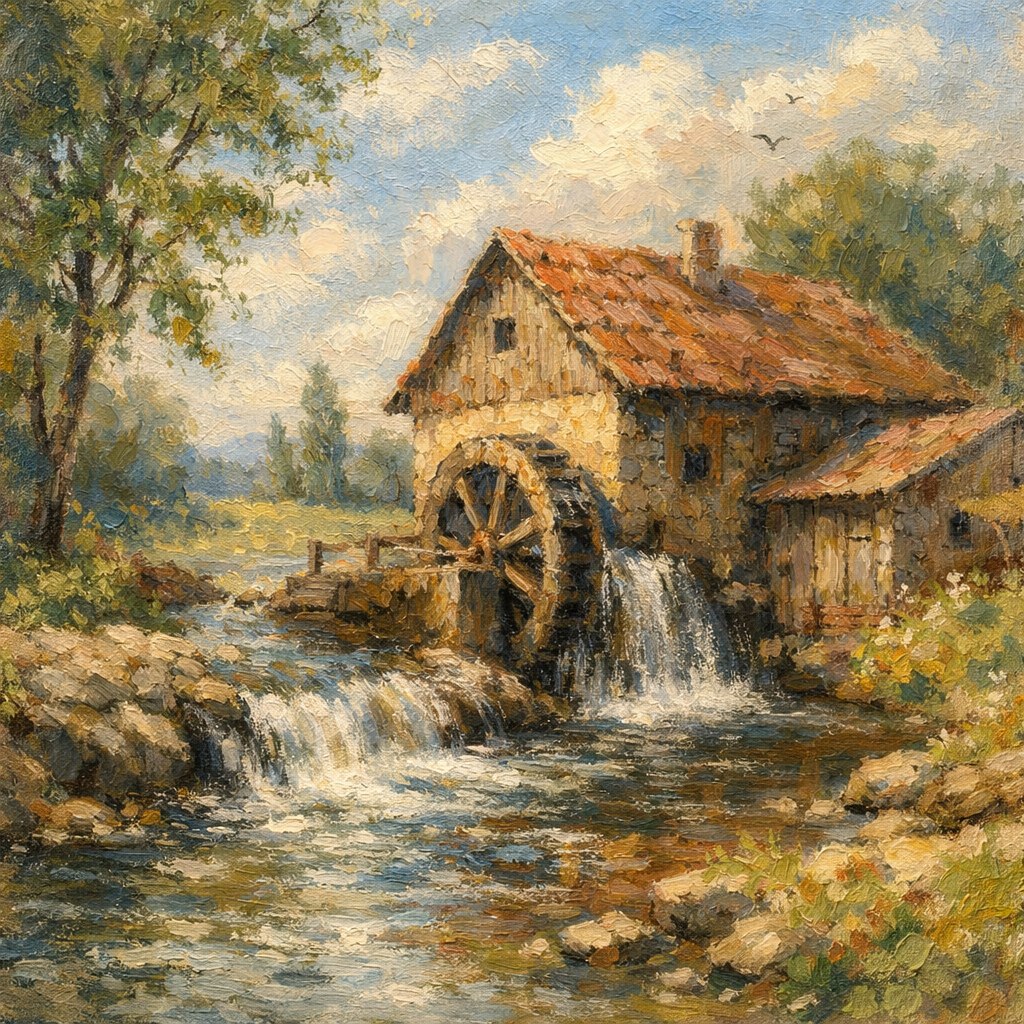
Rustic Watermill and Stream on a Sunny Day
Critique
1. Introduction This square oil painting presents a charming view of a rustic watermill, rendered in a style that draws heavily from Late Impressionist techniques. The work focuses on the play of natural light across moving water and weathered stone, creating a scene that feels both vibrant and nostalgic. It captures a pastoral moment where the mechanical rhythm of the mill wheel integrates seamlessly with the surrounding landscape. 2. Description The central focus of the composition is a stone and timber watermill with a distinctive red-orange tiled roof. A large wooden waterwheel is positioned on the side, with water cascading from its paddles into a rushing stream below. In the foreground, the water flows over a low rocky ledge, creating a series of small waterfalls. The background features a bright blue sky filled with soft, white clouds and two birds in flight. To the left, several trees frame the scene, while the surrounding area is covered in lush, sun-drenched vegetation. 3. Analysis The artist uses short, thick brushstrokes to create a highly textured surface, characteristic of the impasto technique. This approach effectively conveys the kinetic energy of the splashing water and the rough, uneven surfaces of the stone mill. The color palette is composed of warm earth tones, such as ochre and sienna, which are complemented by the cool blues of the sky and water. Light is the primary organizing element, with bright highlights on the water and the mill's side creating a strong sense of a sunny afternoon. 4. Interpretation and Evaluation This painting can be interpreted as a celebration of pre-industrial harmony, where technology and nature work in tandem. The weathered appearance of the mill suggests a long history of human interaction with the environment. Technically, the execution is successful in its ability to capture the transient quality of light and water. The composition is well-balanced, with the mill providing a solid anchor against the fluid movement of the stream and the expansive sky. The use of color is particularly effective in evoking a sense of warmth and peacefulness. 5. Conclusion The work succeeds in transforming a traditional rural subject into a dynamic exploration of texture and light. Initial observations of a simple building give way to a deeper appreciation for the painterly application of color and the convincing rendering of atmospheric conditions. Through detailed analysis, the unity of the scene's formal elements becomes apparent, reinforcing the sense of pastoral tranquility. This piece remains a strong example of how Impressionist influences can elevate a common landscape into a rich sensory experience.
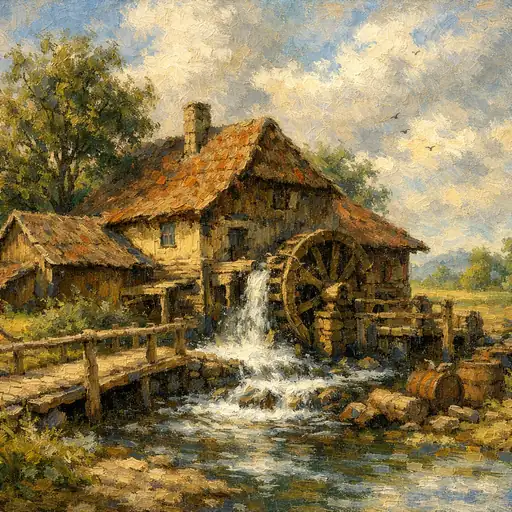 The Mill's Bright Pulse
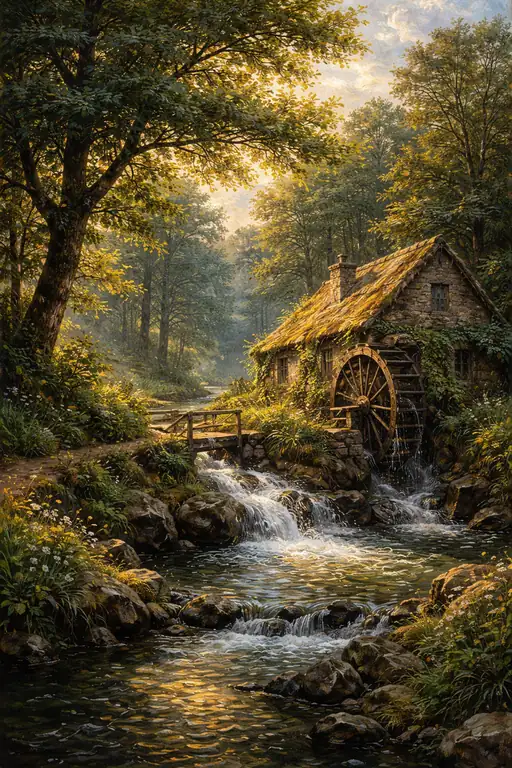 Sanctuary of the Sunbeams
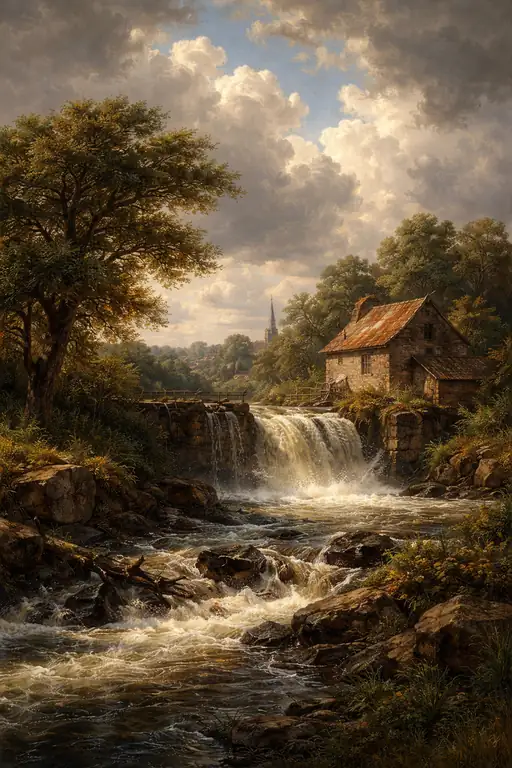 The Timeless Current
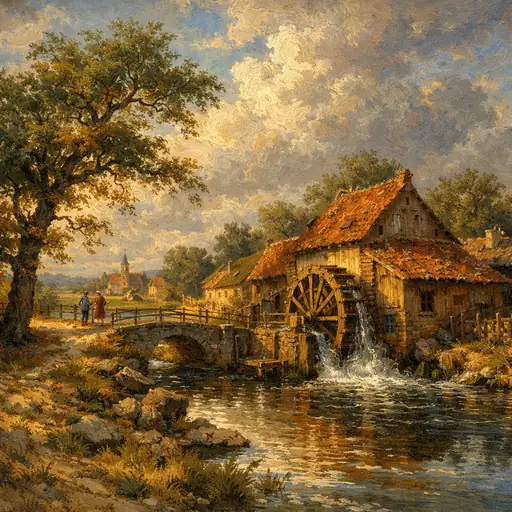 Silent Watcher by the River
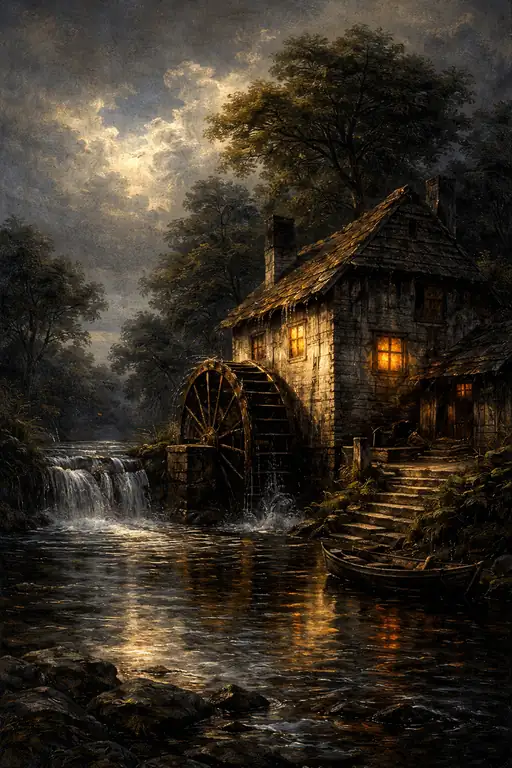 Moonlight over the Restless Wheel
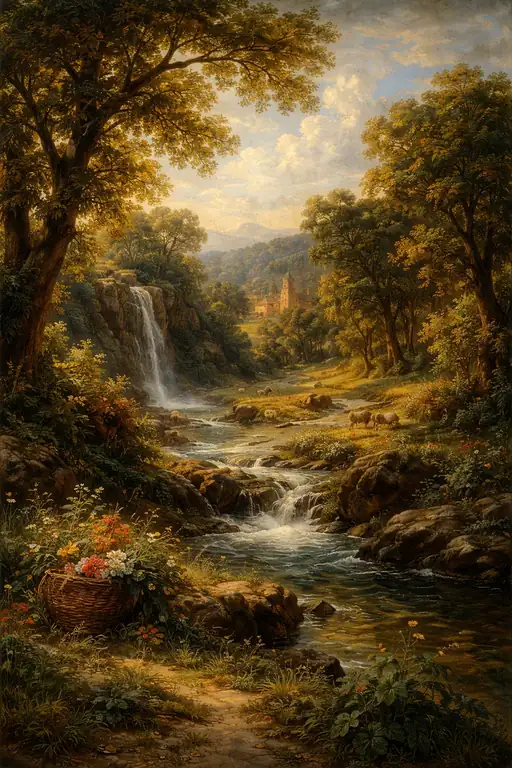 Pastoral Landscape with a Flower Basket
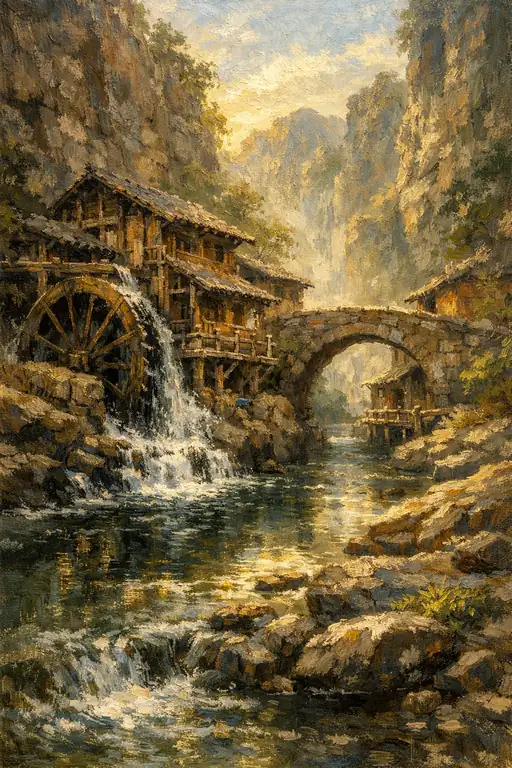 The Eternal Wheel of Time
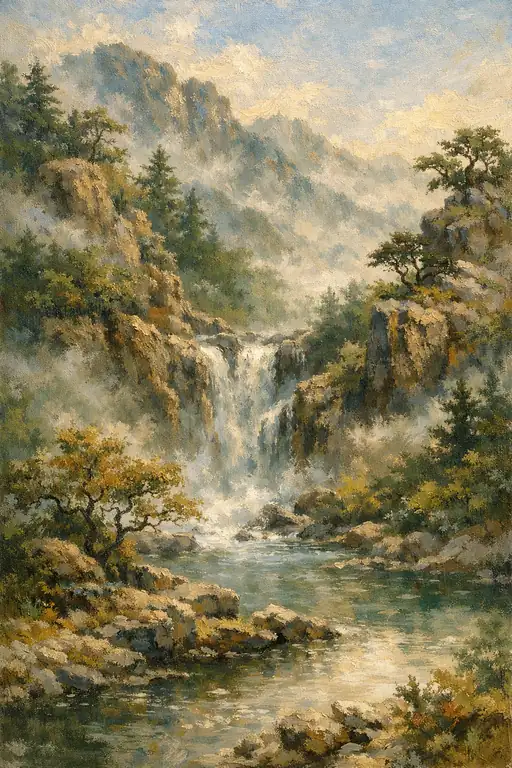 Bathed in the Light of the Crystal Pool
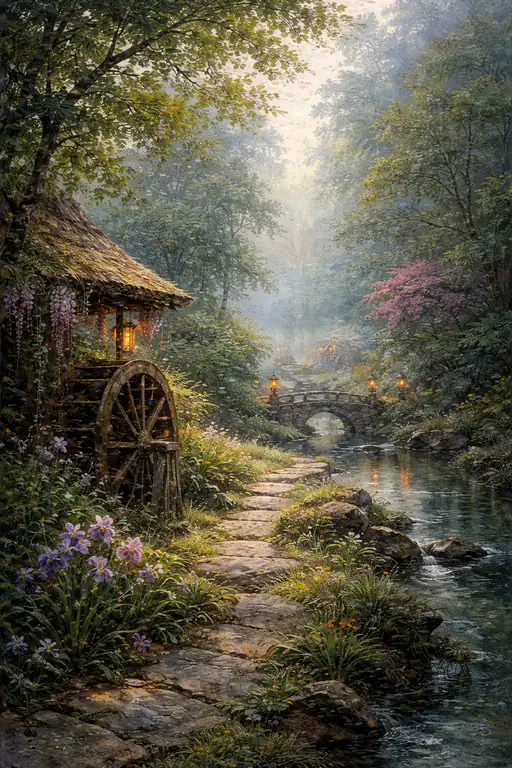 Whispers of the Waterwheel
 Journey to the Golden Castle