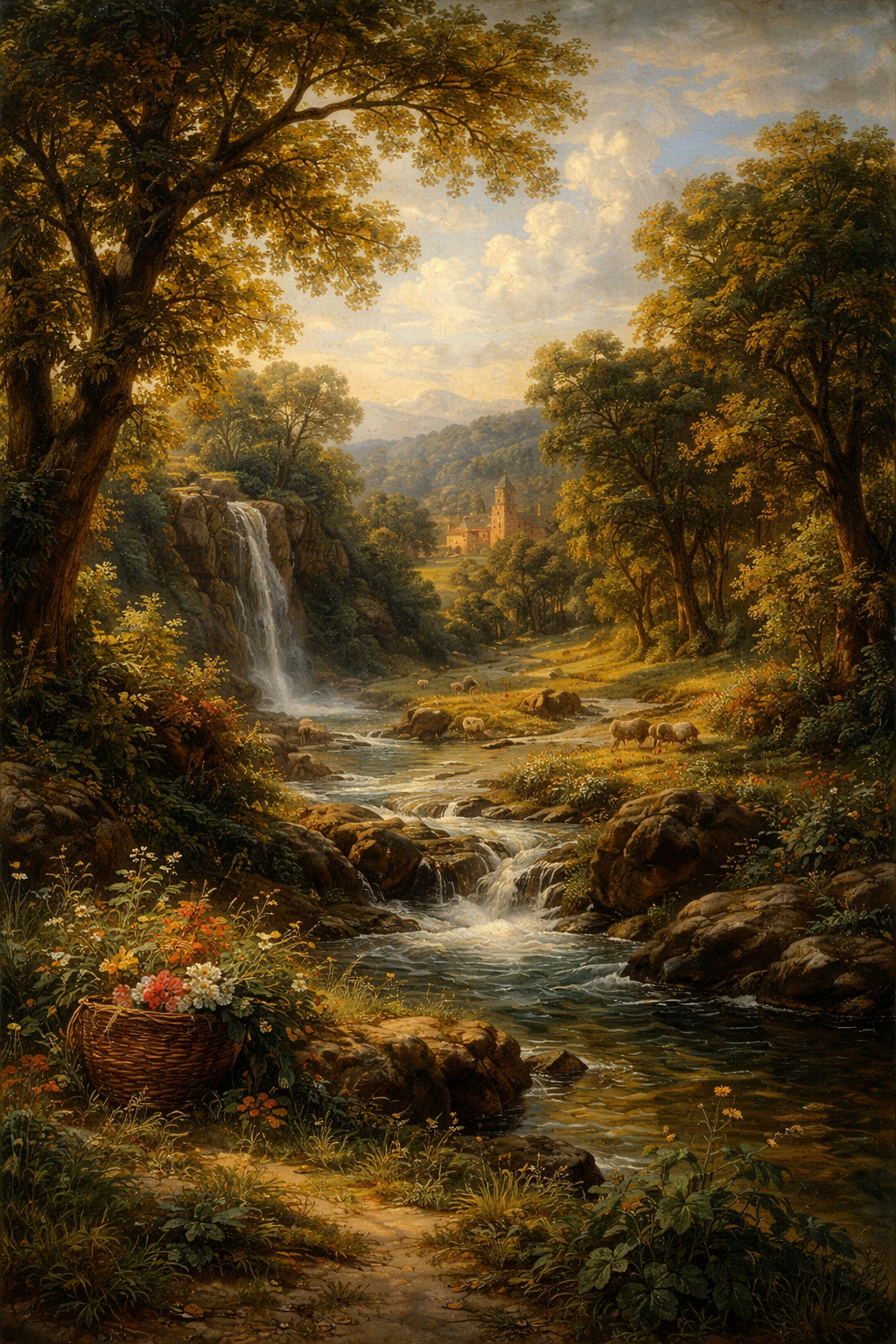
Pastoral Landscape with a Flower Basket
Critique
1. Introduction This detailed oil painting exemplifies the nineteenth-century tradition of pastoral landscape art, presenting a harmonious vision of a sun-drenched valley. The composition masterfully integrates diverse natural elements—a rushing stream, a gentle waterfall, and ancient trees—with subtle signs of human presence. By capturing a moment of perfect stillness and radiant light, the artist creates an idealized world that feels both grounded in reality and elevated by poetic imagination. This work invites the viewer to step into a serene environment where nature and civilization exist in quiet accord. 2. Description In the immediate foreground, a woven wicker basket overflowing with vibrant red, white, and yellow flowers rests upon a rocky bank beside a clear stream. The water flows over small rapids, leading the eye to a graceful waterfall cascading from a rocky ledge on the left. In the middle ground, a flock of sheep grazes peacefully in a sunlit meadow, while a winding path disappears into the distance. The background features a charming stone church or manor with a prominent tower, nestled among dense groves of trees under a bright, cloud-dappled sky. 3. Analysis The artist utilizes a vertical composition that emphasizes the height of the trees and the downward movement of the water, creating a dynamic yet stable structure. The lighting is particularly effective, with the foreground remaining in cool, shaded tones that contrast sharply with the brilliant golden light illuminating the central valley. This technique of "chiaroscuro" in a landscape context adds significant depth and a sense of atmosphere. Each element, from the delicate petals of the flowers to the rugged texture of the rocks, is rendered with meticulous precision and fine brushwork. 4. Interpretation and Evaluation This painting can be interpreted as a celebration of the "locus amoenus" or pleasant place, a recurring theme in Western art that symbolizes peace and abundance. The inclusion of the church and the grazing sheep suggests a moralized landscape where divine order and human stewardship are in balance. Technically, the artist demonstrates a superb command of perspective and light, managing to unify a complex array of details into a single, coherent vision. The work is highly successful in evoking a sense of nostalgic longing for a pure, unblemished connection to the natural world. 5. Conclusion While the initial gaze is drawn to the brilliant light of the valley, a deeper appreciation reveals the careful consideration given to the smaller, intimate details in the foreground. The artist has successfully managed to balance the grand scale of the mountains with the quiet beauty of a basket of flowers. Ultimately, the painting stands as a timeless reminder of the restorative power of nature when viewed through a lens of gratitude and artistic skill. It remains a profound achievement in the depiction of a tranquil, idealized sanctuary.
Same Subcategory
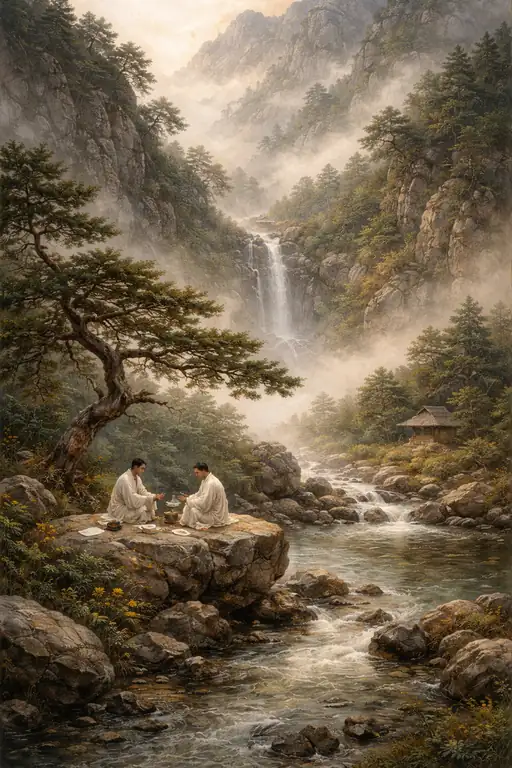 Silent Wisdom by the Cascading Waters
Similar Artworks
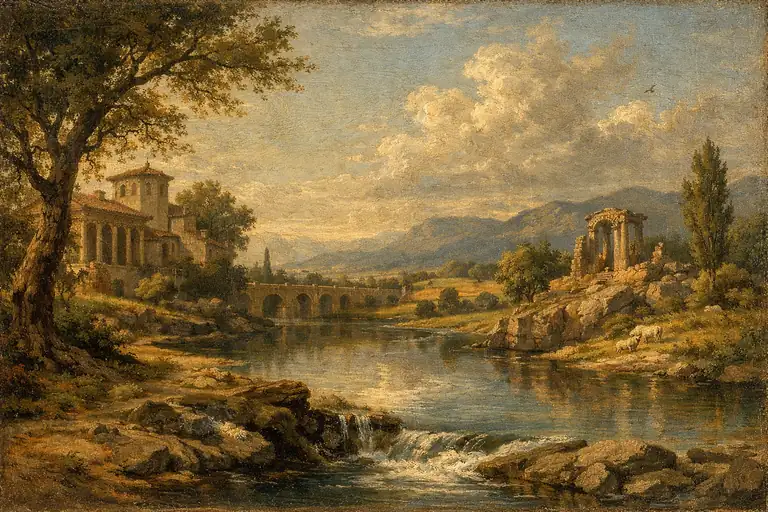 Villa, Bridge, and Ruins
 Awakening of the High Peaks
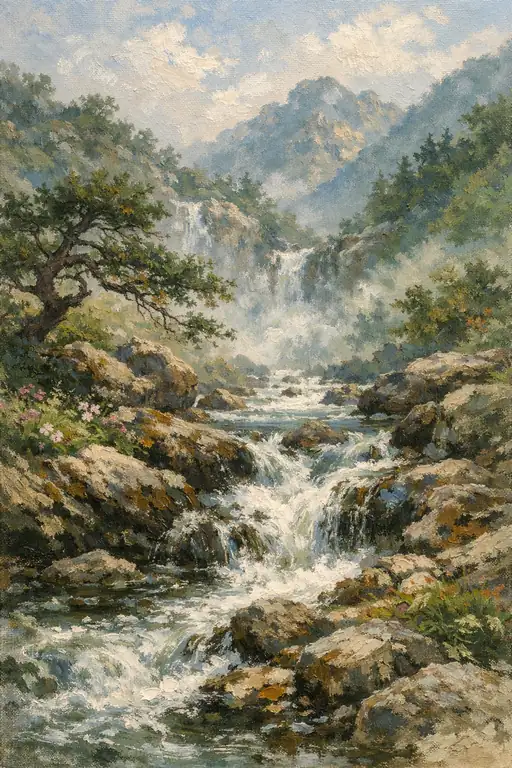 Roar of the Mountain Torrent
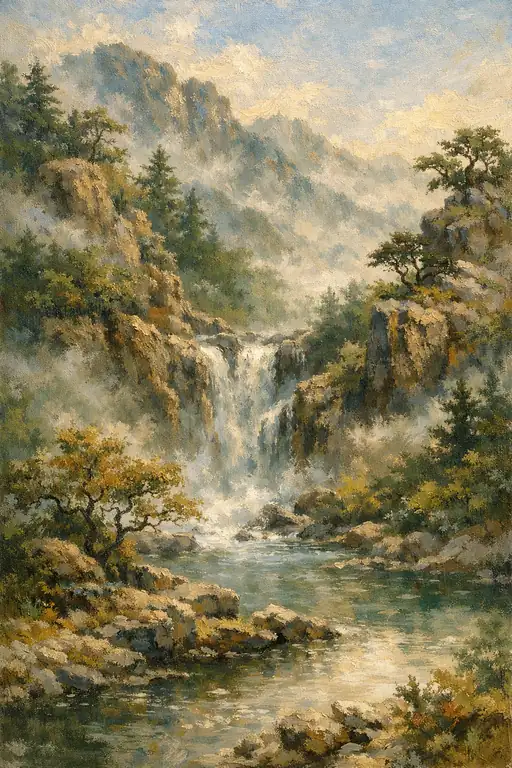 Bathed in the Light of the Crystal Pool
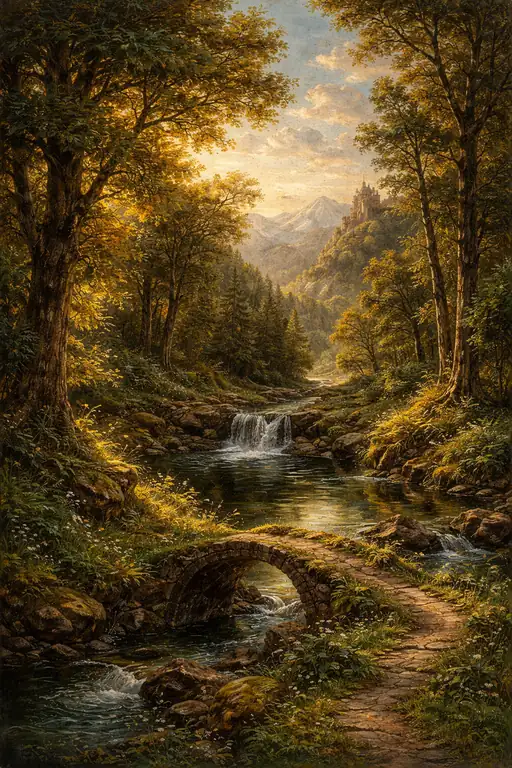 Journey to the Golden Castle
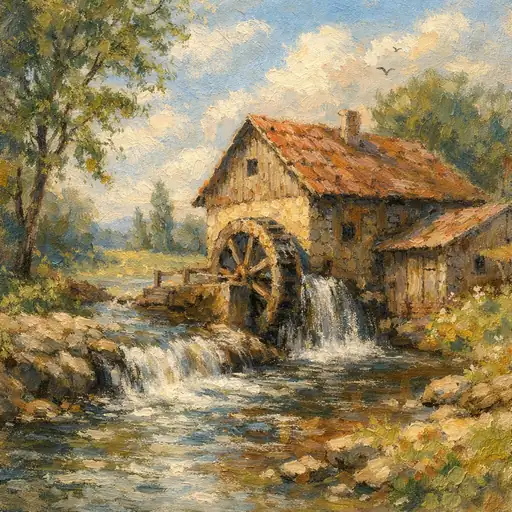 Rustic Watermill and Stream on a Sunny Day
 Where Silence Breathes
 Whispers of the Golden Cascade
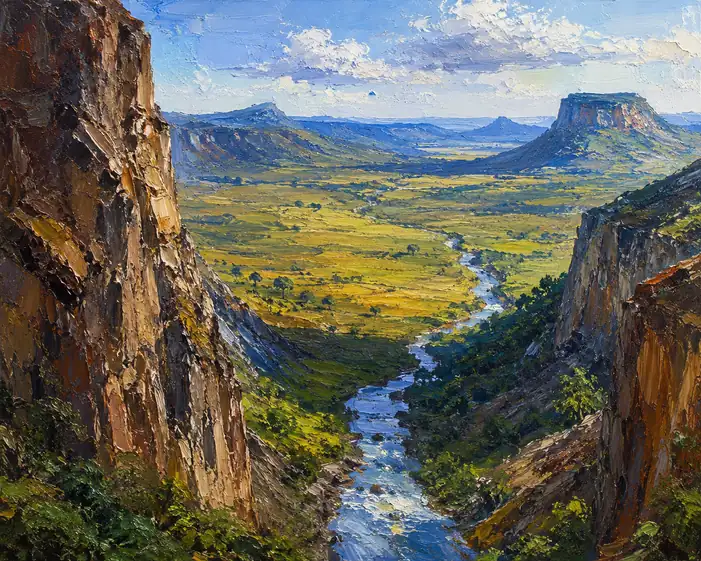 Corridor of the Ancient Earth
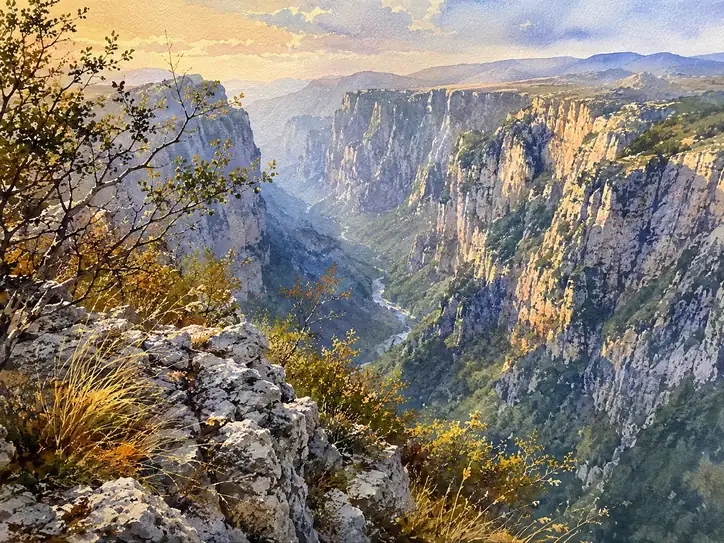 Echoes of the Golden Chasm