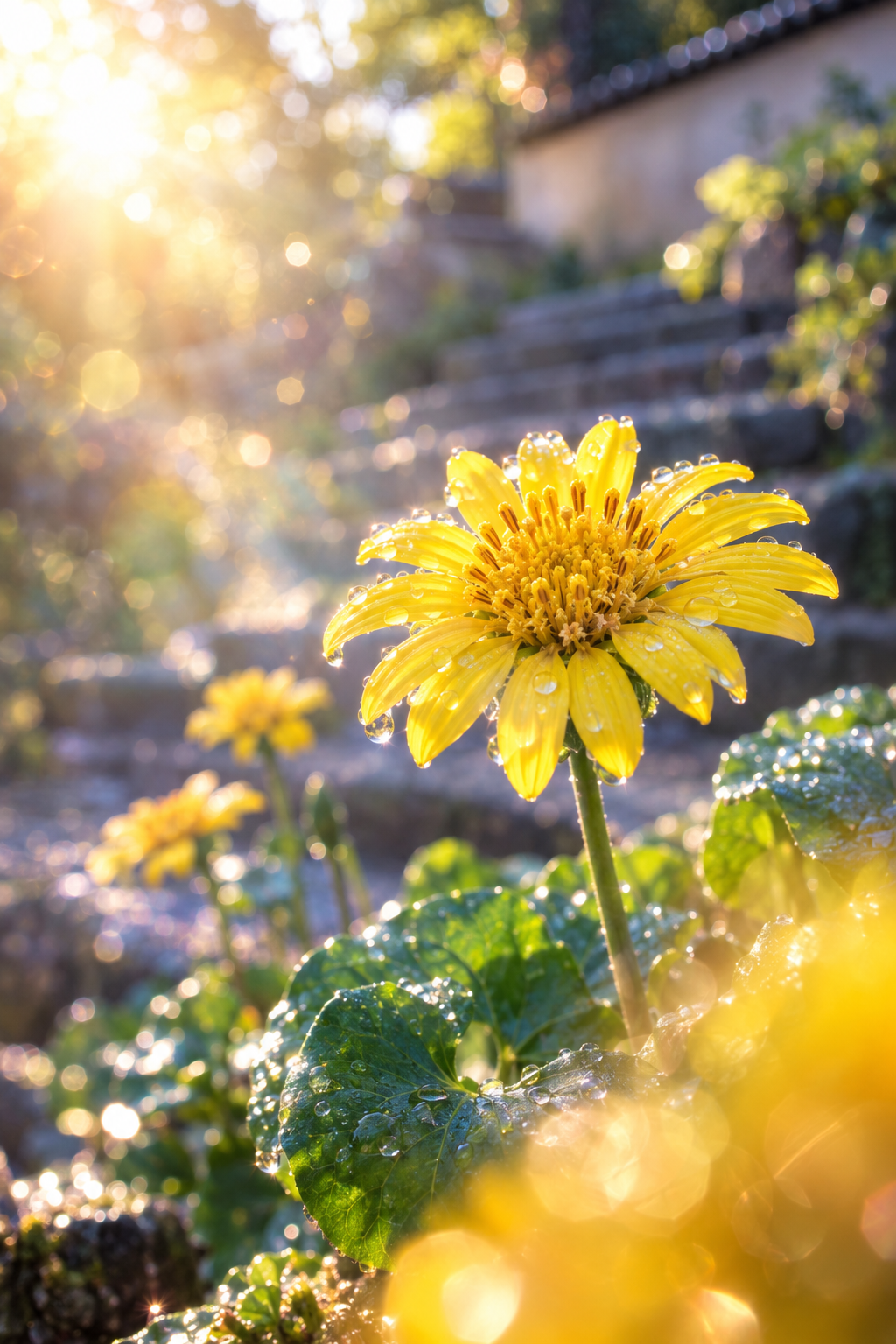
Golden Bloom by the Temple Steps
Critique
1. Introduction This vibrant botanical painting depicts a blooming Japanese silverleaf flourishing beside mossy stone steps at a quiet temple garden in late autumn. Positioned in the center-right foreground, the yellow flowerhead turns toward the morning sun, drenched in glistening dewdrops. Broad, glossy foliage and soft sunlight evoke an aura of serene natural vitality. 2. Composition and Space The spatial organization employs a low vantage point that dramatizes the sturdy flower stalk rising from rounded basal leaves. In the background, stone steps ascend toward a traditional earthen wall capped with tiles, establishing architectural depth. Sunbeams stream down diagonally from the upper left, while blurred golden flowers in the foreground frame the blossom. 3. Light and Color The palette is centered on the cheerful contrast between luminous yellow petals and the deep green of kidney-shaped leaves. Strong morning backlight illuminates water droplets like liquid crystals, setting petal margins aglow. In the upper left, warm flares and hexagonal bokeh dissolve the canopy into a radiant golden haze. 4. Texture and Technique Meticulous brushwork distinguishes diverse surface qualities of the subject. The leathery texture and prominent veins of foliage contrast with the ribbed structure of yellow petals. Each spherical dewdrop is modeled with sharp highlights, while the rough texture of weathered stone steps recedes into atmospheric blur. 5. Conclusion Through its dazzling portrayal of morning light and moisture, the painting celebrates the resilient beauty of late-blooming autumn flora. The juxtaposition of ancient temple stonework and a vibrant wild blossom honors the cyclical endurance of nature. It stands as an uplifting tribute to life's quiet persistence before winter's arrival.
Same Subcategory
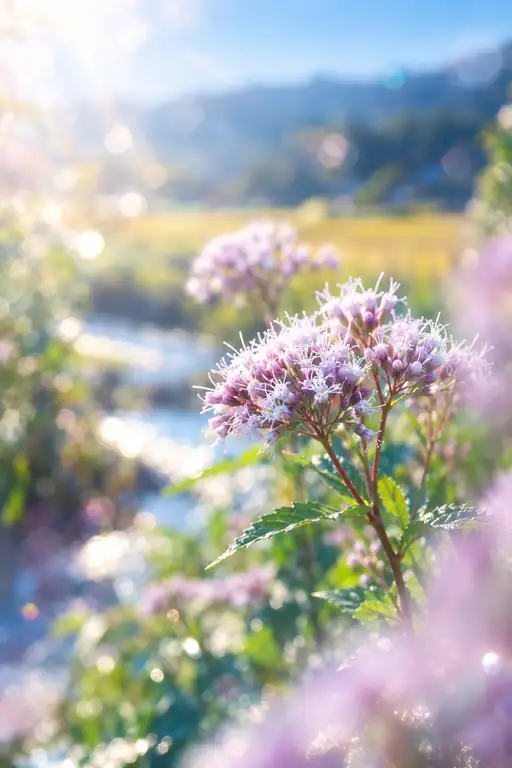 Breeze of the Autumn Mistflower
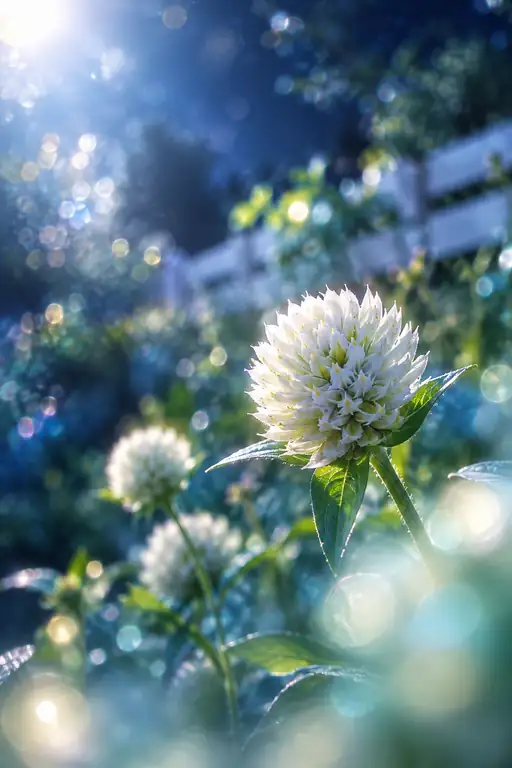 Silver Globe in the Sapphire Morning
Similar Artworks
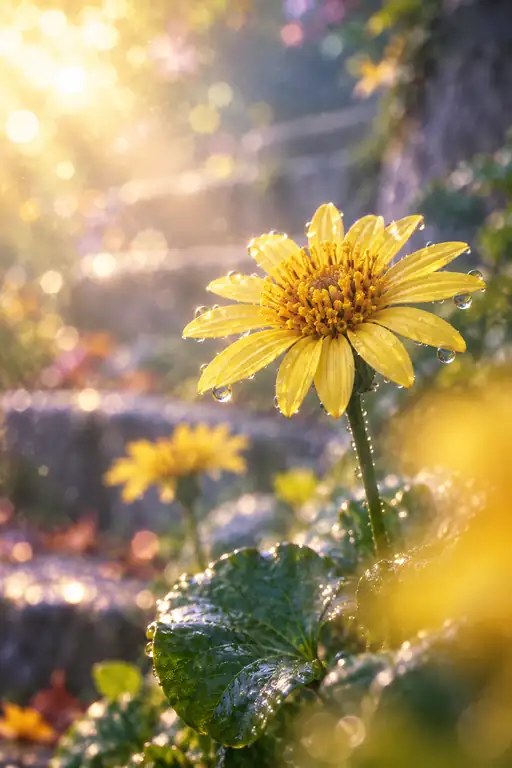 Drops of Sunlight on the Temple Steps
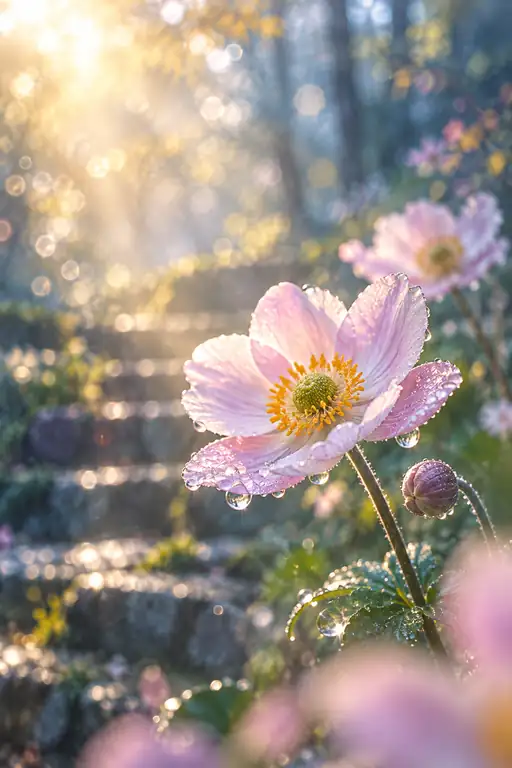 Dewlit Blossom on the Ancient Steps
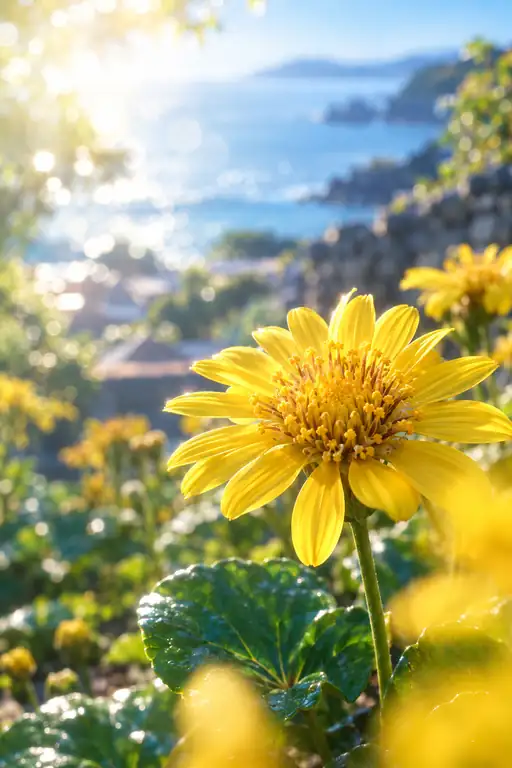 Gilded Petals Facing the Ocean Light
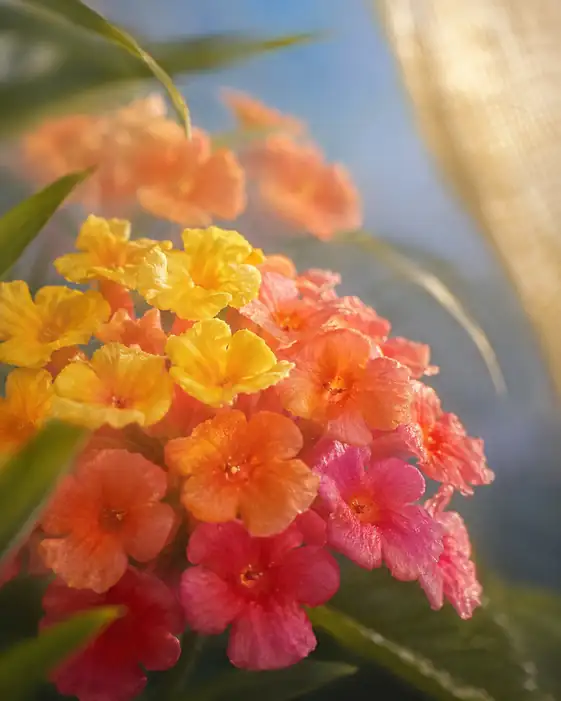 Morning Melody of Changing Hues
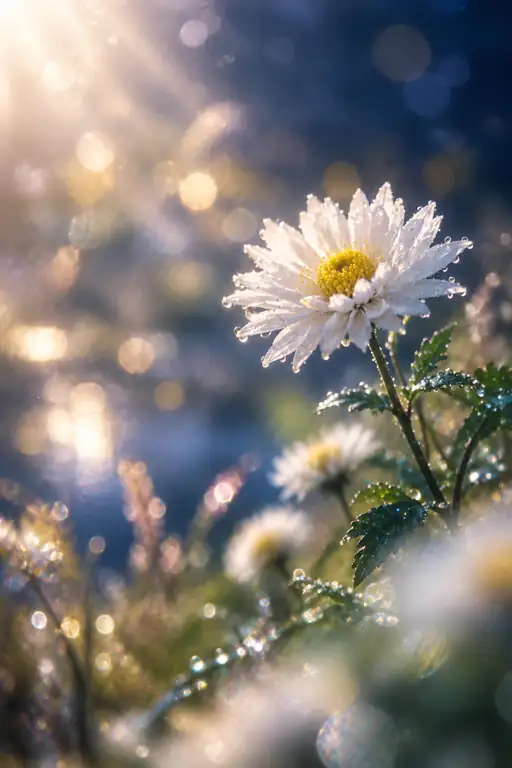 Crown of Frostlit Pearls
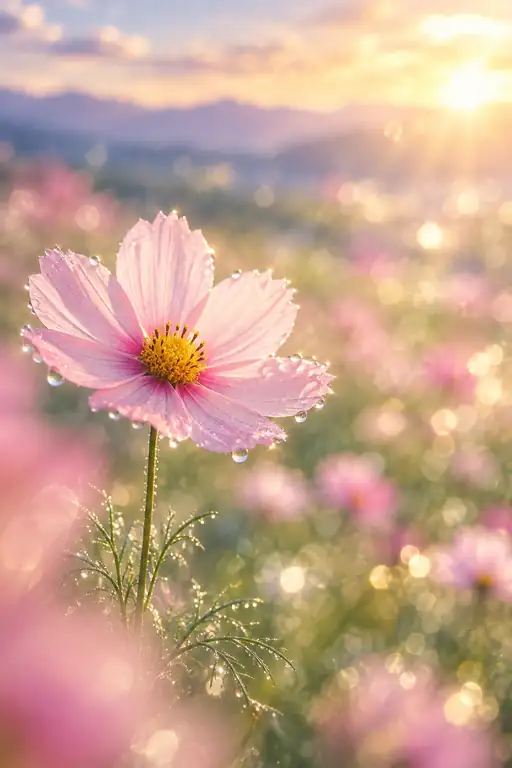 Jewels of Dawn on the Meadow Cosmos
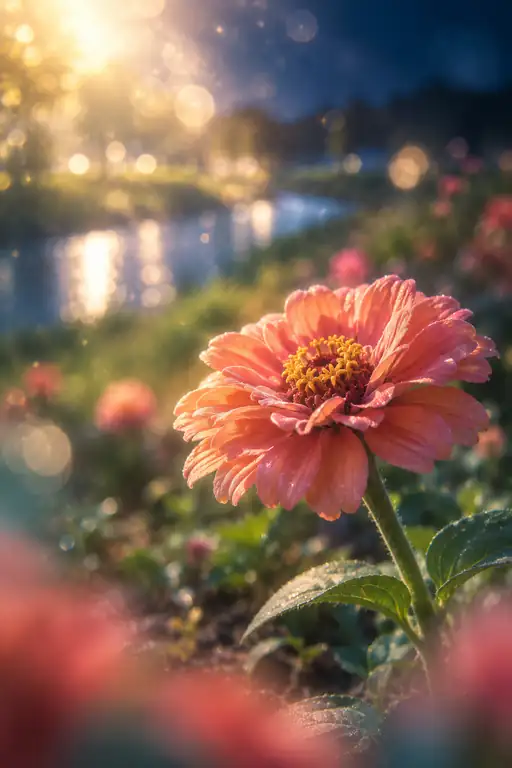 Crown of Petals by the Creek
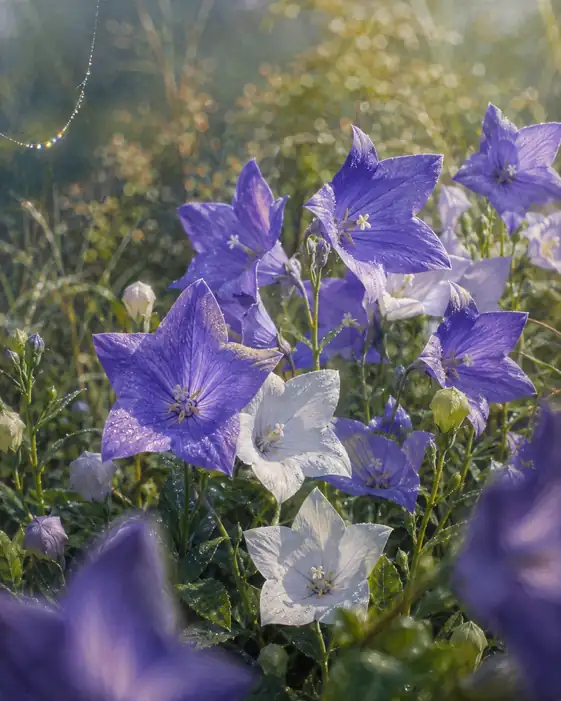 Dew-Laden Web and Purple-White Bellflowers in Morning Light
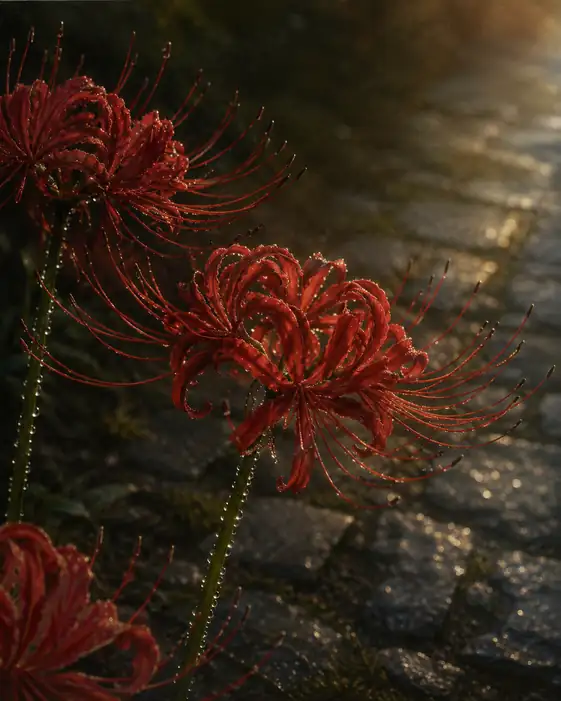 Dew Pearls on the Cobblestone Path and Scarlet Lycoris
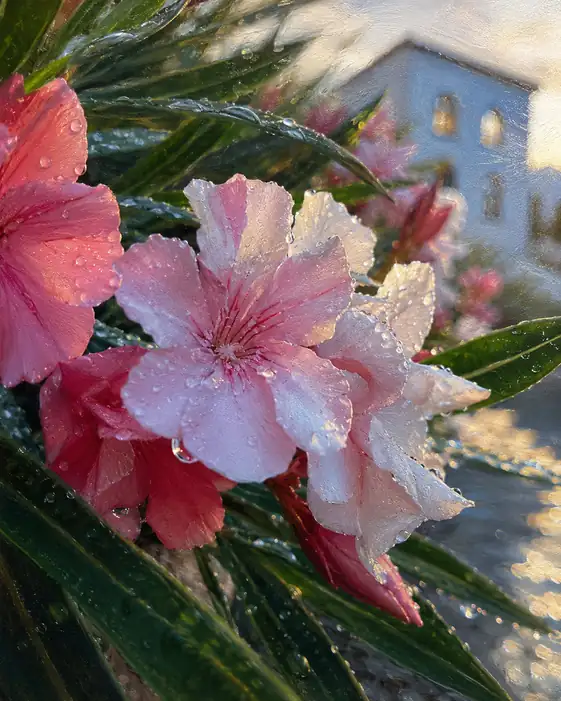 Morning Dew upon the Oleander