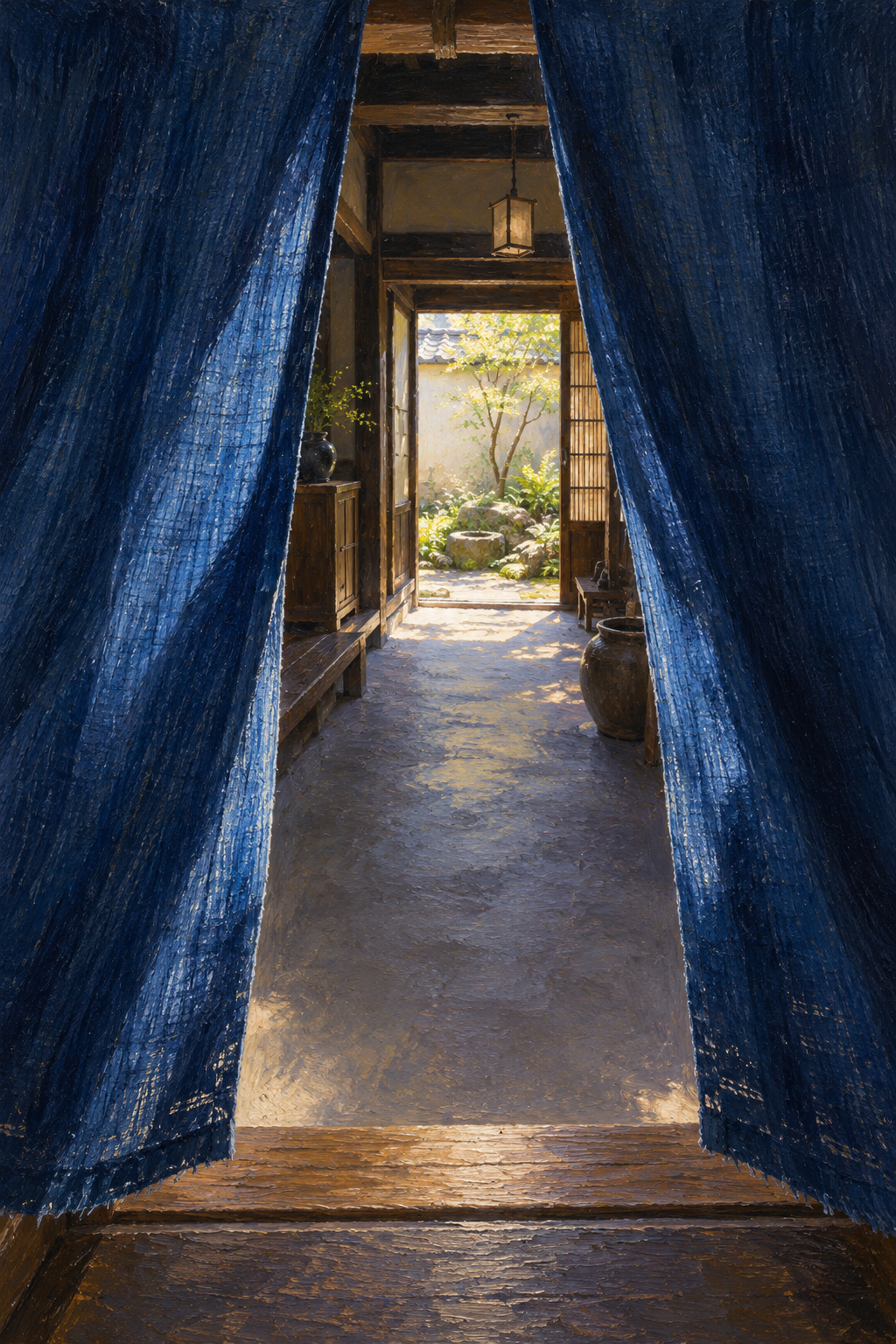
Parting the Indigo Stillness
Critique
1. Introduction This evocative interior painting captures a traditional Japanese machiya, looking through parted indigo noren curtains toward a sunlit courtyard garden. The striking contrast between shadowy domestic coolness and radiant outdoor greenery celebrates architectural serenity and classical Japanese aesthetics. 2. Description Monumental deep-indigo linen curtains frame both sides of the foreground, their coarse weave catching subtle light. Between them opens an earthen hallway receding toward a doorway framing an illuminated garden. Within this sanctuary, delicate leafy branches, mossy groundcover, and a stone basin thrive. Along the corridor, a glazed ceramic jar, a bench, and a hanging lantern accent the polished timber architecture. 3. Analysis The composition employs an elegant frame-within-a-frame structure, using vertical drapes of noren to focus attention upon the garden beyond. Natural light pours from the courtyard, gently illuminating the earthen floor and catching the warm wood grain of the threshold. The color scheme contrasts deep indigo and chestnut browns with garden greens and pale sunlight, creating profound depth. 4. Interpretation and Evaluation Reflecting the contemplative spirit of traditional design, the painting juxtaposes intimate architectural seclusion with natural vitality. Crossing beneath the fabric boundary becomes a poetic meditation on transition, privacy, and reverence for nature. Rich impasto textures render the coarse fiber of hemp curtains and weathered wood surfaces with exceptional fidelity, grounding visual elegance in tangible reality. 5. Conclusion This painting is a masterful exploration of light, shadow, and architectural intimacy in traditional Japanese design. Through disciplined staging, luminous contrasts, and evocative color harmonies, the artist elevates an everyday domestic passage into a timeless sanctuary of quiet contemplation.
Same Subcategory
 1789081793453
Similar Artworks
 Golden Threshold: The Sacred Gate in Sunlight
 The Season Enters Without a Sound
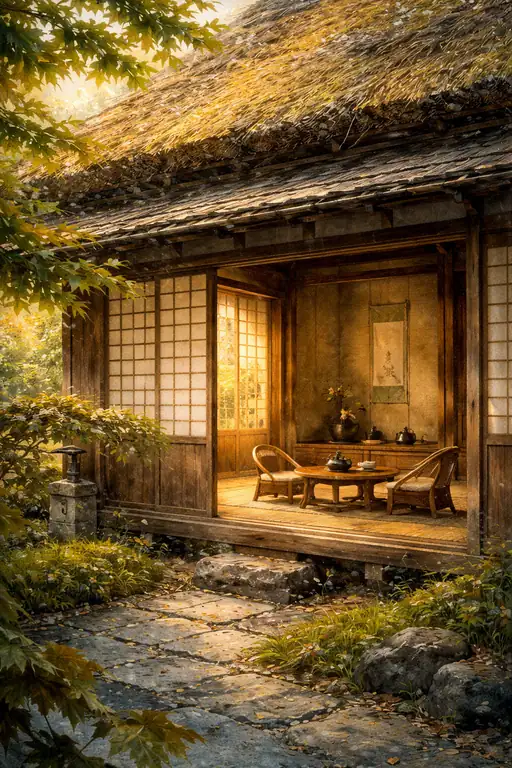 The Golden Silence of the Thatched Sanctuary
 Threshold of Light
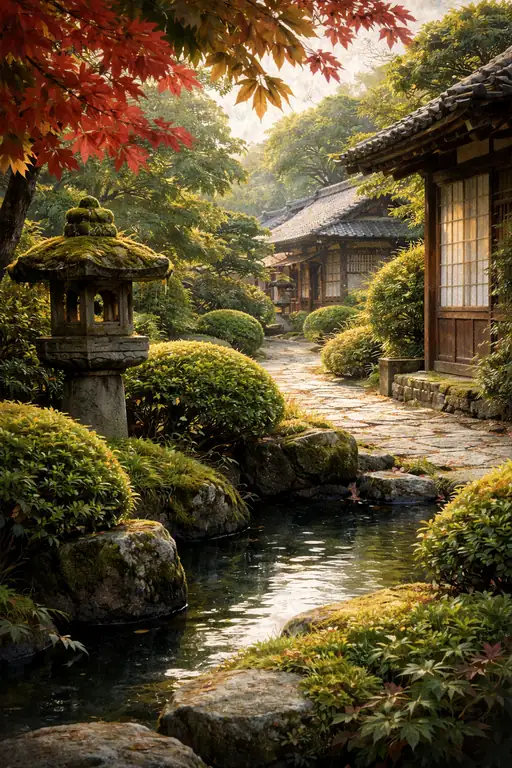 Autumn's Quietude: Reflections of a Timeless Garden
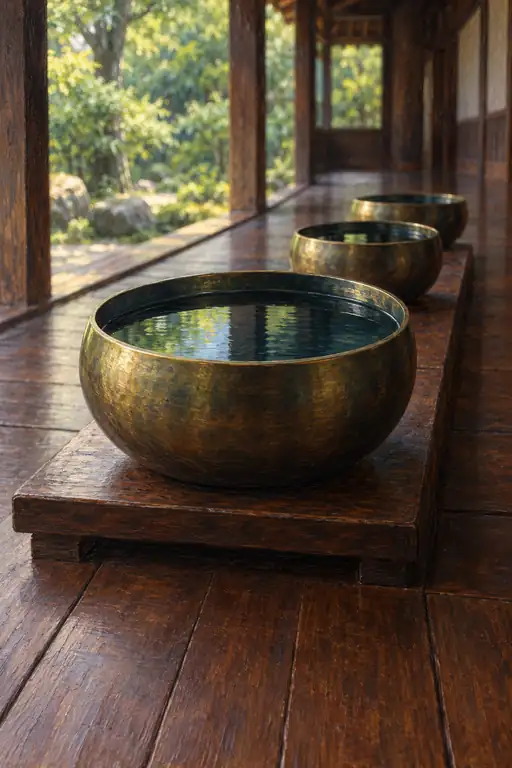 Three Basins of Monastic Stillness
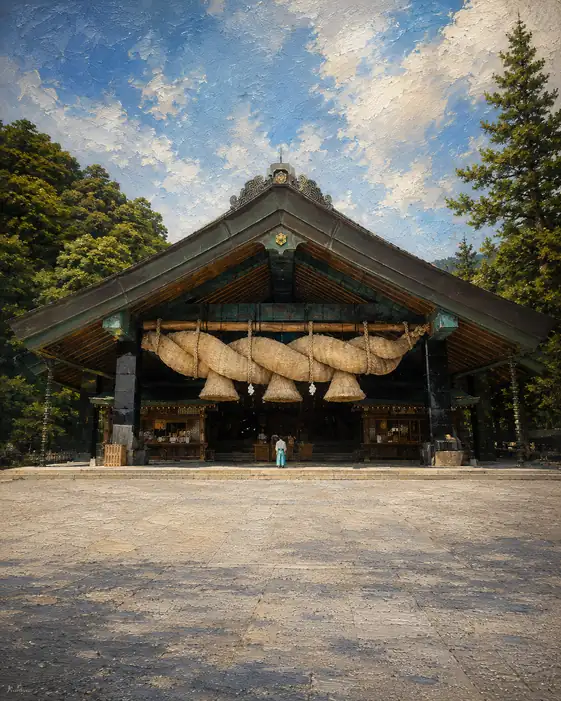 Open Courtyard before the Sacred Shimenawa
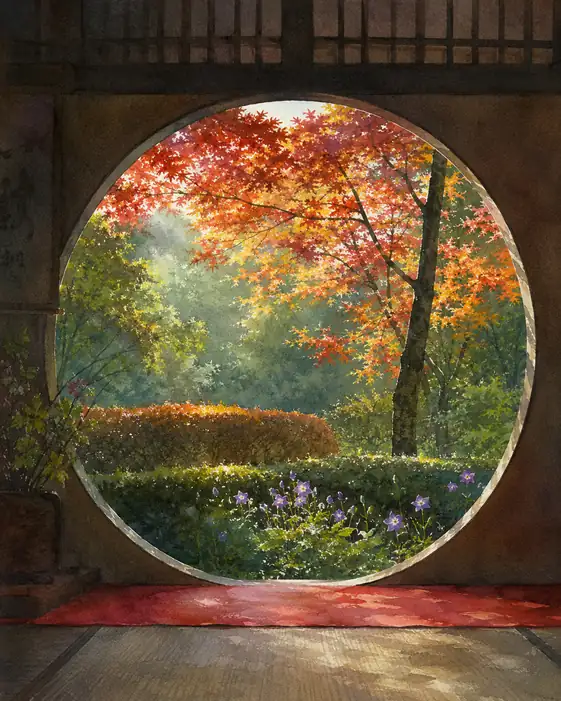 A Round Window for the Returning Sun
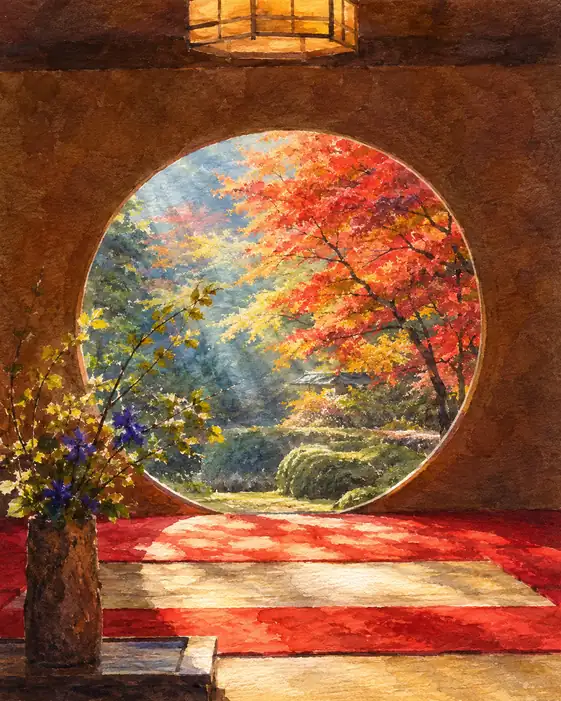 Autumn Held in a Circle of Light
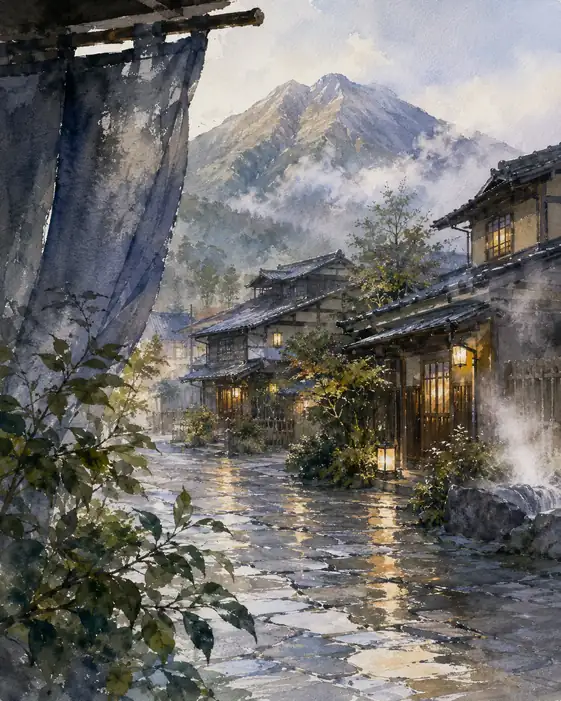 Echoes of the Mist-Bound Inn