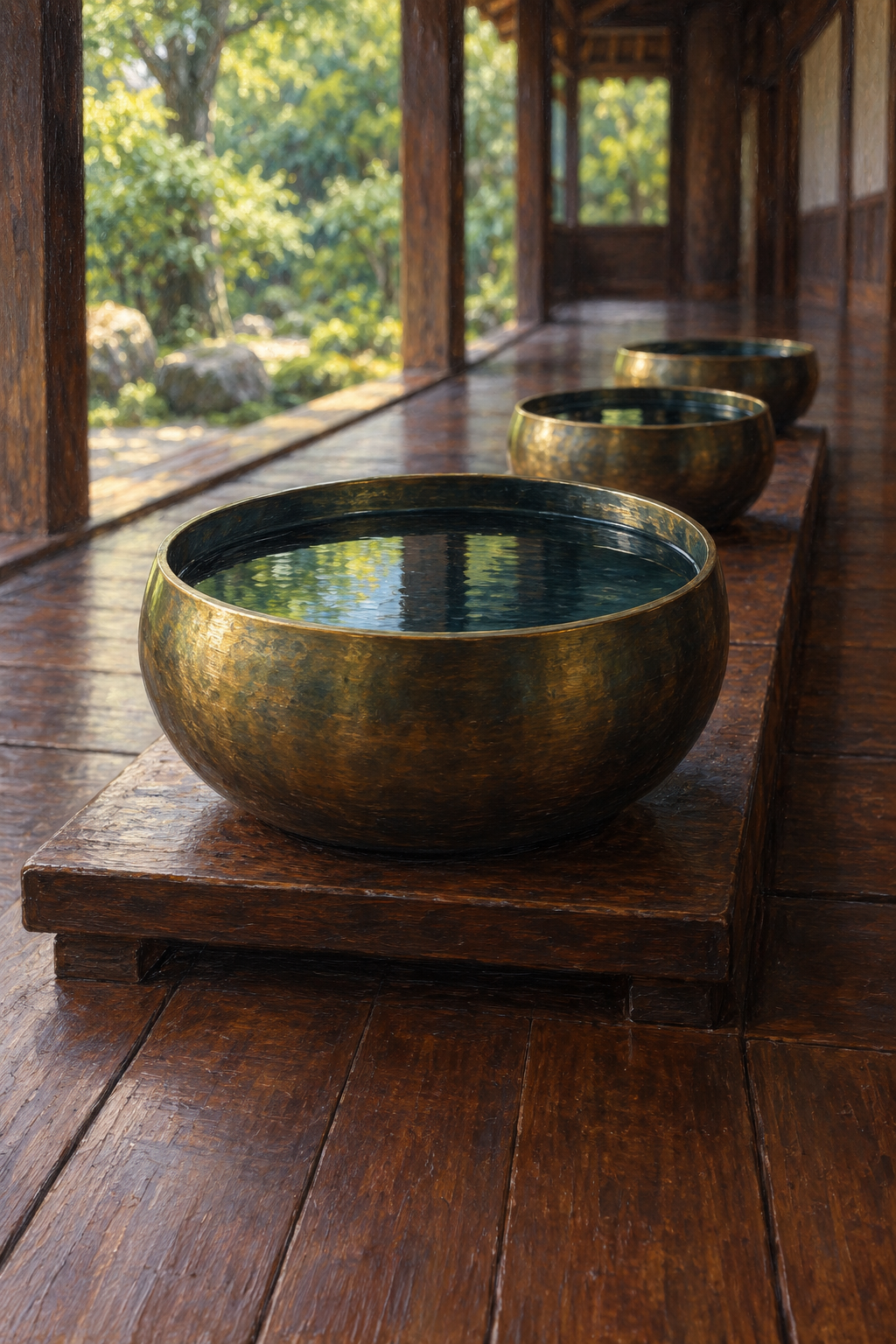
Three Basins of Monastic Stillness
Critique
1. Introduction This contemplative architectural still-life portrays three hammered brass water basins aligned upon a long timber bench along a traditional Japanese temple veranda. Clear water resting inside the rounded vessels reflects the lush garden greenery outside. The harmonious juxtaposition of weathered wood and polished metal evokes meditative tranquility and monastic stillness. 2. Description In the close foreground, a massive spherical brass urn dominates a low dark-stained wooden riser. Its burnished surface reveals hand-hammered indentations and an antique gold patina, holding tranquil water that mirrors sunny foliage. Two smaller basins recede along the wooden platform into the background corridor. To the left, dark timber posts frame a vibrant sunlit moss garden dotted with smooth river stones. 3. Analysis A low, oblique vantage point emphasizes the spherical volume of the foremost basin, while the receding timber bench creates disciplined spatial perspective. Warm raking daylight from the garden illuminates the rim and models the curvature of the metal with glowing highlights. Deep umber flooring anchors the composition, creating a refined chromatic balance against brilliant lime greens and dark emerald reflections. 4. Interpretation and Evaluation The still water basins serve as poetic instruments of mindfulness, capturing temporal nature upon mirror-like surfaces within a quiet cloister. By highlighting elemental materials—hand-beaten metal, seasoned timber, and reflective water—the painter honors Zen principles of austere harmony. The atmospheric handling communicates profound respect for spiritual solitude and natural order. 5. Conclusion This painting is an exquisite study in Eastern architectural aesthetics and contemplative calm. Through commanding tactile realism, balanced perspective, and subtle atmospheric lighting, the artist crafts an enduring visual sanctuary dedicated to peace, reflection, and timeless grace.
Same Subcategory
Similar Artworks
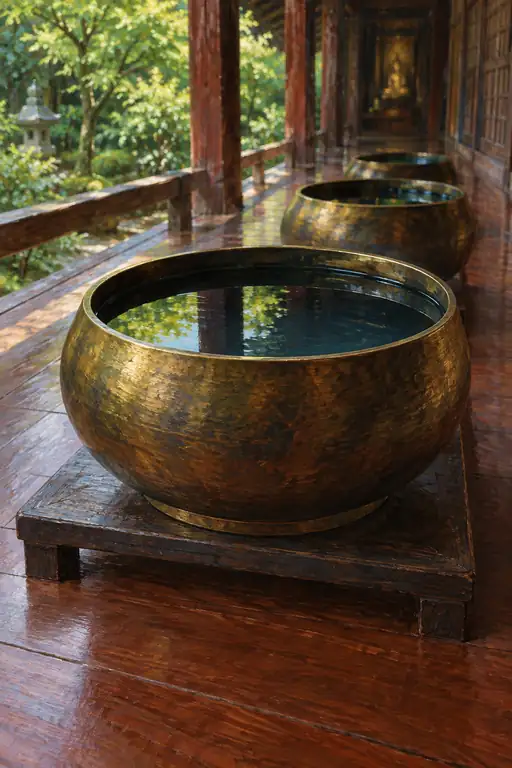 Mirror of the Temple Cloister
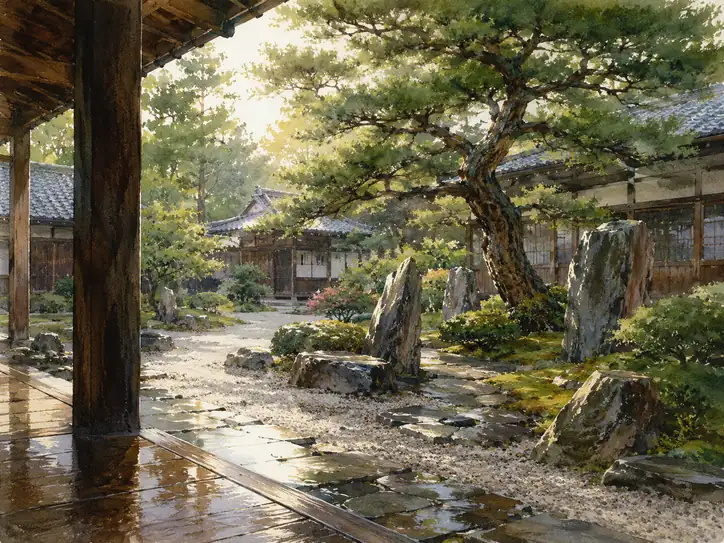 Reflections of Tranquility: Sunlight on the Wet Engawa
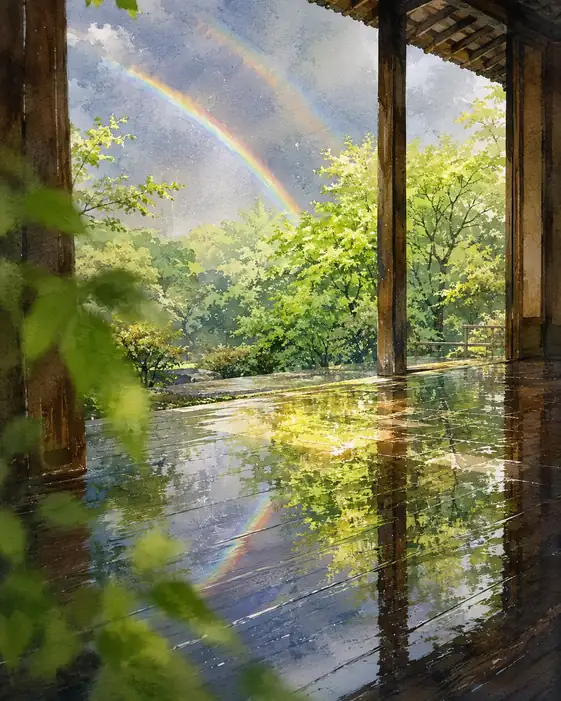 Rainbows Resting on the Engawa Floor
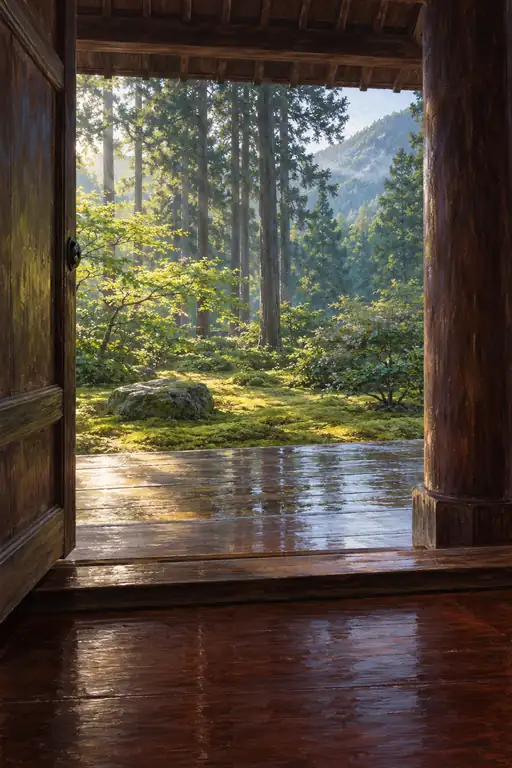 Green Shadows on Polished Wood
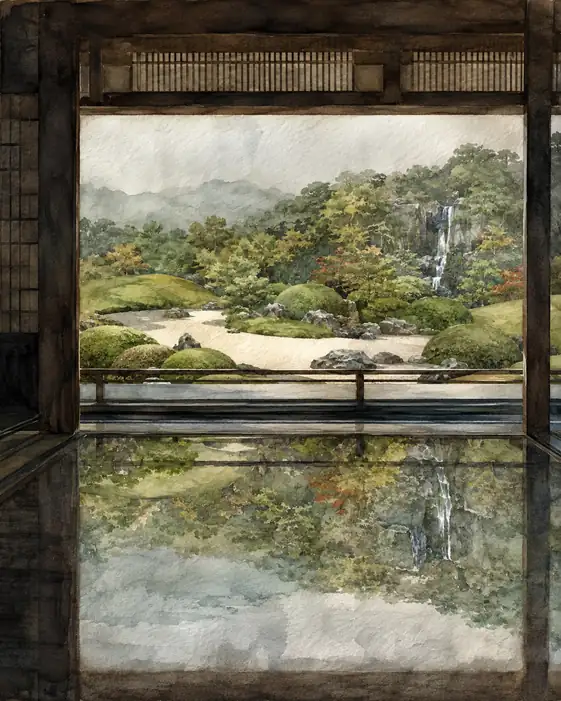 Silence Has a Second Garden
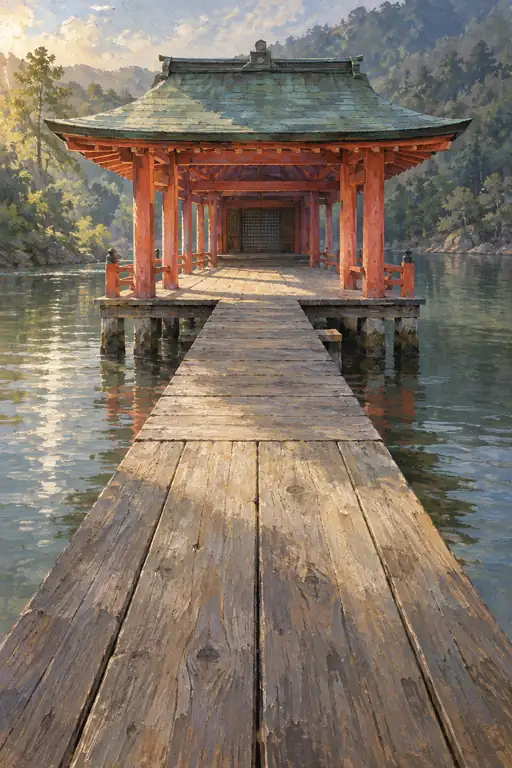 Path Across the Sacred Waters
 A Garden Above, a Garden Below
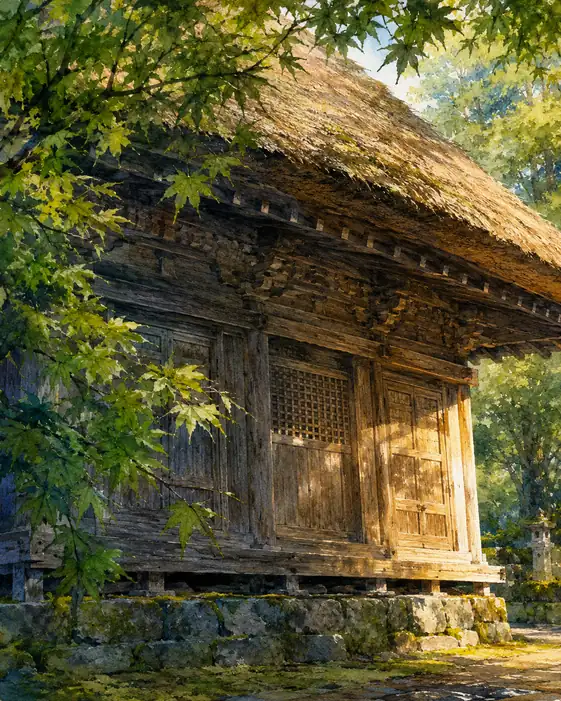 Memory of the Sun-Drenched Leaves
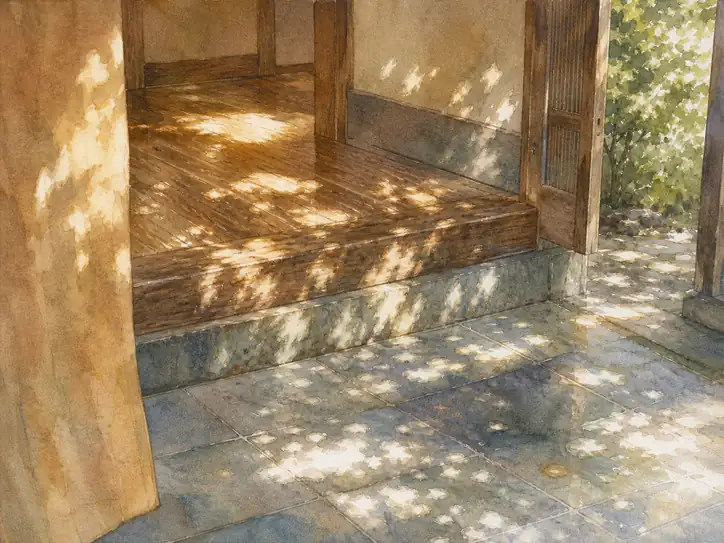 The Starry Threshold of Sunlit Memories
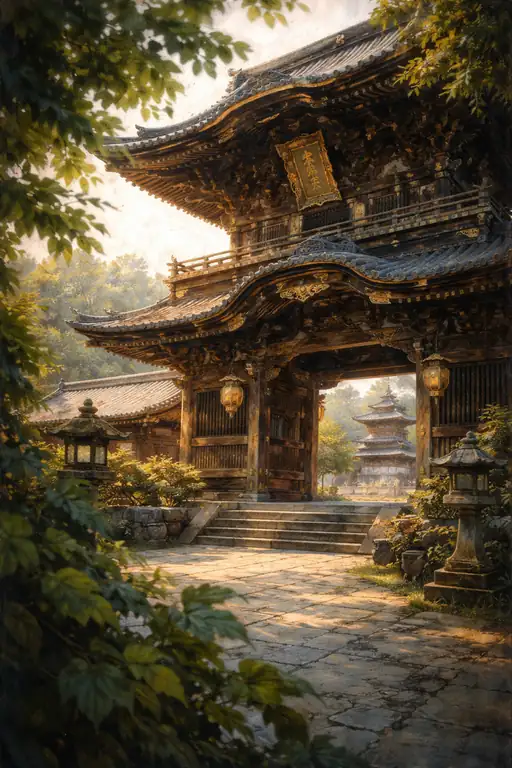 Golden Threshold: The Sacred Gate in Sunlight