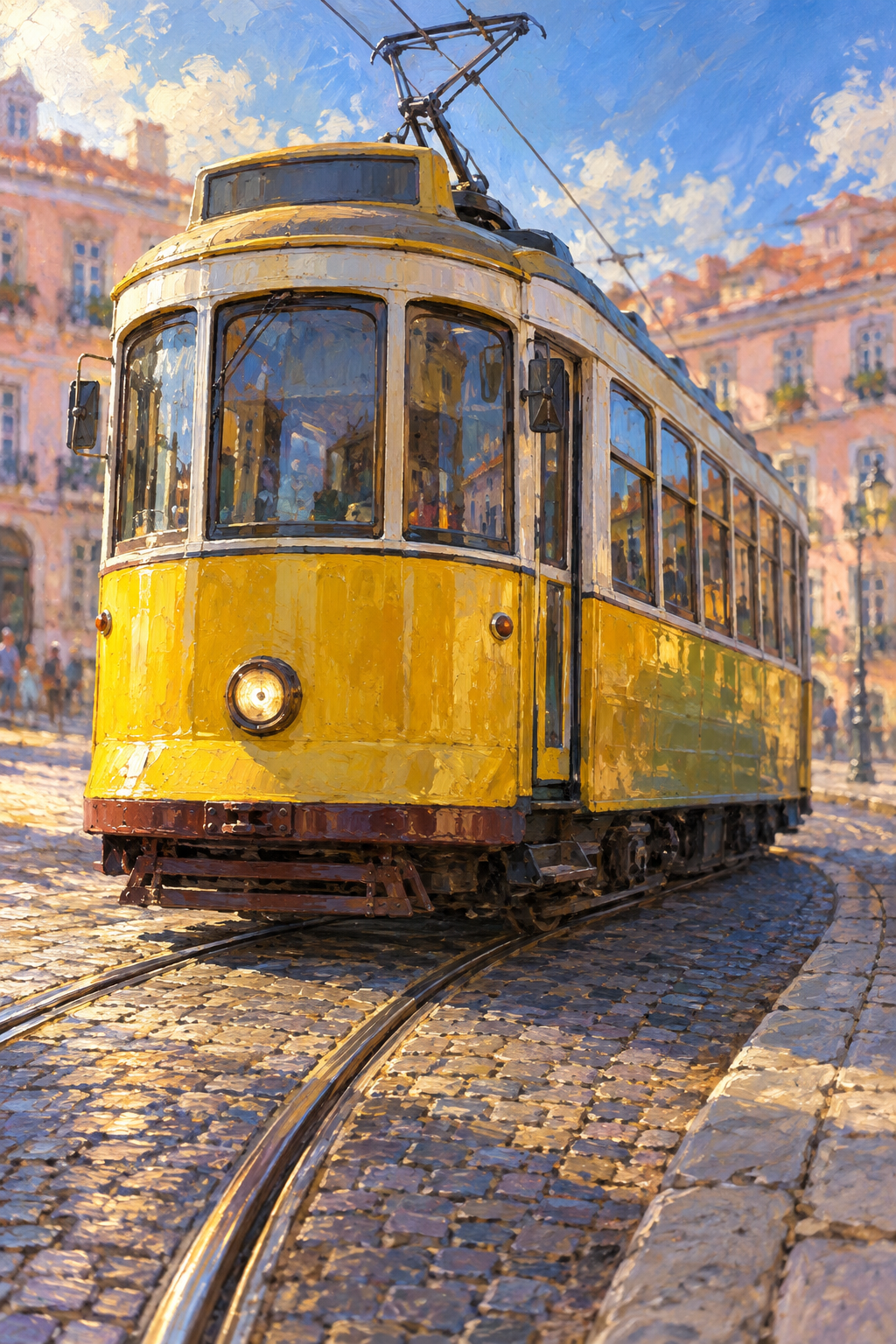
Turn of the Golden Tram
Critique
1. Introduction This kinetic urban painting depicts a vintage yellow tram curving along sun-drenched cobblestone tracks in a historic Southern European city. Viewed from a dramatic low angle, the carriage advances with commanding momentum. Radiant sunlight, salmon-pink architectural facades, and open blue skies evoke nostalgic civic energy and romantic wanderlust. 2. Description Commanding the central foreground, the canary-yellow tram features ivory trim, a glowing central headlamp, and a dark undercarriage. Its glass windshields reflect passing baroque facades and drifting clouds rather than passenger silhouettes. The rooftop pantograph stretches toward a bright summer sky. Below, curvilinear steel rails gleam with metallic highlights across rugged cobblestones, bordered by an elevated stone sidewalk on the right. 3. Analysis The low viewpoint accentuates the mechanical mass of the streetcar, while the sweeping arc of the iron rails establishes powerful spatial recession. Vivid yellow enamel acts as a saturated focal anchor against soft salmon-pink tenements and azure skies. The artist employs energetic impasto, using palette knives to contrast the smooth enameled metalwork with coarse, light-struck paving stones. 4. Interpretation and Evaluation The vintage streetcar represents the enduring continuity of European civic heritage, seamlessly navigating through living history. By capturing brilliant solar reflections upon the glass windows, the painter interprets the vehicle as an active participant reflecting the city's collective spirit. The execution demonstrates sophisticated command of light, mass, and kinetic perspective. 5. Conclusion This painting is an exuberant celebration of urban rhythm and architectural luminosity. Through bold low-angle staging, expressive textural contrasts, and harmonic Mediterranean color chords, the artist creates a thrilling homage to the timeless romance of streetcar transit.
Same Subcategory
Similar Artworks
 Song of the Yellow Tram
 Midnight Journey Through Lisbon's Golden Veins
 Glistening Rain in the Eternal City
 A Glimpse of Golden Antiquity
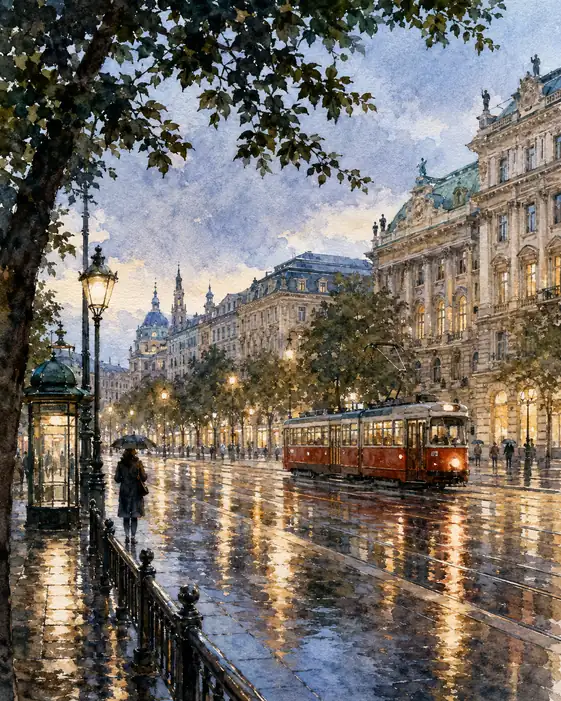 Twilight Waltz on the Rainy Boulevard
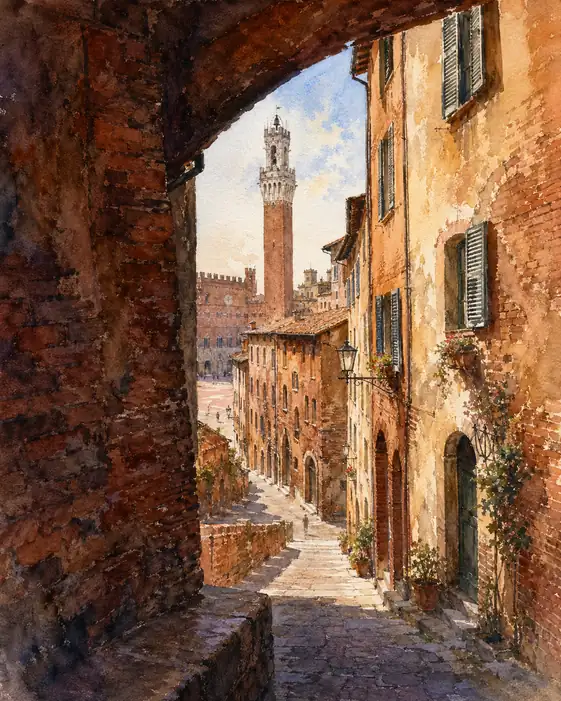 Archway to the Gilded Tower
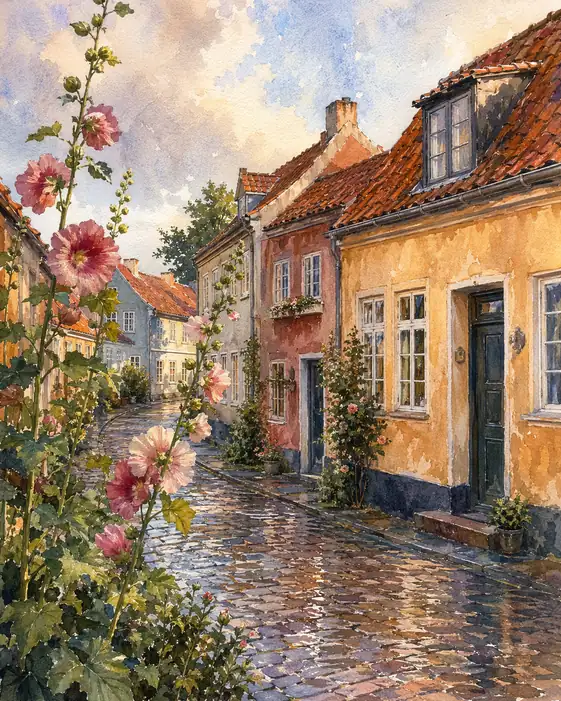 After the Rain, A Pastel Melody
 The Golden Carriage of Nostalgia
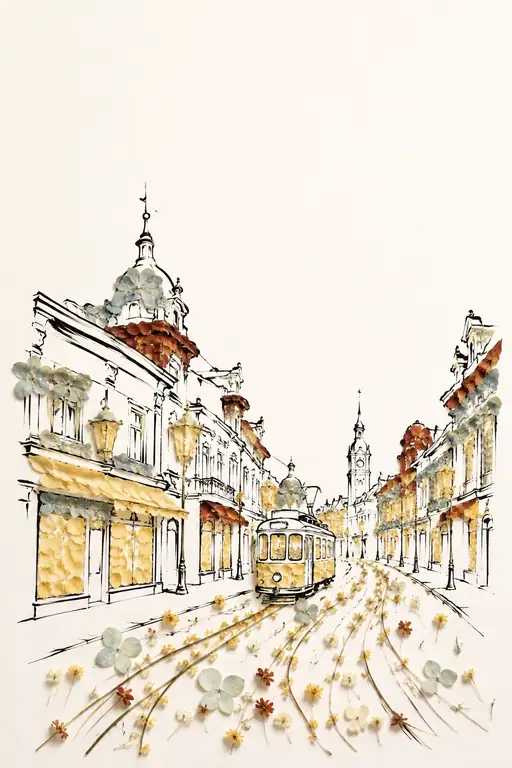 Departure on the Flowered Track
 Quiet Convergence After the Rain