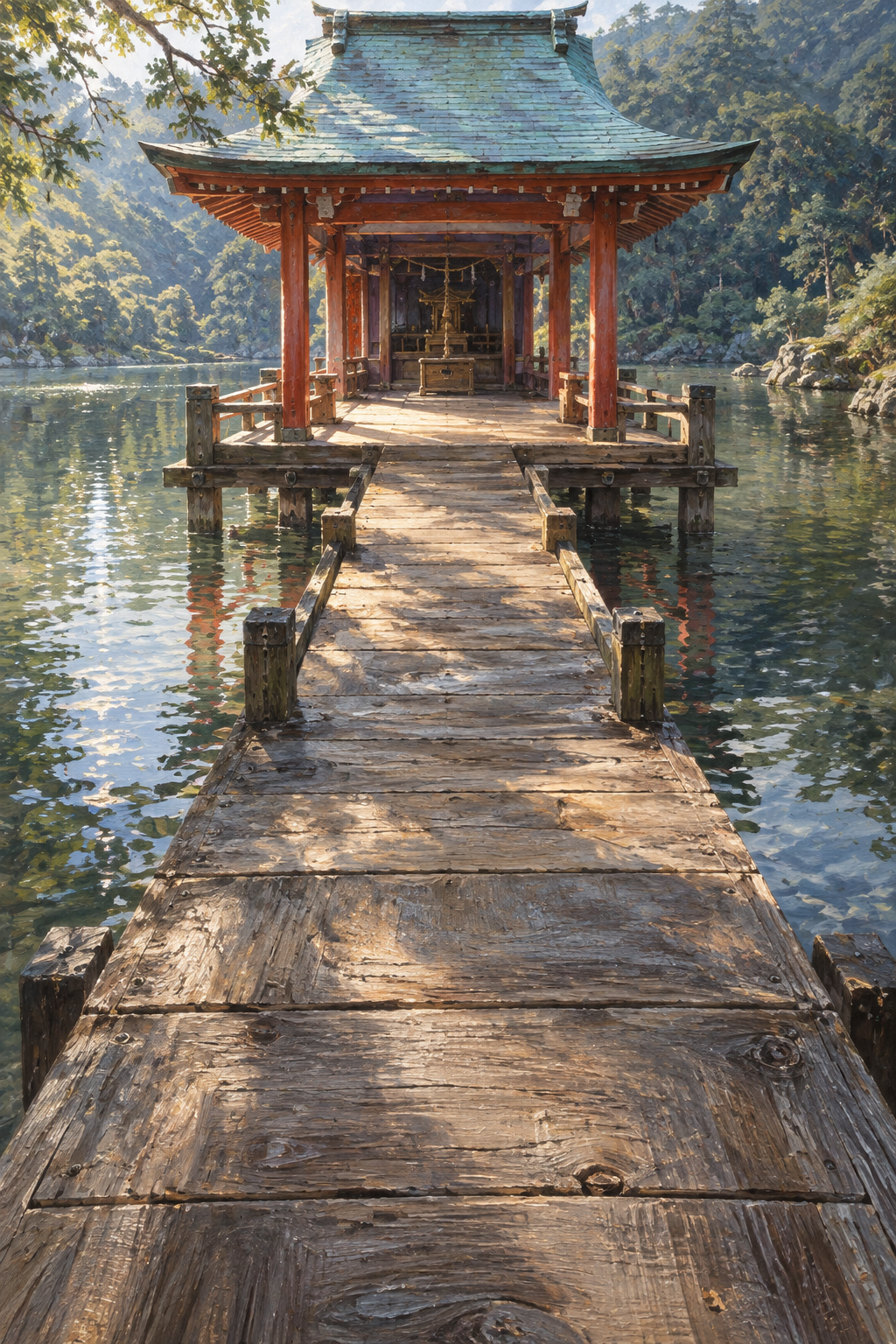
Boardwalk to the Water Sanctuary
Critique
1. Introduction This sacred landscape painting captures a weathered wooden boardwalk leading directly toward a vermilion Shinto shrine pavilion resting over a tranquil mountain lake. Observed from the center of the pier, the composition invites the spectator along a meditative pilgrimage. Green verdigris copper roofing and forested mountain backdrops cultivate solemn peace. 2. Description In the foreground, thick timber planks displaying heavy wood grain, knots, and weathered grooves stretch toward the temple structure. Wooden boundary posts frame the approach. Ahead, the open-air pavilion stands upon submerged stilts, its cinnabar-red pillars supporting a sweeping hip-and-gable roof encrusted with turquoise patina. Within the dim sanctuary, a ceremonial altar resides quietly, reflected along with foliage upon calm waters. 3. Analysis The strict one-point perspective established by the wooden pier focuses the gaze upon the shadowy sanctuary at the vanishing point. Saturated vermilion pillars and copper-green roof plates create an iconic chromatic contrast against earthy umbers and lush forest greens. The artist contrasts the dry, tactile relief of carved timber planks with the soft translucency of the gently rippling lake surface. 4. Interpretation and Evaluation The boardwalk serves as a physical and symbolic threshold, guiding the soul from mundane reality into a consecrated natural sanctuary. By positioning the shrine upon reflective water encircled by ancient mountains, the painter celebrates the sacred communion between architectural elegance and living nature. The execution conveys profound reverence and enduring quietude. 5. Conclusion This painting is an exceptional meditation on spiritual architecture and pastoral stillness. Through disciplined central perspective, masterful textural handling, and evocative atmospheric lighting, the artist constructs an unforgettable sanctuary of contemplation and sacred beauty.
Same Subcategory
 Embraced by the Golden Path of Waves
Similar Artworks
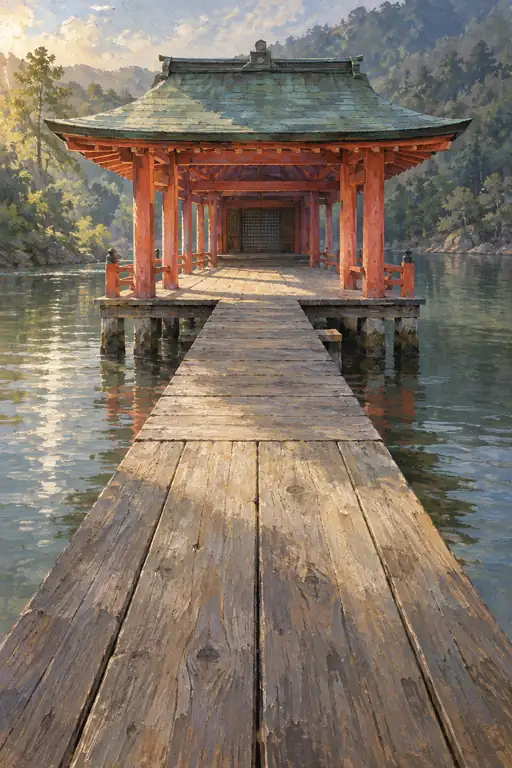 Path Across the Sacred Waters
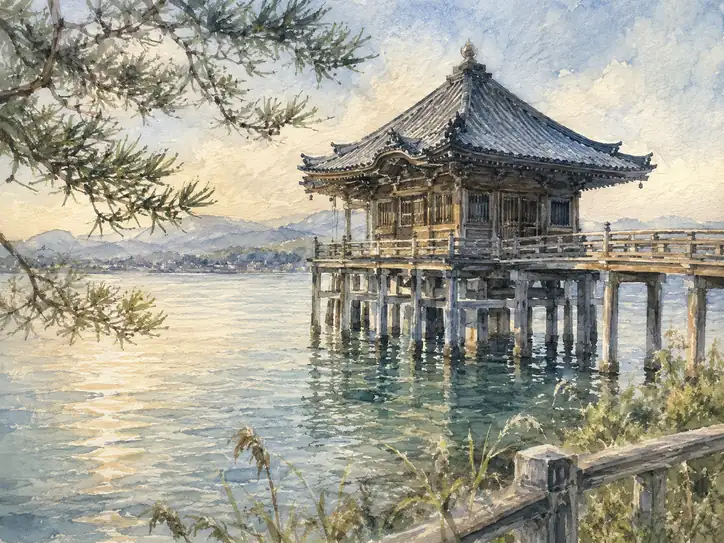 Timeless Serenity of the Floating Pavilion
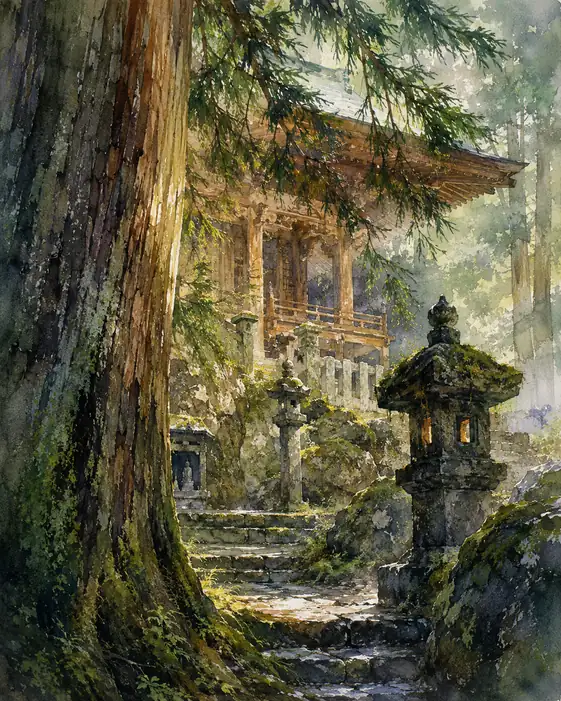 Sanctuary of the Ancient Cedars
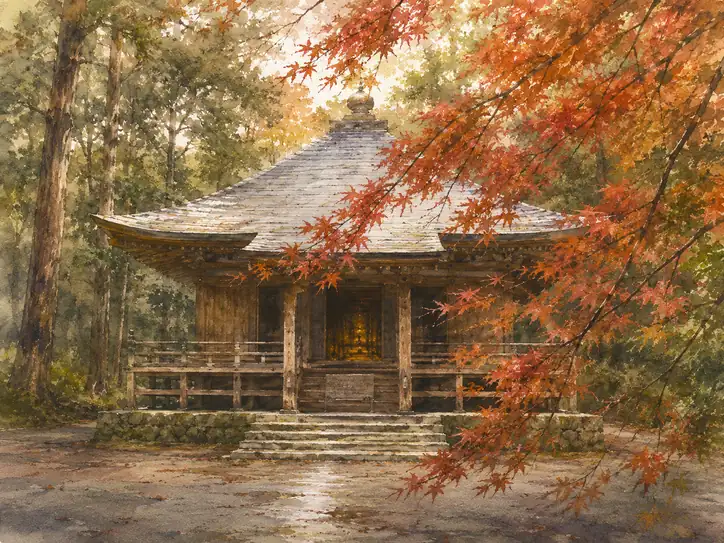 Golden Glow in the Maple Shadows
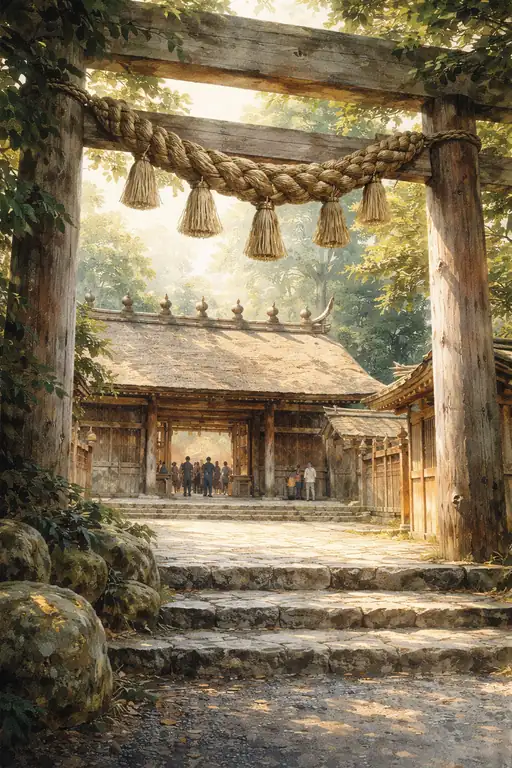 Awakening the Sacred Path
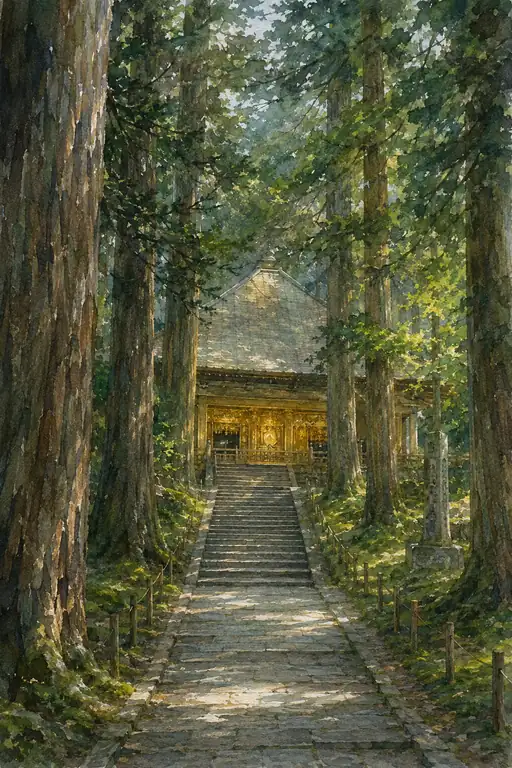 A Sanctuary of Golden Silence
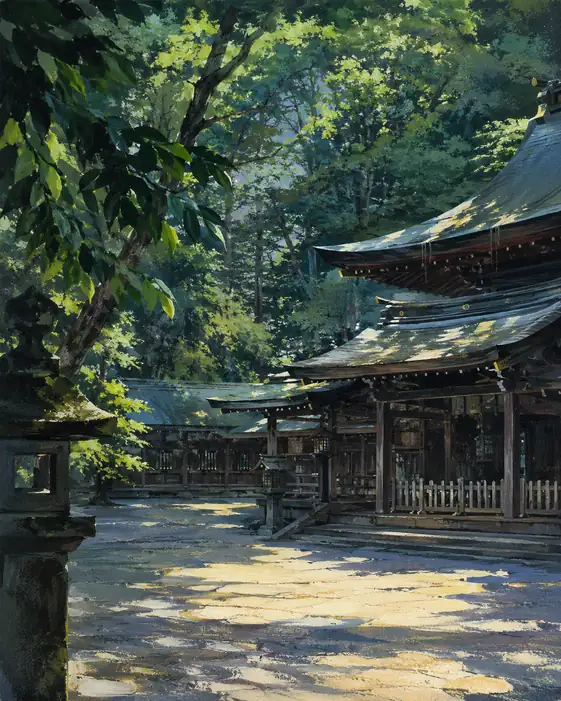 Whispers of the Sunlit Sanctuary
 Silent Steps through the Sacred Forest
 Reflection of the Silent Pagoda
 Sanctuary of the Silent Forest