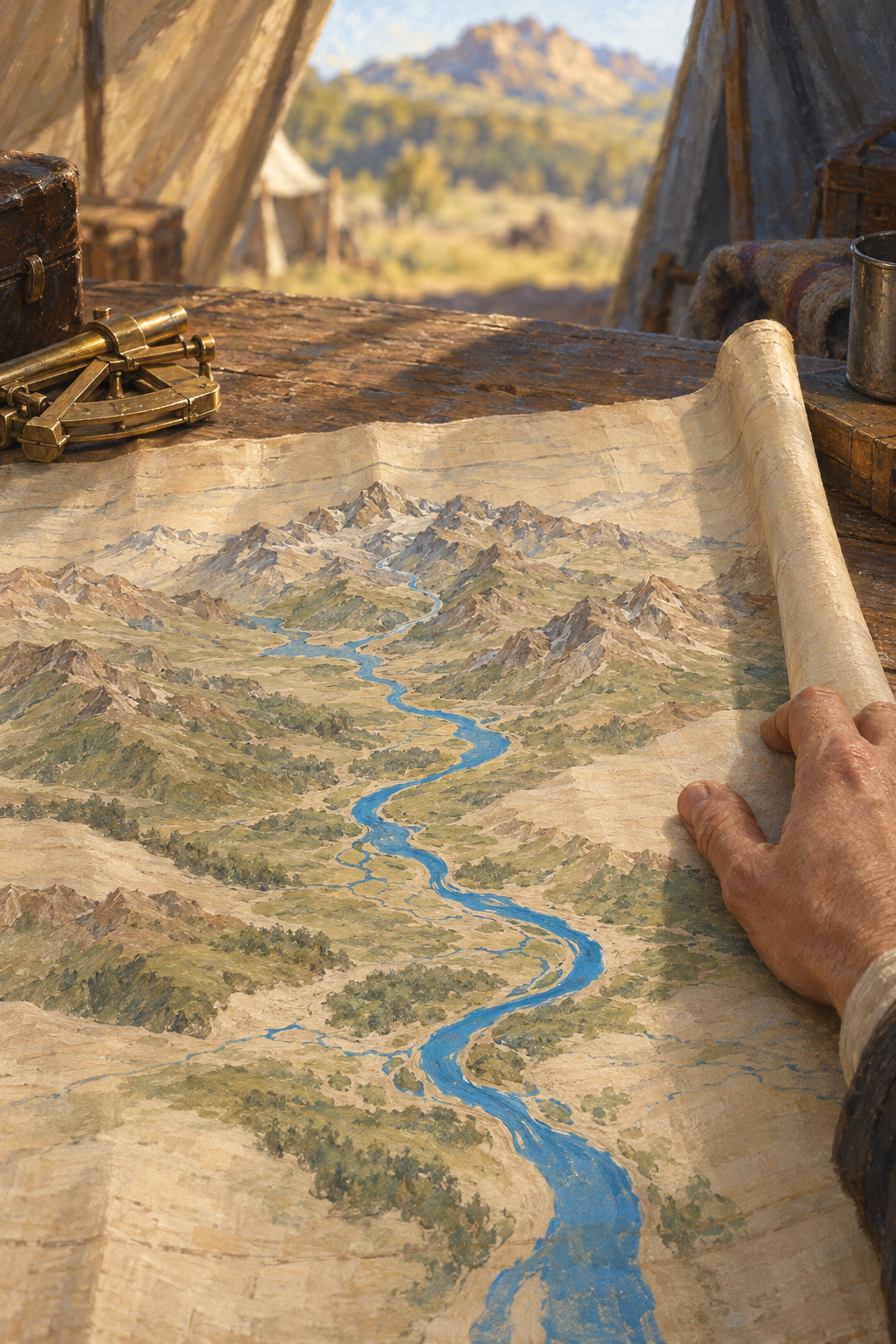
The Cartographer's River
Critique
1. Introduction This narrative still-life captures an expedition map unrolled across a rustic wooden field desk inside a frontier campsite tent. A weathered hand steadies the curling parchment, contemplating uncharted terrain while vintage brass instruments rest nearby. The interplay between drafted cartography and the rugged landscape outside evokes the timeless romance of geographic exploration. 2. Description A detailed topographic map occupies the central foreground, depicting rugged mountain chains flanking a vibrant cerulean river winding down through green valleys. At the right edge, a mature sunburnt hand with visible veins presses the parchment flat against rough timber planks. To the upper left, an antique brass sextant gleams near a leather trunk. Through the open tent canvas, distant arid bluffs rise under sunny skies. 3. Analysis The composition establishes dynamic tension between the flat pictorial plane of the parchment and the expansive natural perspective beyond the tent opening. Warm, filtered daylight reveals delicate wrinkles in the paper, tactile wooden grain, and the metallic polish of the instruments. The earthy harmony of beige, ochre, and warm brown is invigorated by the river's vivid cobalt-blue ribbon, which directs the viewer's gaze. 4. Interpretation and Evaluation The map embodies human ambition to comprehend and navigate the wilderness, bridging rational knowledge and primeval nature. By juxtaposing the tactile miniature landscape on paper with the untamed mountains outside, the painter honors the quiet courage and intellectual focus of frontier surveyors. The execution conveys profound emotional authenticity. 5. Conclusion This painting is a masterful tribute to the golden era of cartography and exploration. Through meticulous textural contrasts, evocative lighting, and compelling narrative staging, the artist celebrates the noble spirit of human curiosity confronting boundless horizons.
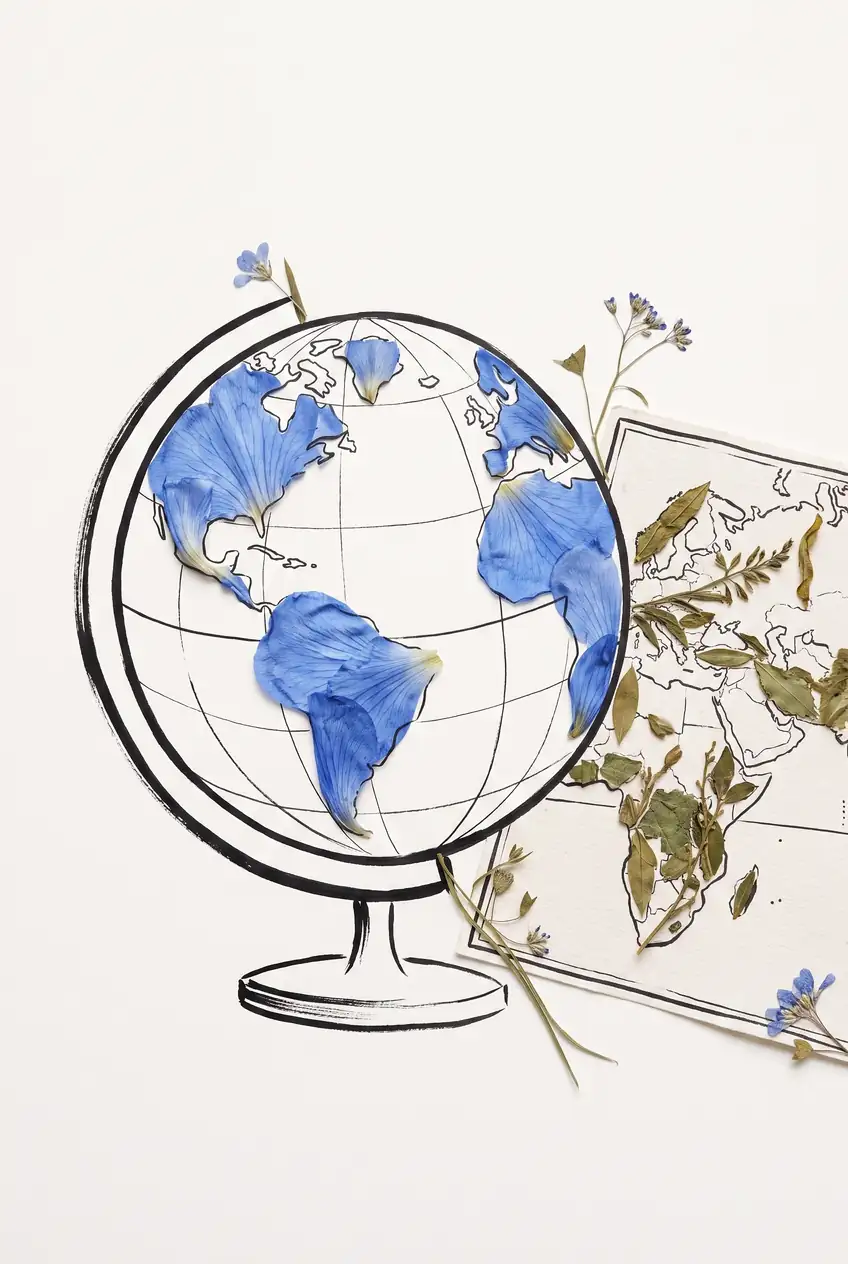 Continents of Azure Petals
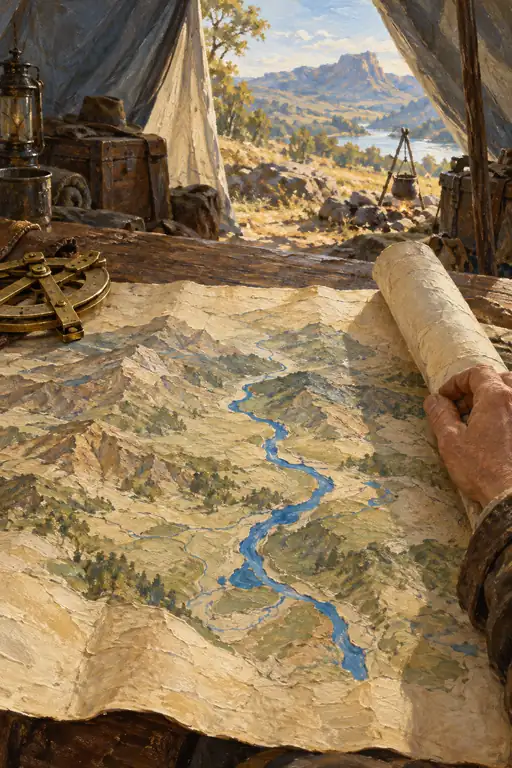 Echo of the Charted Valley
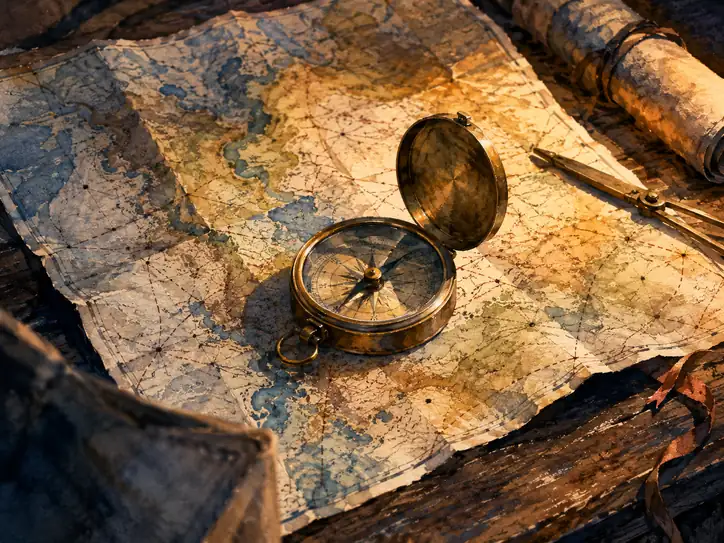 The Voyager's Silent Resolve
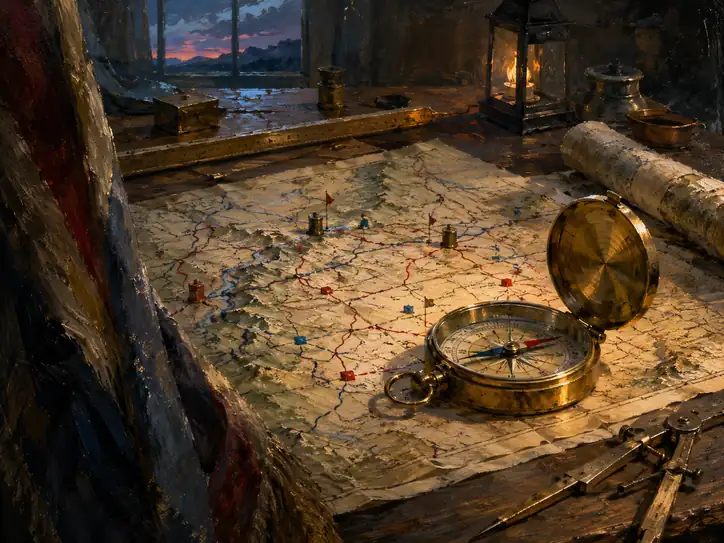 The Compass of Destiny: Charting the Path Unseen
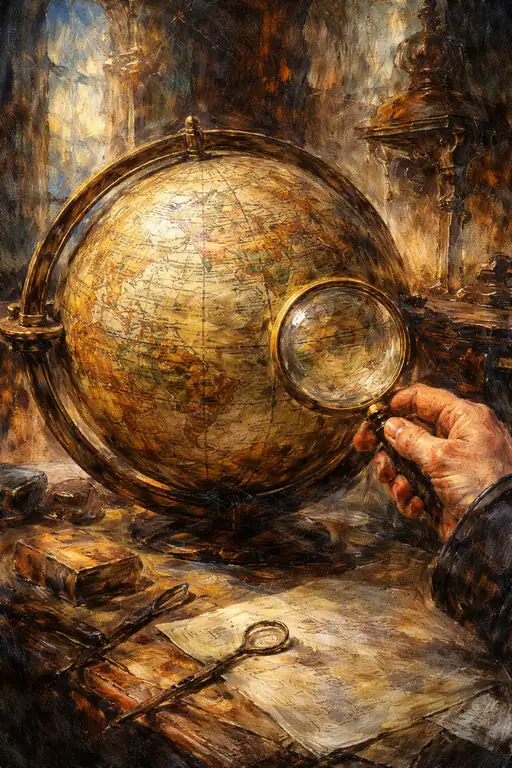 Whispers of the Old Cartographer
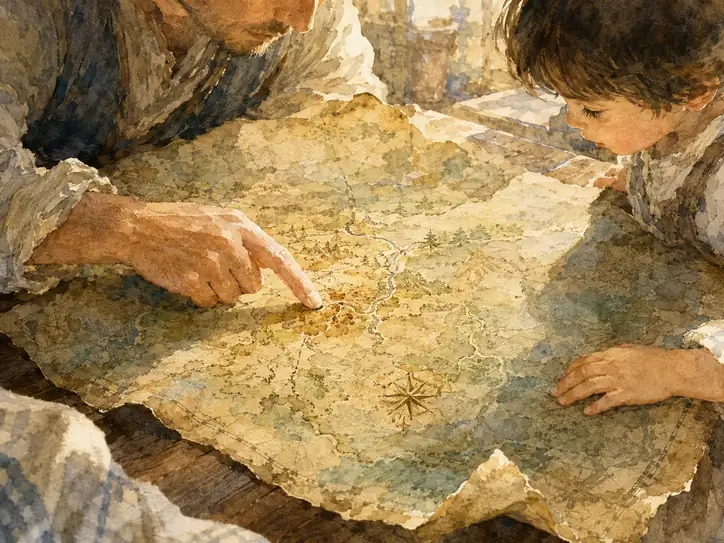 Where Adventure Begins
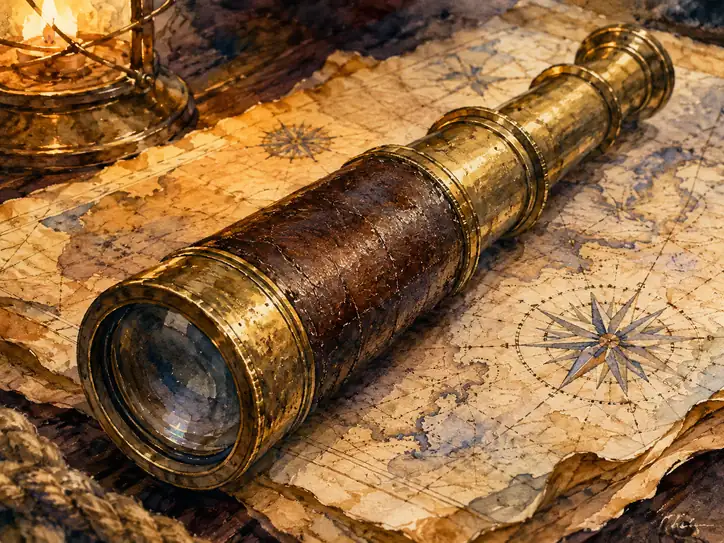 The Navigator's Nostalgia
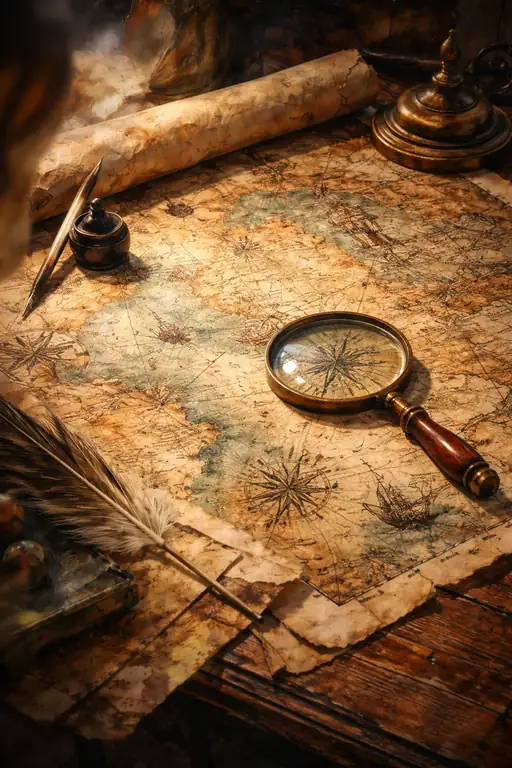 Navigating the Unknown
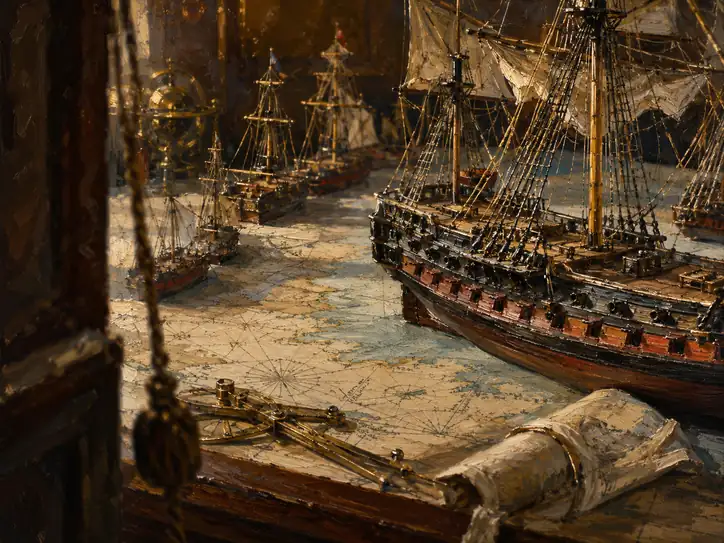 Dreams of the New World
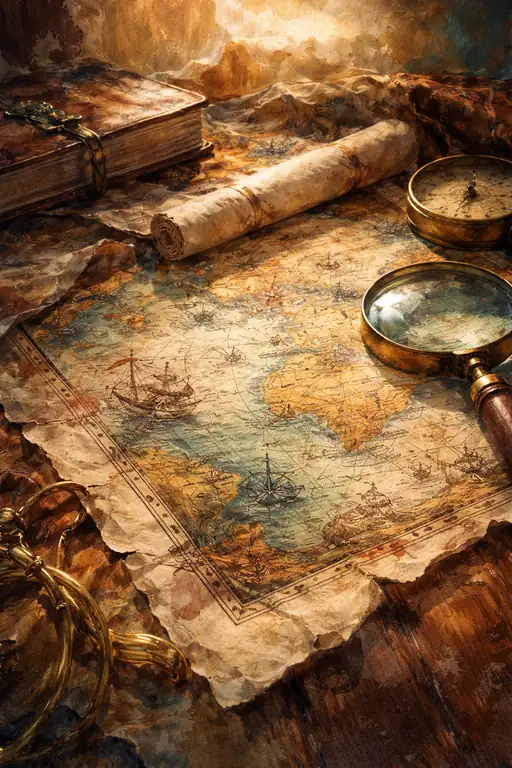 My Journey Starts with a Single Line
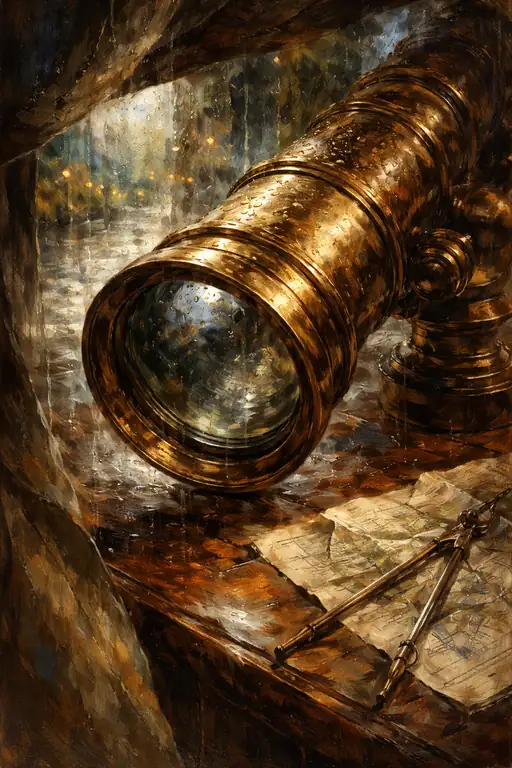 The Horizon of Longing