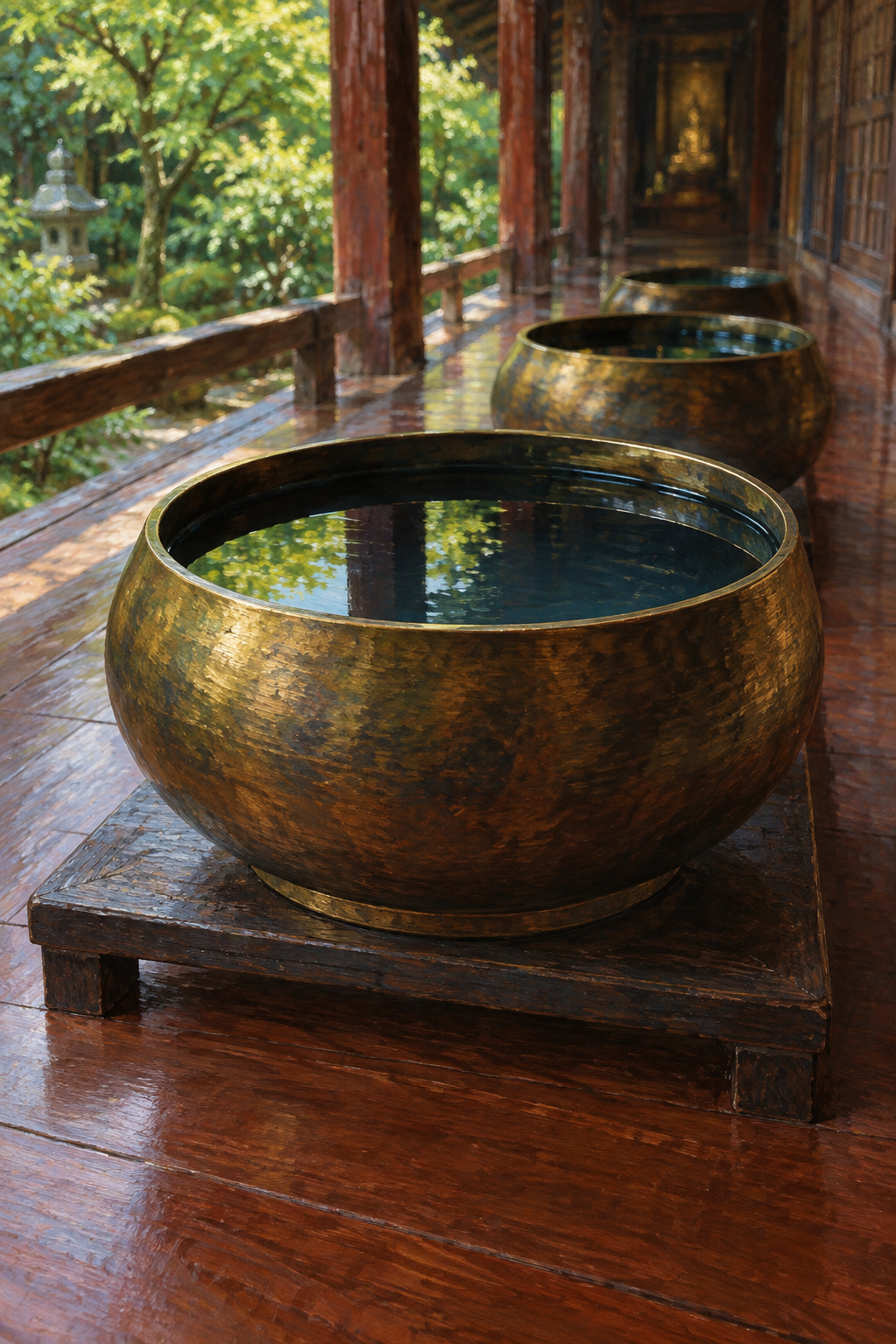
Mirror of the Temple Cloister
Critique
1. Introduction This serene interior landscape portrays hammered bronze water basins resting along the polished wooden veranda of a traditional Buddhist temple. Soft natural light filters from the adjacent garden, illuminating reflective waters and glossy timber floorboards. The quiet composition unites architectural harmony with organic tranquility, evoking deep contemplation and spiritual peace. 2. Description In the foreground, a large spherical bronze urn sits atop a low dark-lacquered pedestal. Its hand-hammered metallic surface displays mottled gold patina, while undisturbed water mirrors the vibrant green tree canopy outside. Two additional basins diminish in scale along the receding corridor. The lustrous amber-red floor reflects ambient light alongside sturdy pillars, past which a stone garden lantern and a distant golden Buddha statue emerge. 3. Analysis The linear recession of the basins and timber planks creates disciplined perspective, guiding the eye into the shadowy depths of the cloister. Raking sidelight from the left models the rounded curve of the metal urn while producing gleaming highlights on the lacquered floor. Earthy mahogany, ochre, and warm bronze tones contrast gracefully with the cool emerald foliage, balancing heavy architectural mass with airy natural illumination. 4. Interpretation and Evaluation The water-filled basin functions as an ancient metaphor for clarity and mental stillness, reflecting the outer world upon an unruffled surface. By framing the sacred sanctuary alongside living nature, the painter meditates on the coexistence of temporal beauty and eternal serenity. The tactile execution captures an authentic atmosphere of venerable calm. 5. Conclusion This painting is a masterful study in texture, shadow, and eastern monastic aesthetics. Through exquisite handling of reflective surfaces and geometric balance, the artist achieves a timeless visual sanctuary that invites quiet meditation.
Same Subcategory
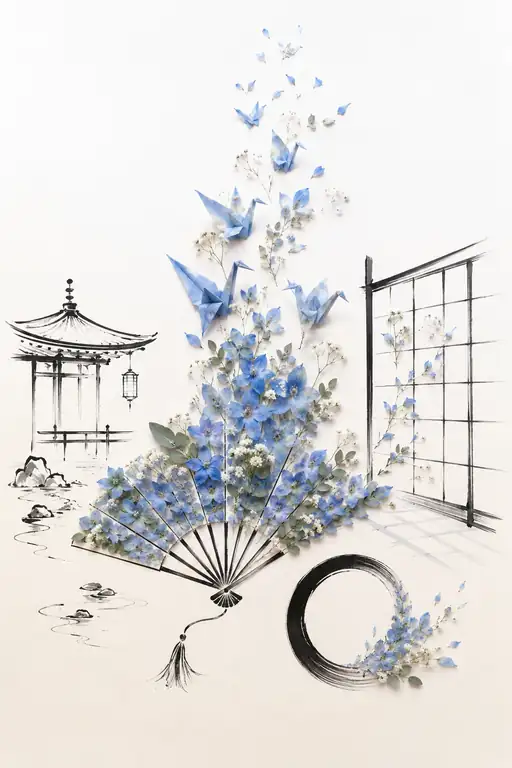 Uplifting Breeze of Serenity
Similar Artworks
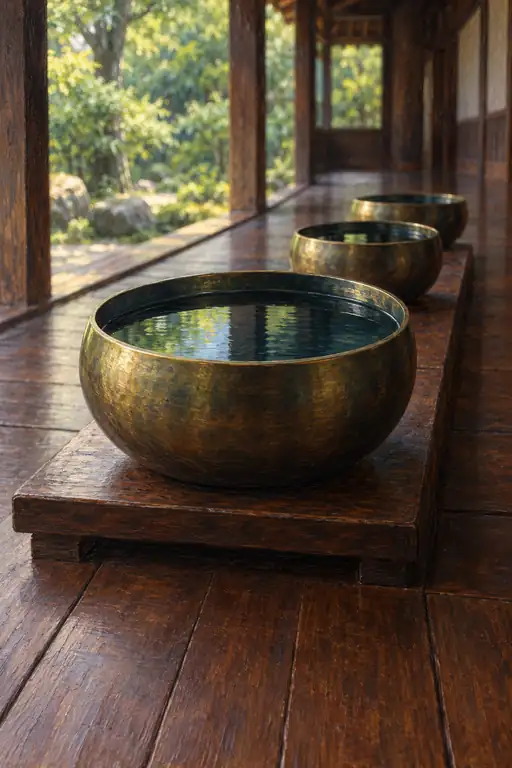 Three Basins of Monastic Stillness
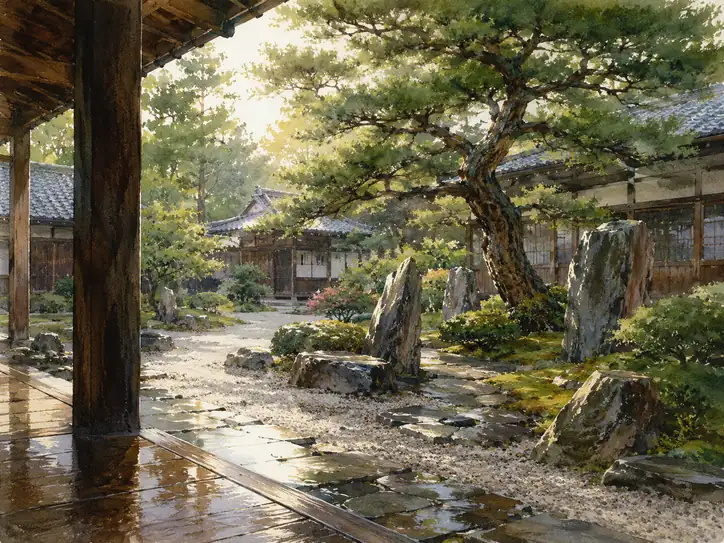 Reflections of Tranquility: Sunlight on the Wet Engawa
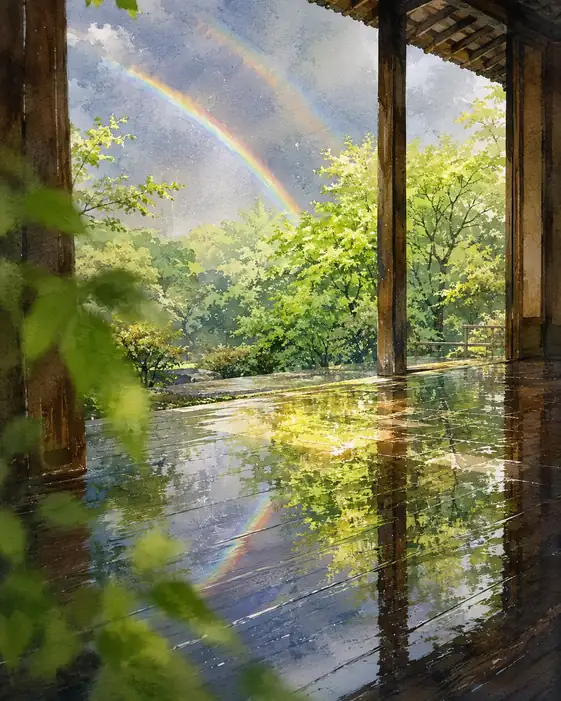 Rainbows Resting on the Engawa Floor
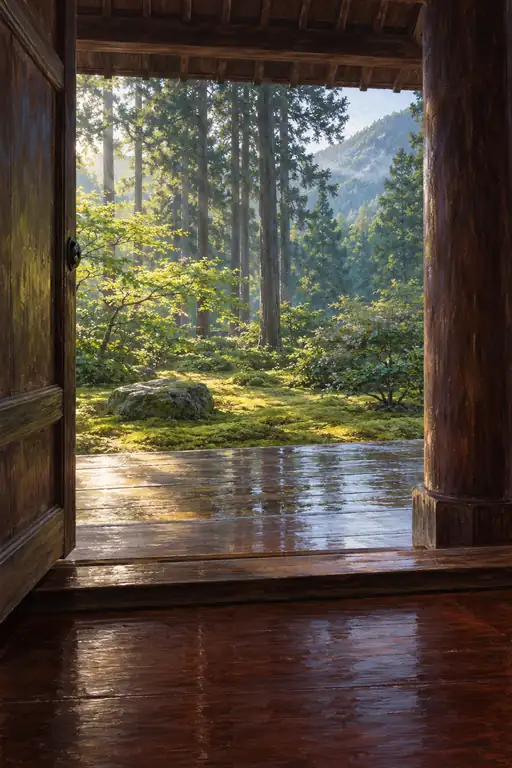 Green Shadows on Polished Wood
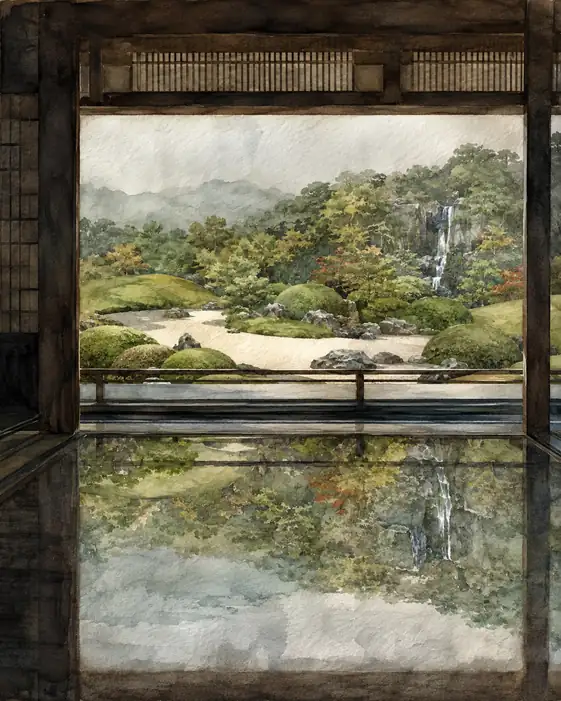 Silence Has a Second Garden
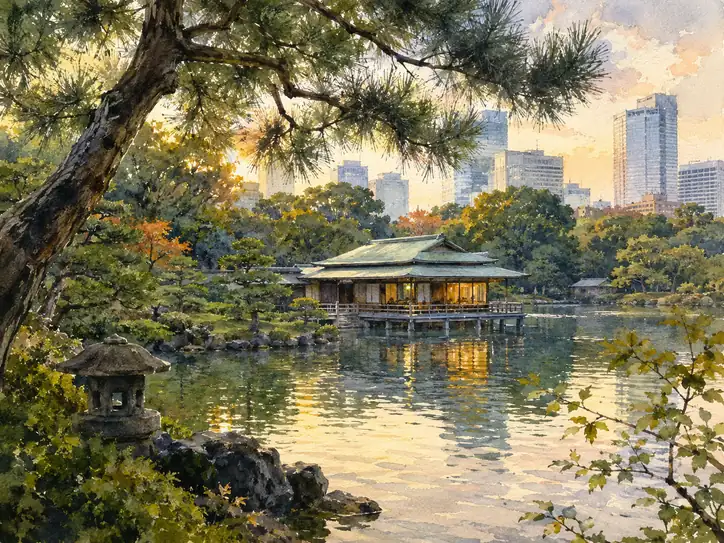 Twilight Sanctuary Between Eras
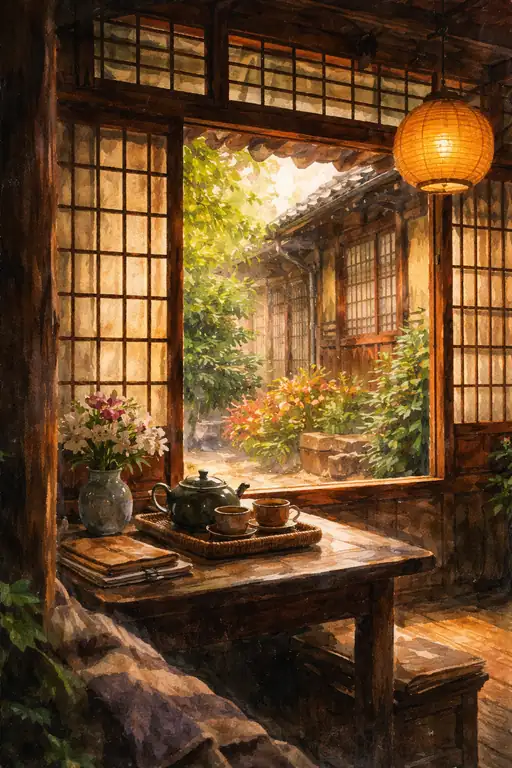 The Soft Glow of Peace in a Paper Lantern
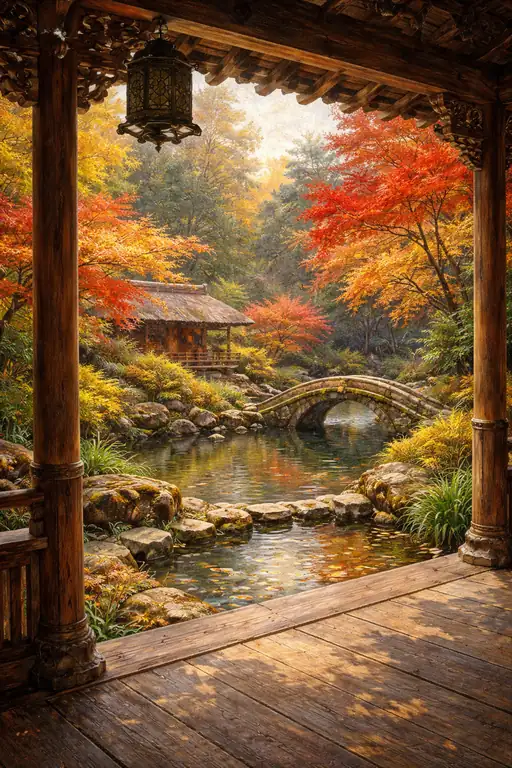 Crimson Reflections
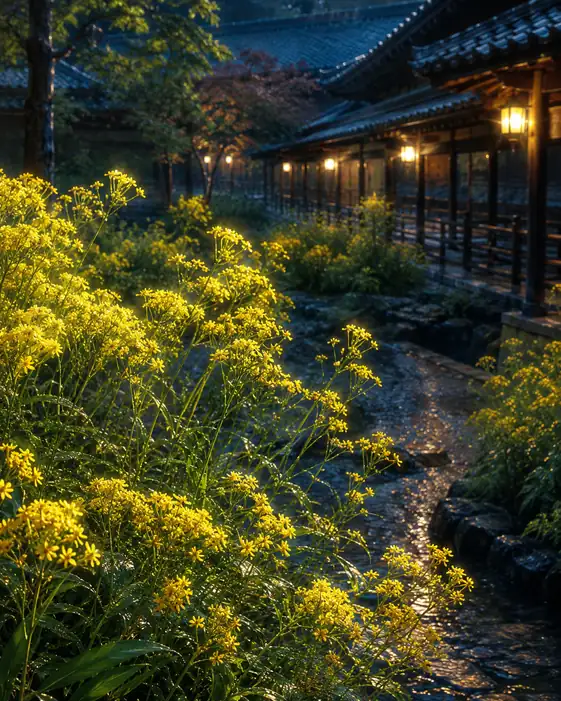 Golden Autumn Waves Along the Temple Corridor
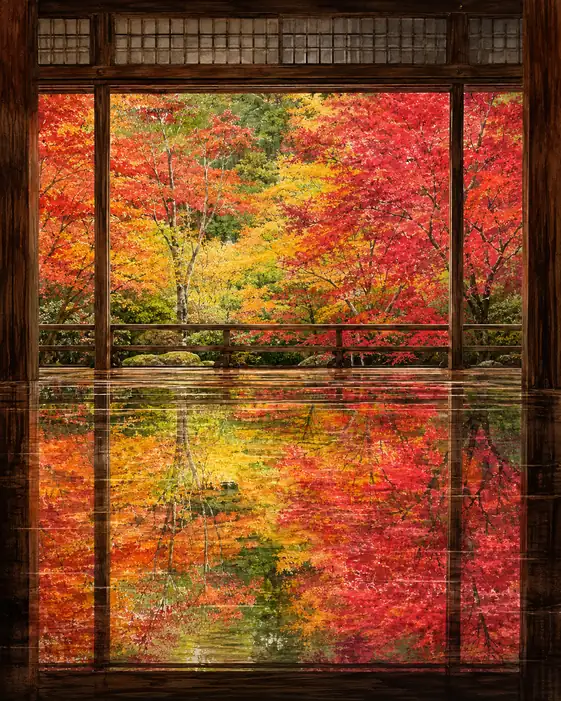 Autumn Waits behind the Quiet Frame