Patience Measured in Gilded Dust
Critique
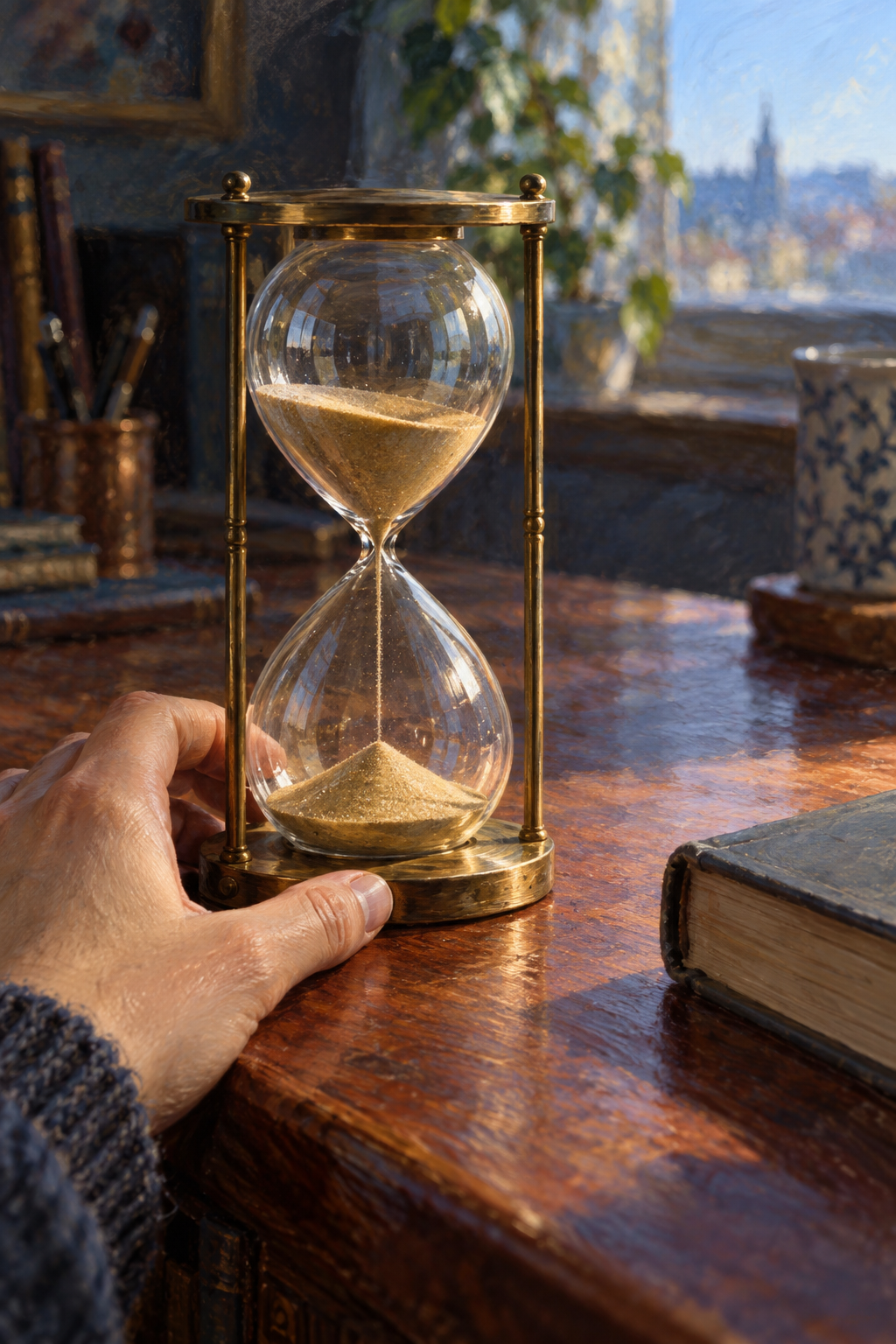
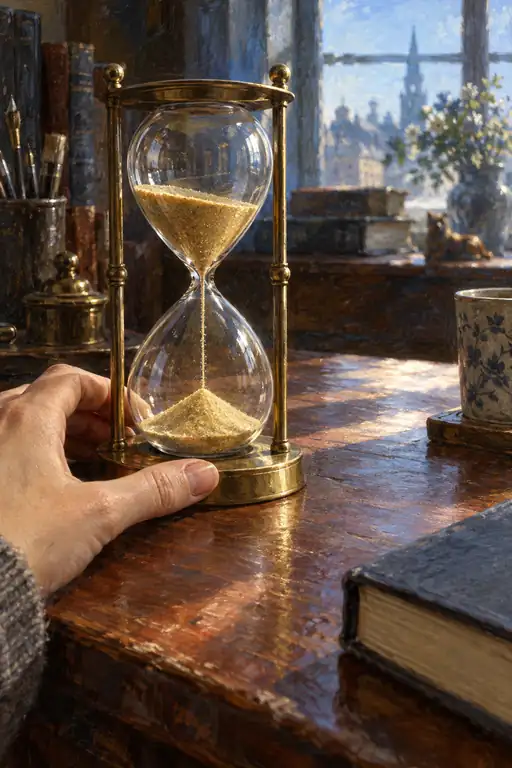
Introduction A brass-framed hourglass stands slightly left of center on a richly colored wooden desk. A hand rests against its base, and golden sand continues to fall through the narrow glass neck. The scene gives a familiar timekeeping object prominence within a softly described room of books, brushes, and window light. Description The upper chamber contains a sloping bank of sand, while a pointed mound gathers below. Tall metal supports flank the glass and connect broad circular plates. A thick book enters at the lower right, balanced by brushes and stacked volumes at the left. A patterned cup and leafy plant occupy the brighter background. Analysis The hourglass's narrow waist contrasts with the straight supports, concentrating attention where the sand changes chambers. Window reflections curve across the glass, making transparency visible against the darker interior. The reddish desk spreads warm color beneath the gold frame, while blue background passages and the book's cool cover provide a measured counterbalance. Interpretation and Evaluation The image makes waiting tangible through a visible stream and accumulating grains. The hand's stationary contact emphasizes observation rather than intervention. The technique distinguishes the glass's sharp highlights from the desk's dispersed sheen, and the surrounding objects suggest sustained indoor attention without needing to specify a particular occupation or task. Conclusion The initial still-life arrangement develops into a quiet contrast between stable objects and continuous change. The lower mound records the passing material, while the untouched frame maintains order around it. Balanced placement, varied reflections, and restrained background definition give the small falling line unusual importance within the broader desktop scene.
 The Silent Cascade of Golden Seconds
 Brass Lamp and Spring Blossom
 The Silent Dialogue
 The Fragile Hold of Time
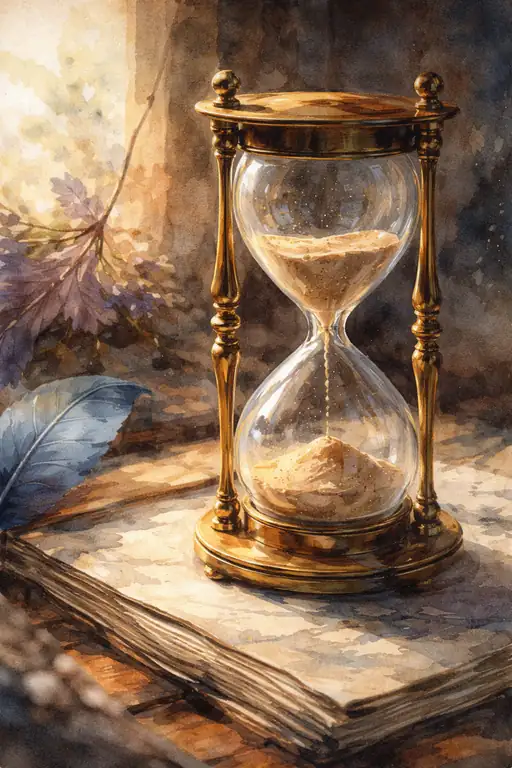 Sands of Serene Passage
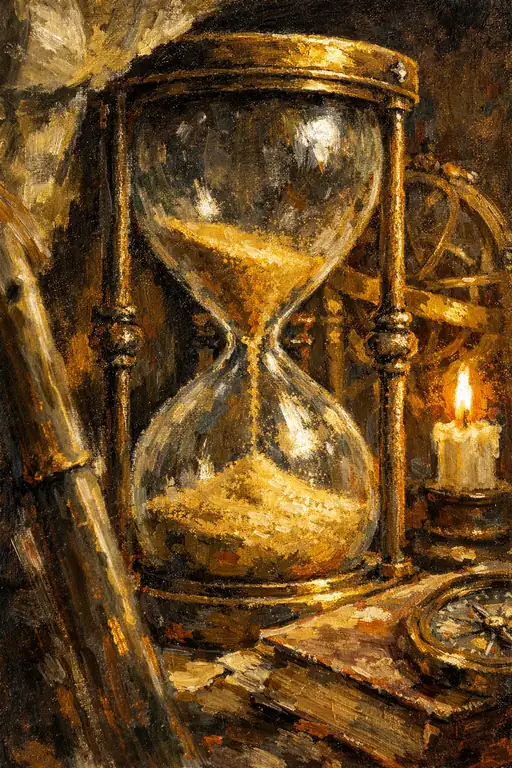 Echoes in the Falling Sand
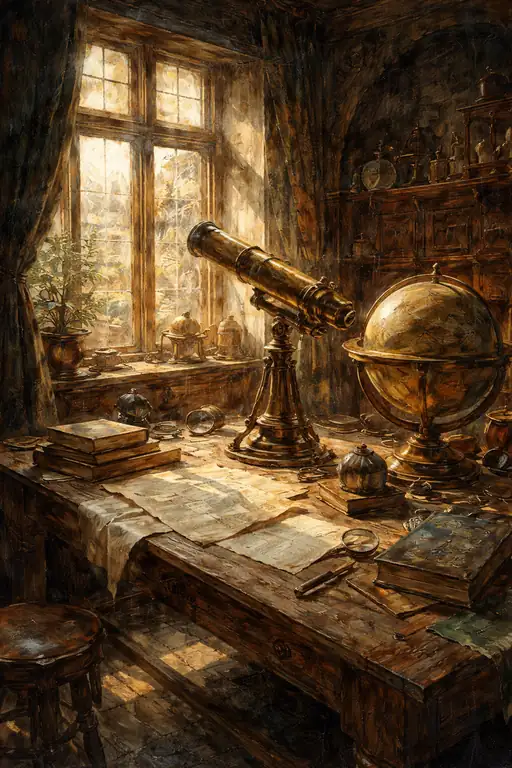 Vigil of the Golden Scholar
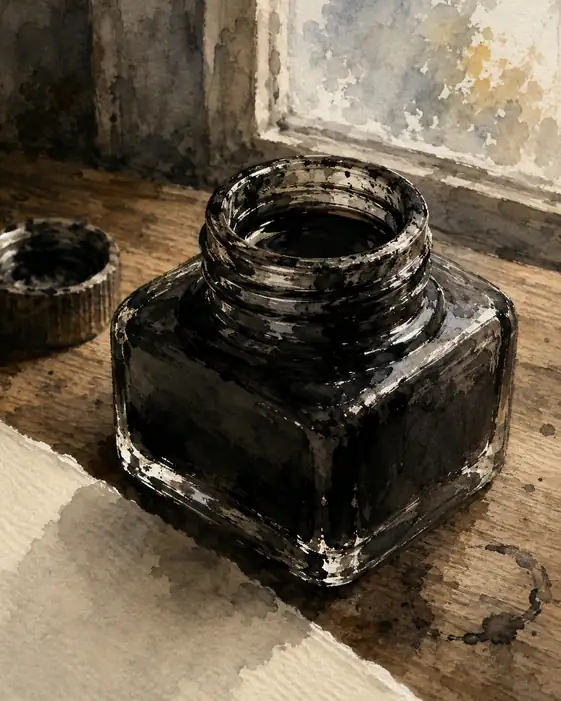 The Well of Unspoken Dreams
 Where the Silent Ages Speak
 The Golden Wait of Leather and Pages