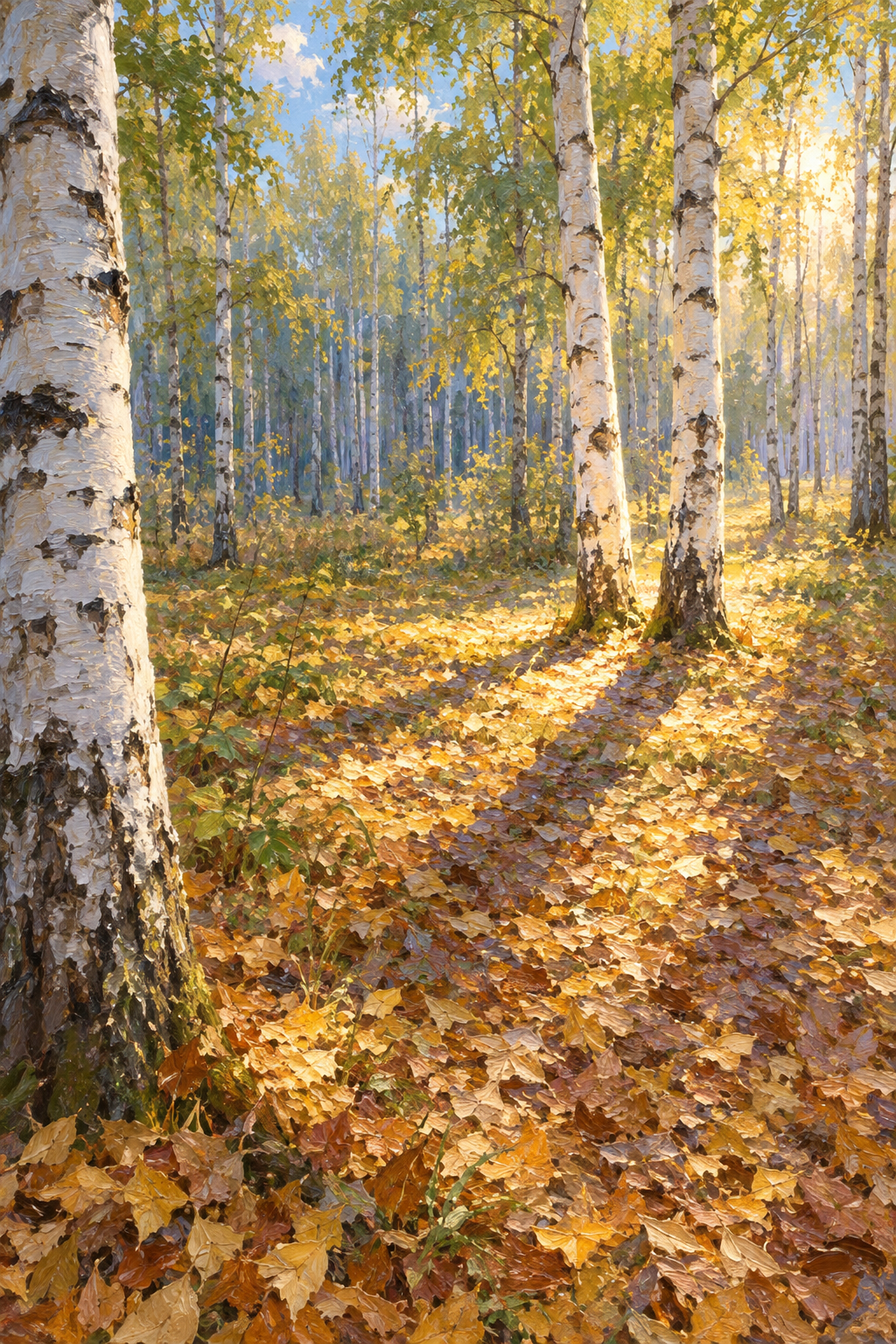
Golden Carpet of the Birch Grove
Critique
Introduction White birch trunks rise through golden foliage in this brightly lit woodland painting. A large cropped trunk anchors the left foreground, while two slimmer trees stand near the right center. Fallen leaves cover the ground, making the forest's vertical structure visible against a continuous field of warm autumn color. Description Dark patches interrupt the pale bark, and green moss gathers near the tree bases. Long shadows stretch diagonally toward the lower foreground from the central trunks. Yellow leaves hang among small blue sky openings, while distant trees become narrower and cooler. Scattered green plants remain visible through the dense carpet of fallen leaves. Analysis The foreground trunk frames the scene without closing its central opening. Repeated verticals establish depth through changes of width and contrast, while diagonal shadows lead across the ground toward the light. Thick, separate leaf marks contrast with elongated bark strokes. Cool lavender shadows moderate the strong yellow and orange illumination. Interpretation and Evaluation The scene suggests seasonal abundance through the simultaneous presence of leaves above and below. Its stillness depends on repeated upright forms, but the uneven leaf carpet gives the surface an active rhythm. The descriptive contrast between peeling bark, moss, and dry foliage is effective, allowing the woodland to remain materially varied despite its dominant color. Conclusion The initial impression of golden light develops into awareness of an organized passage among trunks and shadows. The large left tree establishes proximity, while the cooler background keeps the forest open in depth. Rhythmic repetition and carefully opposed stroke directions give the autumn setting both richness and spatial clarity.
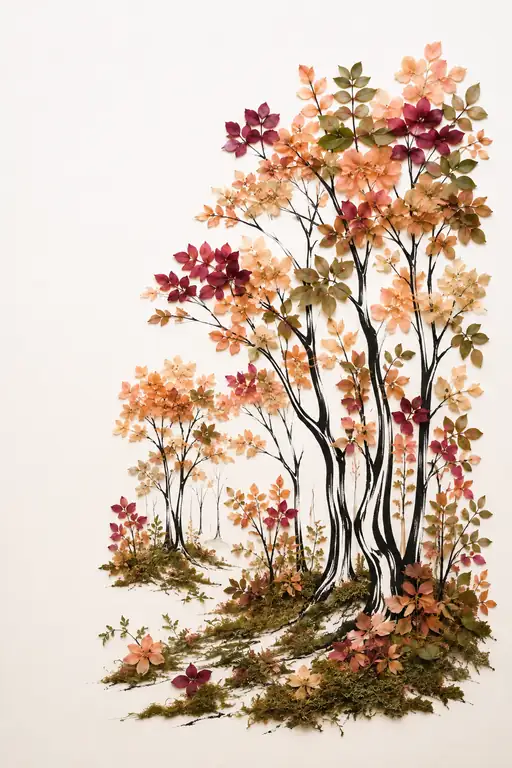 Living Earth of the Autumn Woods
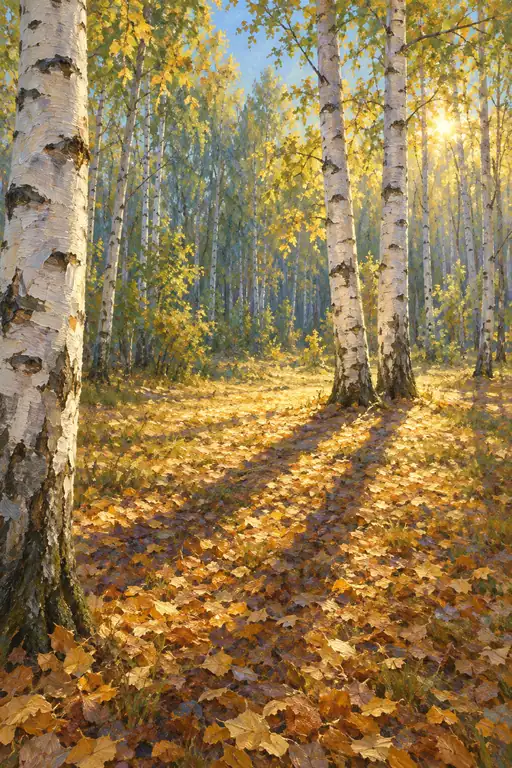 Sanctuary of Gilded Birch
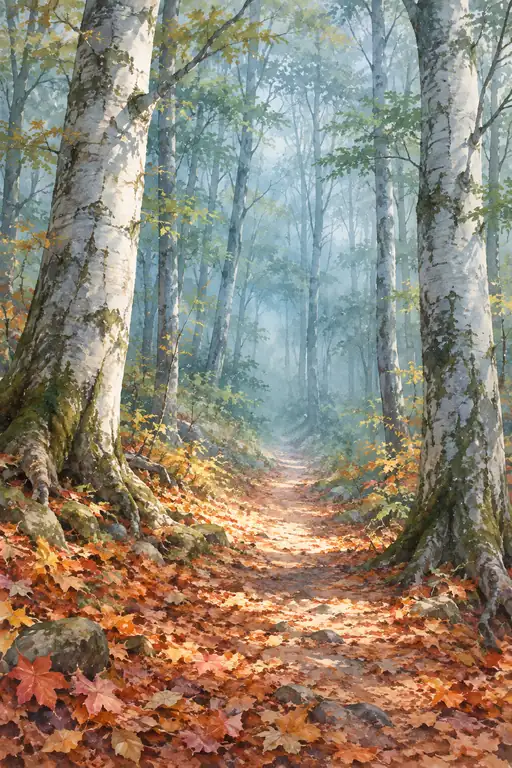 Golden Path into Mist
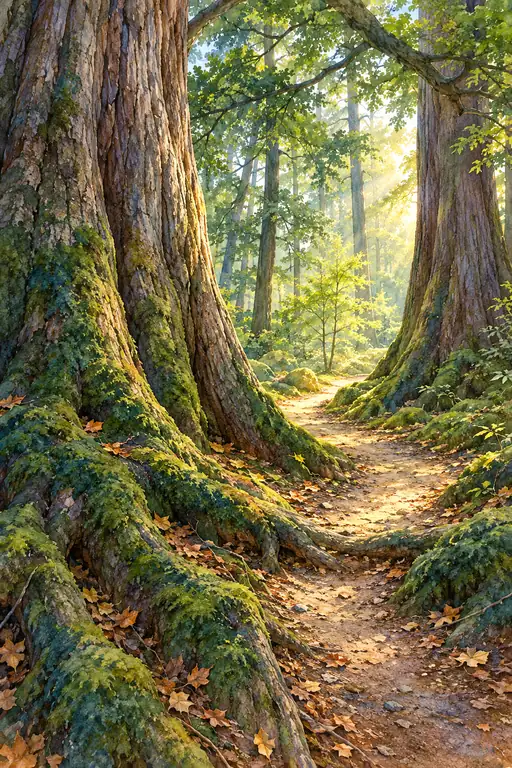 Sacred Canopy and the Sunlit Path
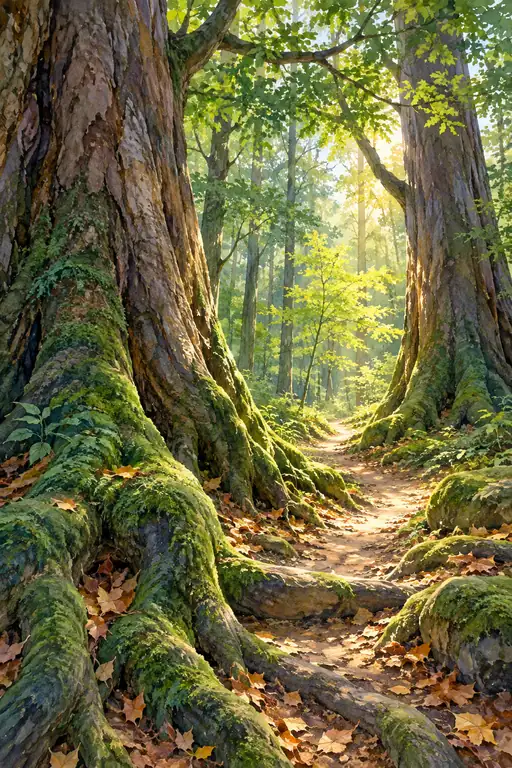 Breath of Ages and the Path of Light
 Path of the Fallen Fire
 Song of the Hidden River
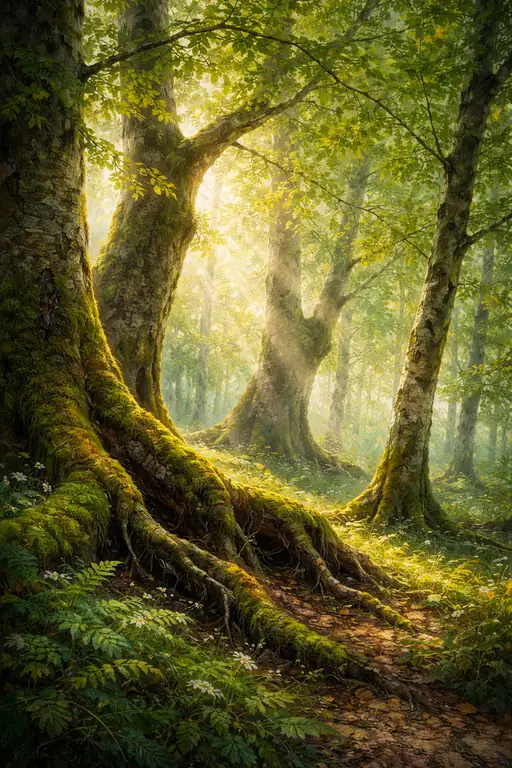 Morning Mist Awakening
 The Sun's Breath in a Verdant Dream
 Whispers of the Emerald Canopy
 Golden Leaves Crowned in Morning Dew