The Silent Cascade of Golden Seconds
Critique
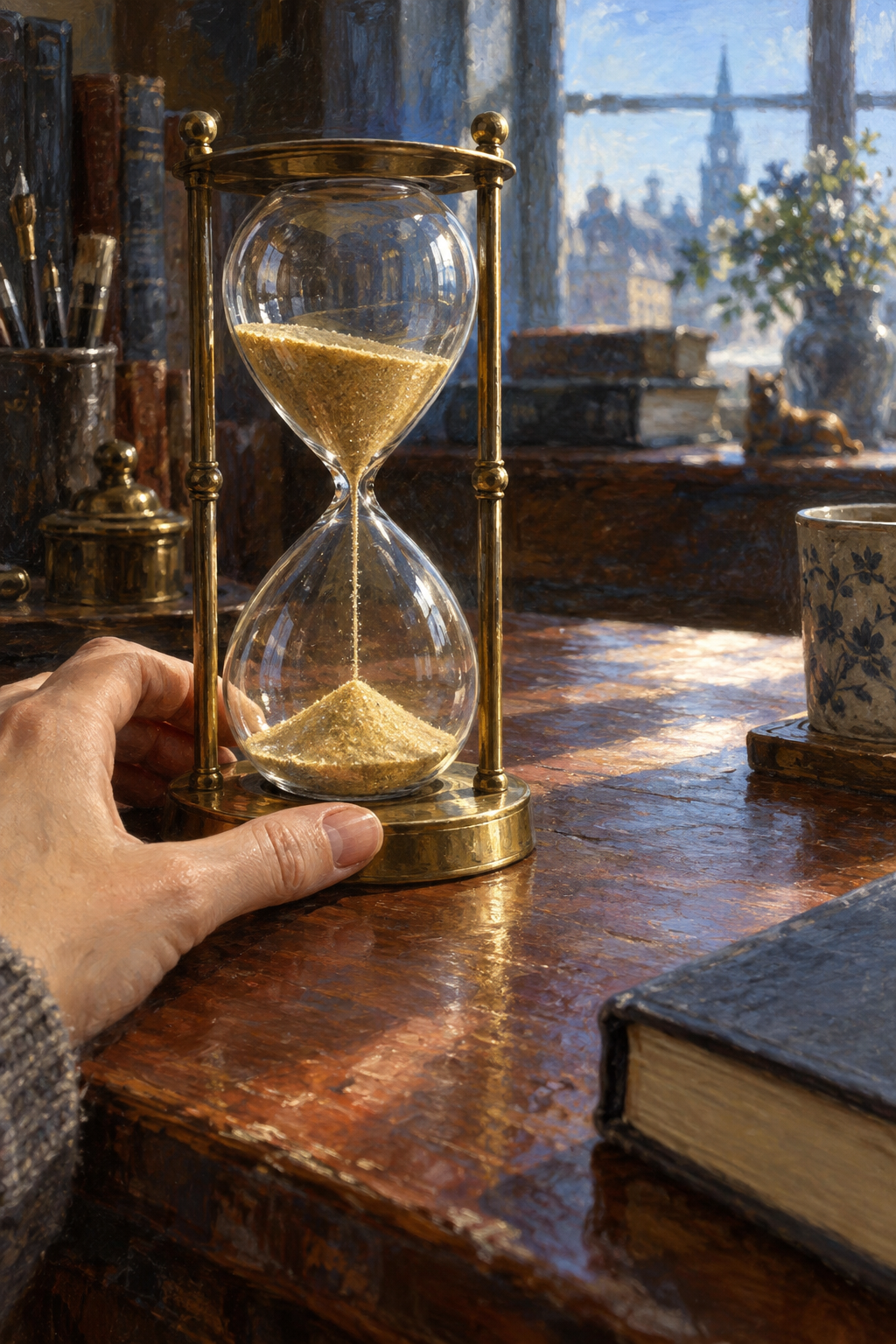
Introduction An hourglass in a polished brass frame stands on a wooden desk beside a resting hand. Golden sand falls between transparent bulbs, making a narrow stream the visual center of a richly furnished still life. Cool window light and warm reflections place the object within a quiet working interior. Description Sand forms a sloping mass in the upper bulb and a small cone below. The hand touches the circular base at the lower left. Books and brushes occupy the darker left background, while a blue-patterned cup and a cropped book appear at the right. Flowers and distant rooftops remain visible through the window. Analysis The frame's vertical columns stabilize the two curving glass chambers. Bright window reflections follow their edges, separating transparency from the darker room seen through them. The fine falling line connects two larger gold shapes. A reflected streak on the desk continues the object's vertical emphasis into the foreground without duplicating its structure exactly. Interpretation and Evaluation The visible flow gives elapsed time a physical form through accumulation and depletion. The nearby hand introduces human attention without interrupting the mechanism. Glass, metal, paper, and worn wood are differentiated through distinct highlight patterns, and the surrounding study objects reinforce concentration while remaining secondary to the central passage of sand. Conclusion The initial appeal of a luminous object develops into close observation of a small ongoing change. The contrast between the stable frame and moving grains gives the scene its quiet tension. Clear geometry, restrained background focus, and opposing warm and cool light make duration visible within a materially specific desktop setting.
Same Subcategory
 Timeless Autumn Chronicle
Similar Artworks
 Patience Measured in Gilded Dust
 The Golden Spiral of Timeless Knowledge
 The Afternoon Left Between the Pages
 The Silent Dialogue
 The Fragile Hold of Time
 Sands of Serene Passage
 Echoes in the Falling Sand
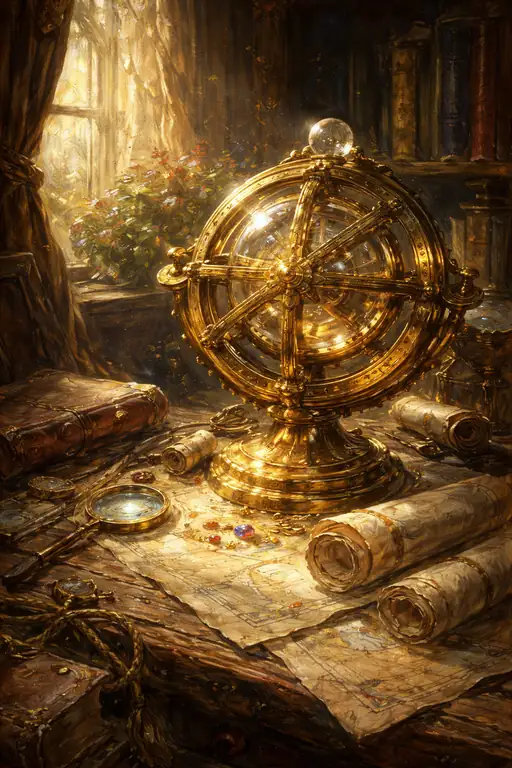 Wandering Through the Celestial Spheres
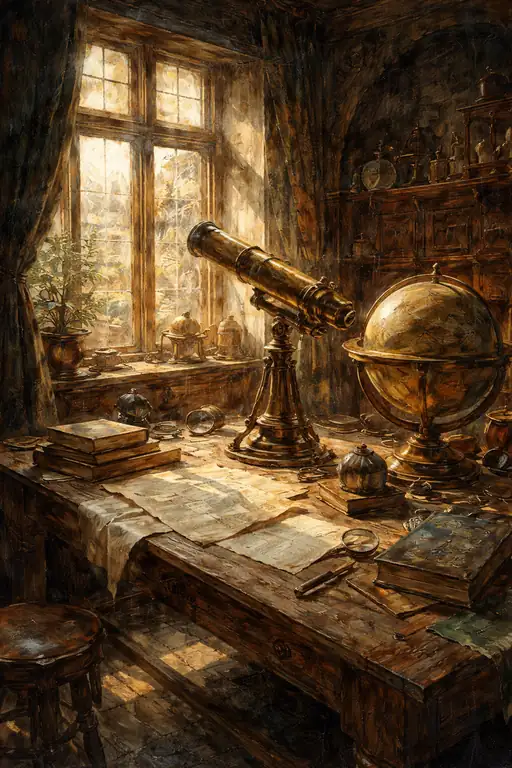 Vigil of the Golden Scholar
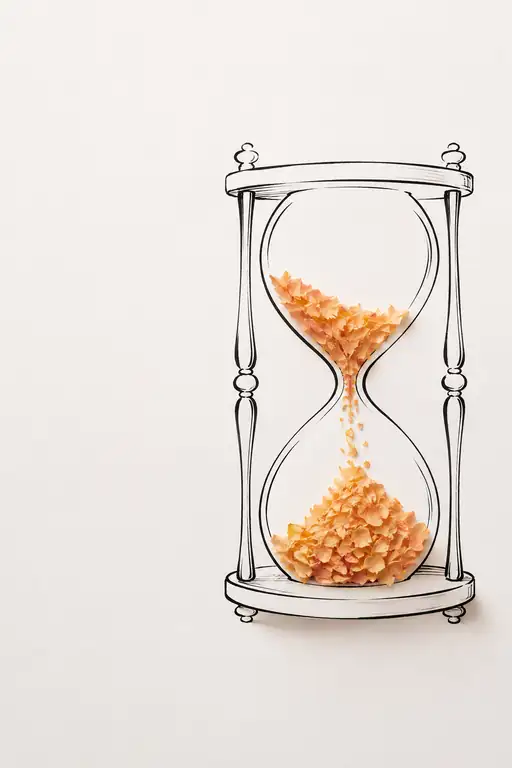 Golden Sands of Fleeting Hours