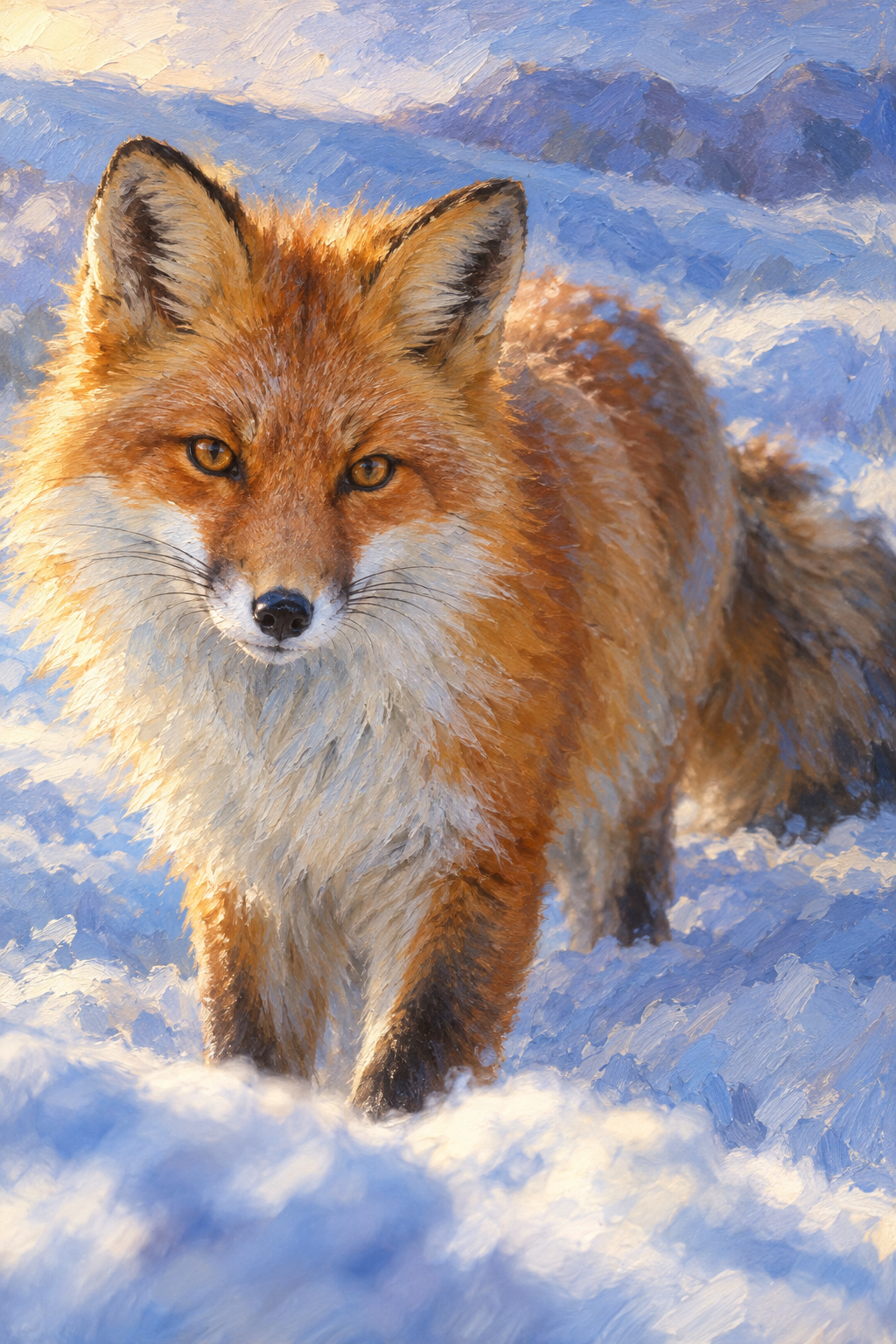
Golden Flame in Winter Solitude
Critique
Introduction A fox faces the viewer from within a field of blue-shadowed snow. Its upright ears and amber eyes concentrate attention near the upper left center, while the body recedes to the right. The image gives the animal a compact, alert presence through a close crop and clearly opposed temperatures. Description White cheek fur spreads outward beside a small dark nose, continuing into a long pale chest. Blackened lower forelegs emerge before disappearing behind a raised foreground snowbank. The back carries scattered cool patches, and a thick tail reaches toward the right edge. Broad snow ridges occupy the upper background. Analysis The face forms a tapered arrangement between the wide ears and narrow muzzle. Left-side illumination picks out projecting hairs, whereas blue and lavender strokes break up the shaded body. The chest's long downward marks oppose the shorter, angular snow strokes, keeping pale fur legible against an equally light environment. Interpretation and Evaluation The steady gaze and planted forelegs suggest a pause in movement. The tail and receding flank enlarge the animal's physical context beyond its expressive face. The strongest descriptive decisions are the dark outlines around the eyes and the changing direction of fur, which establish form without making every surface equally detailed. Conclusion The initial attraction of the fox's gaze develops into attention to how its body occupies uneven snow. The foreground ridge conceals the paws and gives the animal a definite position within the terrain. Warm fur, cool reflected color, and varied stroke lengths create a coherent portrait of watchfulness within a textured winter setting.
Same Subcategory
Similar Artworks
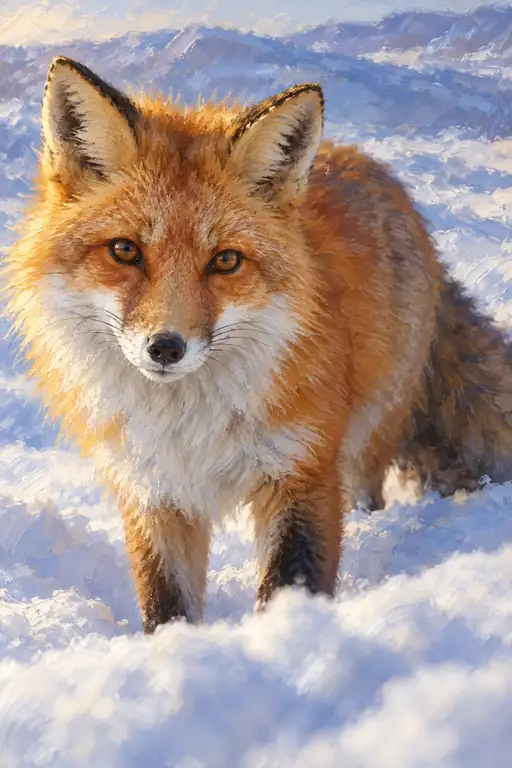 Amber Gaze in the Silent Frost
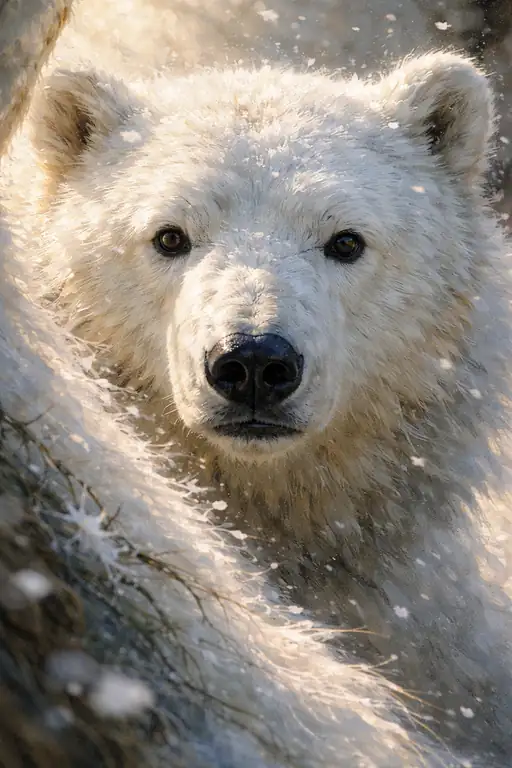 Quiet Dignity in the Frost
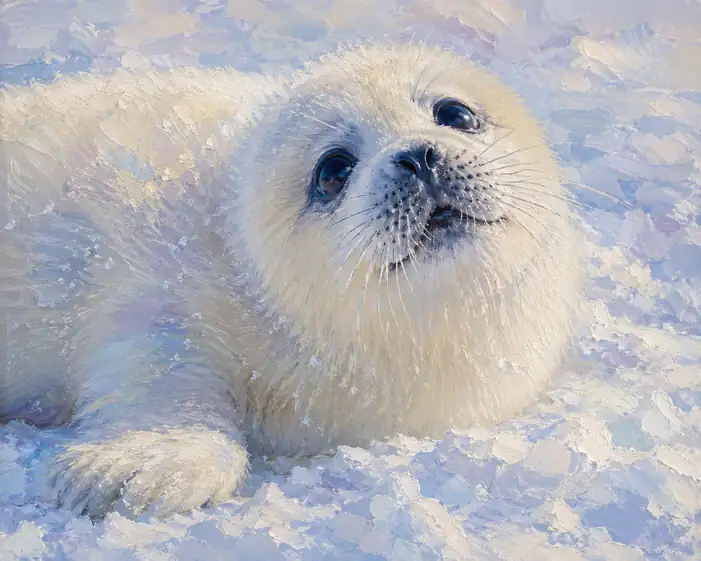 Warmth in the White Silence
 Basking Along the Green Canopy
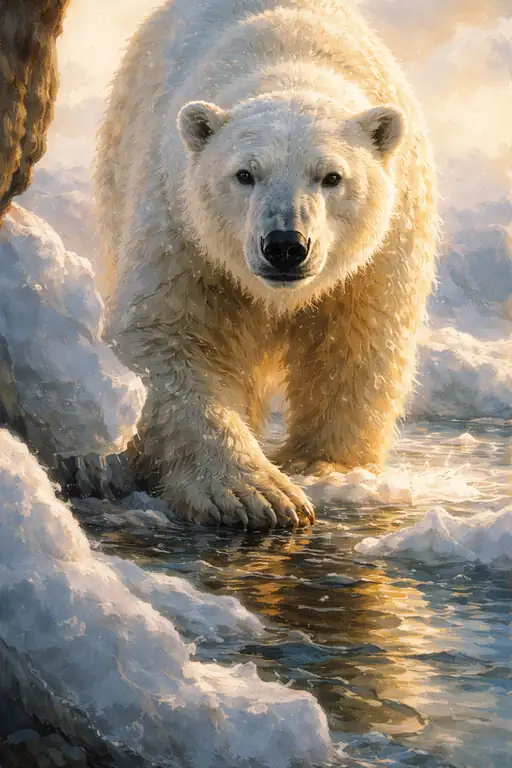 Monarch of the Golden Frost
 Dappled Slumber on the Bough
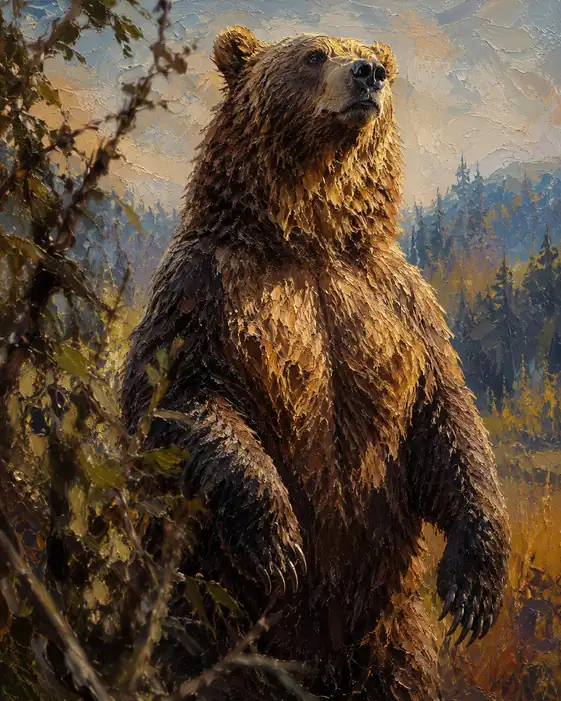 Sovereign of the Golden Forest
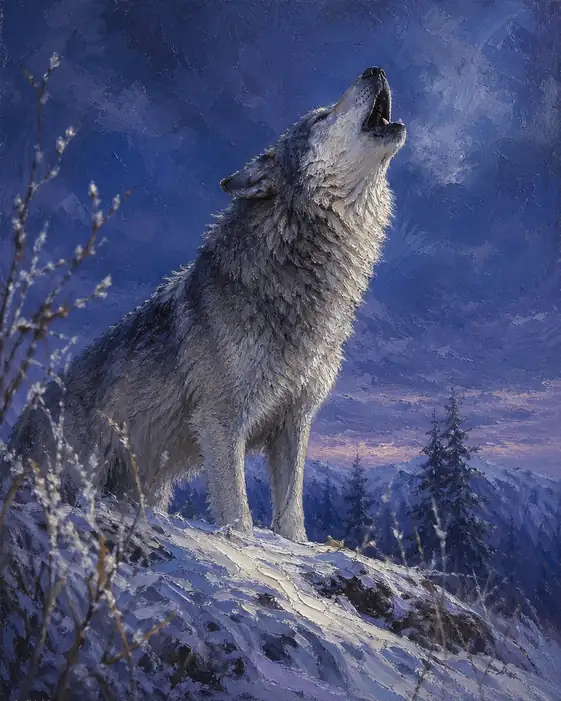 Echoes from the Edge of the World
 River Stone Kept in Little Paws
 Treasure of the Clear Shallows