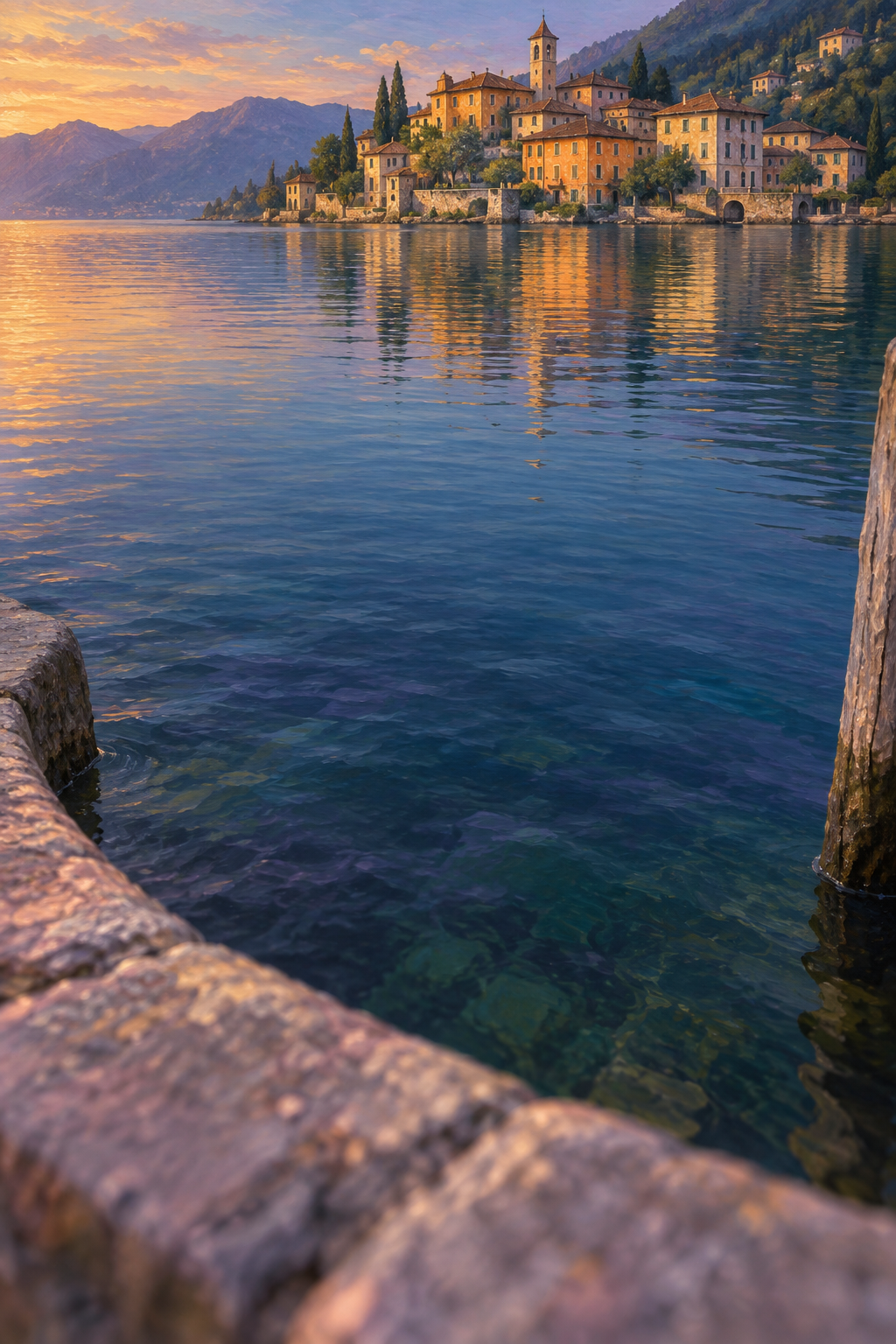
Twilight Reflection of the Lakeside Hamlet
Critique
1. Introduction This serene lakeside landscape depicts a Mediterranean-style village situated along the calm waters of an alpine lake at twilight. Framed by an ancient curved stone quay and wooden mooring pile, the painting captures the peaceful communion of architecture, water, and sunset light. The composition evokes romantic tranquility. 2. Description In the immediate foreground, a curved stone pier of weathered masonry sweeps from the bottom left, while a vertical timber mooring post anchors the right edge. Between them lies deep, crystal-clear turquoise lake water shifting toward twilight indigo. Across the mirrored surface, a village of villas and a slender church bell tower clings to the water's edge below steep forested mountains under an apricot-colored sunset. 3. Analysis The artist establishes spatial depth by contrasting the tangible texture of the stone quay with the ethereal transparency of the lake. Liquid reflections of terracotta buildings and sunset sky dissolve softly across subtle surface ripples. The warm golden-orange radiance of the evening sky harmonizes with cool, deep blues of the water, creating a balanced complementary palette. 4. Interpretation and Evaluation The painting serves as an allegory for harmony between human community and natural majesty. The tranquil lake reflects the enduring stability of ancient dwellings, suggesting a peaceful way of life attuned to elemental cycles. The absence of modern disruption evokes a nostalgic yearning for quiet contemplation beside mirrored waters. 5. Conclusion In conclusion, the artwork excels in atmospheric luminosity, water transparency, and harmonious architectural integration. Its masterly handling of evening reflections and tactile stone surfaces creates a deeply restorative visual experience. The painting stands as an enchanting celebration of lakeside tranquility.
Same Subcategory
 1787952808106
Similar Artworks
 Tranquil Morning at the Lake's Edge
 Reflections of a Peaceful Dream
 A Luminous Dream by the Shore
 Where Twilight Dreams in Pink
 Serenity in the Shadows of Giants
 Where the Journey Pauses
 Sunset Serenade on the Quiet Shore
 Twilight Reflections by the Lake
 Balcony Over the Azure Serenity
 The Floral Chalet in the Sun: A Vibrant Alpine Sanctuary