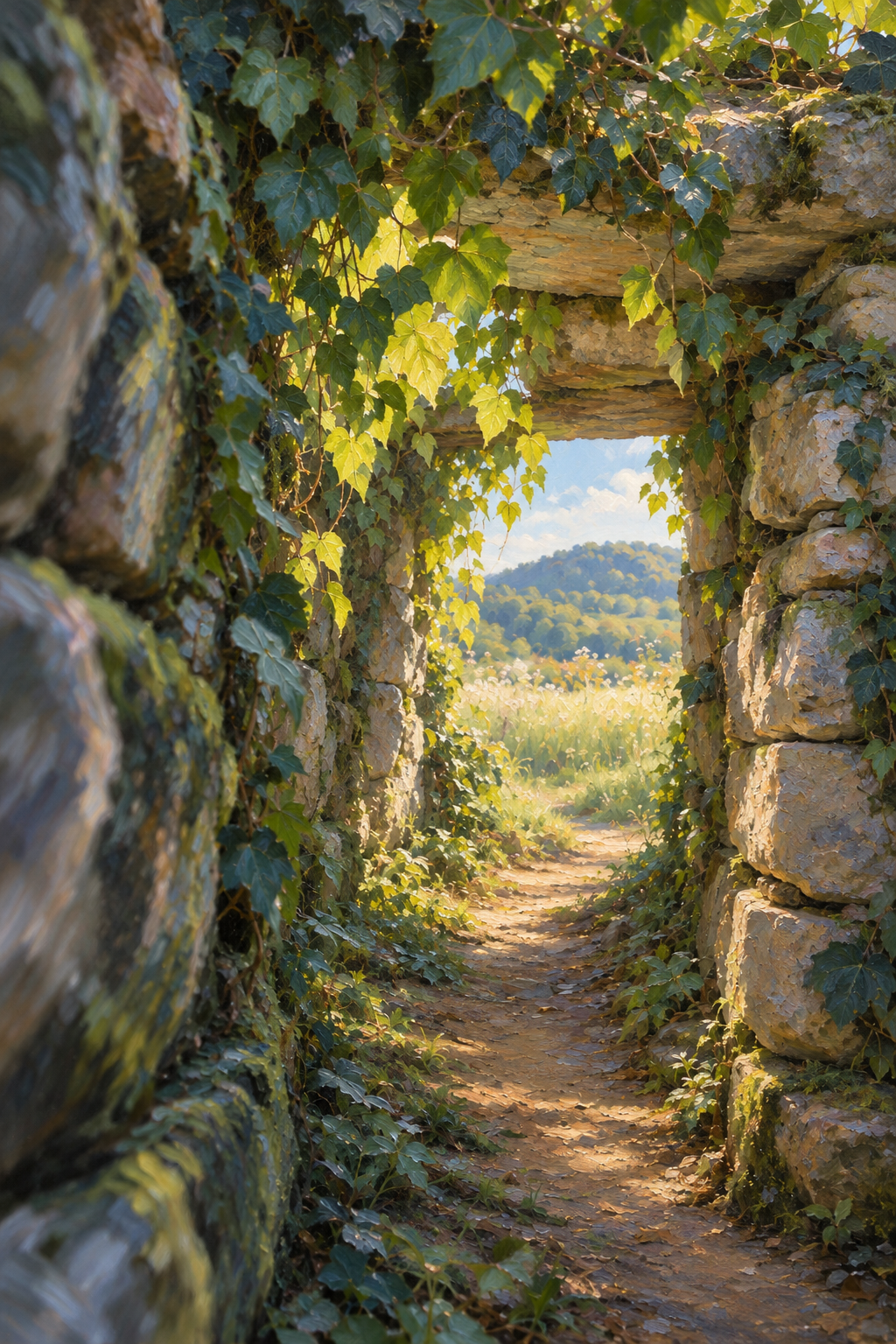
Ivy Portal to the Summer Pasture
Critique
1. Introduction This evocative landscape painting depicts a sunlit rural vista viewed through the weathered stone opening of an ancient, ivy-clad ruin. Framing an expanse of open countryside through a shaded architectural threshold, the composition explores the dialogue between historical decay and vibrant natural rebirth. The work evokes poetic nostalgia and quiet renewal. 2. Description Thick, mossy limestone walls frame the foreground, profusely draped in cascading tendrils of green ivy that catch golden overhead sunlight. Through the rectangular stone doorway, an unpaved earthen path leads toward sun-drenched meadows blooming with wildflowers. In the far distance, a gentle rolling hill clad in dense forest rises toward a soft summer sky dotted with fair-weather clouds. 3. Analysis The artist utilizes a classic "frame within a frame" technique, using the shadowed masonry threshold as a repoussoir to accentuate the luminous landscape beyond. Chiaroscuro contrast between the cool, shadowed stone interior and the incandescent outdoor daylight creates palpable depth. Saturated viridian and chartreuse tones of the ivy harmonize with distant olive hills and pale azure skies. 4. Interpretation and Evaluation The painting serves as an allegory for transition, time, and nature's reclamation. The crumbling masonry reminds the observer of passing human civilizations, while the thriving ivy and vibrant meadow celebrate organic resilience and continuity. Passing through the ruined stone portal symbolizes emergence from the shadowed weight of history into an open, luminous future. 5. Conclusion In conclusion, the artwork excels in atmospheric contrast, botanical fidelity, and evocative spatial staging. Its delicate rendering of sunlit foliage against aged masonry creates an inviting, contemplative journey. The painting stands as an enduring tribute to the romantic poetry of ruins and the eternal youth of nature.
Same Subcategory
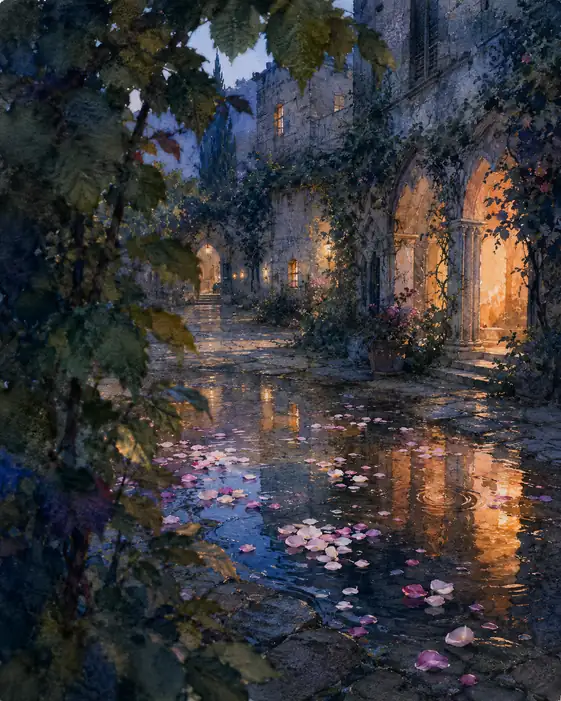 Petals Resting on After-Rain Courtyard Waters
Similar Artworks
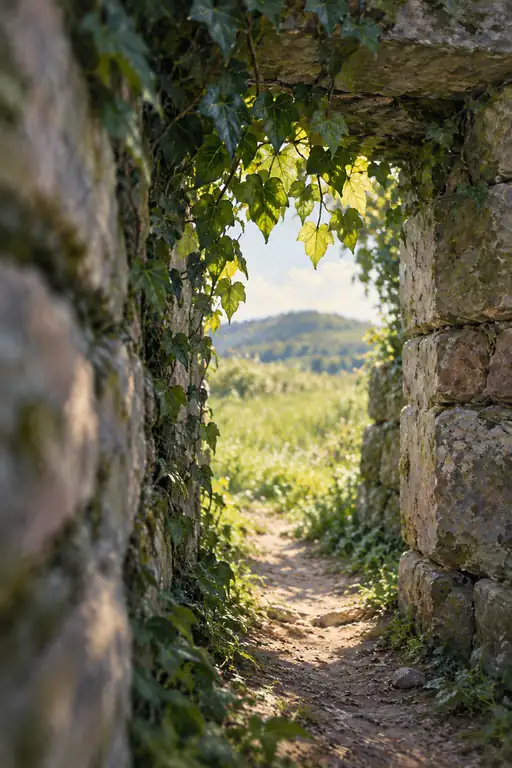 Beyond the Ivy Gateway, into the Sunlit Hill
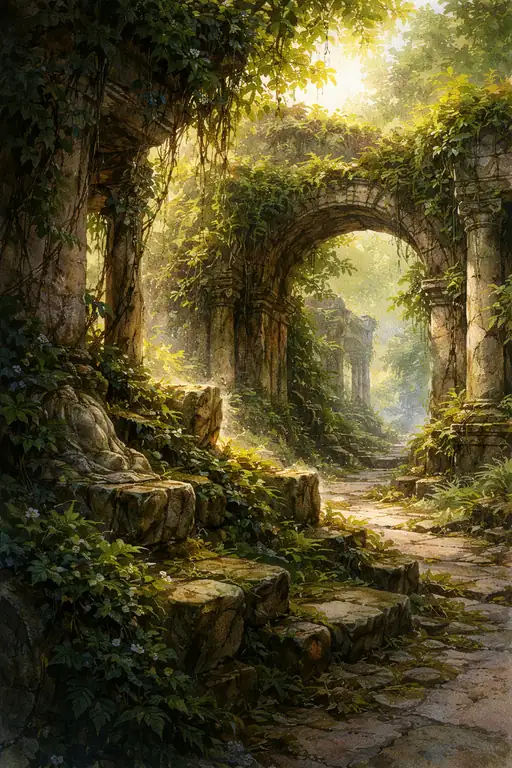 Nature's Reclaimed Archway
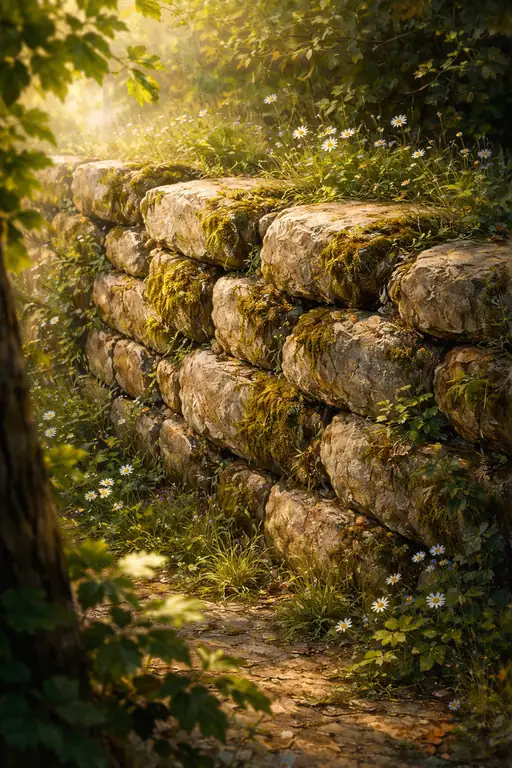 Breath of the Ancient Stones
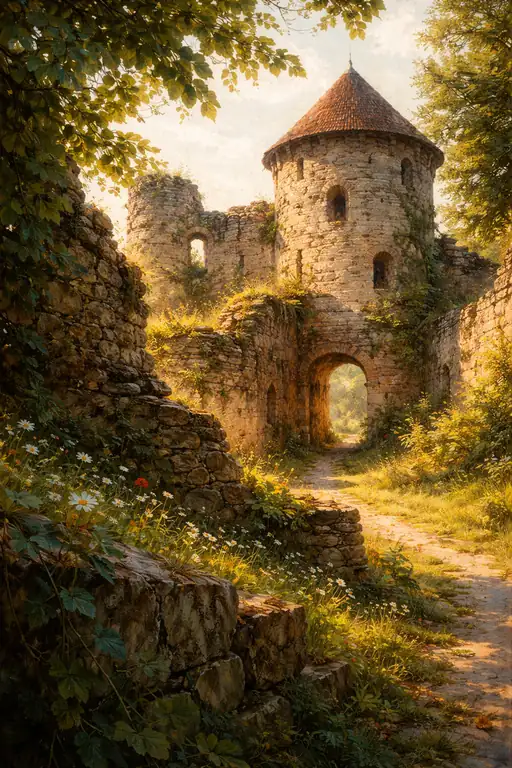 Nature's Embrace of the Ruined Tower
 Sunlit Cascades of Paradise
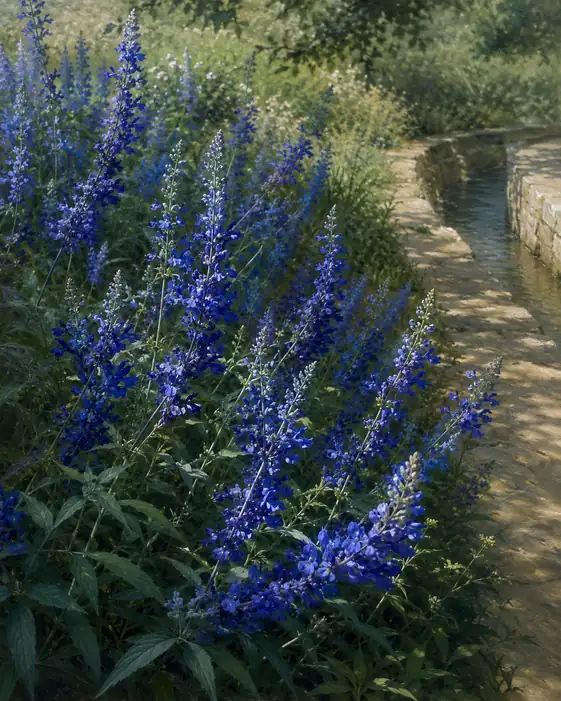 Azure Rhythms by the Curving Brook
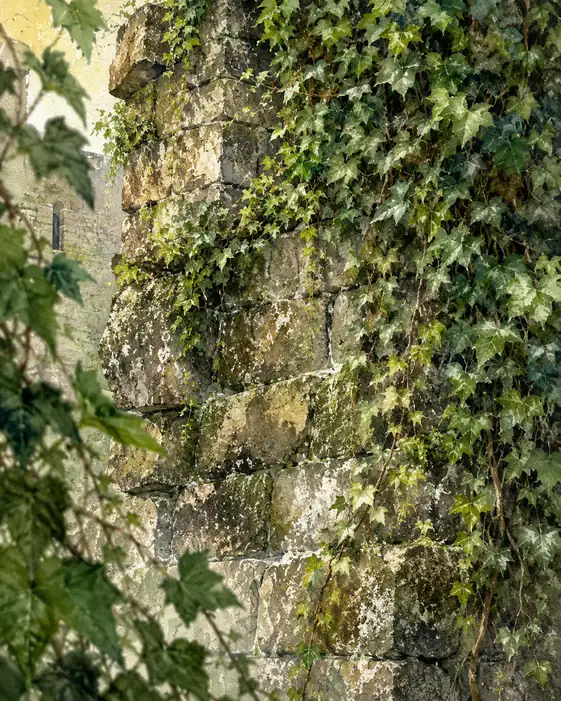 The Ivy's Silent Embrace of Time
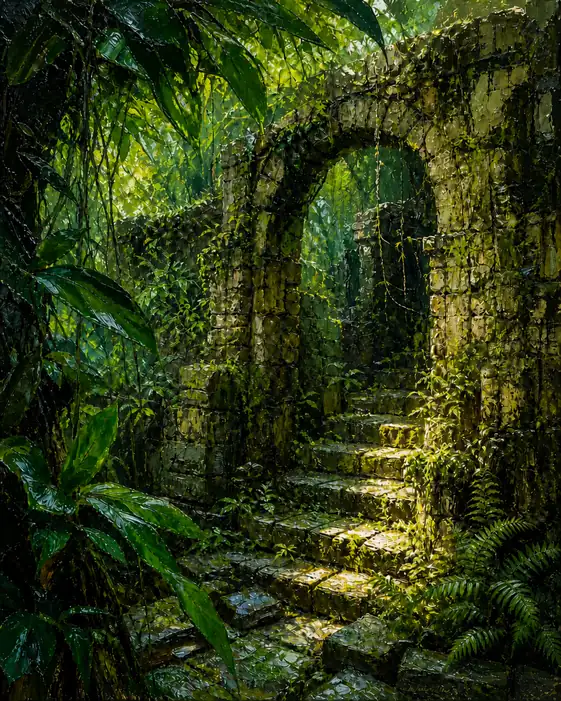 Threshold of the Emerald Silence
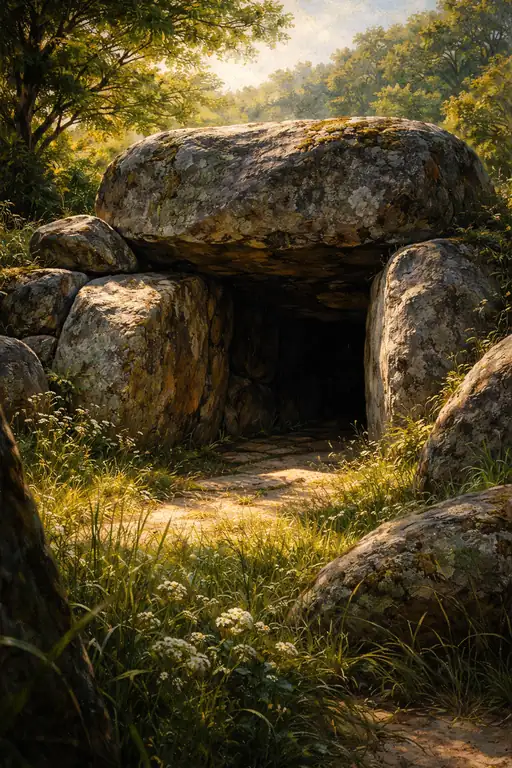 Echoes in the Mossy Stones
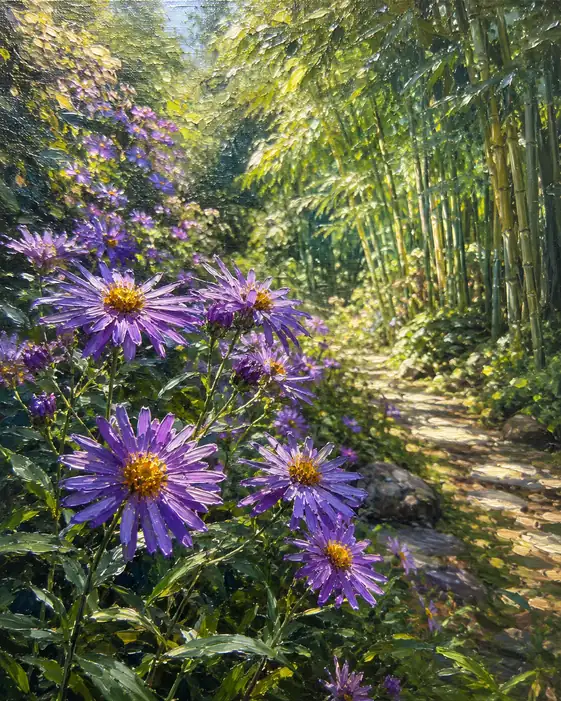 Sunlit Path in the Whispering Grove