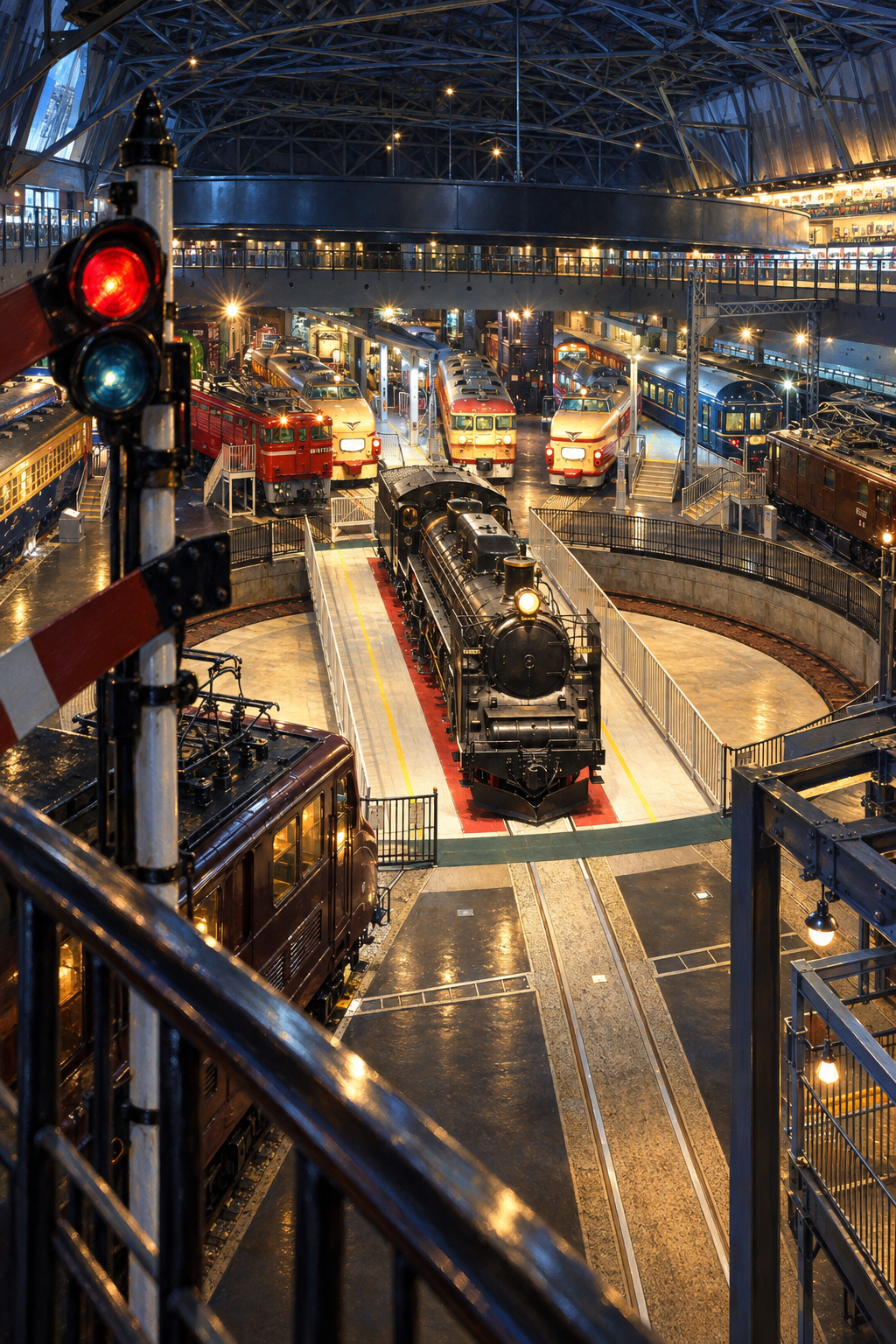
Vigil of the Crimson Beacon
Critique
1. Introduction This painting presents an atmospheric view of a railway roundhouse museum, centered around a historic steam locomotive on an iron turntable. In the left foreground, a tall semaphore signal introduces a mechanical framing device. The scene balances industrial heritage with quiet nostalgia, celebrating vintage engineering beneath an expansive terminal roof. 2. Description The composition is dominated by the massive boiler of a steam locomotive standing along radiating tracks. To the left, the vertical pole and arm of a semaphore signal stand sharply, its colored lenses gleaming. Above, arched lattice framework supports a cavernous roof with skylights, allowing daylight to wash over the floorboards and rails. 3. Analysis The artist establishes depth by using the semaphore as a repoussoir pushing the locomotive into the distance. Linear perspective converges toward the smokebox door, guiding the gaze past radiating rails. Contrasts between rich charcoal blacks, rusted ochres, and vivid jewel tones of signal glass create focal accents against the smoky ambiance. 4. Interpretation and Evaluation The work bridges functional engineering and poetic memory. By juxtaposing rigid railway geometry with gentle atmospheric haze, the painting elevates the retired locomotive into a monument of human ingenuity. The inclusion of the semaphore suggests enduring vigilance, turning the museum space into a sanctuary where industrial dynamism is preserved. 5. Conclusion In conclusion, the painting captures the dignified presence of nineteenth-century locomotion with technical precision and emotive lighting. Its balanced staging and disciplined tonal modulation create an immersive tribute to the age of steam, achieving a compelling blend of documentation and reverence.
Same Subcategory
Similar Artworks
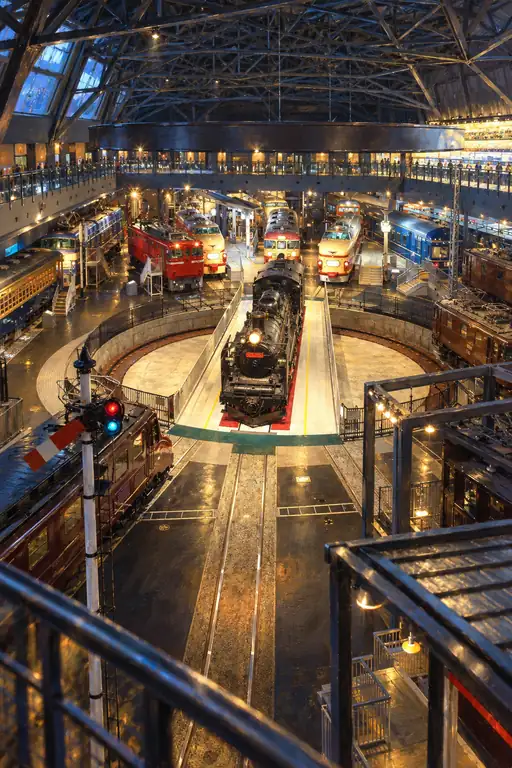 Overlook Above the Iron Tracks
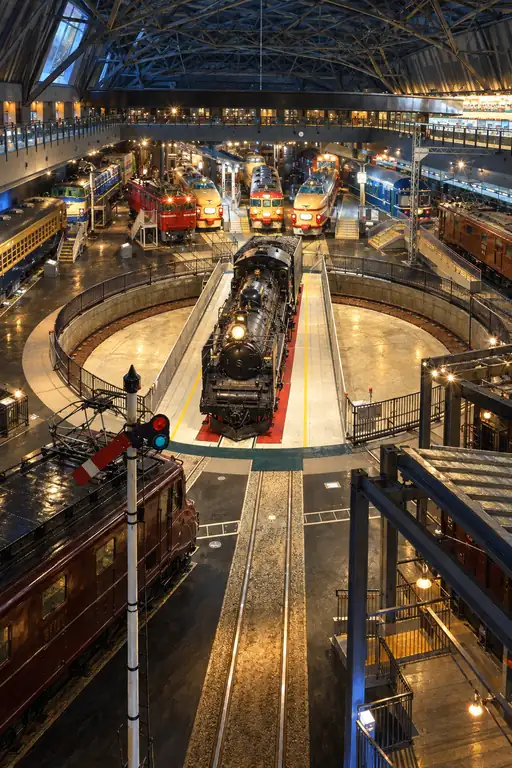 Pivot of the Iron Century
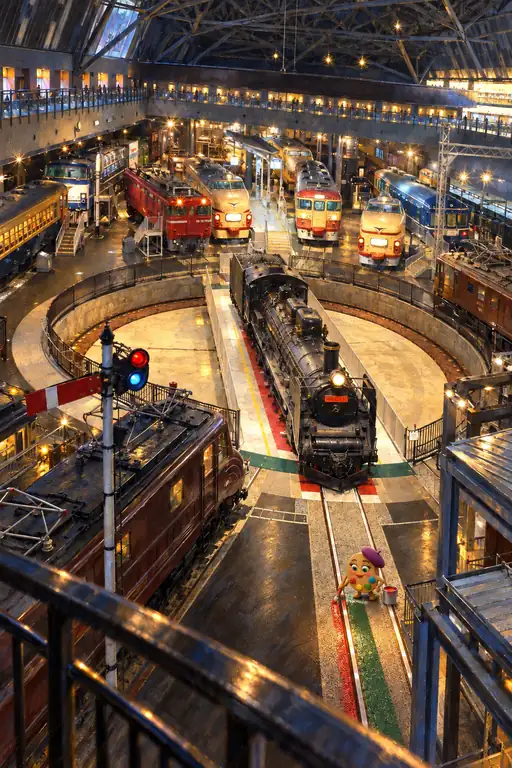 Painting Rainbows on the Sleepers
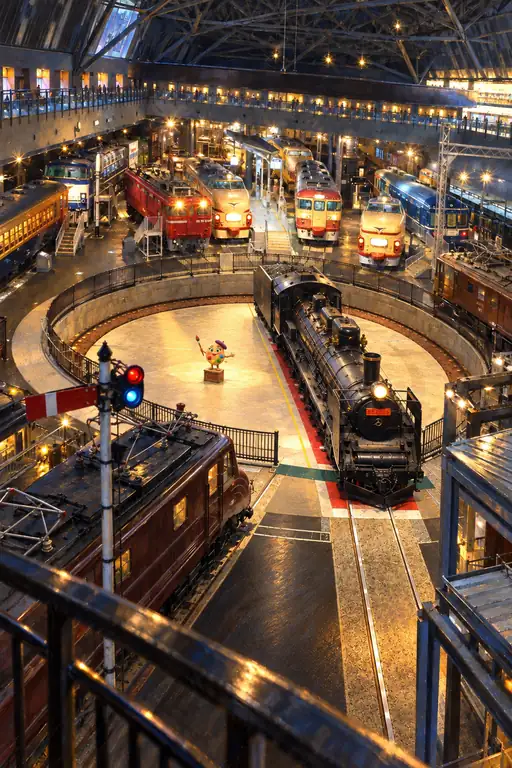 Whistle and Palette on the Turntable
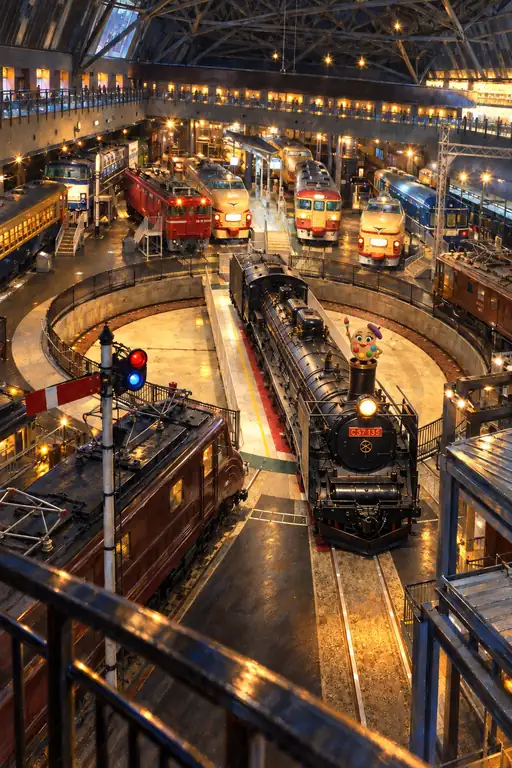 Perched on the Iron Smokestack
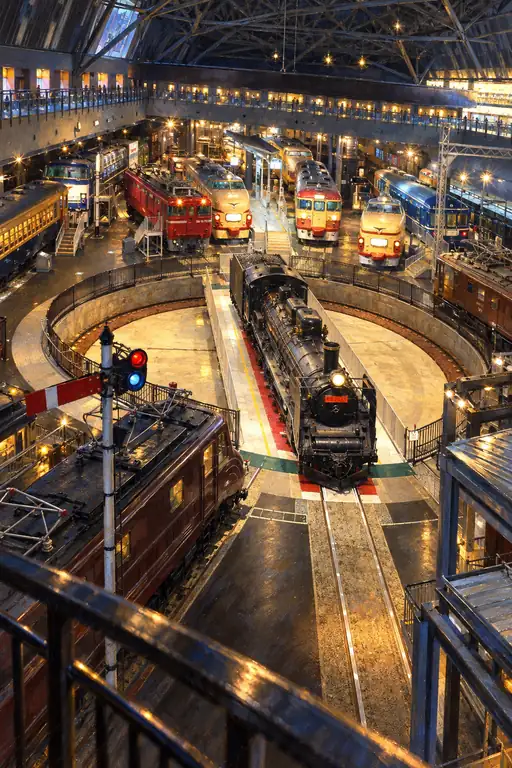 Signal Fire for the Steam Giant
 White Plume of the Dream Locomotive
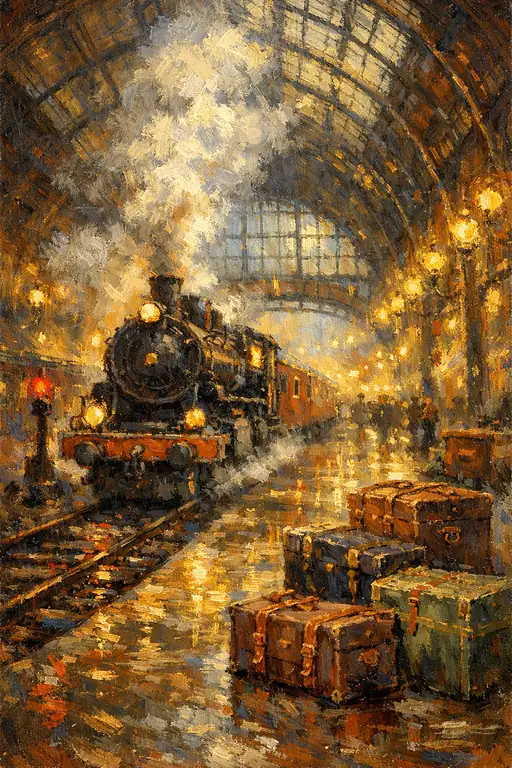 A Fleeting Farewell Amidst the Steam
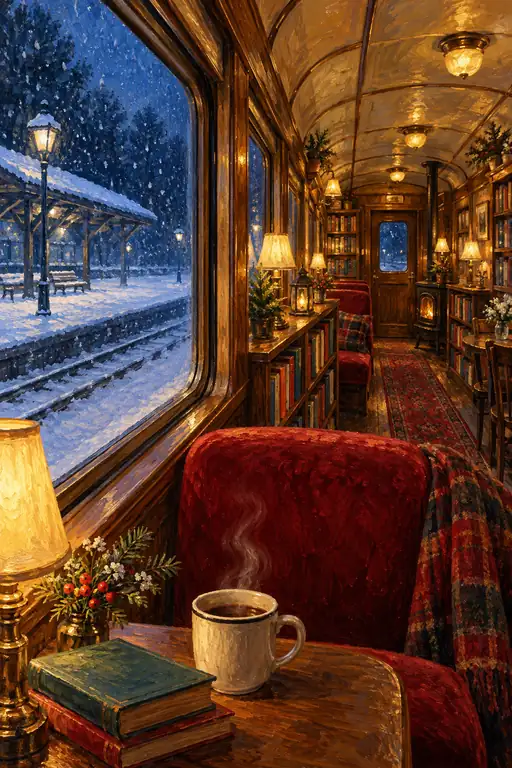 Warmth Rekindled in a Snowy Night's Library
 A Warm Window Crossing Winter