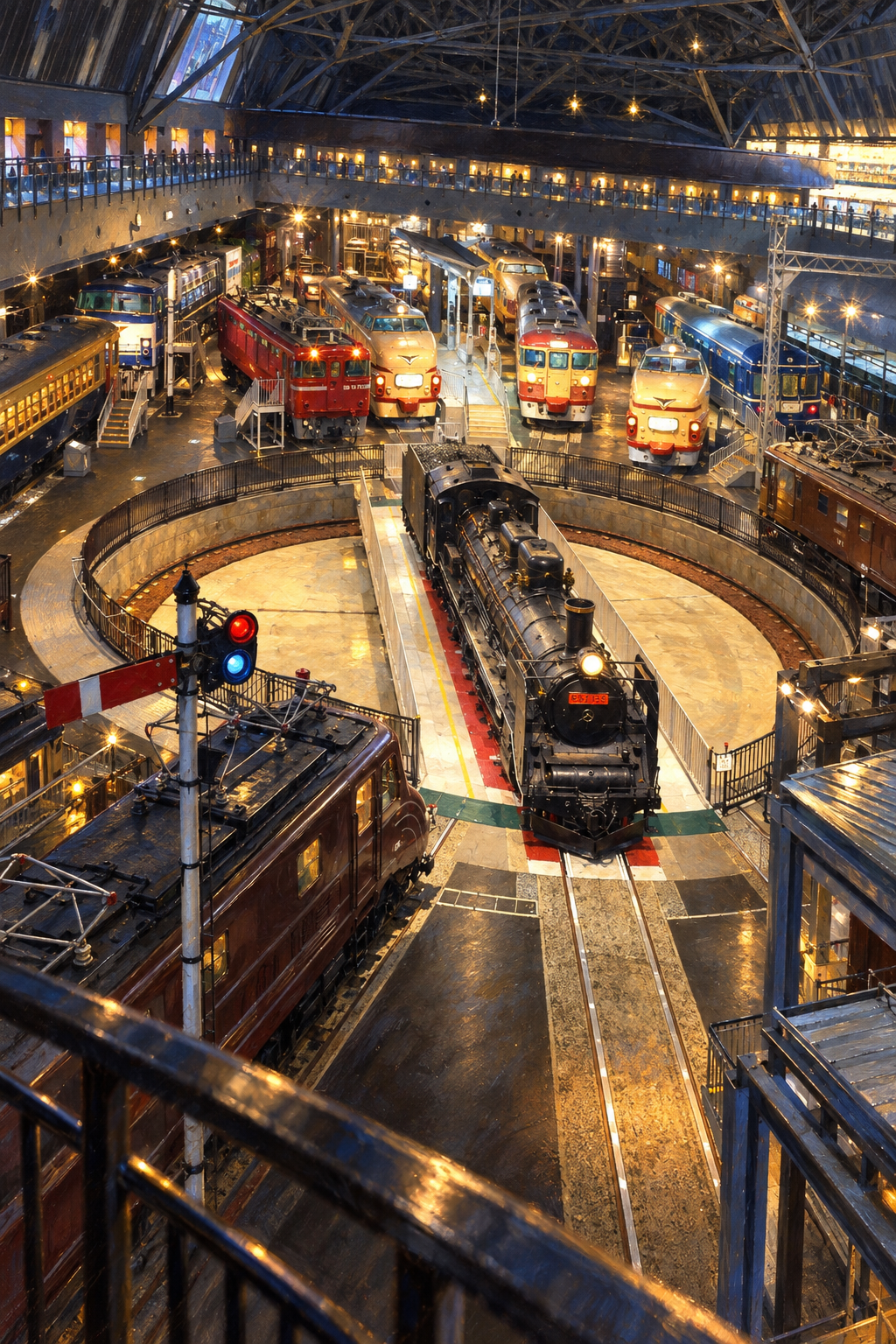
Signal Fire for the Steam Giant
Critique
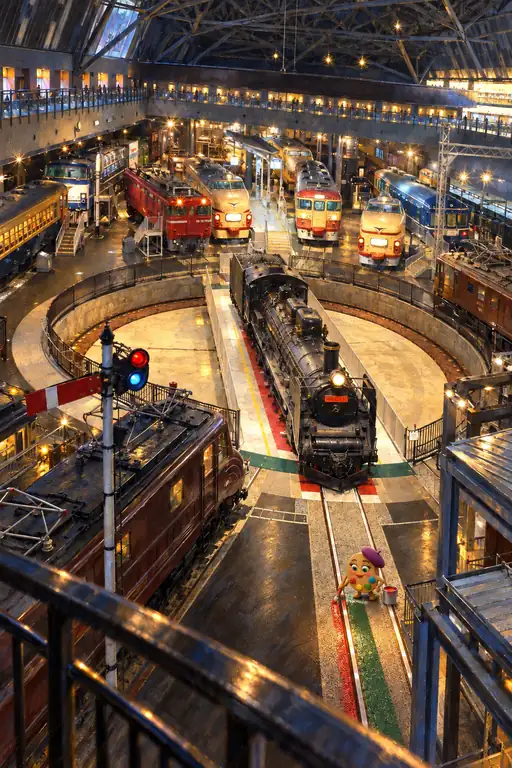
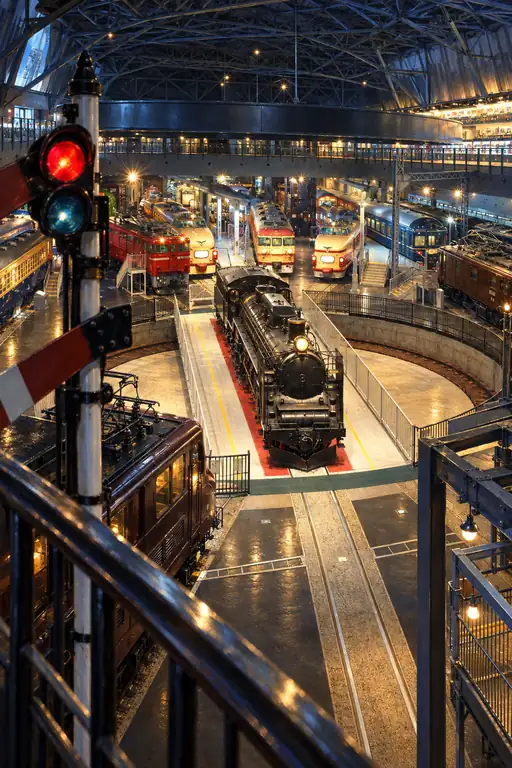
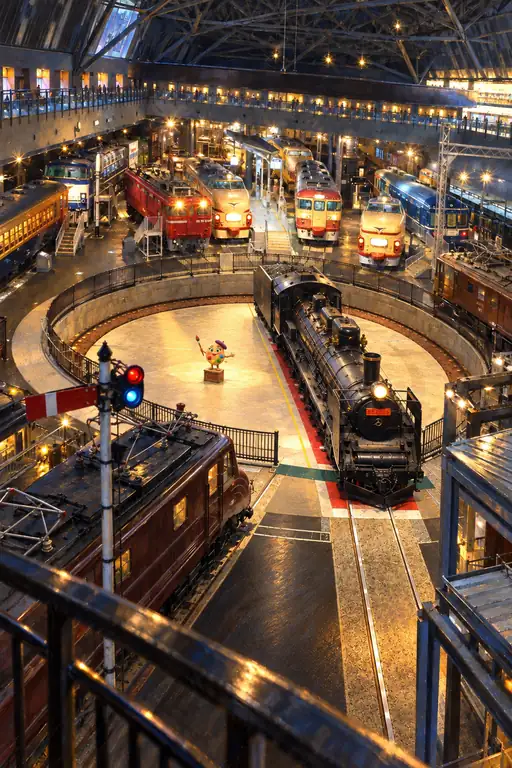
1. Introduction This detailed industrial landscape painting depicts the main exhibition hall of a transport museum, highlighting the coexistence of steam and electric locomotives. Viewed from an upper floor, the central turntable acts as the mechanical heart of the composition. The artwork explores the harmony between intricate structural ironwork and polished locomotive bodies. 2. Description In the middle ground, a black steam engine rests upon the glowing circular turntable, aligned with long approach tracks leading toward the viewer. To the left, an antique semaphore signal with illuminated red and green lenses stands beside a dark brown electric locomotive. Around the perimeter, a wide variety of vintage express trains and railcars are displayed under an expansive trussed ceiling. 3. Analysis The linear converging rails form a dominant vertical axis that anchors the circular turntable within the composition. Artificial lighting radiates across the polished floorboards, casting amber reflections that contrast with the deep blue-gray shadows beneath the roof. The interplay between the deep black finish of the steam engine and the bright signal lights creates focal vitality. 4. Interpretation and Evaluation The painting illustrates the historical evolution of rail technology and human mastery over mechanical movement. The juxtaposition of the steam locomotive with electric engines and signals symbolizes technological transition and collective innovation. Through meticulous perspective draftsmanship and sensitive handling of indoor atmospheric haze, the artwork demonstrates exceptional technical skill. 5. Conclusion This piece successfully translates the atmospheric grandness of railway history through disciplined spatial organization and nuanced illumination. While the black steam engine immediately commands historical reverence, the surrounding technical apparatus provides rich educational context. The painting provides an enduring tribute to industrial design, confirming its distinguished artistic value.
Same Subcategory
Similar Artworks
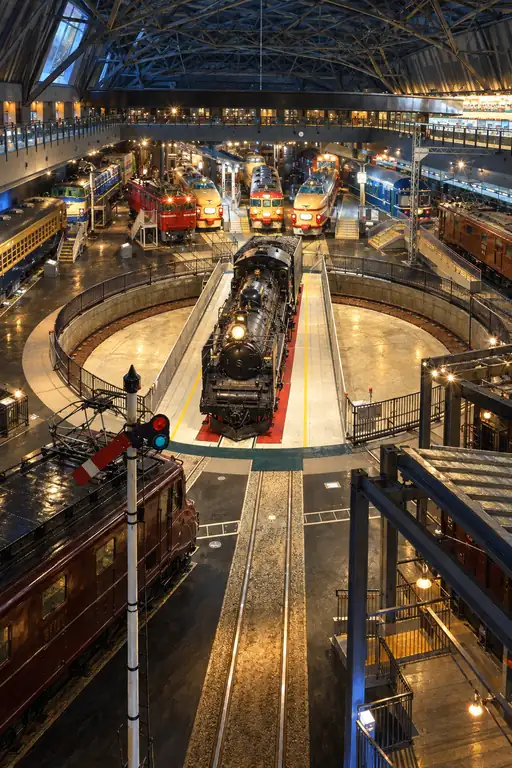 Pivot of the Iron Century
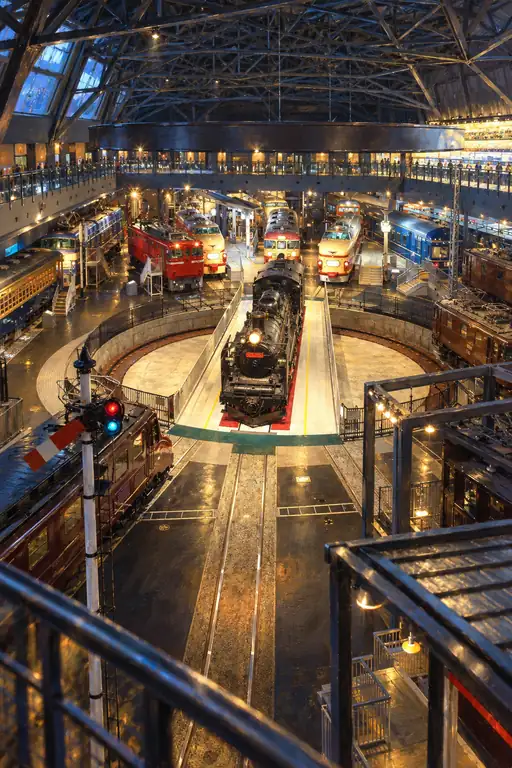 Overlook Above the Iron Tracks
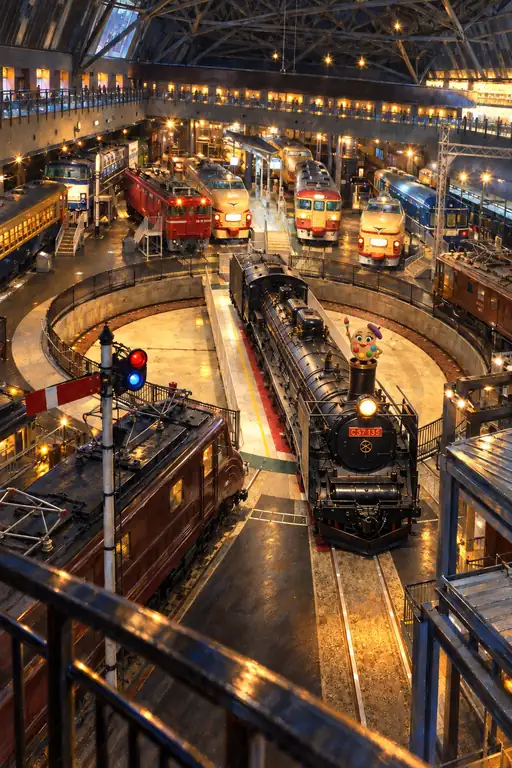 Perched on the Iron Smokestack
 Painting Rainbows on the Sleepers
 Vigil of the Crimson Beacon
 Whistle and Palette on the Turntable
 The Iron Pulse in Lavender Mist
 Whispers of a Flowering Journey
 Midnight Momentum: Fire on Iron
 Breath of the Iron Behemoth