
Unfolding Breeze on the Veranda
Critique
1. Introduction This contemplative still life painting portrays an open folding fan resting upon indigo-dyed cloth on the polished wooden veranda of a traditional Japanese pavilion. Beyond the architectural threshold lies a sun-dappled courtyard garden. The artwork explores the harmony between patterned paper craft and natural greenery. 2. Description In the foreground, a pleated paper fan decorated with broad indigo wave brushstrokes lies open atop folds of deep blue textured fabric. The glossy timber boards of the engawa veranda reflect warm daylight and cast leaf shadows. Outside, sunlit garden stones rest amidst lush green foliage, framed by the wooden frame of a sliding shoji door on the left. 3. Analysis The semicircular radiating form of the open fan provides a strong geometric foundation across the lower canvas. Natural afternoon sunlight streaming across the veranda creates sharp linear highlights along the fan's wooden ribs and illuminates the fibrous texture of the washi paper. The complementary interaction between deep indigo blues, warm amber floorboards, and fresh garden greens establishes visual balance. 4. Interpretation and Evaluation The painting celebrates the traditional Japanese seasonal aesthetic of seeking coolness during early summer. The folding fan symbolizes transient breezes, artisan heritage, and mindful domestic tranquility in harmony with nature. Through tactile rendering of coarse textile weaves and reflective varnished floorboards, the work displays exceptional technical virtuosity. 5. Conclusion This piece successfully translates the refined quietude of a traditional garden pavilion through balanced spatial composition and luminous light. While the bold indigo brushwork on the fan commands immediate visual focus, the sunlit garden outside fosters enduring contemplative calm. The artwork achieves profound aesthetic resonance, confirming its distinguished artistic value.
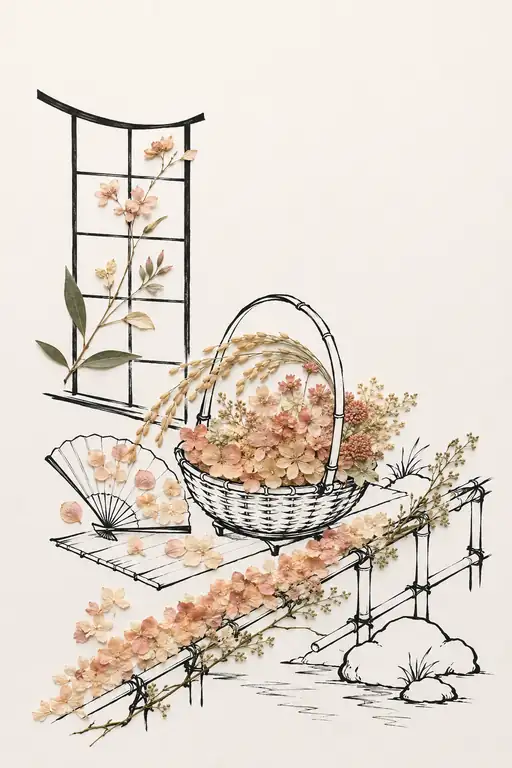 Harvest Basket and Peach Blossoms on the Veranda
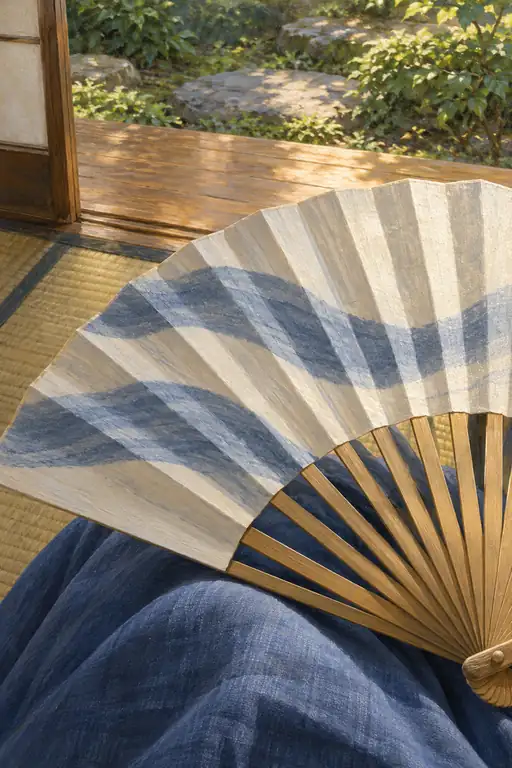 Ripples Resting on the Tatami
 The Color of Wind
 Indigo Breeze in the Sand
 Where the Wind Rests
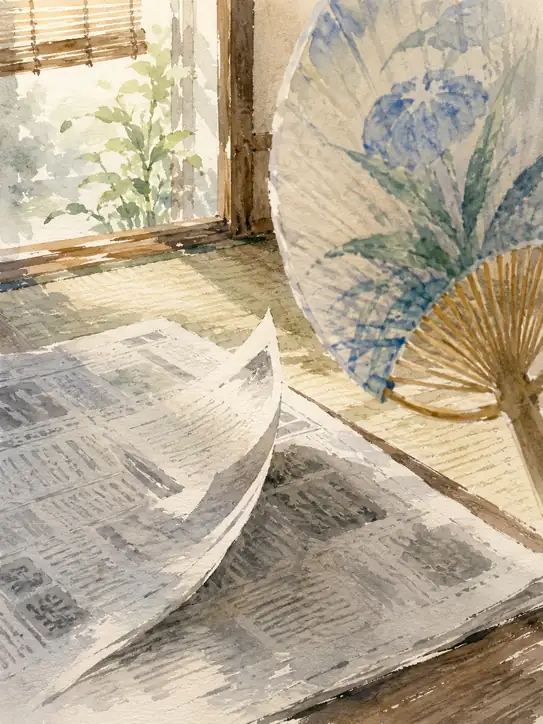 Whisper of the Summer Breeze
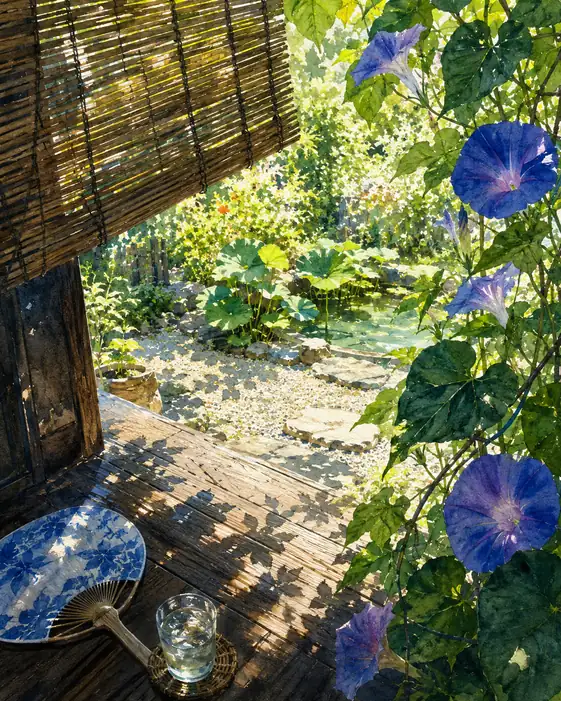 Where the Cool Breeze Lingers
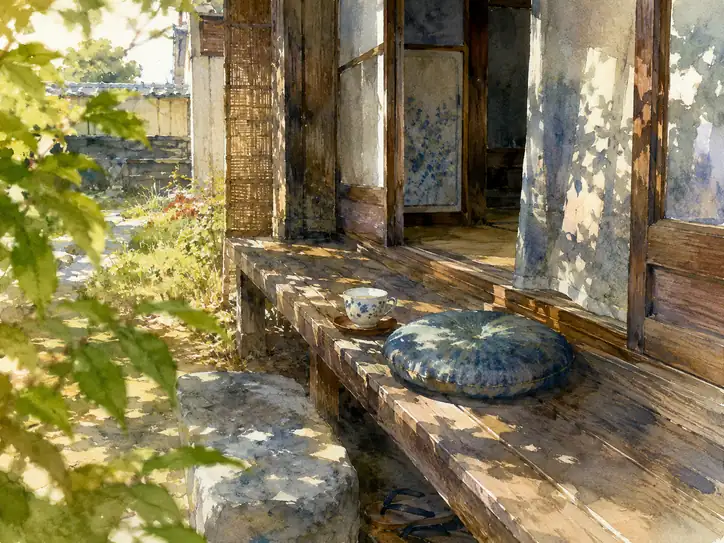 Whispering Sunbeams on the Veranda
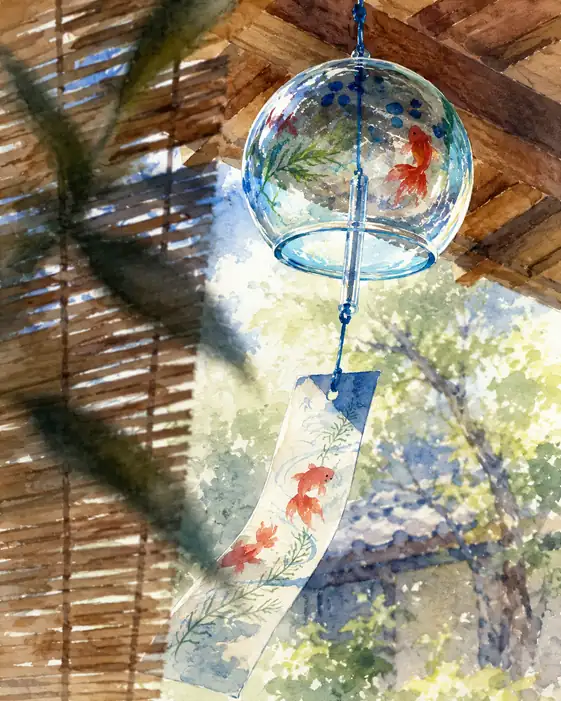 The Song of a Summer Breeze
 Breeze of Nostalgia
 Green Shadows on Polished Wood