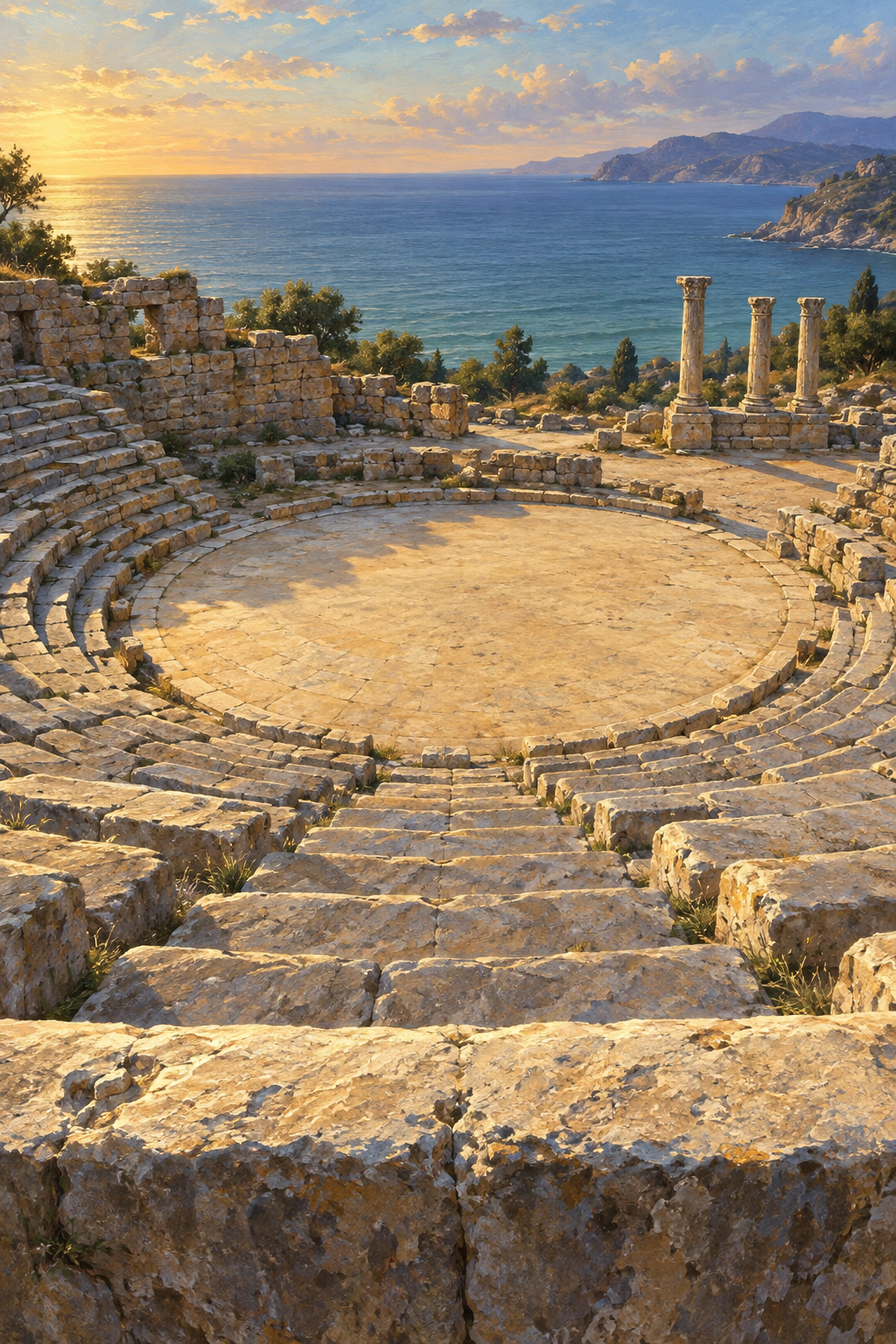
Theater of the Silent Sea
Critique
1. Introduction This archaeological landscape depicts the ruins of a classical amphitheater overlooking a shimmering Mediterranean sea at sunset. Stepped stone seating curves downward toward a circular orchestra stage. The composition is built upon the contrast between weathered golden limestone and the azure ocean. 2. Description The foreground features tiers of weathered stone seats and a central stairway descending toward the circular orchestra below. Behind the performance circle, the backdrop opens directly to the sea, where three Corinthian columns stand atop a stone terrace among olive trees. In the background, the setting sun casts a golden path across the water. 3. Analysis The semicircular geometry of the tiered seating creates an encompassing perspective that draws the gaze from foreground stone down to the stage and toward the horizon. Warm raking sunlight accentuates pitted textures of the ancient blocks with deep shadows. The harmony between golden-ochre stone and deep marine blue enriches spatial depth. 4. Interpretation and Evaluation The painting contemplates the passage of time, the endurance of classical civilization, and the union of architecture with the natural world. The ruined theater symbolizes an eternal stage where history and nature continually interact. Through textural impasto on masonry and luminous rendering of sea reflections, the work displays painterly authority. 5. Conclusion This piece successfully captures the quietude of classical antiquities through disciplined geometric composition and Mediterranean light. While the circular seating initially commands attention, the panoramic sea view instills lasting spiritual awe. The artwork provides a profound meditation on history, confirming its artistic value.
Same Subcategory
Similar Artworks
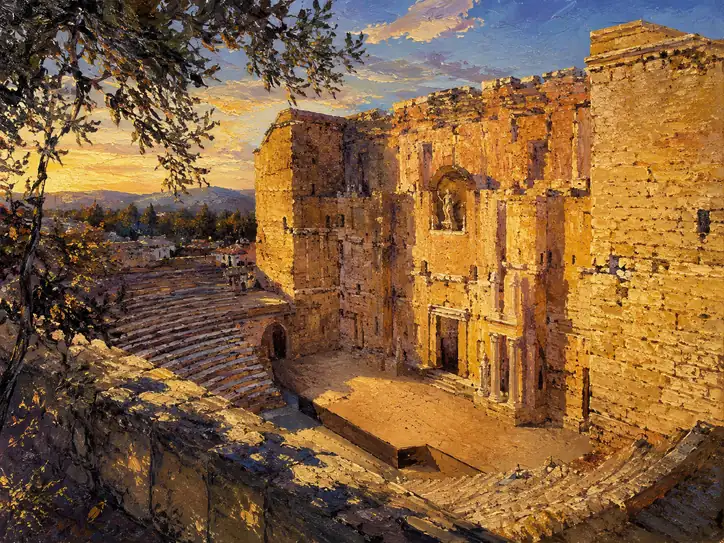 Twilight's Last Ovation
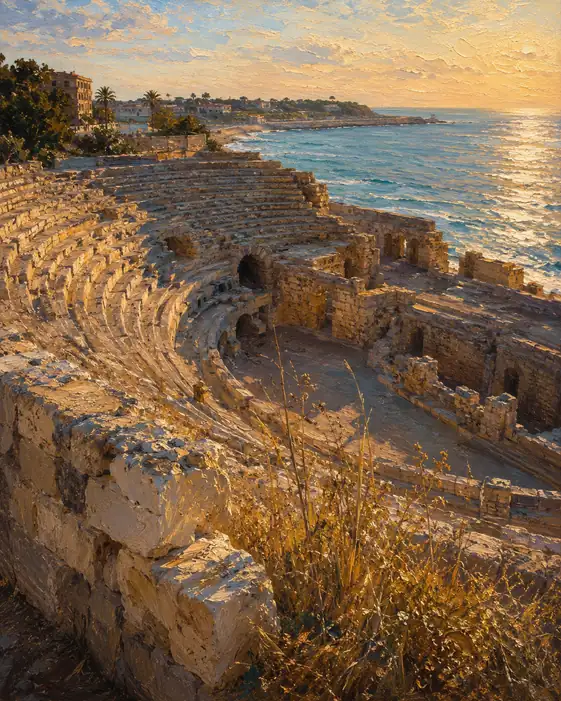 Where the Applause Met the Tide
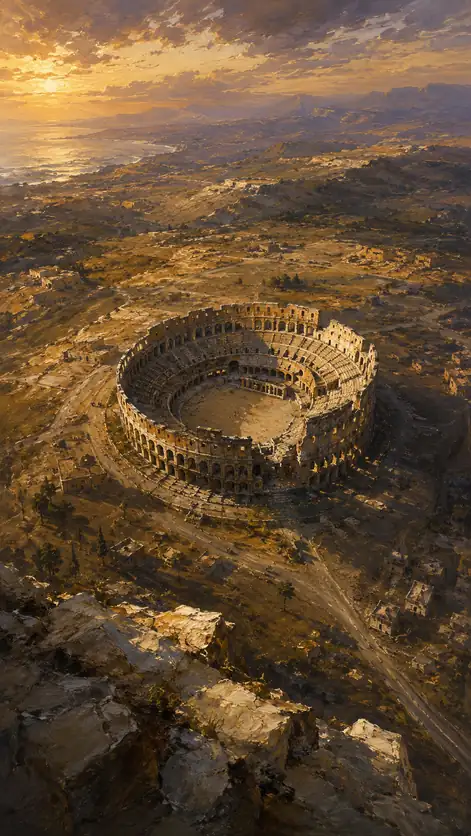 Echoes of a Forgotten Empire
 Whispers of Antiquity Bathed in Gold
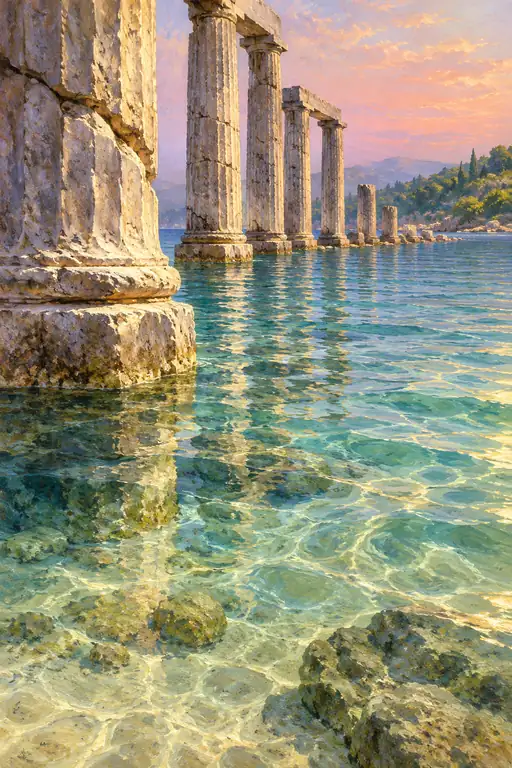 Pillars in the Emerald Shallows
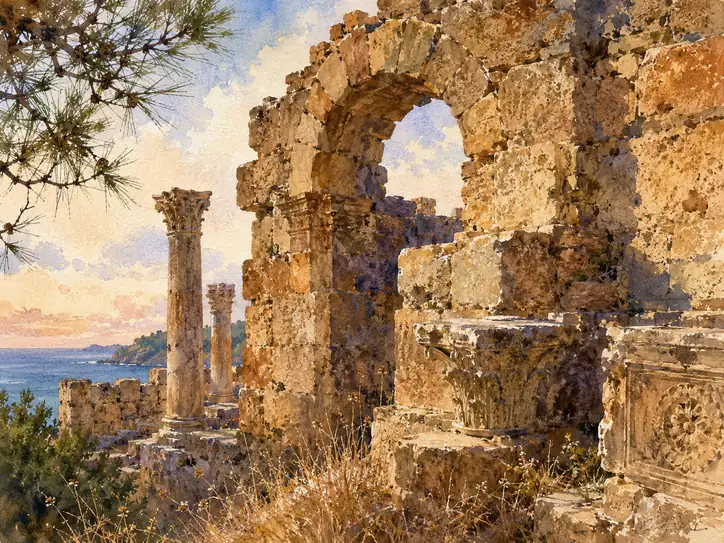 Silent Guard of the Sapphire Sea
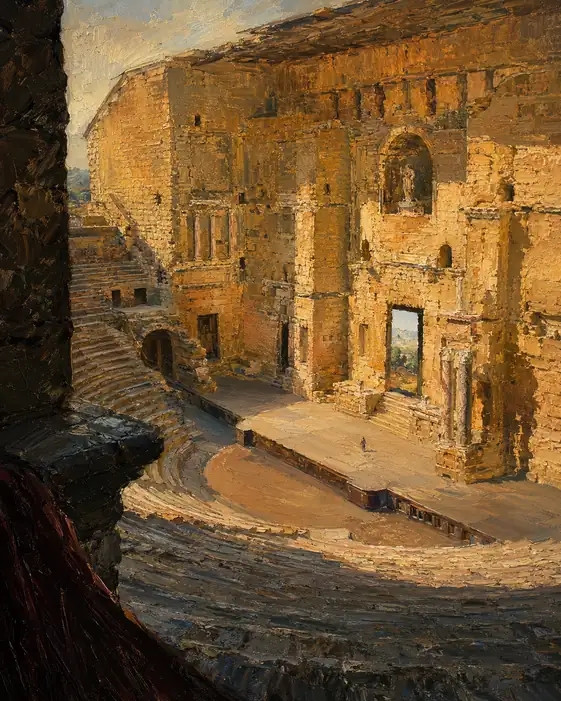 Solitude on the Golden Stage
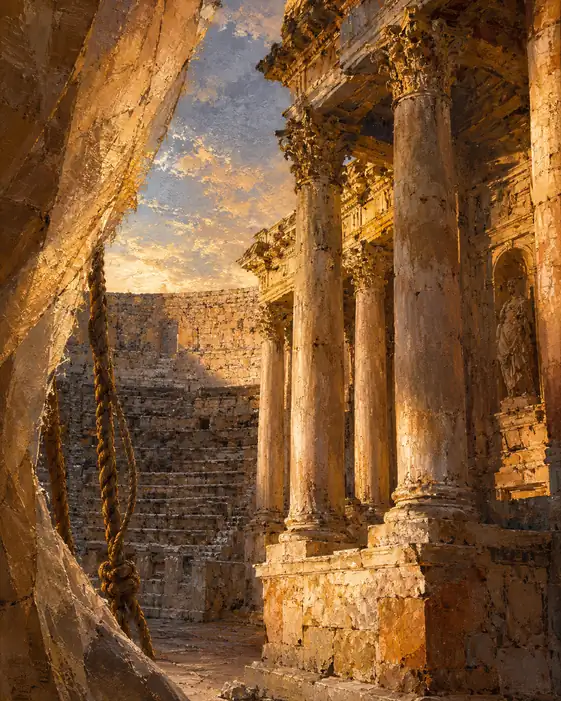 Echoes of the Eternal Theater
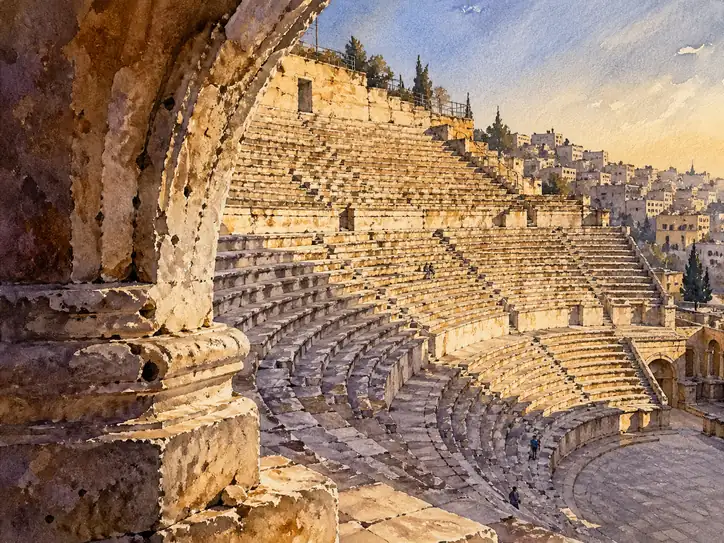 Echoes of the Arena: Where Silence Meets Past Glory
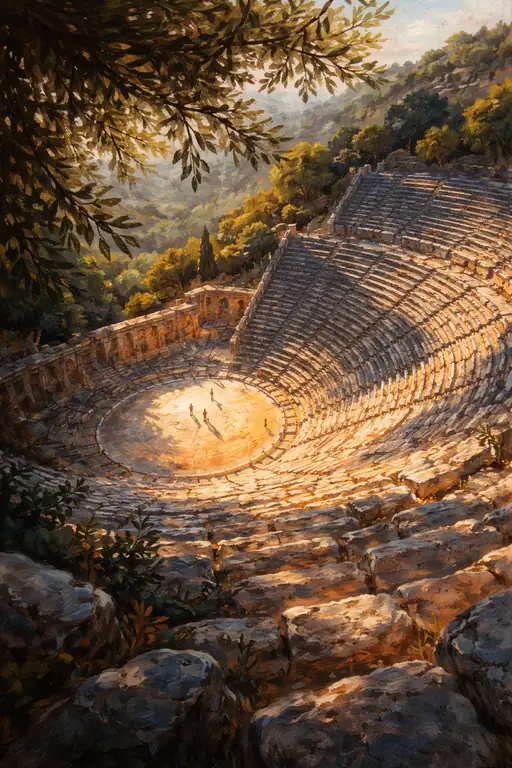 The Golden Ruin