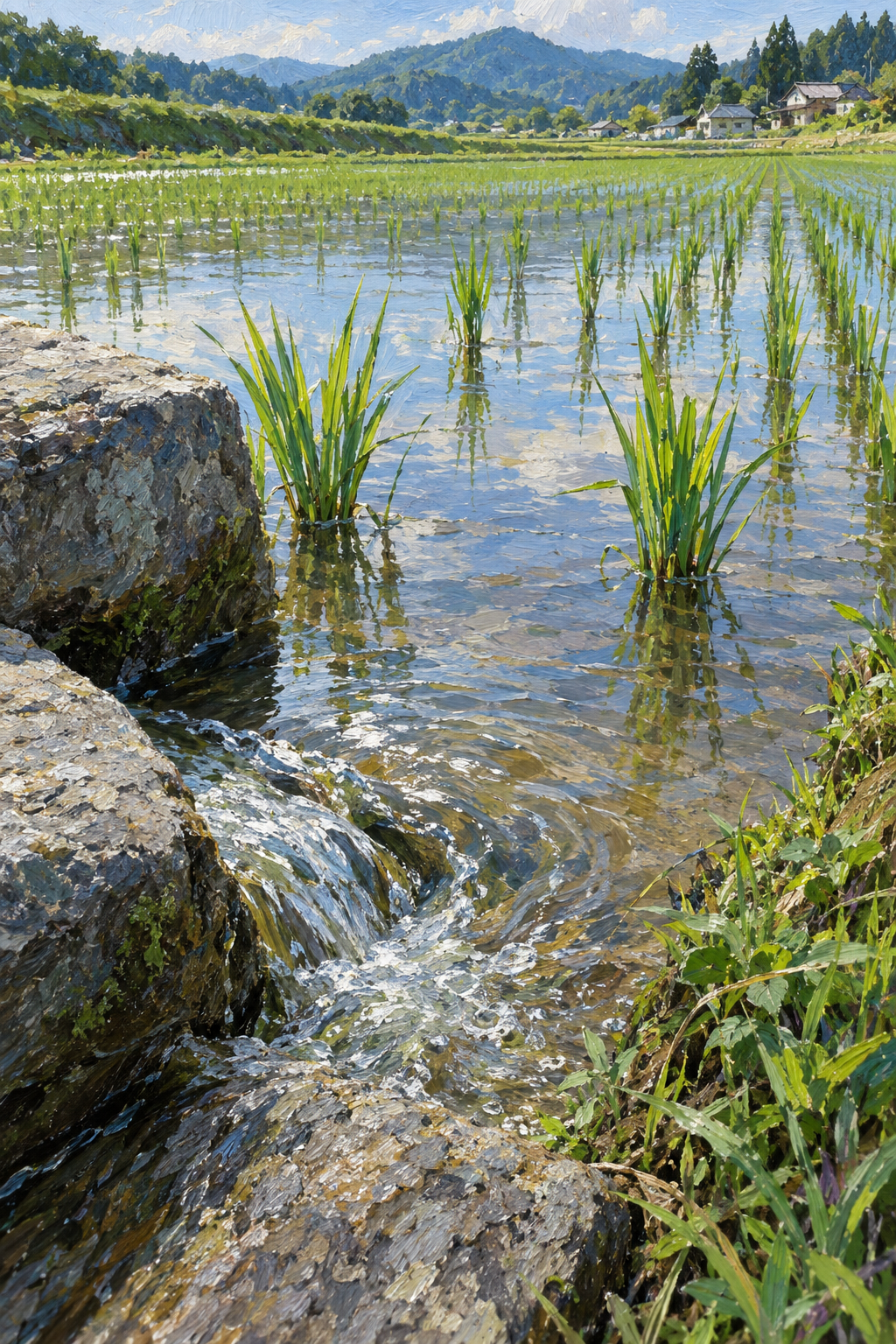
Source of the Living Mirror
Critique
1. Introduction This radiant landscape painting portrays an early summer Japanese rice paddy, where clear irrigation water cascades over mossy stones into newly planted fields. Through lively impressionistic brushwork, the artwork celebrates agrarian harmony, the life-giving vitality of mountain water, and the serene beauty of rural ecology. 2. Description In the lower left foreground, crystalline water pours between weathered stones, creating frothing white rapids and swirling ripples across the ponded surface. Young green rice seedlings stand in neat rows across flooded paddies, casting vibrant reflections alongside the mirrored blue sky and drifting clouds. Lush grassy ridges border the right bank, while traditional farmsteads and rolling forested hills rise in the sunlit background beneath summer cumulus clouds. 3. Analysis The artist establishes a dynamic interplay between motion and stillness. The turbulent water rushing through the stony sluice contrasts with the glassy tranquility of the flooded paddy field. Impasto strokes convey the rough, mineral texture of the moss-flecked boulders and the crisp shoots of the emerald rice plants. The palette harmonizes the vibrant cerulean reflection of the sky with rich verdant greens, earthy ochres, and cool slate tones, creating crisp atmospheric clarity. 4. Interpretation and Evaluation The painting captures the sacred relationship between water and agriculture. Depicting the irrigation intake honors centuries of rural stewardship, where water sustains community life. The mirrored sky on the water’s surface symbolizes the union of heaven and earth, offering viewers an uplifting experience of seasonal renewal, abundance, and tranquility. 5. Conclusion With exceptional mastery of aquatic reflection, mineral texture, and pastoral atmosphere, this painting is an inspiring tribute to the Japanese countryside. It conveys an enduring message of environmental harmony and agricultural vitality.
Same Subcategory
 1787953013822
Similar Artworks
 Ripple Where the Skies Descend
 Blue Sky Flowing Through the Stones
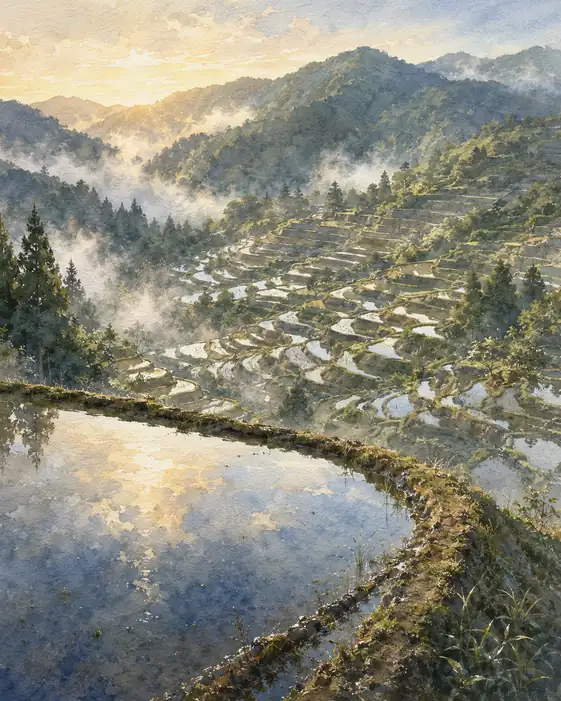 A Thousand Skies Sown on the Mountain
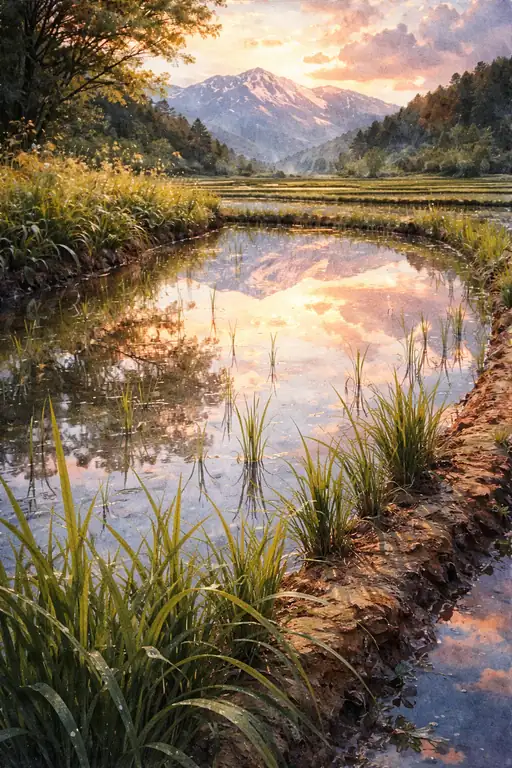 Heaven Mirroring the Harvest
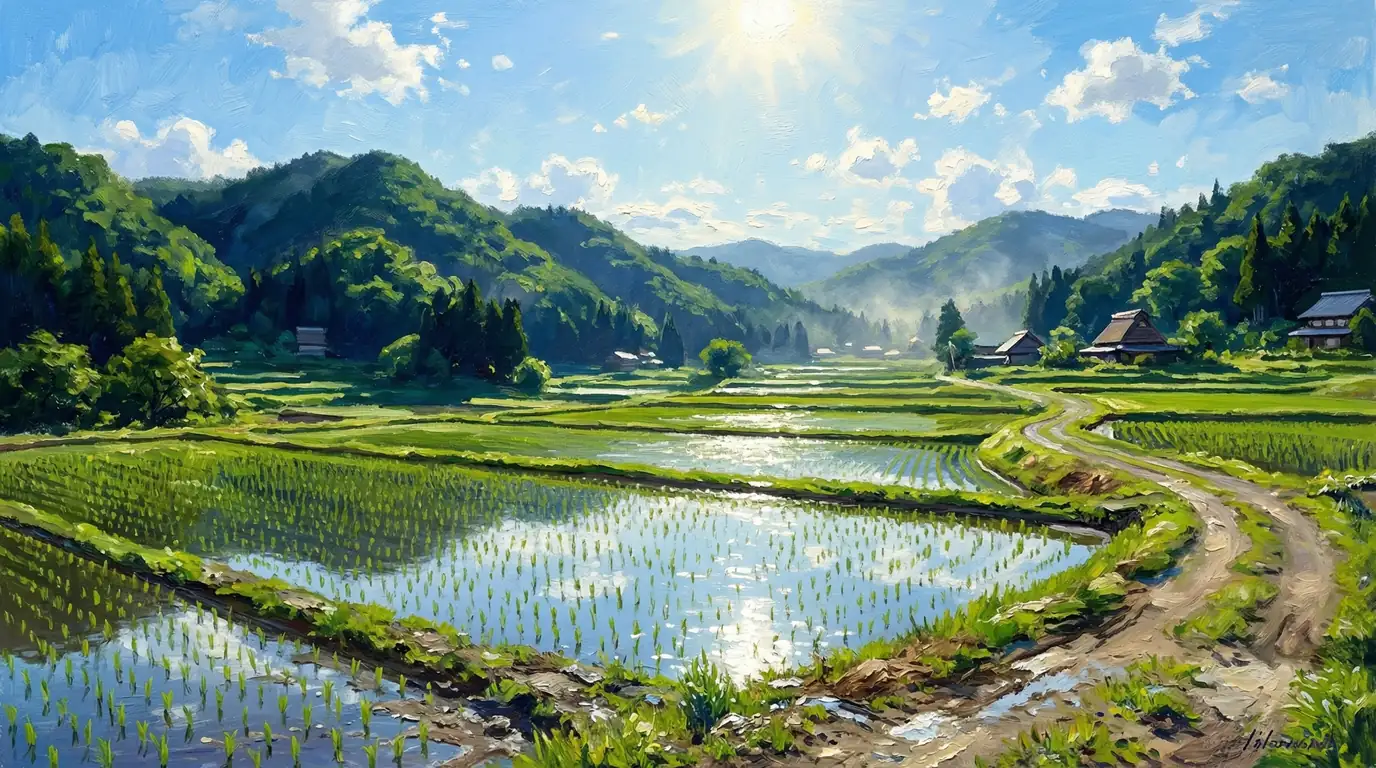 Sunlit Promise of the Harvest
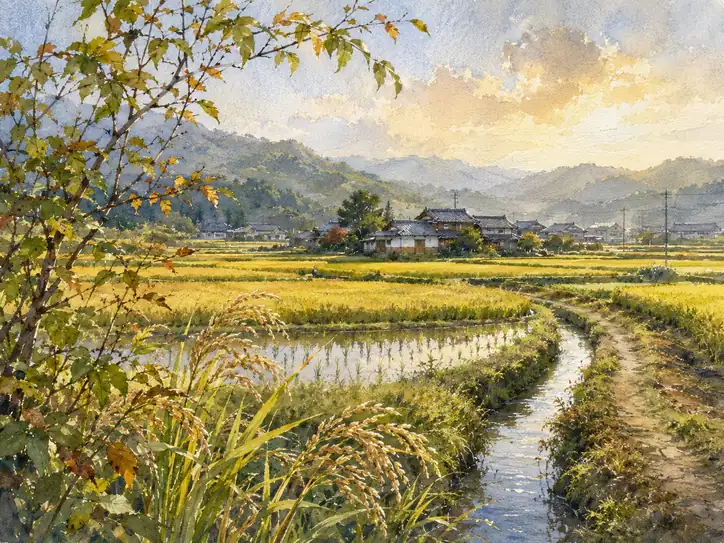 Returning Home to the Golden Light
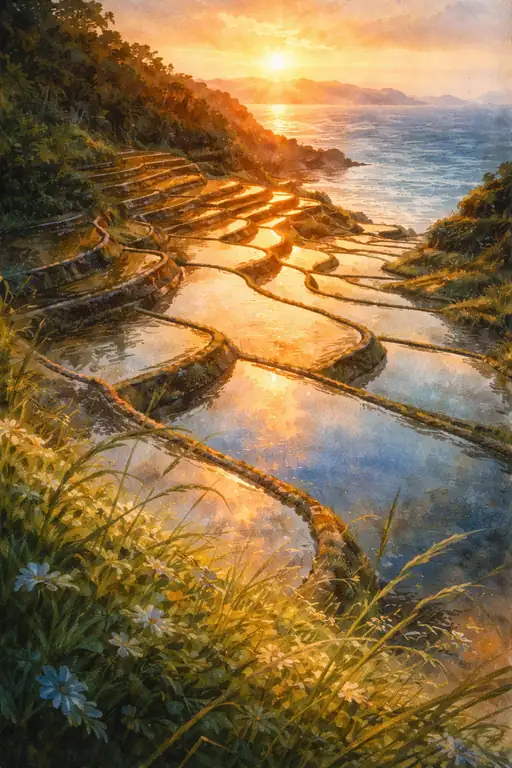 The Golden Mirror of the Hills
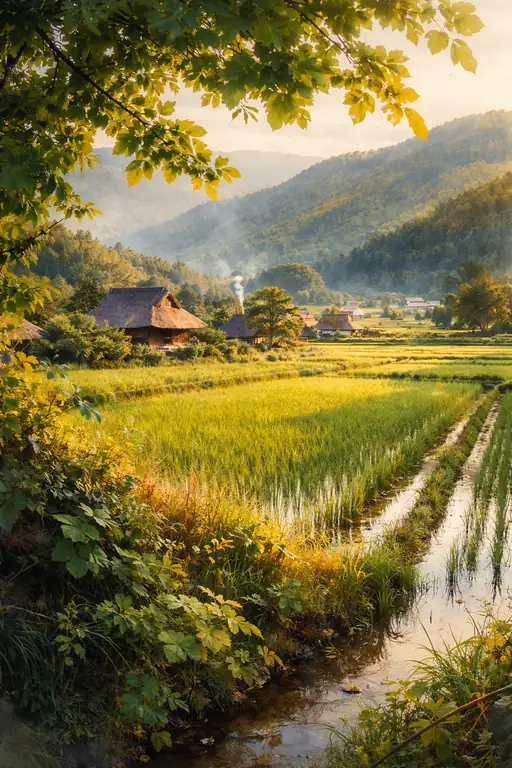 The Light We Carry Home
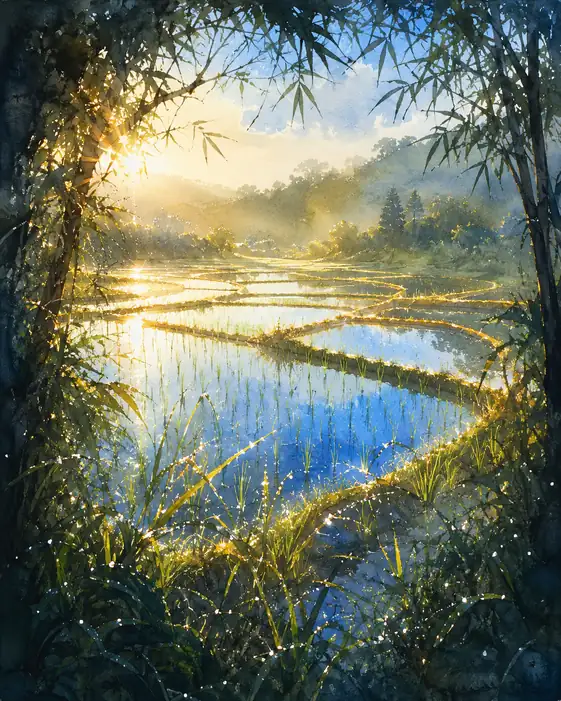 Morning Symphony Across the Water Terraces
 Green Ripples in the Mist