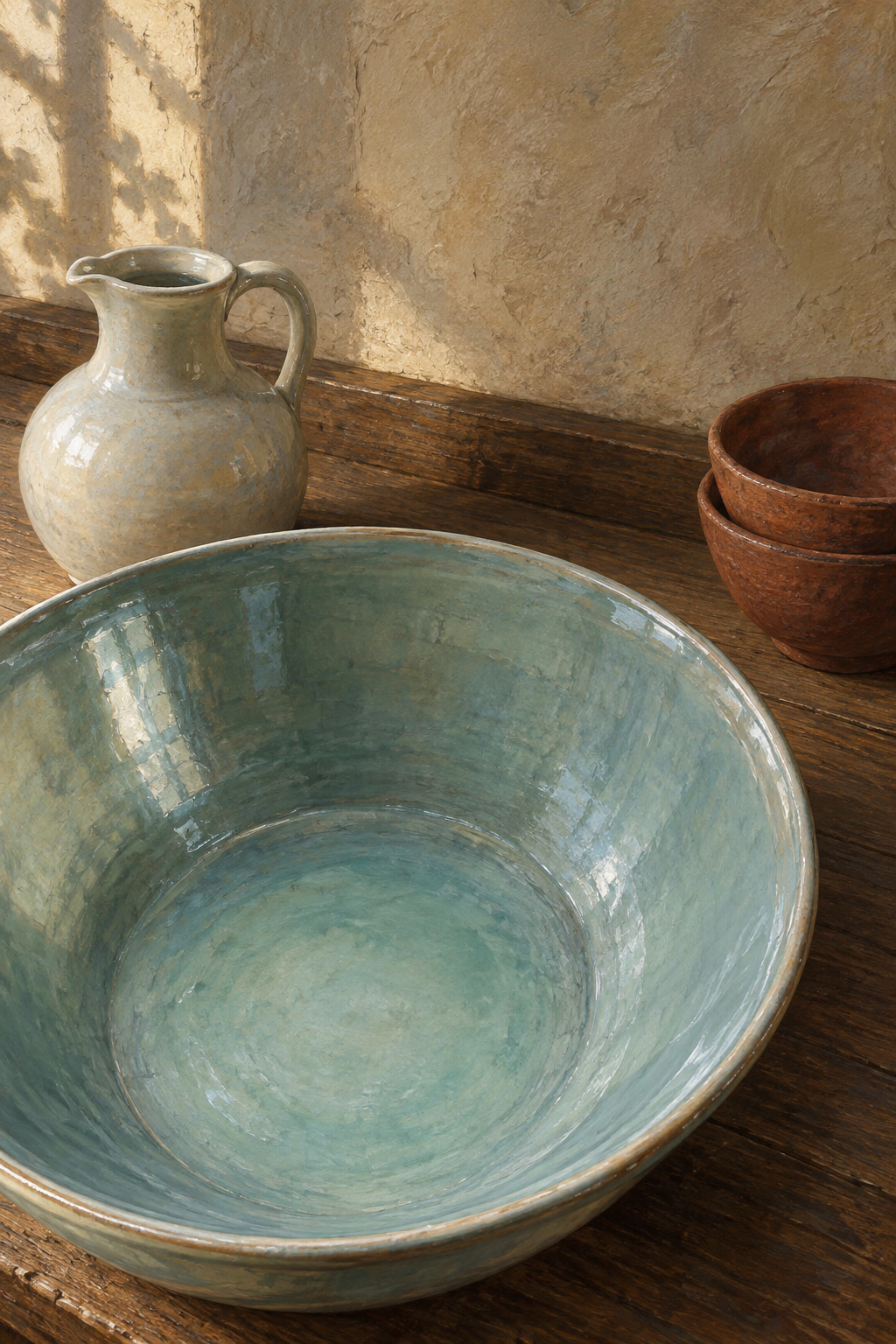
Basin of Quiet Glaze
Critique
1. Introduction This austere still life presents an arrangement of rustic ceramic vessels resting on a weathered timber table. Channeling the meditative quietude of Giorgio Morandi, the painting explores the tactile elegance of utilitarian pottery under soft ambient light, finding contemplative poetry in form, texture, and silence. 2. Description A broad celadon glazed basin commands the foreground, tilted slightly toward the viewer to expose its concave interior. Its pale blue-green surface displays glossy variations in glaze thickness and subtle crazing along the rim. Behind it to the left stands a rounded earthenware pitcher with a curving handle, while two unglazed terracotta bowls sit stacked in the upper right. Sunlight through an unseen window casts diagonal mullion shadows across the textured stucco wall behind. 3. Analysis The artist constructs spatial harmony through geometric dialogue among circular forms. The broad horizontal basin anchors the lower composition, balanced by the vertical stance of the pitcher and the compact volume of the reddish clay bowls. Subtle cool tones of sage, seafoam, and celadon contrast with the warm, earthy sienna of the terracotta and dark walnut table. Glaze reflections across the inner curve of the basin provide rhythmic highlights against matte plaster walls. 4. Interpretation and Evaluation The painting elevates humble domestic vessels into monuments of quiet endurance. The absence of human presence invites reflection, highlighting the honest labor embodied in handmade objects. Sunlight tracing across the earthen wall emphasizes tranquil hours, transforming pottery into symbols of enduring peace. 5. Conclusion With restrained brushwork, disciplined harmony, and acute sensitivity to ceramic surfaces, this still life achieves profound aesthetic depth. It celebrates simplicity and the quiet dignity of everyday domestic objects.
Same Subcategory
Similar Artworks
 Vessels of Pale Solitude
 Vessel of Boundless Blue
 Reflections of Craft in the Rain
 Light Dwelling in the Seams
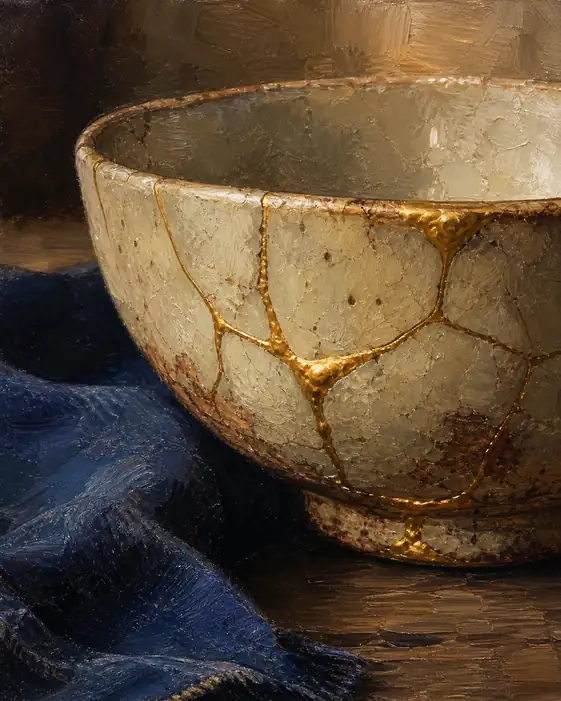 The Beauty of Becoming Whole Again
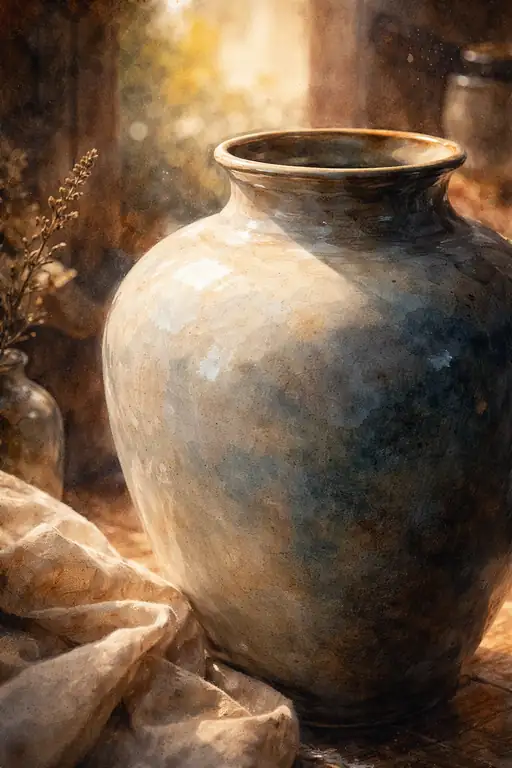 Earthen Soul Bathed in Sunlight
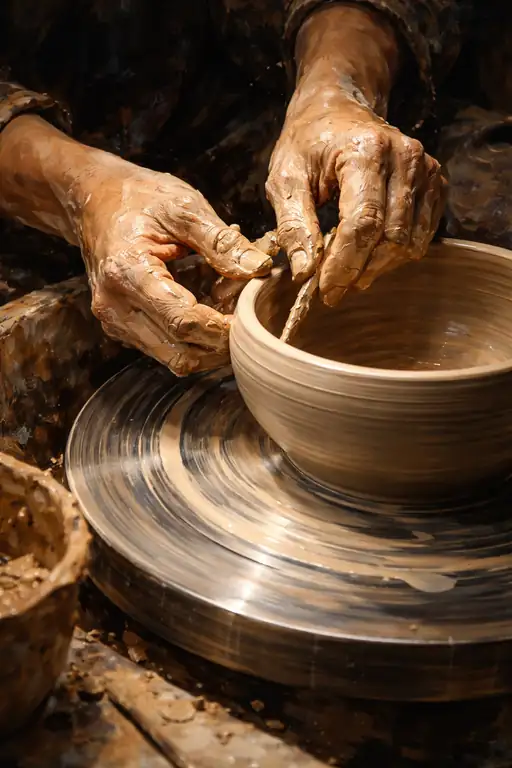 Earthly Genesis: Form from Formless Clay
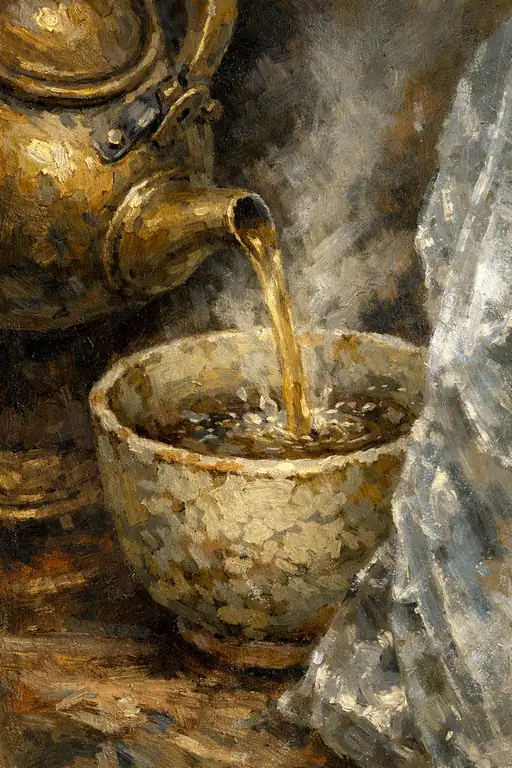 Golden Warmth Pouring into the Silence of Bronze
 Sunlit Rustic Pottery Workshop
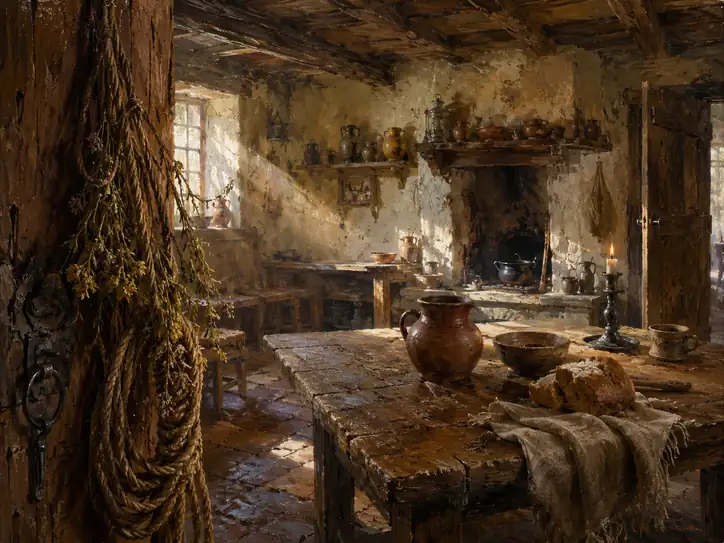 Sunbeam on the Humble Table