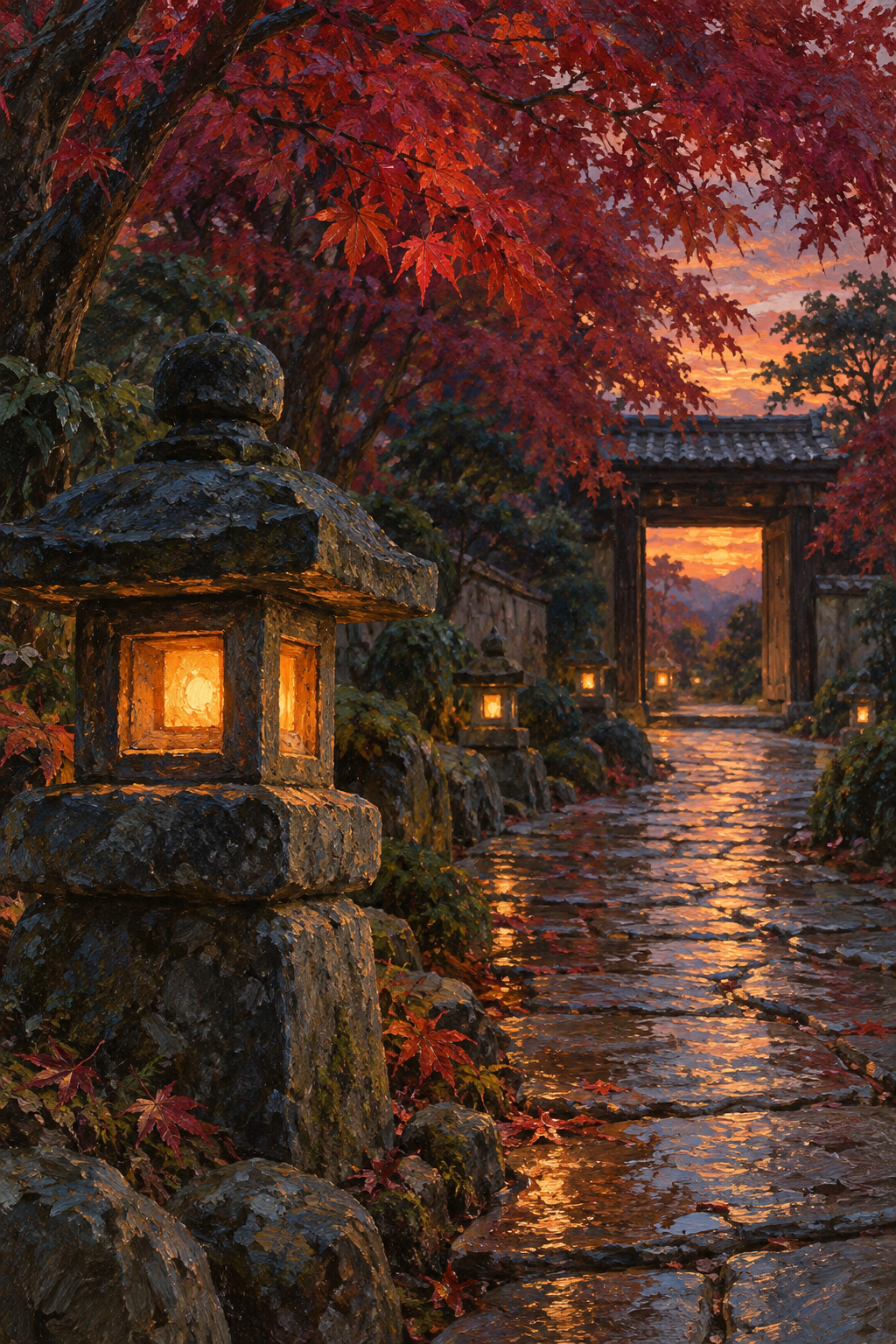
Path of Maple Embers
Critique
1. Introduction This atmospheric autumn painting depicts a Japanese temple garden at dusk, where a mossy stone lantern illuminates a wet flagstone path beneath a canopy of scarlet maples. Celebrating the aesthetic of wabi-sabi, seasonal impermanence, and meditative stillness, the artwork creates a sanctuary of profound beauty. 2. Description Positioned prominently in the left foreground, an ancient stone lantern carved from lichen-dusted granite radiates warm amber candlelight from its lattice chamber. Leading into the background, a rain-slicked stone pathway glistens with reflections of the sunset and lantern fire, scattered with fallen crimson maple leaves. Above, a sweeping canopy of fiery maple boughs glows against the fading light. Smaller illuminated stone lanterns line the winding path toward a traditional tiled wooden temple gate, through whose portal a golden sunset and distant mountain silhouettes are revealed. 3. Analysis The composition guides the viewer along the reflective diagonal pathway from the stone lantern to the distant gate. The artist orchestrates a dramatic chromatic contrast between blazing crimsons of foliage against deep charcoal and moss green tones of wet stones. Textured impasto marks capture the mineral density of the lantern and the glassy sheen of the pavement. 4. Interpretation and Evaluation The juxtaposition of resilient stone and fleeting autumn foliage symbolizes mono no aware and the search for enlightenment amidst worldly flux. Framing the sunset through the wooden gate transforms a physical pathway into a spiritual transition toward peace. 5. Conclusion Through masterful handling of moisture, illumination, and seasonal color harmony, the painting evokes the quiet majesty of autumn twilight, offering viewers an enduring experience of meditative tranquility.
Same Subcategory
Similar Artworks
 One Red Word in the Garden of Silence
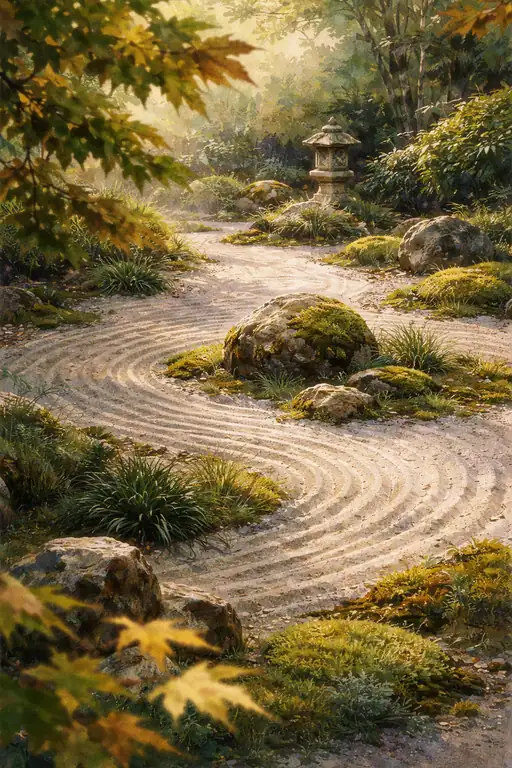 The Golden Harmony
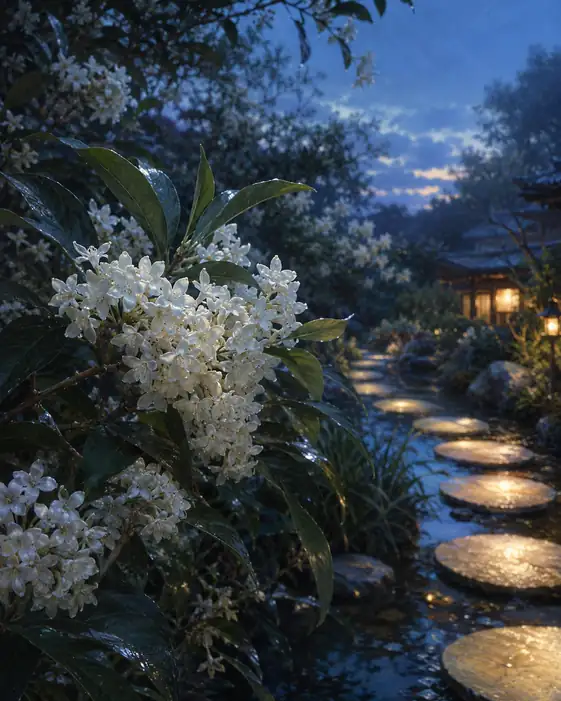 Stepping Stones of Light Through Indigo Dusk
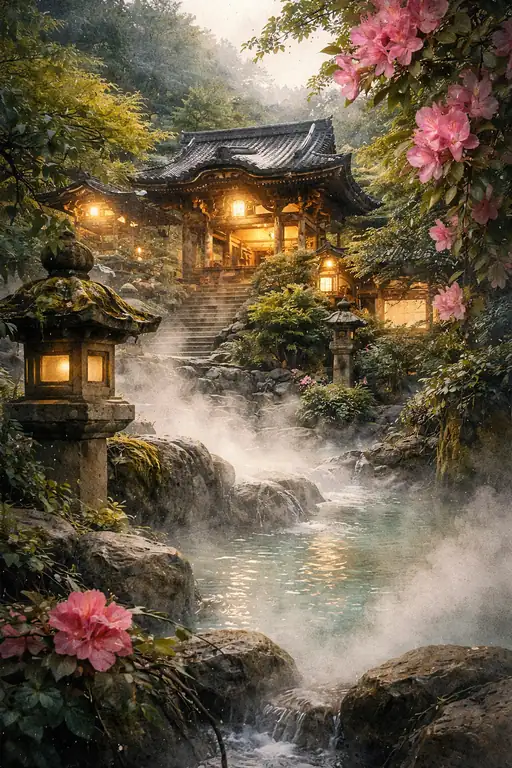 Misty Sanctuary Amidst the Woods
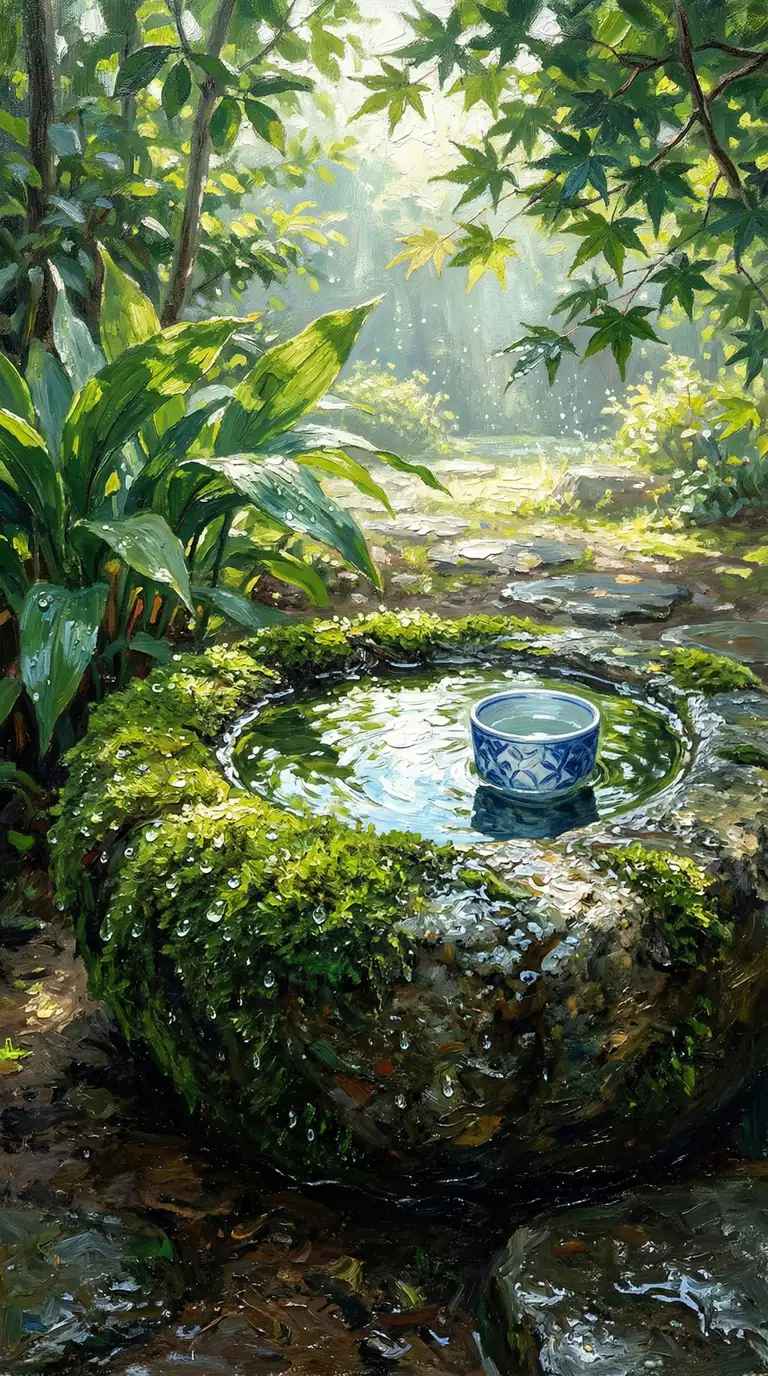 Reflection in the Timeless Basin
 Journey to the Floating Shrine at Dusk
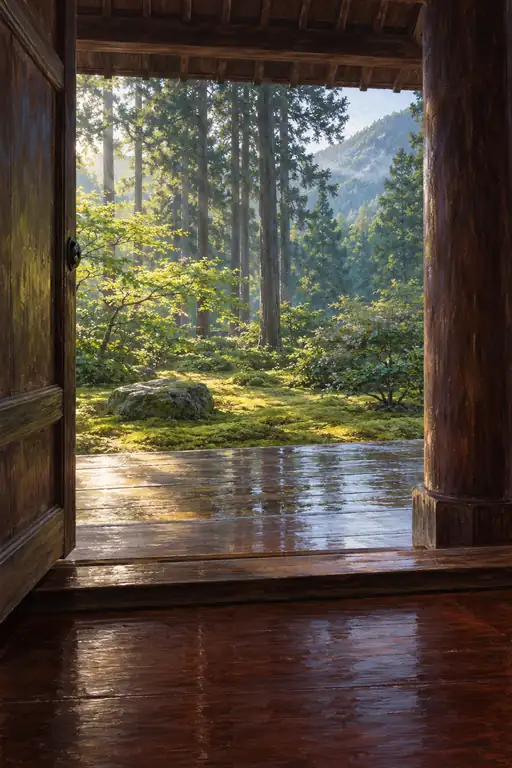 Green Shadows on Polished Wood
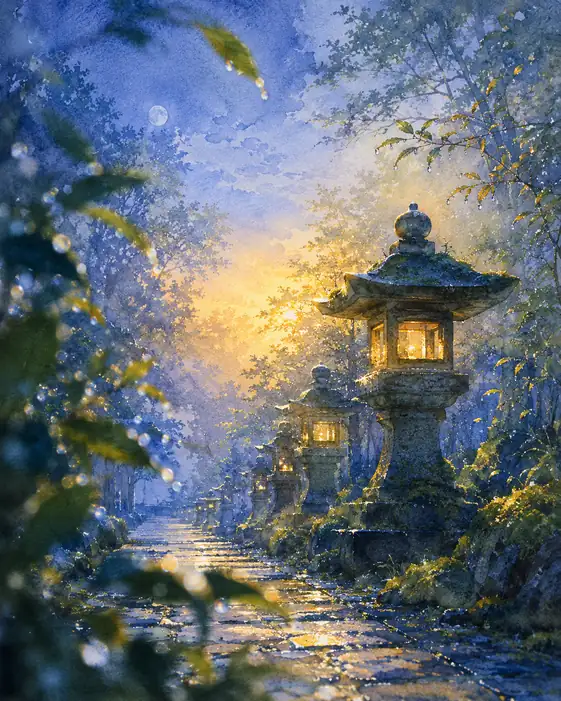 Stone Lanterns Guard the Blue Hour
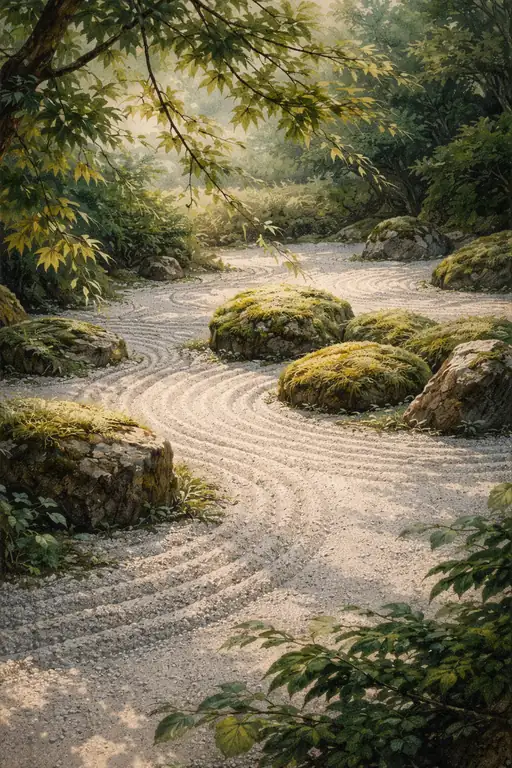 Rhythms of the Raked Sand
 Twilight Beacon on the Canal