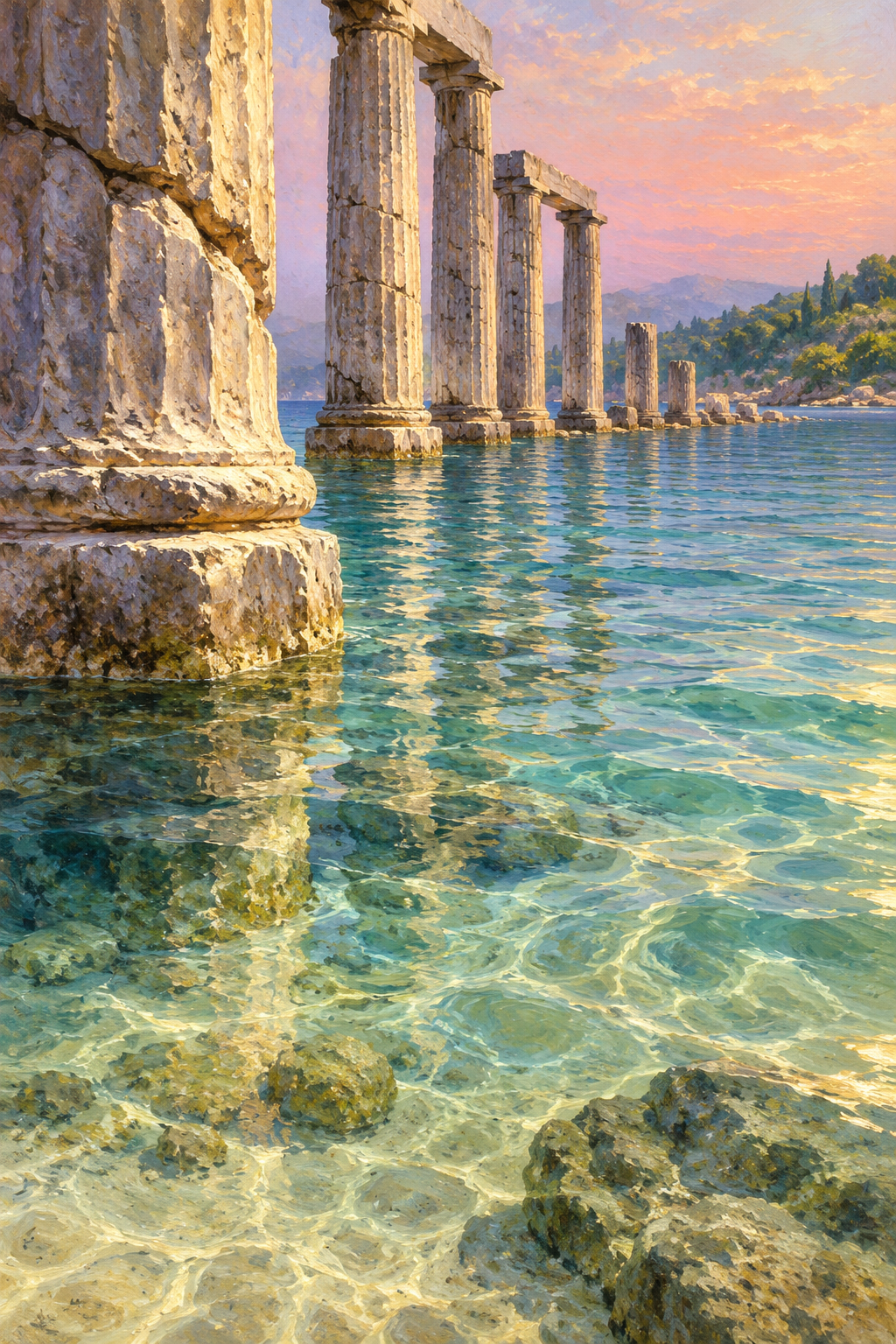
Pillars in the Emerald Shallows
Critique
1. Introduction This evocative landscape painting portrays the partially submerged ruins of an ancient classical temple colonnade standing in crystalline Mediterranean shallows at sunset. Merging architectural majesty with oceanic tranquility, the artwork reflects upon the transience of civilizations and the eternal beauty of the natural world. 2. Description In the left foreground, a weathered classical fluted column and stone base rise from the tide, displaying centuries of fissures. Beneath the water's surface, the seabed of golden sand and mossy boulders is rendered with astonishing optical clarity, illuminated by dancing caustics of refracted sunlight. A colonnade extends diagonally toward the upper right across turquoise waters, its lintels partly preserved before tapering into broken stumps. In the far background, verdant coastal hills recline beneath an expansive twilight sky suffused with glowing hues of coral pink, gold, and lavender. 3. Analysis The linear recession of the colonnade creates a commanding architectural perspective across the marine expanse. Chromatically, the composition balances the cool turquoise and emerald greens of the sea against warm coral and amber tones of the sunset sky. The tactile impasto of crumbling stone contrasts brilliantly with the delicate transparency of the undulating water surface. 4. Interpretation and Evaluation The submerged temple serves as a poignant emblem of history's passage, showing human monumental ambition gently reclaimed by nature. Rather than bleak ruin, the scene radiates peaceful serenity, suggesting harmonious integration between antiquity and the elements. 5. Conclusion Through superb rendering of water optics and romantic atmospheric color, the painting achieves transcendent poetic depth, leaving viewers in quiet awe of time and timeless beauty.
Same Subcategory
 Ancient Arch and Bell Tower by the Stream
Similar Artworks
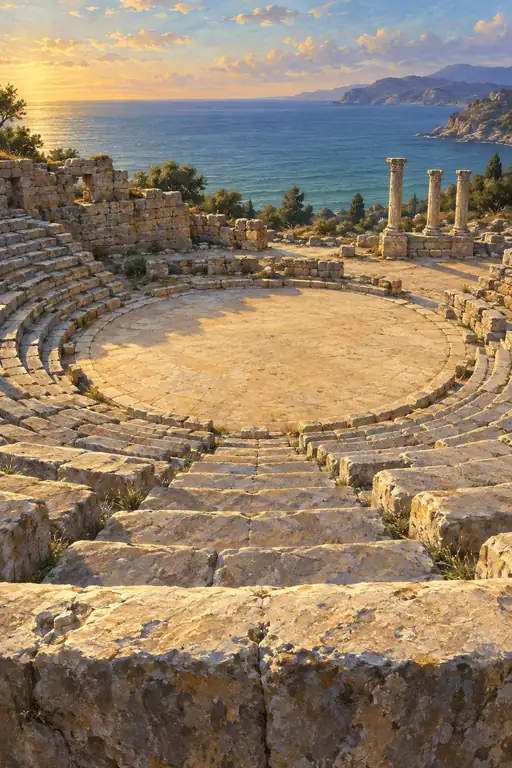 Theater of the Silent Sea
 Whispers of the Submerged Empire
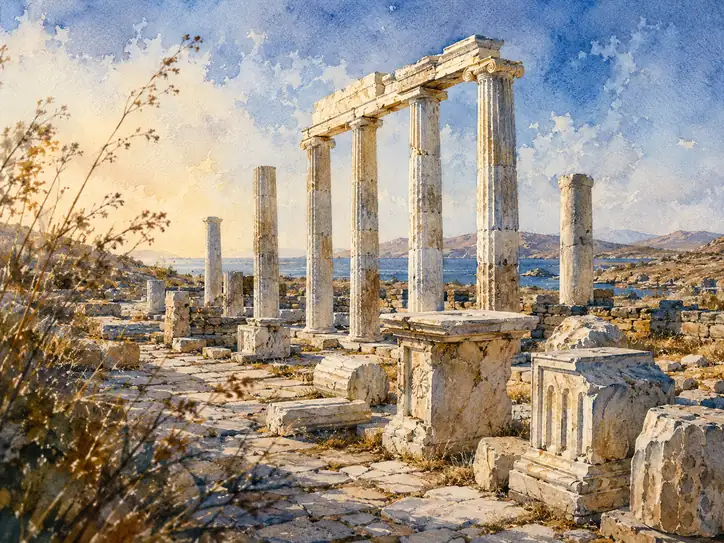 Guardians of the Eternal Sea
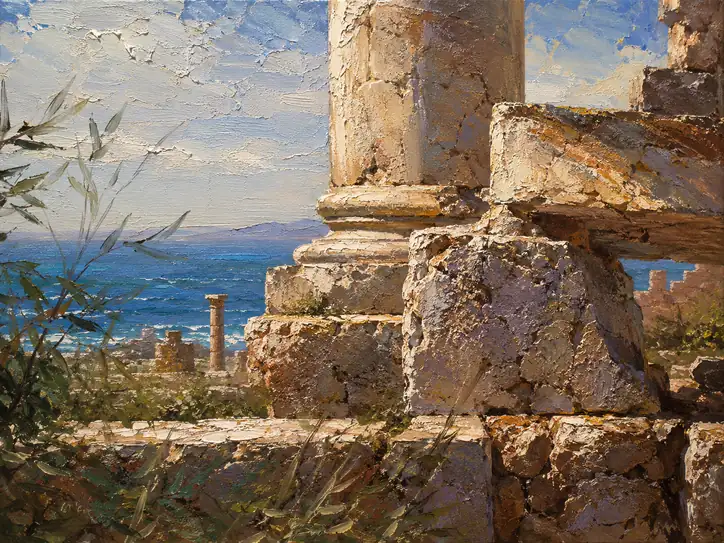 Sentinel of the Eternal Ocean
 Whispers of Philae at Sunset
 Where the Turquoise Sea Remembers
 Silent Guard of the Sapphire Sea
 Pillars of Antiquity Awash in Gold
 Golden Nostalgia Upon the Distant Horizon
 Where Time Sleeps in Silence