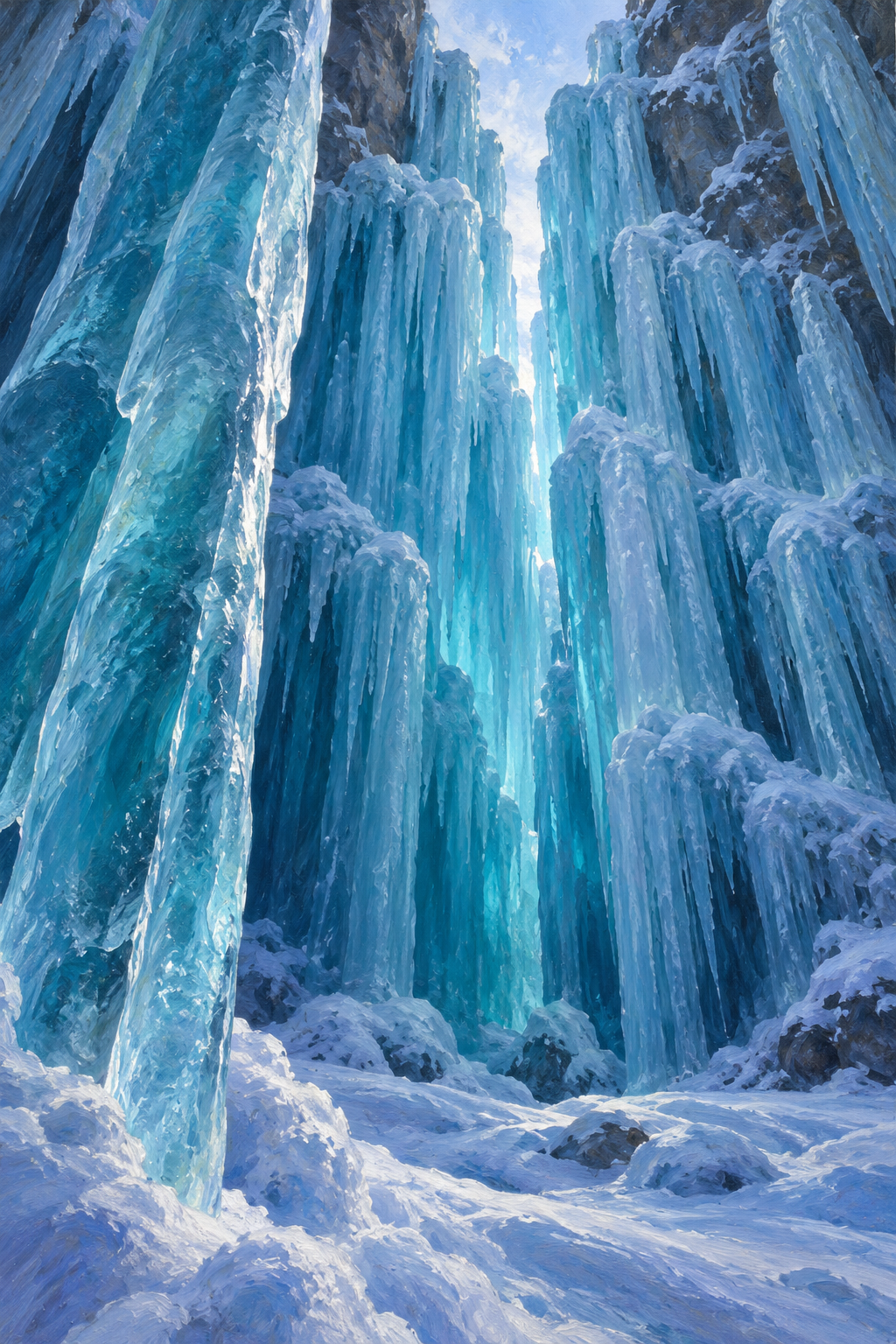
Spire of the Frozen Abyss
Critique
1. Introduction This vertical landscape painting captures the monumental grandeur of a frozen alpine canyon dominated by colossal icefalls and towering icicles. Free of human presence, the composition pays tribute to the sublime architecture of winter, pristine solitude, and the ethereal beauty of polarized arctic light. 2. Description Anchoring the left foreground stands a massive pillar of translucent ice rising from the snow-covered valley floor, its crystalline mass illuminated in vivid shades of aquamarine, cyan, and deep cobalt. Receding into the narrow mountain chasm, countless hanging ice columns drape over dark, craggy rock faces like the organ pipes of a natural cathedral. Through a slender opening at the gorge's apex, brilliant winter sunlight filters from above, backlighting the ice formations with a mesmerizing emerald glow. Across the foreground plane, sculpted snowbanks undulate with soft lavender shadows and crisp, white impasto highlights. 3. Analysis The vertical framing emphasizes the dizzying height of the cliff walls and the sheer downward momentum of the frozen cascades. A sophisticated cool palette orchestrates varied gradations of turquoise, cerulean, and slate grey, punctuated by blinding white crests where light catches frozen edges. Crisp linear brushstrokes along the icicles contrast dynamically with the broad, rounded impasto describing the powdery snowbanks below. 4. Interpretation and Evaluation The pristine ice canyon embodies the sublime power of untouched nature, representing timeless permanence formed through extreme seasonal transformation. The radiant backlighting transforms frigid elements into an uplifting visual sanctuary of purity and spiritual stillness. 5. Conclusion Through commanding handling of light, crystalline texture, and vertical perspective, the painting captures the austere majesty of the frozen wilderness, leaving viewers in quiet awe of nature's monumental craftsmanship.
Same Subcategory
Similar Artworks
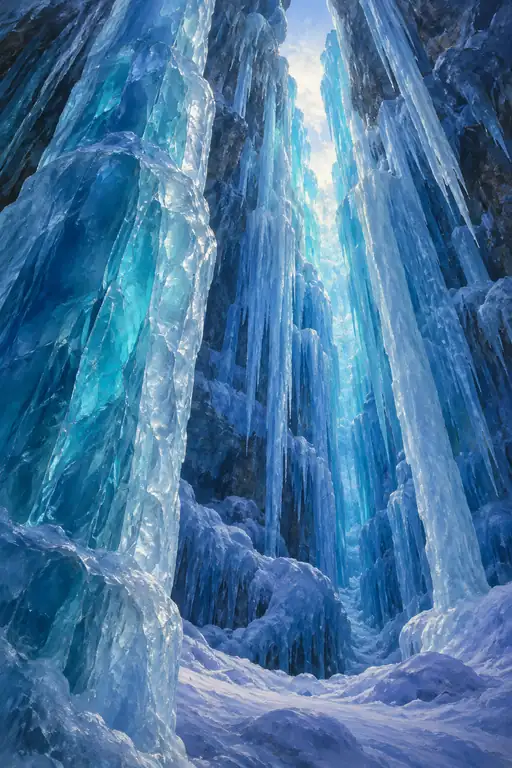 Cathedral of Frozen Light
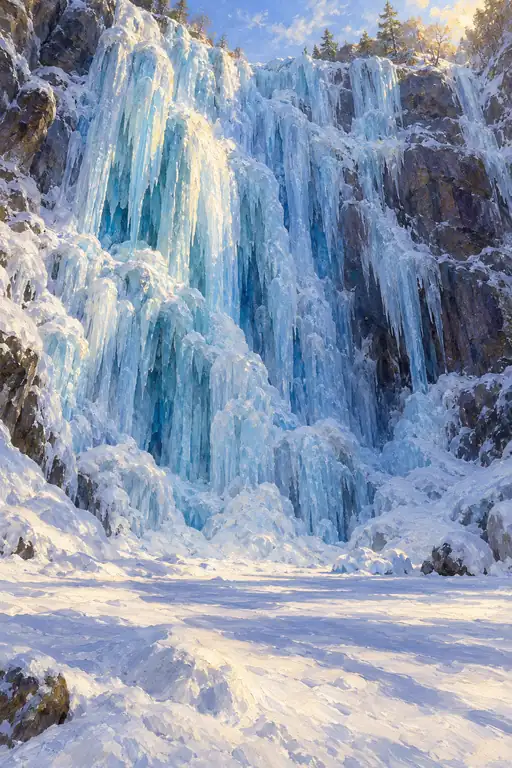 Dawn Touches the Crystalline Wall
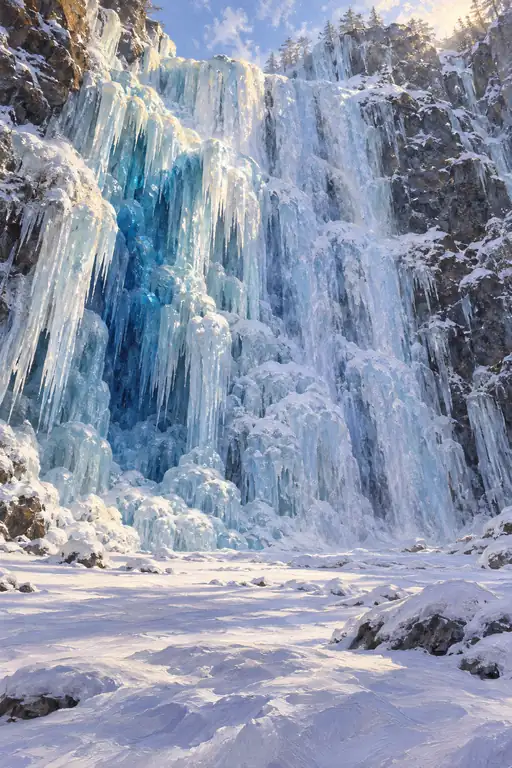 Silence Suspended in Azure Ice
 Whispers of Hope in the Emerald Gorge
 Frozen Symphony of the Gorge
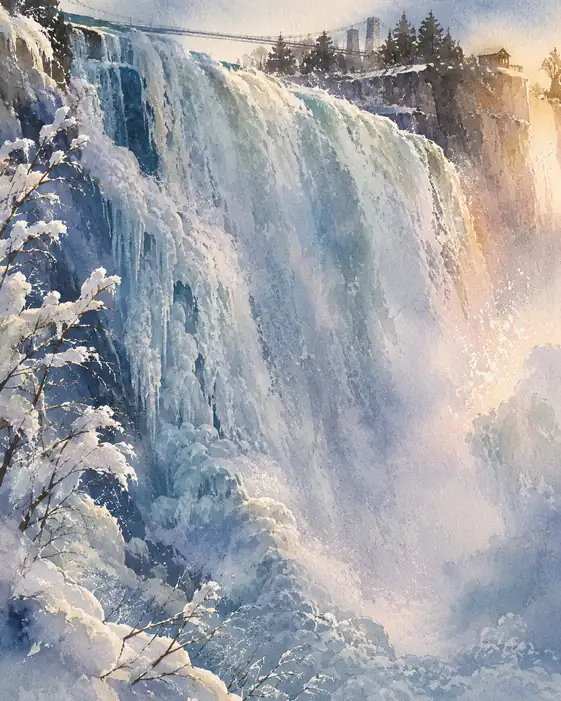 Where the Torrent Sleeps in Gold
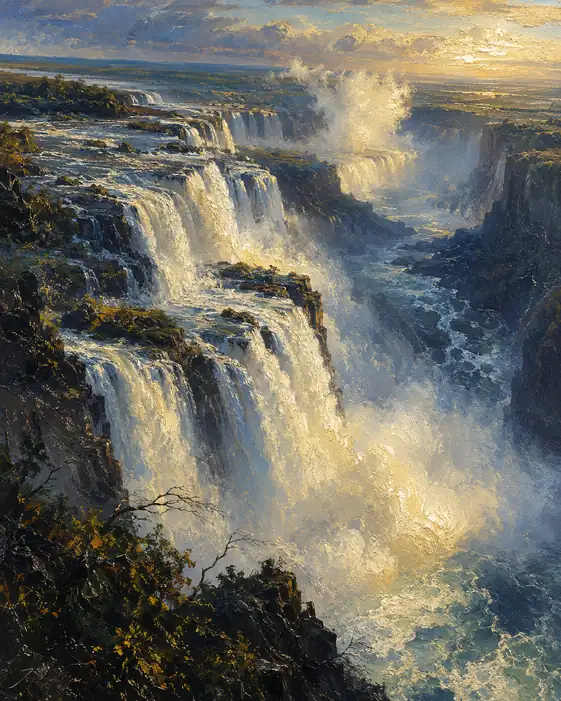 The Roar of Gilded Waters
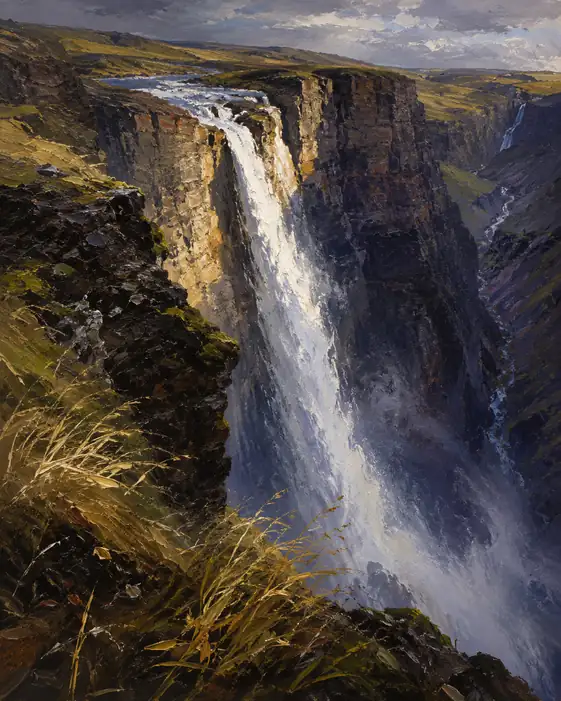 Thunder of the Ancient Gorge
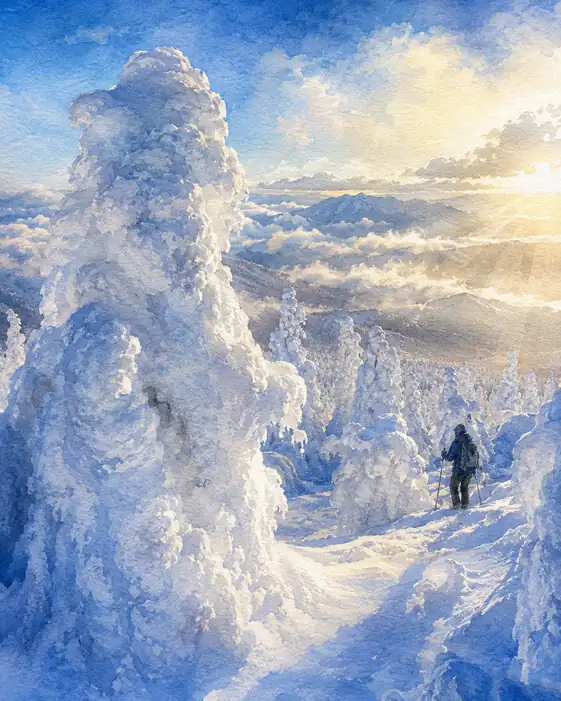 The Giants' Road to the Land of Light
 Azure Pulse of the Ancient Ice