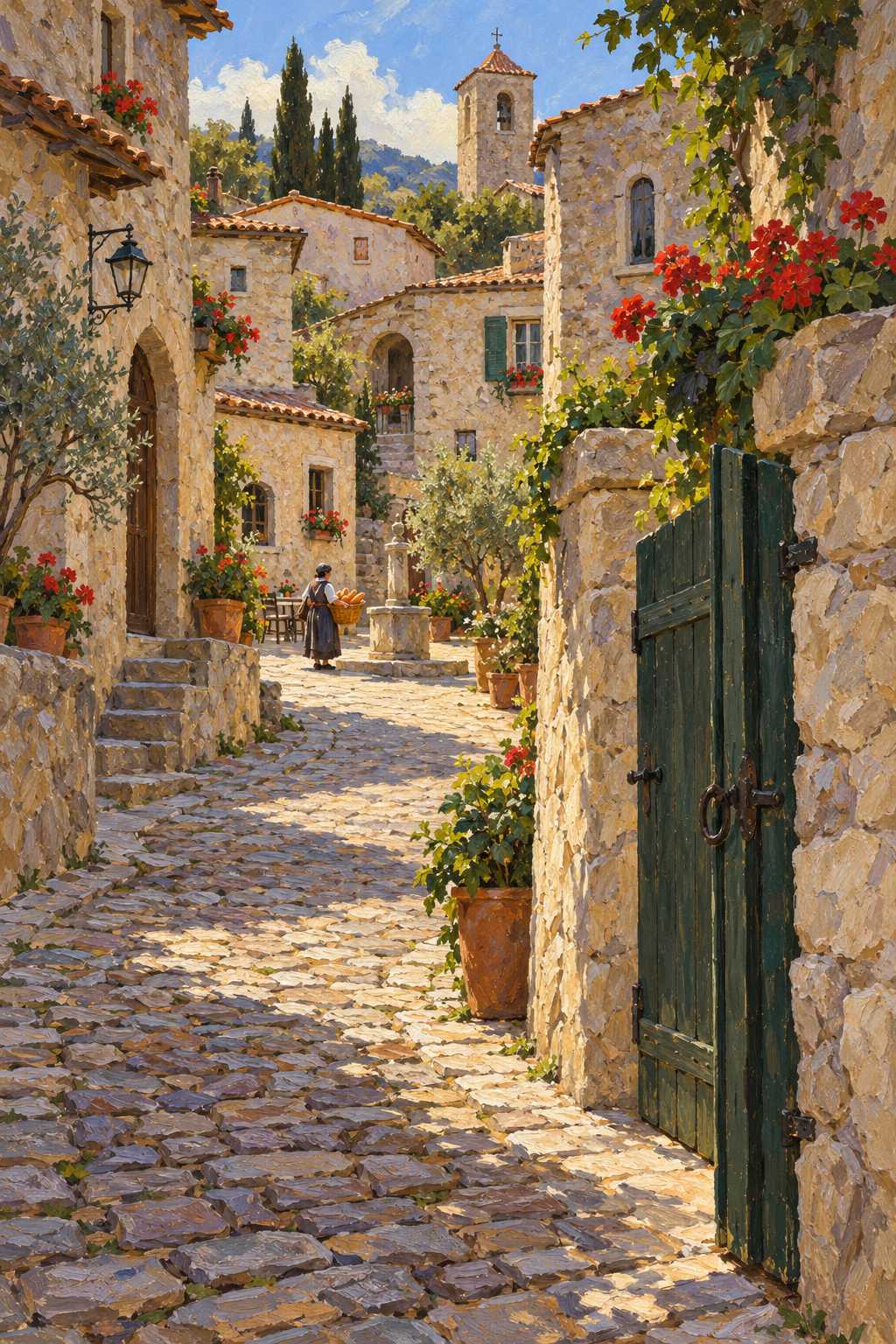
Sun-Baked Stones of the Old Village
Critique
1. Introduction This radiant oil landscape captures a winding cobblestone lane traversing a sun-drenched medieval stone village. Framed by an open green timber door and cascading red geraniums, the artwork portrays a peaceful European hamlet steeped in timeless rustic charm. 2. Description In the foreground, weathered paving stones ascend along a curving pathway toward a quaint square. To the right, an open dark-green wooden gate with iron hardware is set into a wall crowned with blooming scarlet flowers. Flanking the alley, historic cottages display terracotta planters, shuttered windows, and arched doorways. A village woman carries bread near a stone fountain, beneath cypresses and a church bell tower. 3. Analysis The meandering pathway creates an inviting curvilinear perspective that leads the viewer deeper into the village. Strong directional sunlight casts diagonal shadows across the cobblestones, establishing high-relief chiaroscuro throughout the masonry. Saturated scarlet geraniums and emerald foliage punctuate the warm ochre palette, while heavy impasto articulates the rugged texture of stone blocks. 4. Interpretation and Evaluation The painting celebrates community harmony, architectural endurance, and the quiet dignity of slow-paced rural life. The open gate acts as a hospitable welcome into an intimate world preserved outside modern haste. The artist demonstrates extraordinary technical authority in oil, masterfully rendering tactile masonry surfaces, crisp shadows, and the luminous Mediterranean atmosphere. 5. Conclusion This piece succeeds in conveying the warmth and serene nostalgia of an old-world hill town. The initial delight in colorful flowers and cobblestones deepens into an enduring admiration for structural cohesion and expressive brushwork. Ultimately, the painting stands as an accomplished, uplifting homage to Mediterranean heritage.
 Pastoral Village with Thatched Roofs and Blossom Sheep
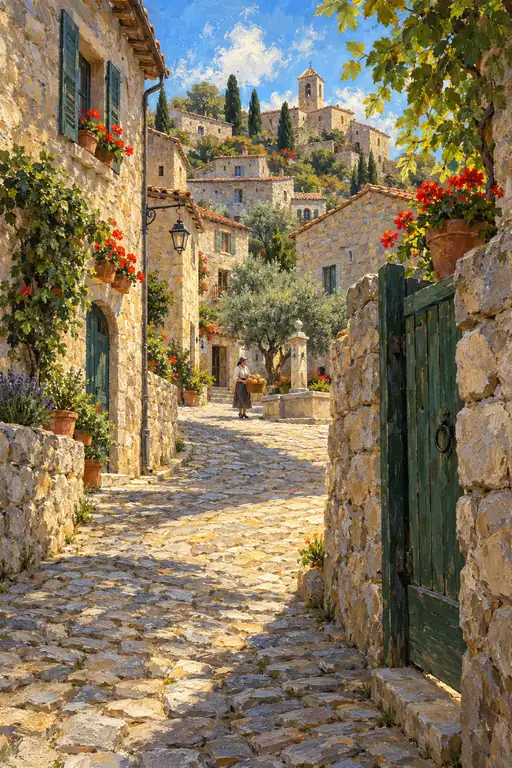 Path to the Hilltop Belfry
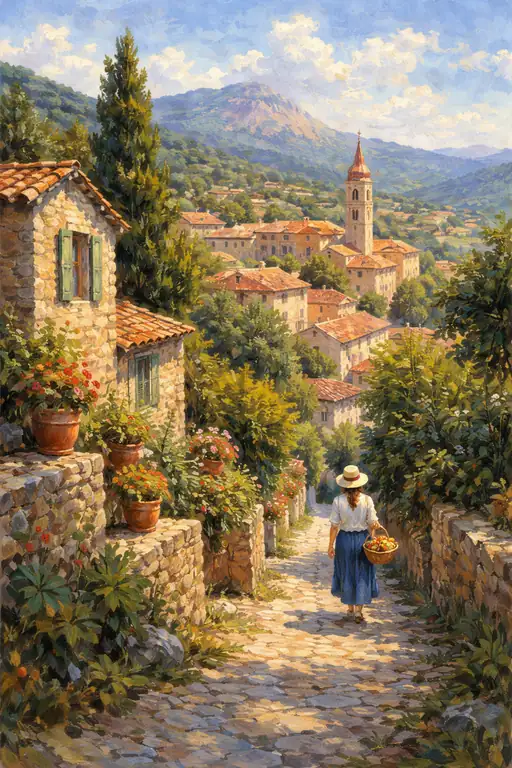 A Sun-Kissed Stroll Through Time
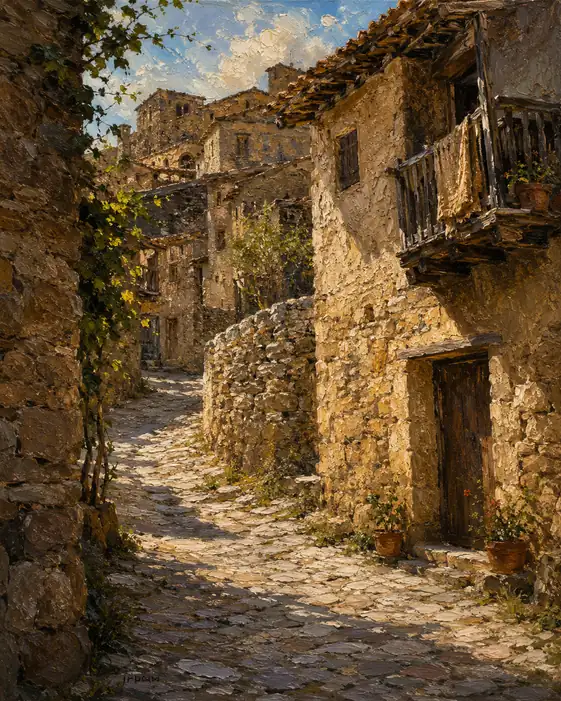 Where the Cobblestone Dreams
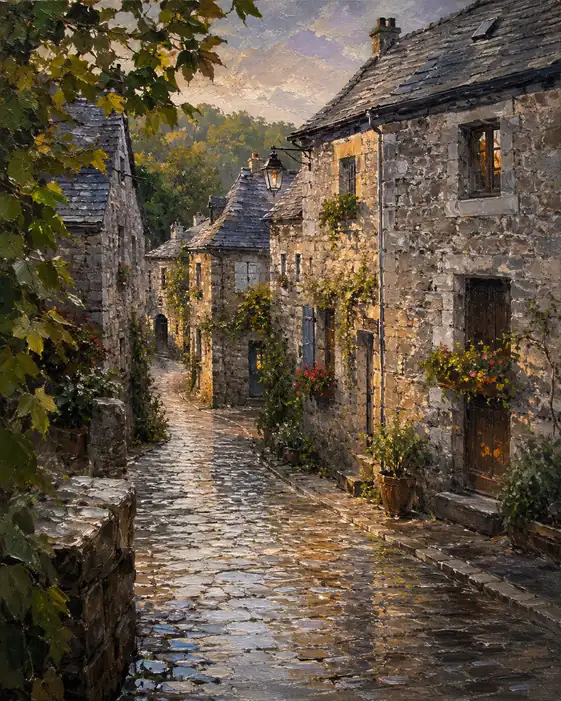 Echoes of the Golden Hour
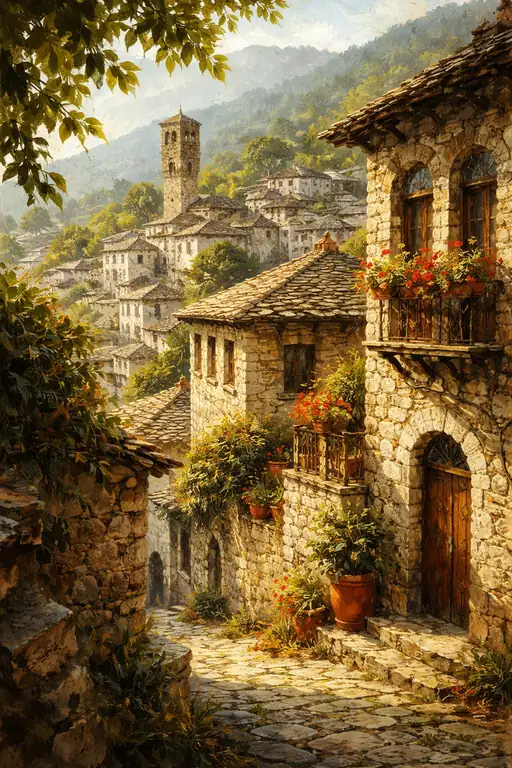 A Winding Path Through History
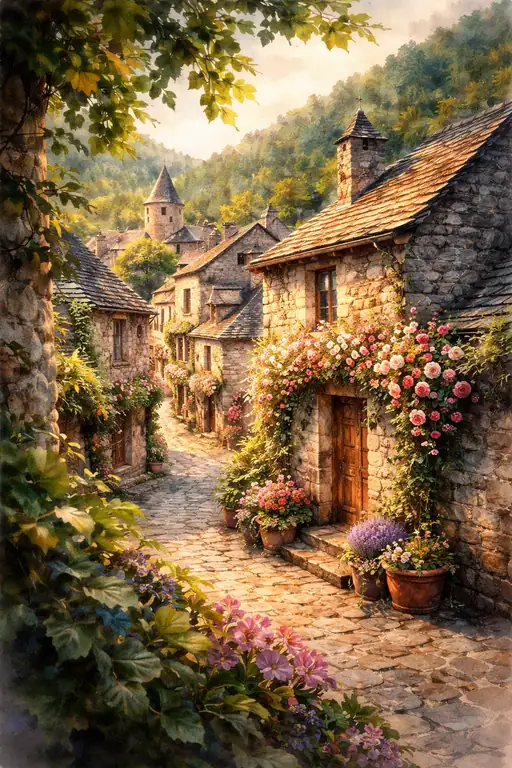 A Floral Path in the Village
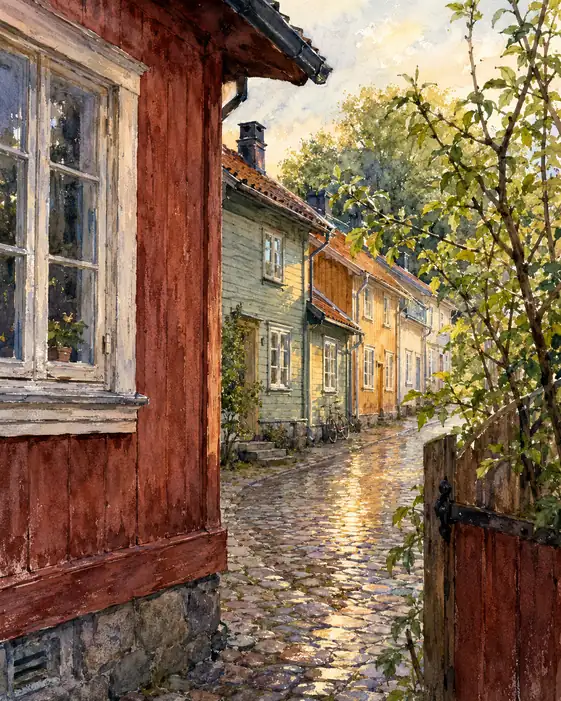 The Golden Return
 Echoes of a Quiet Afternoon
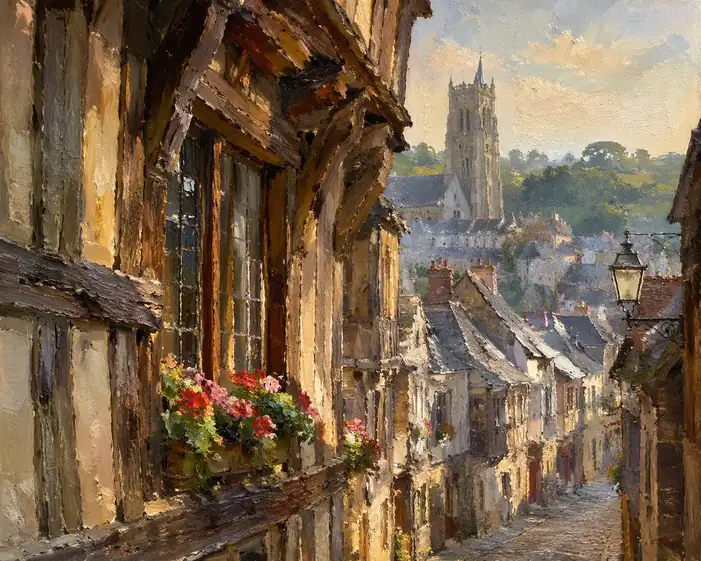 Nostalgic Light of the Old Town
 The Warm Embrace of Yesterday's Valley