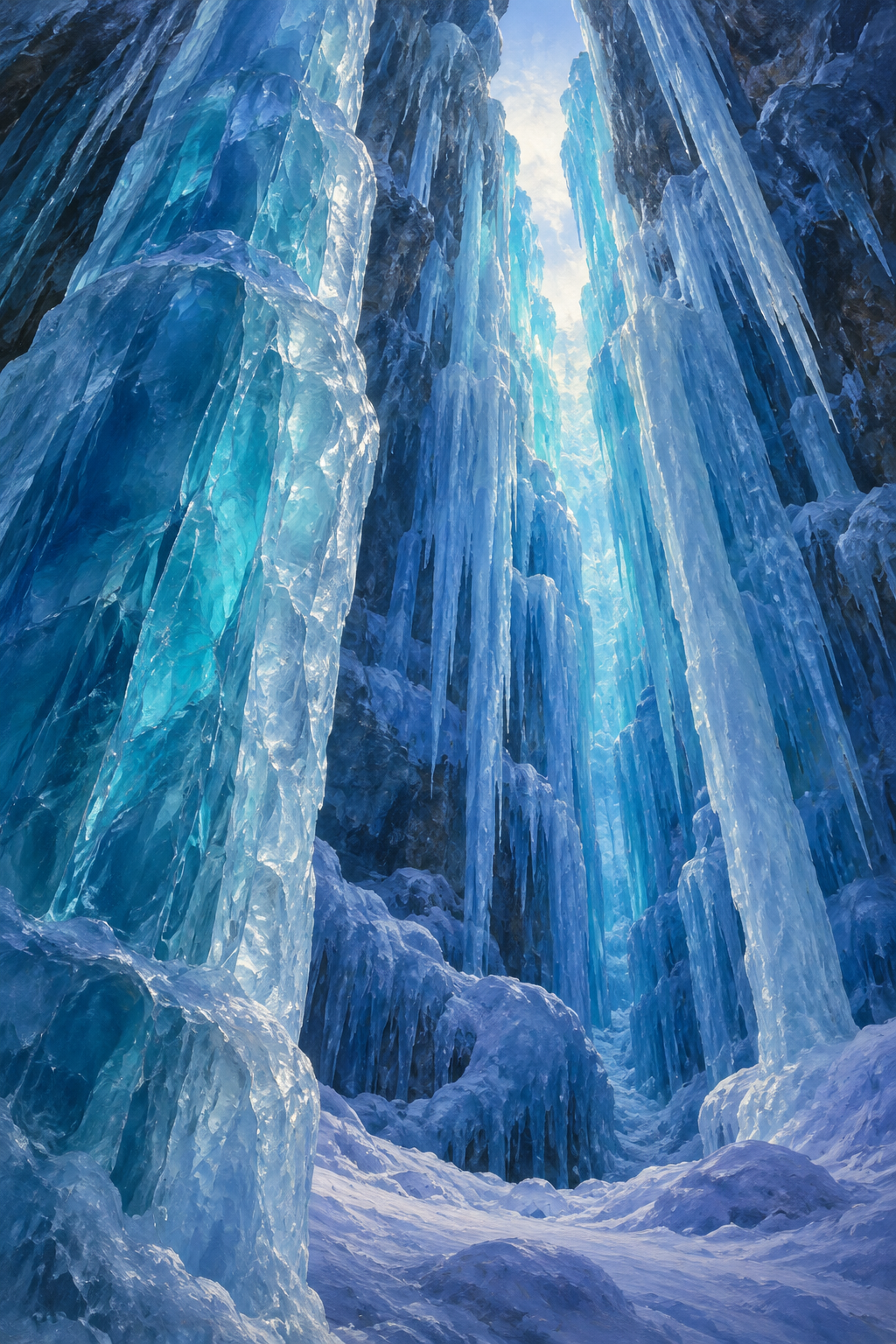
Cathedral of Frozen Light
Critique
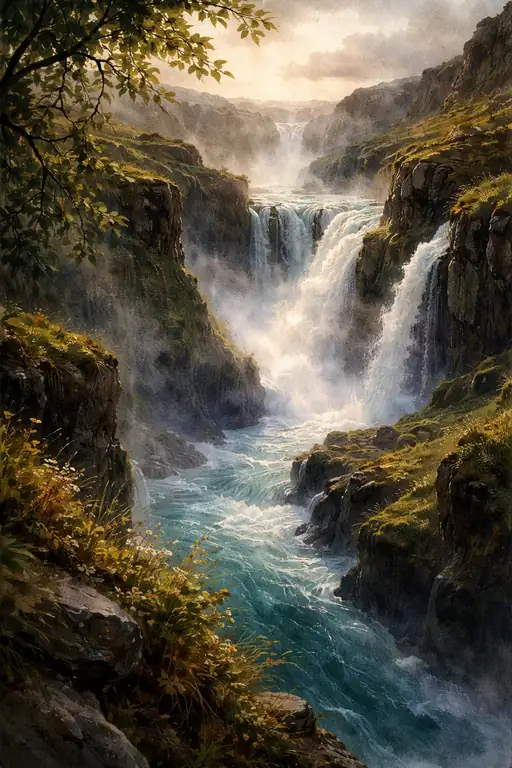
1. Introduction This majestic oil landscape depicts a colossal canyon of crystalline ice and soaring icicles carved within a glacial chasm. Bathed in ethereal light filtering from above, the artwork evokes a breathtaking sense of arctic quietude, pristine purity, and natural sublimity. 2. Description On the left, a monumental pillar of compacted ice rises like a tower, glowing with turquoise and cerulean translucence. From the heights on the right, thousands of sharp icicles cascade toward the frozen floor, forming a colonnade of frost. A blanket of snow carpets the pathway beneath dark rock faces, while sunlight illuminates the upper crevasse. 3. Analysis The vertical orientation emphasizes the monumental scale of the glacial cavern, drawing the gaze through the chasm toward the sky. Backlit from the opening, the ice acts as a natural prism, diffusing daylight into radiant gradations of aqua, sapphire, and ultramarine. The stark palette of cool blues and untouched whites creates an immaculate atmosphere. 4. Interpretation and Evaluation The painting symbolizes nature's sovereign indifference, geological patience, and the fragile majesty of frozen worlds. The frozen cataracts represent absolute stillness preserved outside human time. The artist displays remarkable technical authority in oil paint, convincingly handling the refractive depth of translucent ice and soft powdery snowdrifts with exquisite precision. 5. Conclusion This piece succeeds in conveying the tactile chill, silence, and awe-inspiring grandeur of a frozen cathedral. The initial astonishment at the monumental ice pillars deepens into an enduring contemplation of the earth's sublime power. Ultimately, the work stands as an accomplished, evocative triumph of polar landscape art.
Same Subcategory
 Stairway of Frozen Time
Similar Artworks
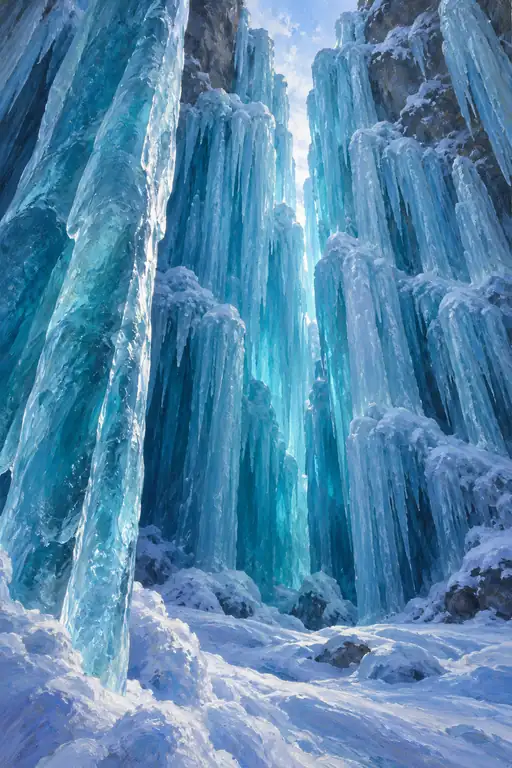 Spire of the Frozen Abyss
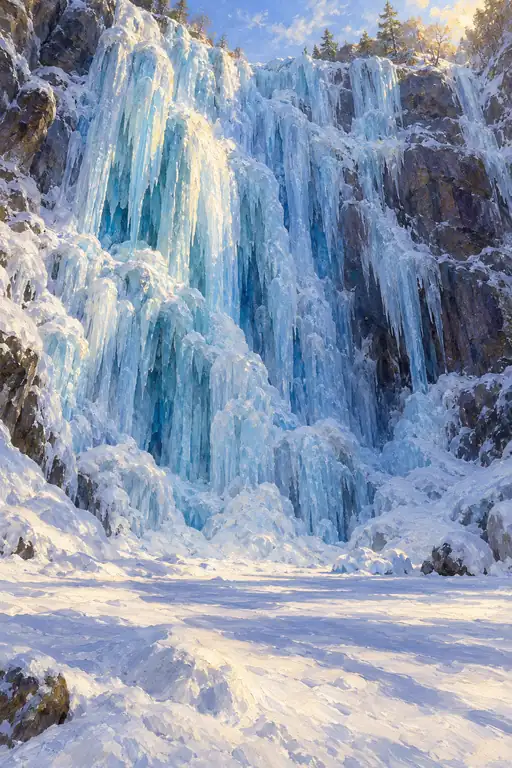 Dawn Touches the Crystalline Wall
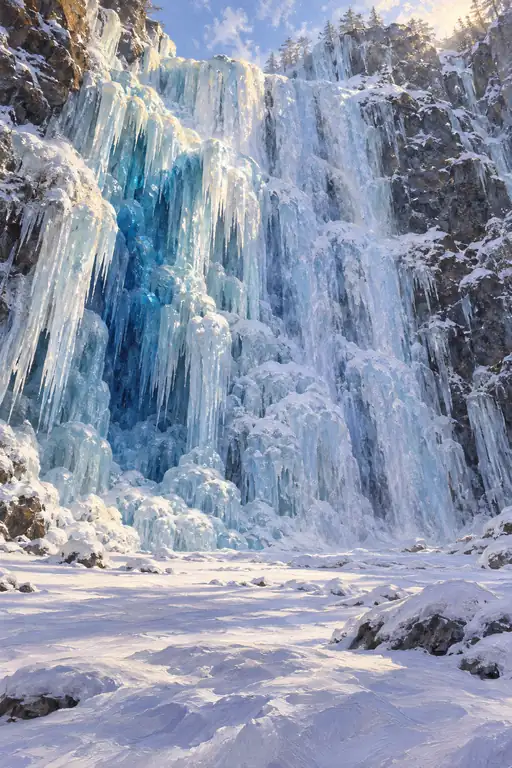 Silence Suspended in Azure Ice
 Whispers of Hope in the Emerald Gorge
 Frozen Symphony of the Gorge
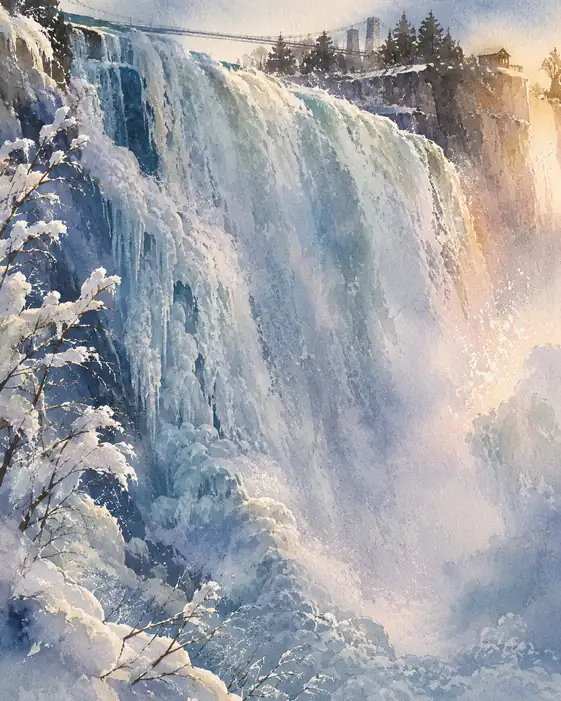 Where the Torrent Sleeps in Gold
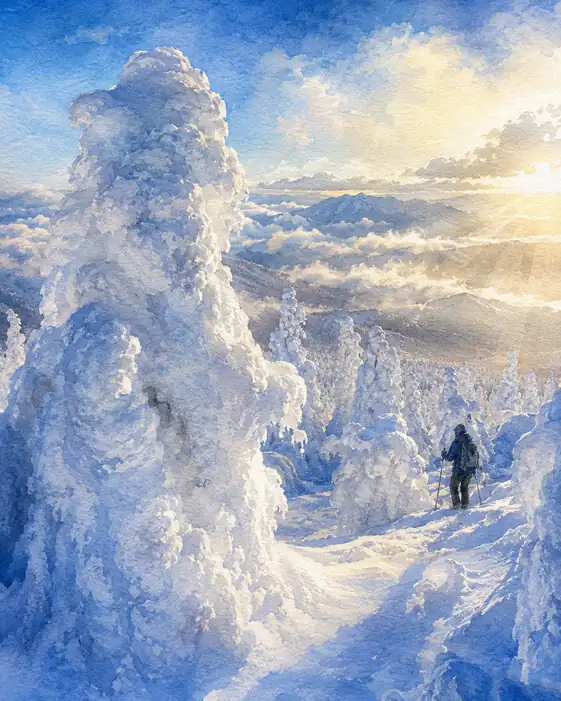 The Giants' Road to the Land of Light
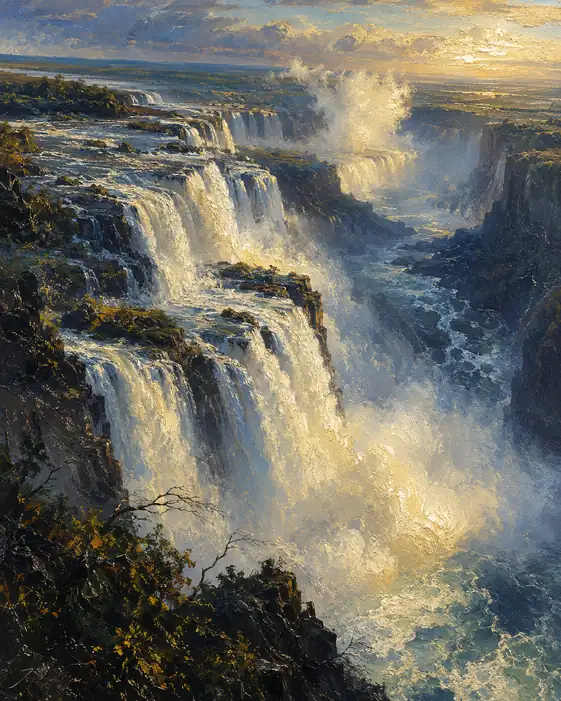 The Roar of Gilded Waters
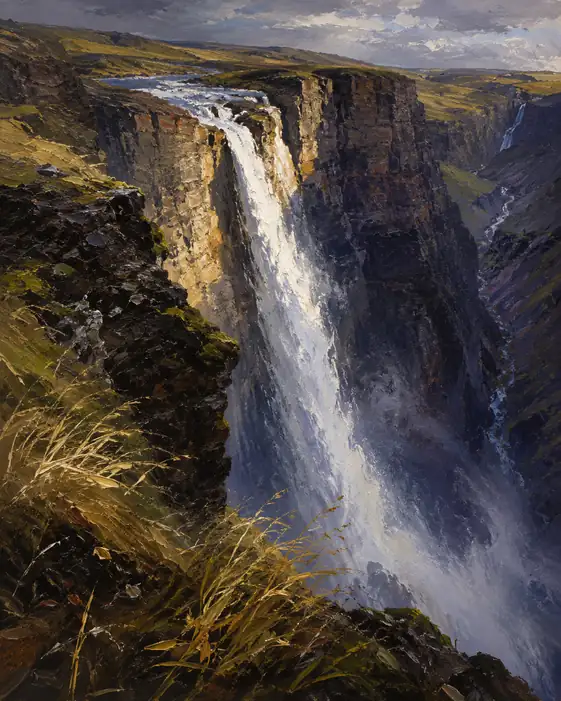 Thunder of the Ancient Gorge
 Whispers of the Sacred Abyss