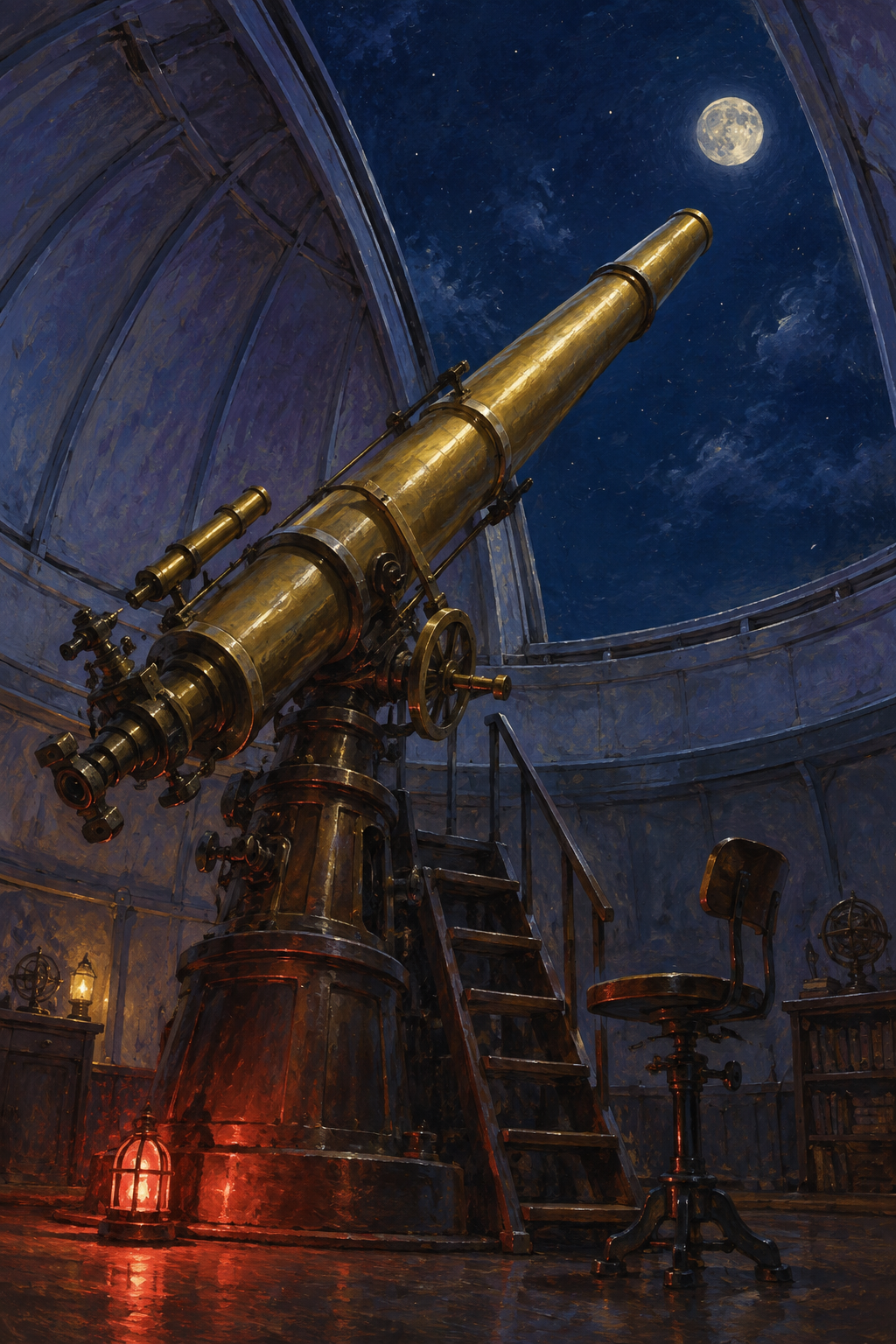
Vigil for the Silver Moon
Critique
1. Introduction This powerful oil painting portrays a monumental brass refractor telescope aimed toward the glowing full moon inside a darkened observatory dome. Rendered from a dramatic low-angle perspective, the composition contrasts metallic brilliance with the silent depths of the midnight sky. 2. Description Mounted upon a cylindrical iron pier, the massive brass telescope points diagonally toward the open dome shutter, where the cratered moon shines amidst deep indigo celestial clouds. Attached to the right side of the mount is a wooden access staircase, beside an adjustable leather swivel stool. On the planked floor to the lower left, an illuminated cage lantern bathes the base of the apparatus in warm crimson light. 3. Analysis The upward perspective magnifies the physical scale of the instrument, enhancing the sensation of reaching toward the cosmos. A compelling dual-lighting scheme contrasts the cool, silver radiance of the moon with the hot amber glow of the oil lantern below. Rich, painterly impasto textures define the machined gears, rivet seams, and tactile grain of the worn floorboards. 4. Interpretation and Evaluation The painting symbolizes humankind's intellectual reach and persistent curiosity toward celestial mysteries. The quiet solitary apparatus represents scientific devotion, bridging terrestrial mechanics with cosmic wonders. The artist demonstrates extraordinary virtuosity in oil paint, convincingly handling complex specular reflections across curved metal while maintaining atmospheric softness throughout the shadowy dome. 5. Conclusion This piece succeeds in uniting industrial craftsmanship with celestial poetry. The initial awe inspired by the massive astronomical instrument deepens into an enduring contemplation of humanity's quiet vigil beneath the stars. Ultimately, the work stands as a technically flawless and deeply inspiring artistic homage to scientific observation.
Same Subcategory
Similar Artworks
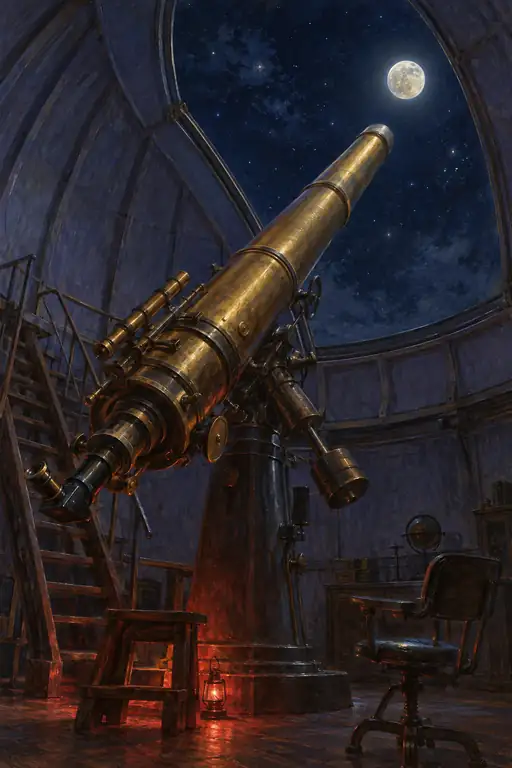 Eye to the Celestial Spheres
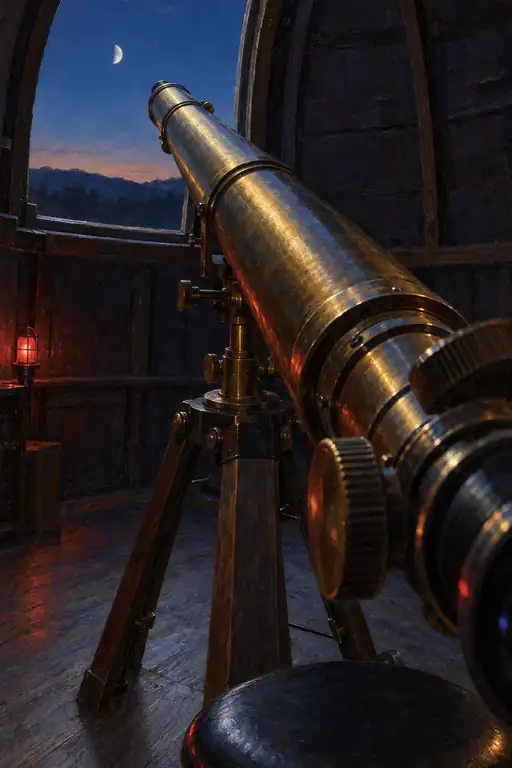 Arc Toward the Crescent Night
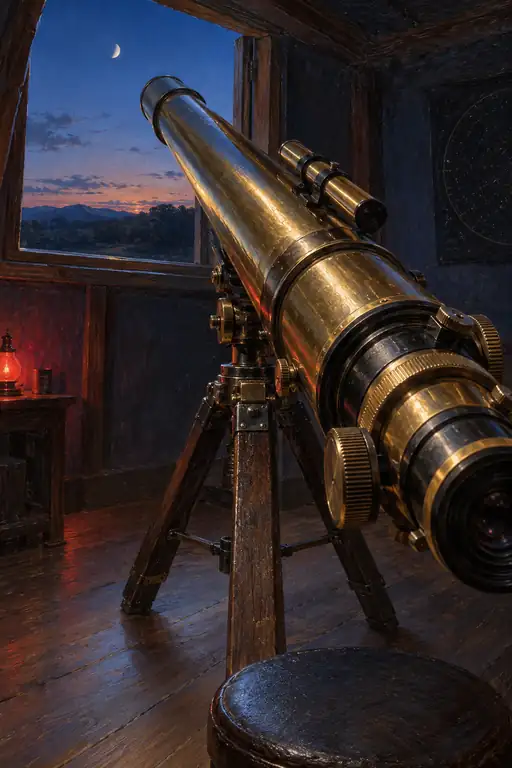 Gazing at the Crescent Silence
 Silent Dialogue with the Cosmos
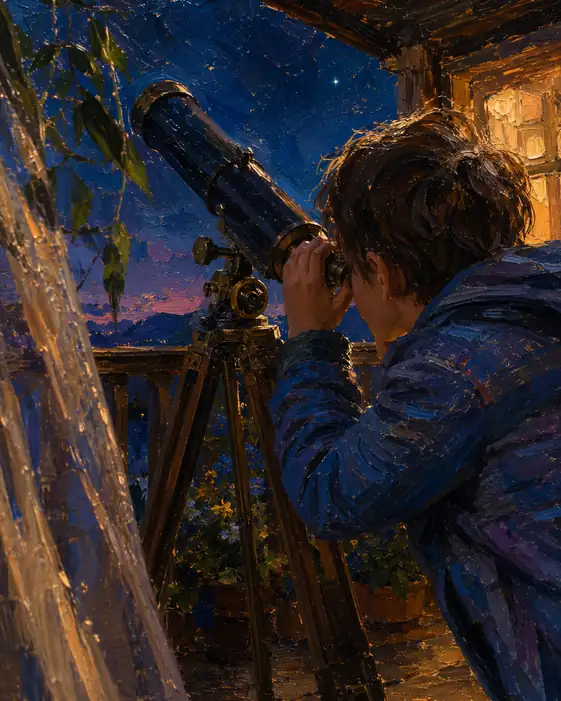 The Balcony to the Cosmos
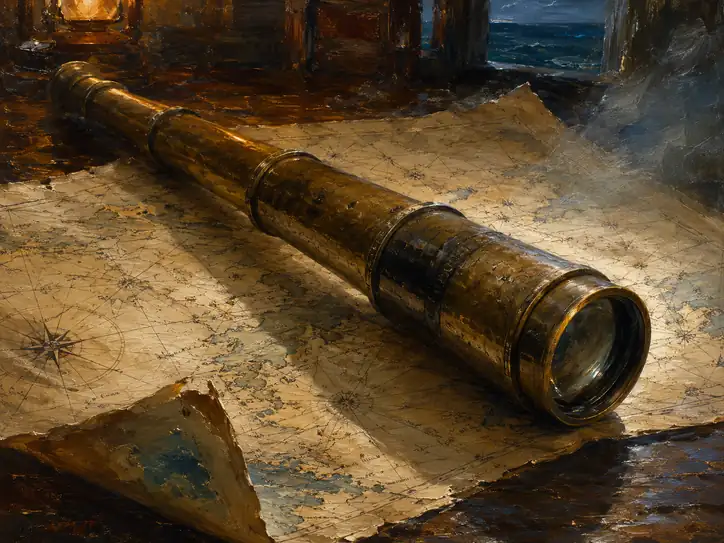 The Silent Call of the Infinite Sea
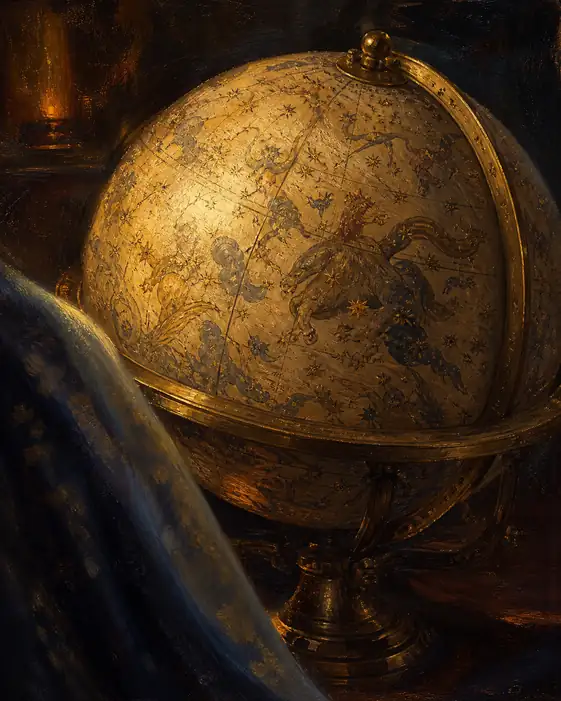 Cartographer of the Infinite Soul
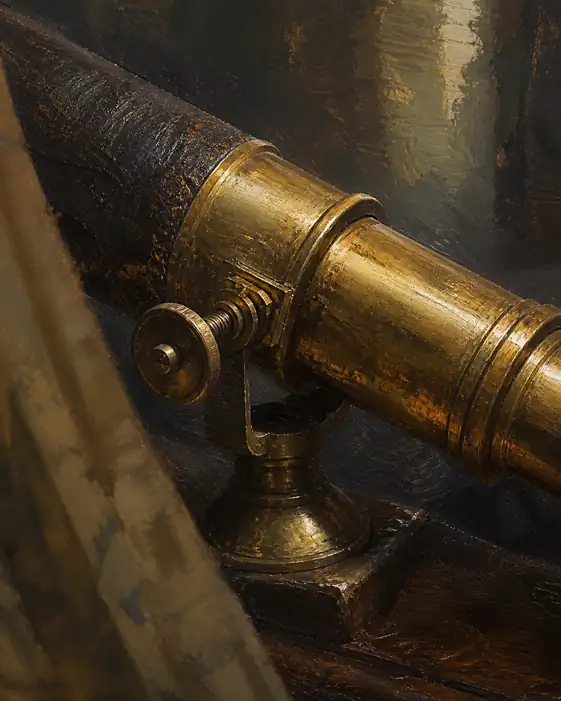 Echoes of an Endless Horizon
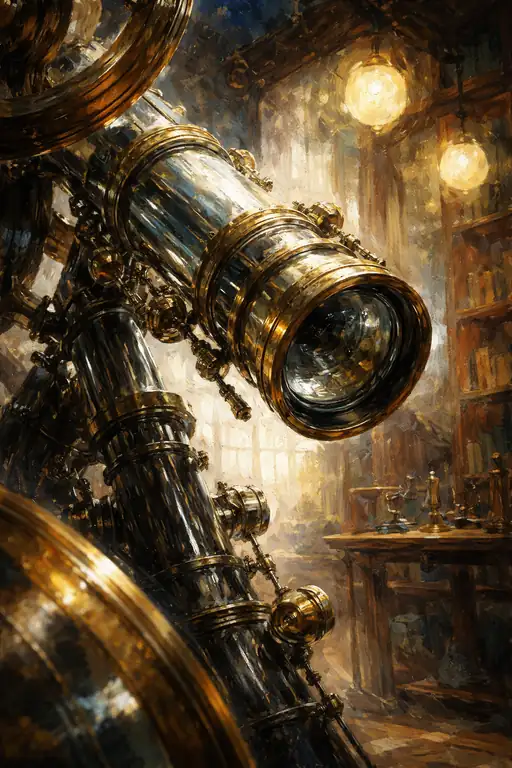 The Scholar's Cosmos
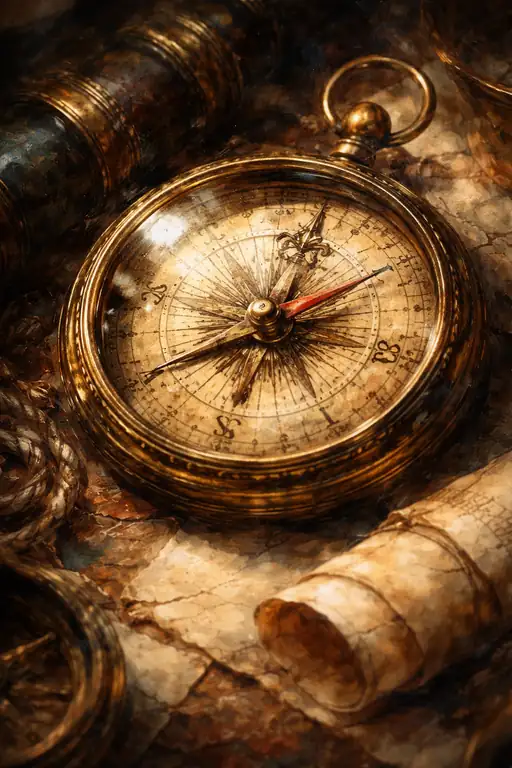 The Compass that Knows My Heart's Direction