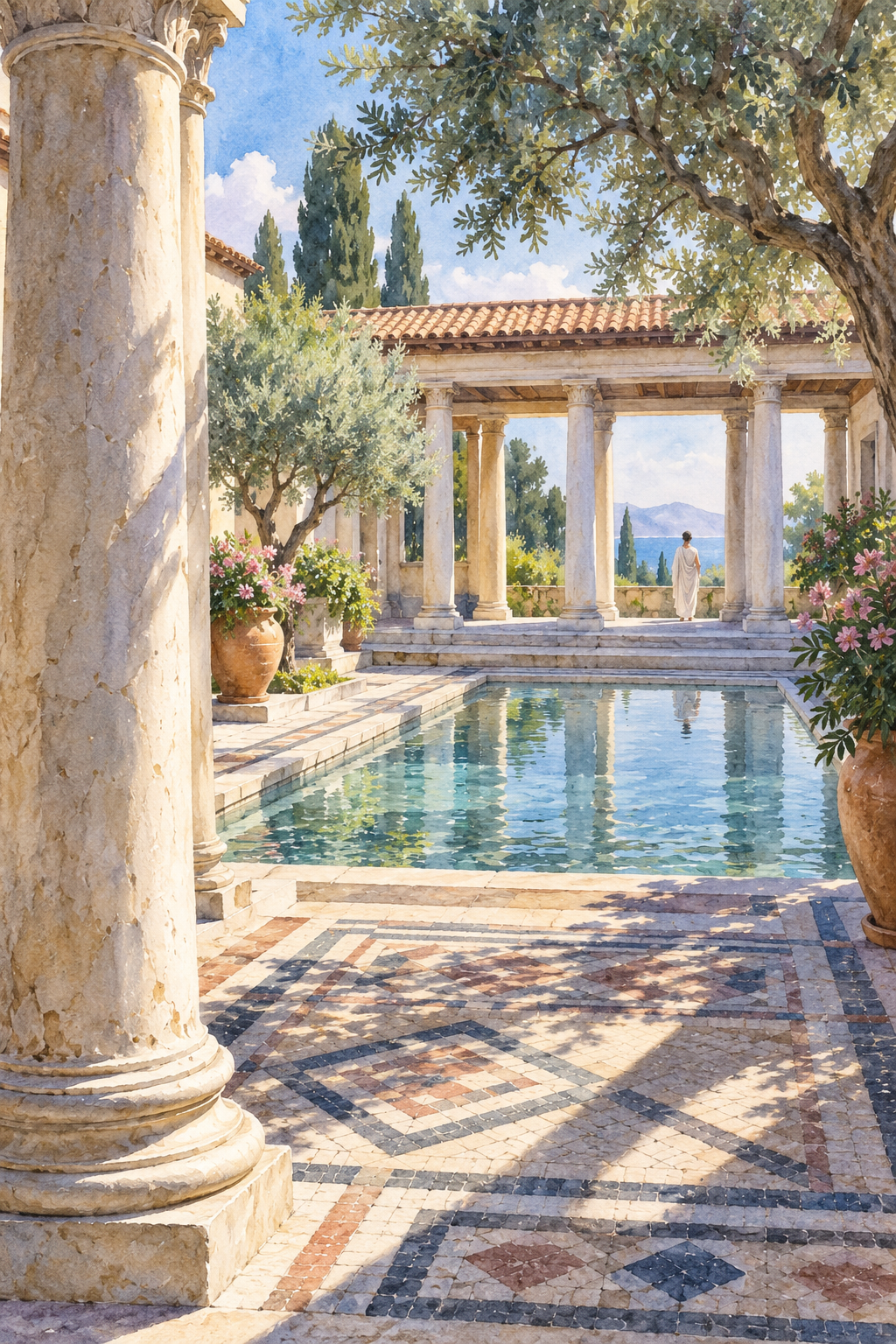
Otium in the Marble Court
Critique
1. Introduction This vertical watercolor painting portrays a tranquil peristyle courtyard within a classical Roman villa, centered around a reflective pool of azure water. Flanked by marble colonnades and olive trees, the architectural sanctuary opens toward a panoramic vista of distant hills and sea. The artwork evokes the harmonious elegance and contemplative stillness of antiquity. 2. Description A fluted column rises in the left foreground, its weathered stone base resting upon a sun-dappled mosaic pavement. In the center, a calm pool mirrors surrounding columns and Mediterranean sky. Potted urns with pink oleanders punctuate the terrace, while in the shaded colonnade beyond, a lone figure in a white toga gazes out toward cypress trees. 3. Analysis The artist establishes classical balance through linear perspective, using the rectangular pool and receding colonnade to draw the viewer's eye toward the solitary philosopher figure. Dappled shadows cast by the olive tree dance across the warm mosaic floor, creating surface rhythm. The cool azure of the water complements warm roof tiles and masonry, generating chromatic harmony. 4. Interpretation and Evaluation The painting symbolizes the classical ideal of otium, where philosophy, nature, and noble architecture coexist in equilibrium. The solitary figure embodies human contemplation amid enduring architectural beauty. The painter demonstrates precision in rendering perspective alongside delicate watercolor washes that convey the soft warmth of air. 5. Conclusion This work achieves a sublime realization of classical tranquility through refined draughtsmanship and luminous color handling. What begins as an architectural reconstruction evolves into a deeply moving meditation on harmony, wisdom, and timeless grace. With its poised geometry and atmospheric light, it stands as an exceptionally accomplished watercolor painting.
Same Subcategory
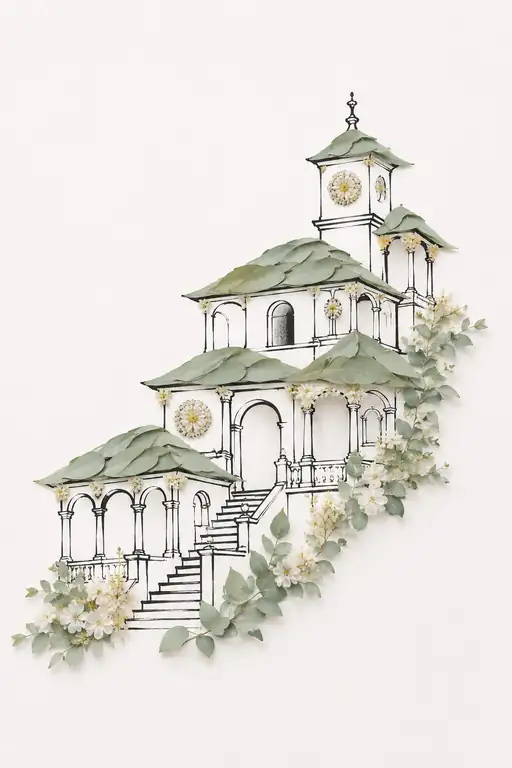 Verdant Clocktower and Blossoming Facade
Similar Artworks
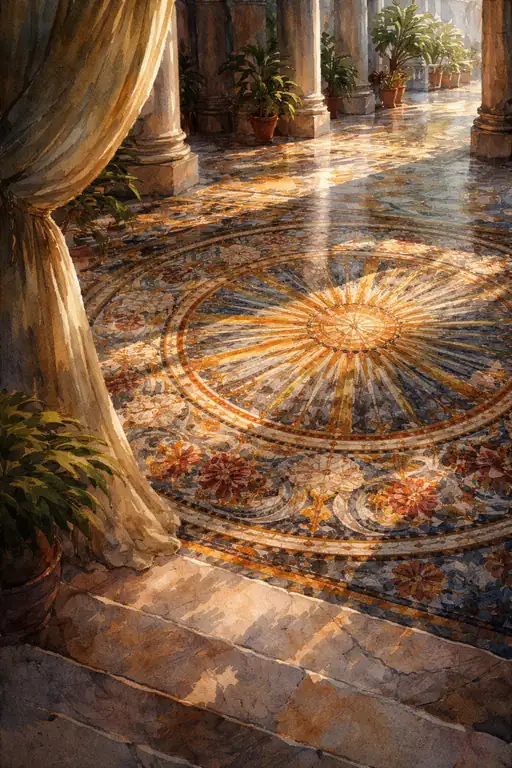 Silent Echoes in the Grand Hall
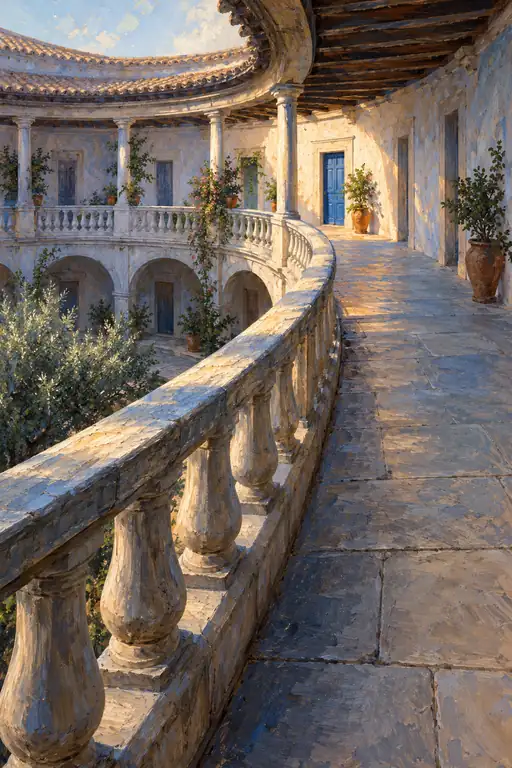 Terrace of the Blooming Colonnade
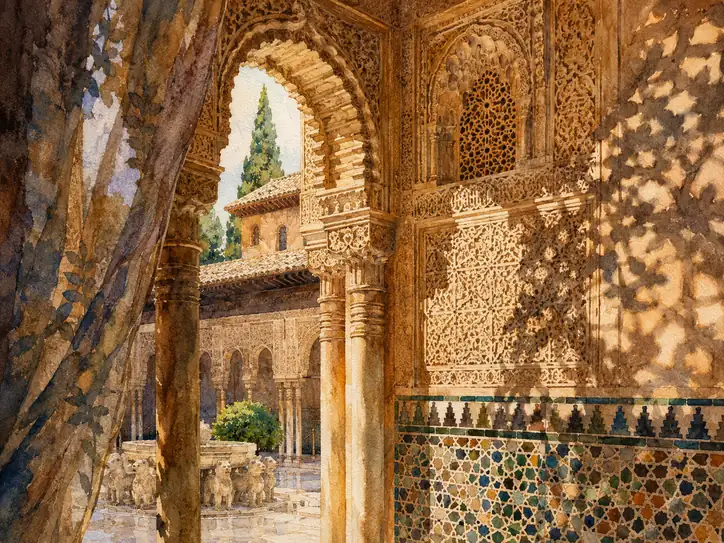 The Light That Carves Eternity
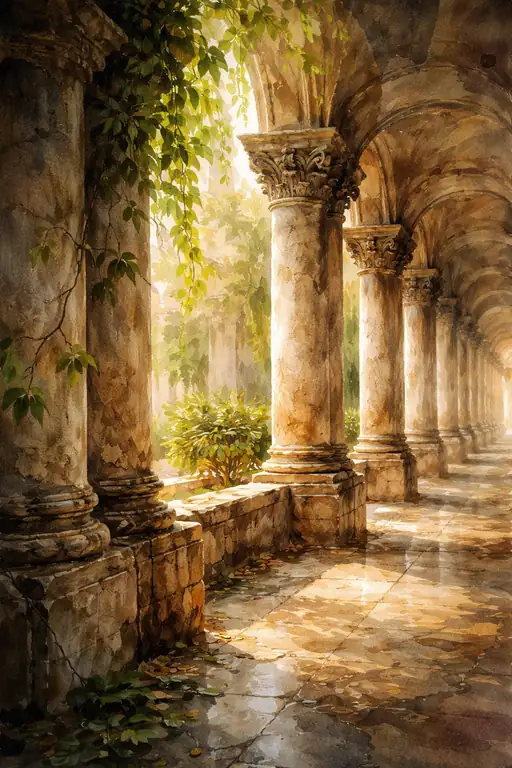 Sunlit Echoes in the Corridor
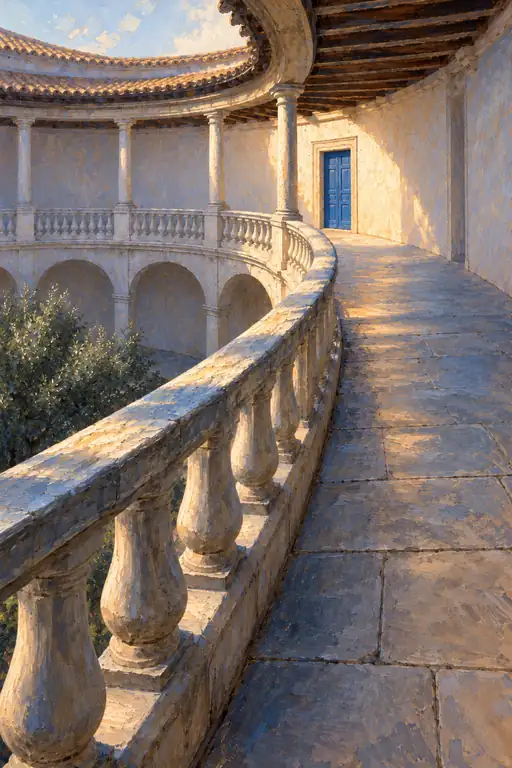 Solitary Blue at the Arc's End
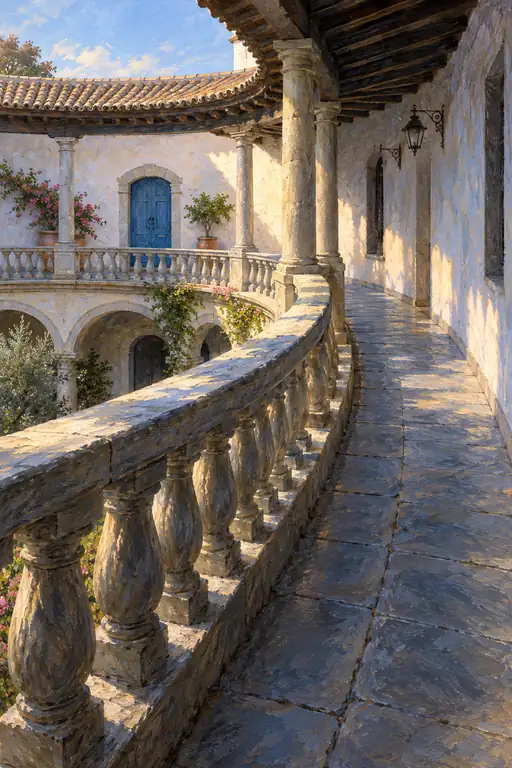 Arc of the Courtyard Breeze
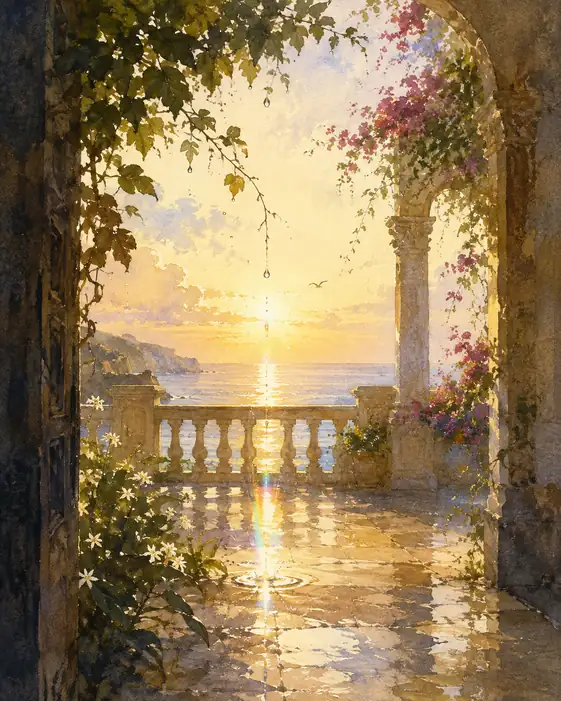 A Raindrop Holds the Mediterranean Sun
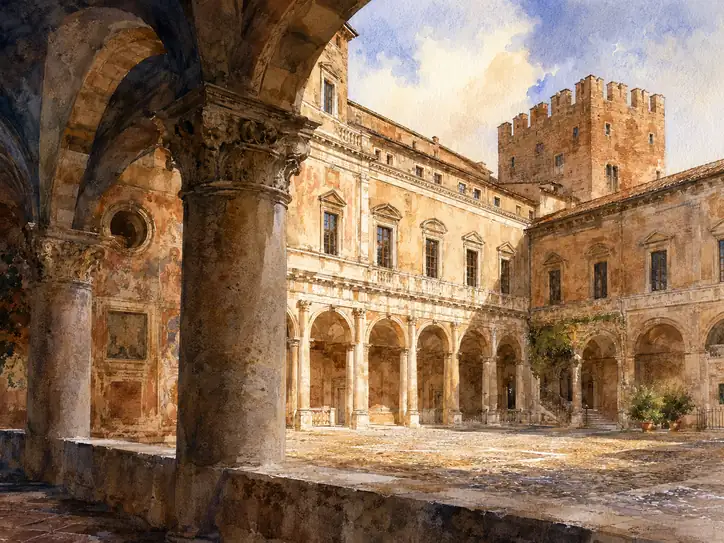 Sunlight on Faded Memories
 The Silent Serenade of the Golden Hour
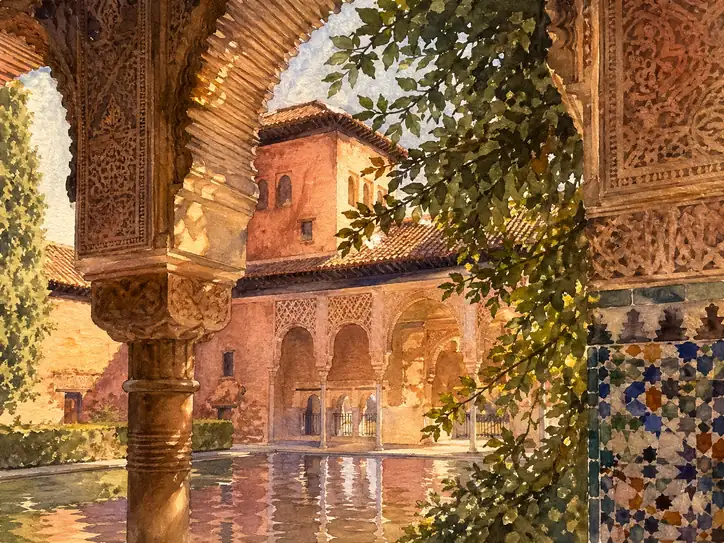 Whispers of the Alhambra Pool