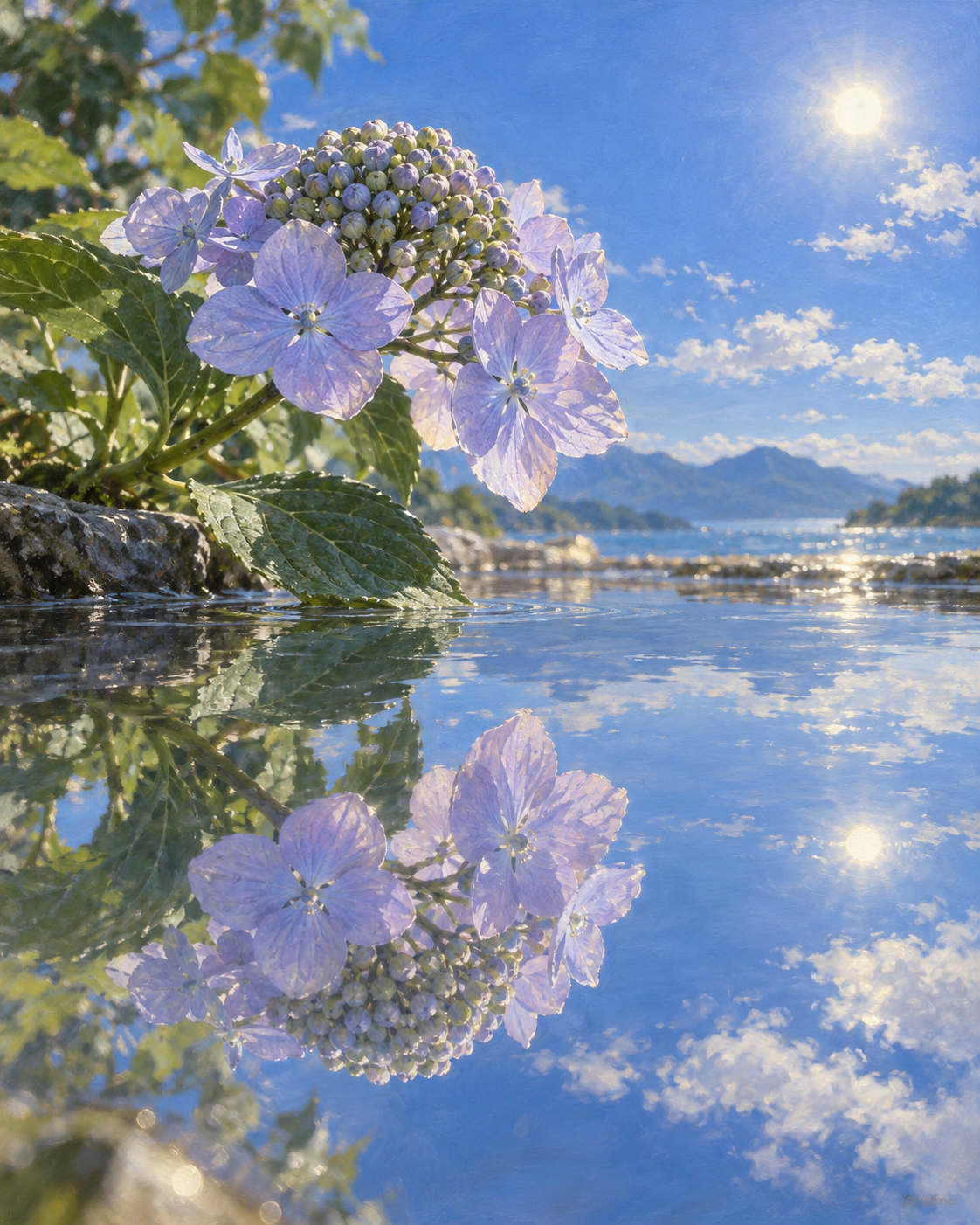
Flower Reflected in Azure Waters
Critique
1. Introduction This low lakeside image balances a lavender hydrangea rooted on a wet rock with its expansive reflection. More open water than foliage is shown, allowing the mirrored sky to become an atmospheric field rather than a simple duplicate. 2. Description At upper left, pale sepals surround a compact dome of green and violet buds. Stems rise beside a dark rock, and one broad wet leaf touches the water. The pool occupies most of the lower image, reflecting flower, foliage, clouds, and a small sun near the lower right. Above, the actual sun glows in a clear blue sky. A distant mountain ridge and lake form a narrow middle band. 3. Analysis The rock anchors the flower at the waterline, making transition legible. Its upper mass is compact, while reflection spreads downward softly. The blue field separates paired hydrangeas and emphasizes clouds. Sun and reflected sun stabilize the right against floral weight at left. Lavender remains cool and translucent. Ripples, glints, and submerged tones distinguish water from sky. 4. Interpretation and Evaluation Reflection becomes spatial expansion. A flower on a limited bank gains presence in a deeper blue realm, yet rock and touching leaf insist on roots. Buds hold potential above; their image hangs below. The narrow landscape makes near and distant waters continuous, blurring private pool and public lake. Rough rock gives this ambiguity a material reference, making openness feel earned. 5. Conclusion By minimizing the horizon and enlarging the reflective surface, the work turns a botanical close-up into an atmospheric landscape. Its anchored flower, broad blue interval, and gently altered double express how still water can enlarge presence without changing its source.
Same Subcategory
Similar Artworks
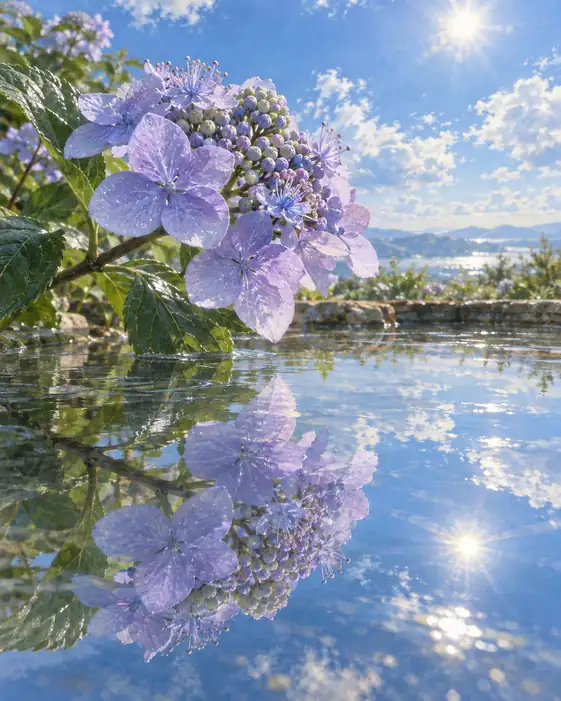 Ripples of Light, Hydrangeas Mirrored in Summer
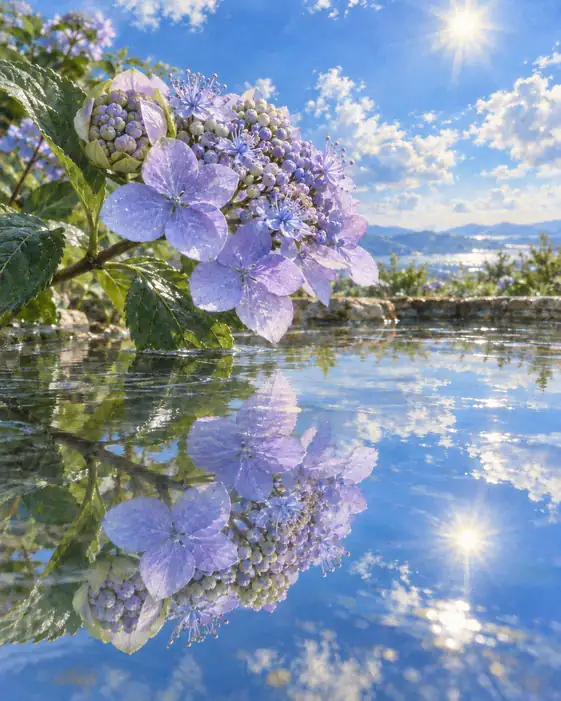 Ripples of Sunlight, Hydrangeas Mirrored in Blue
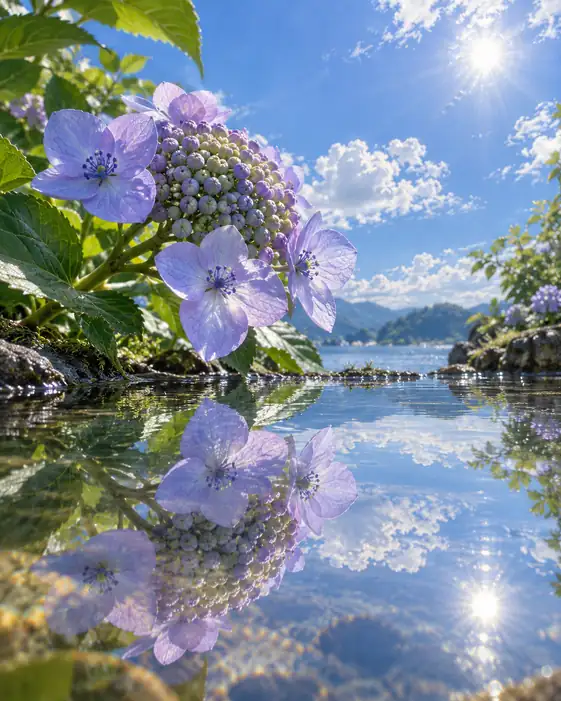 Mirrored Skies and Blooming Hydrangeas
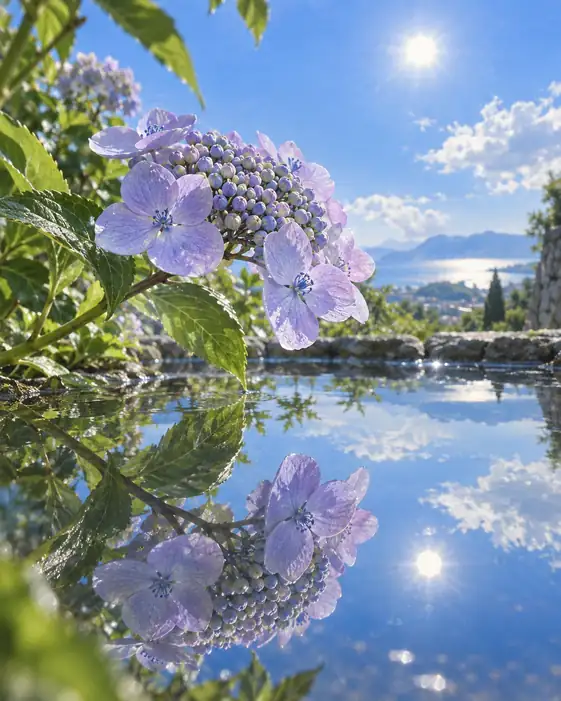 Mirrored Horizons, Hydrangea by the Stone Basin
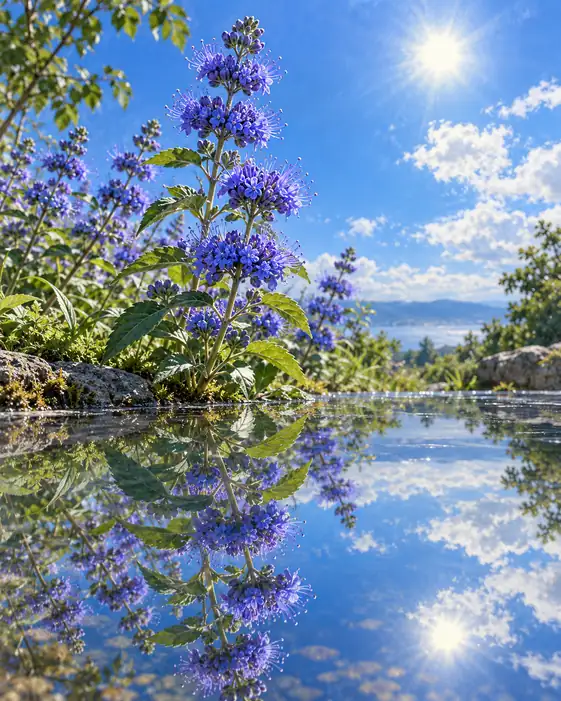 Caryopteris Reflected in the Sky Mirror
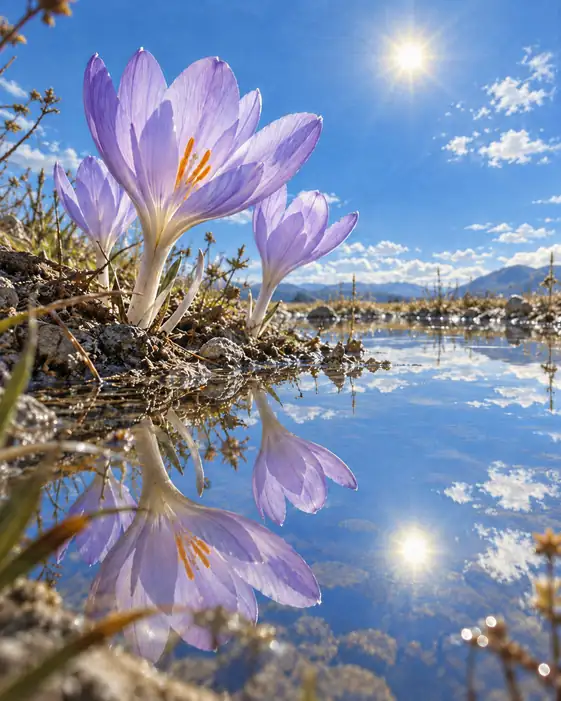 Reflection of Crocus and Sun
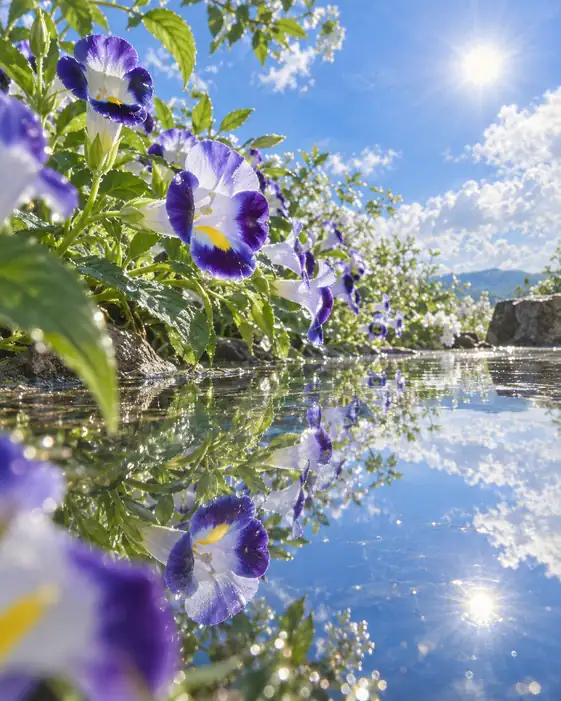 Summer Violets in the Water Mirror
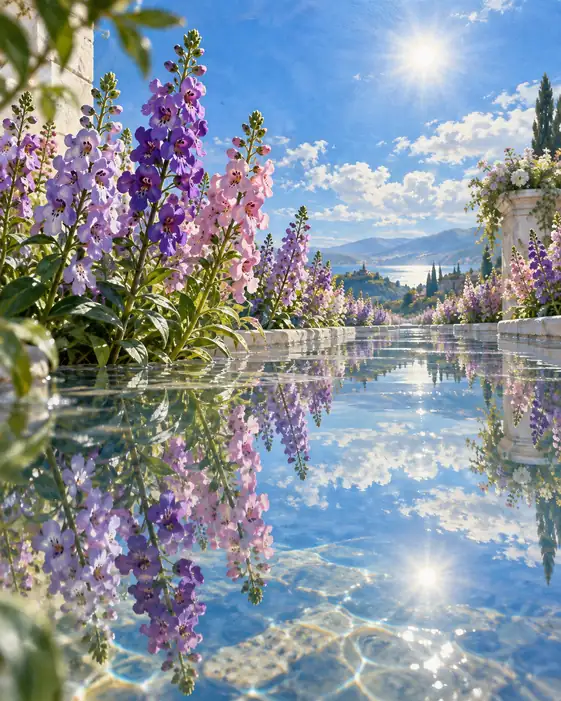 Caustics of a Clear Horizon
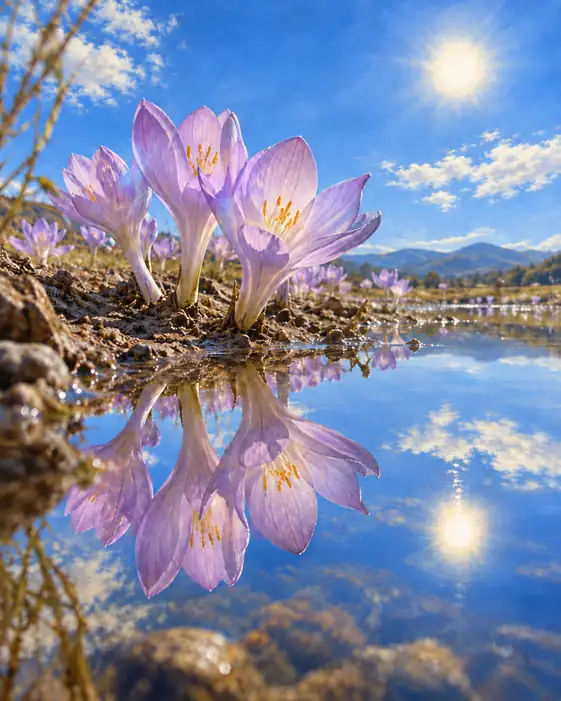 Crocuses in the Alpine Water Mirror
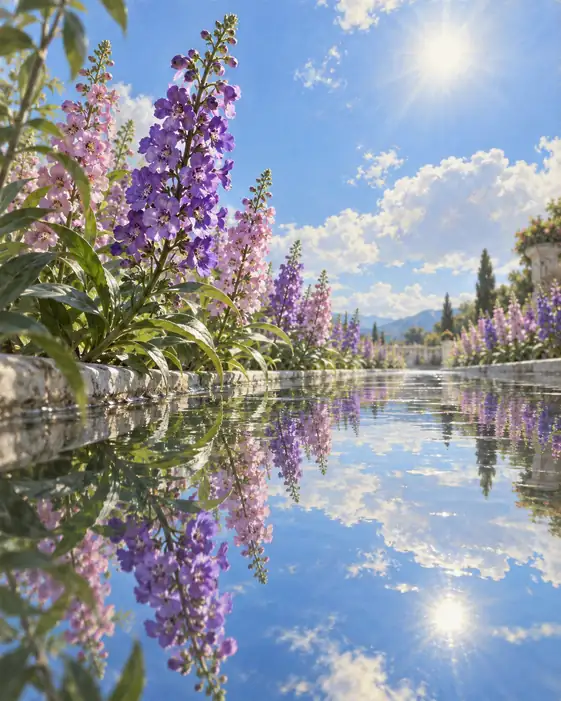 Double Sun upon Cerulean Waters