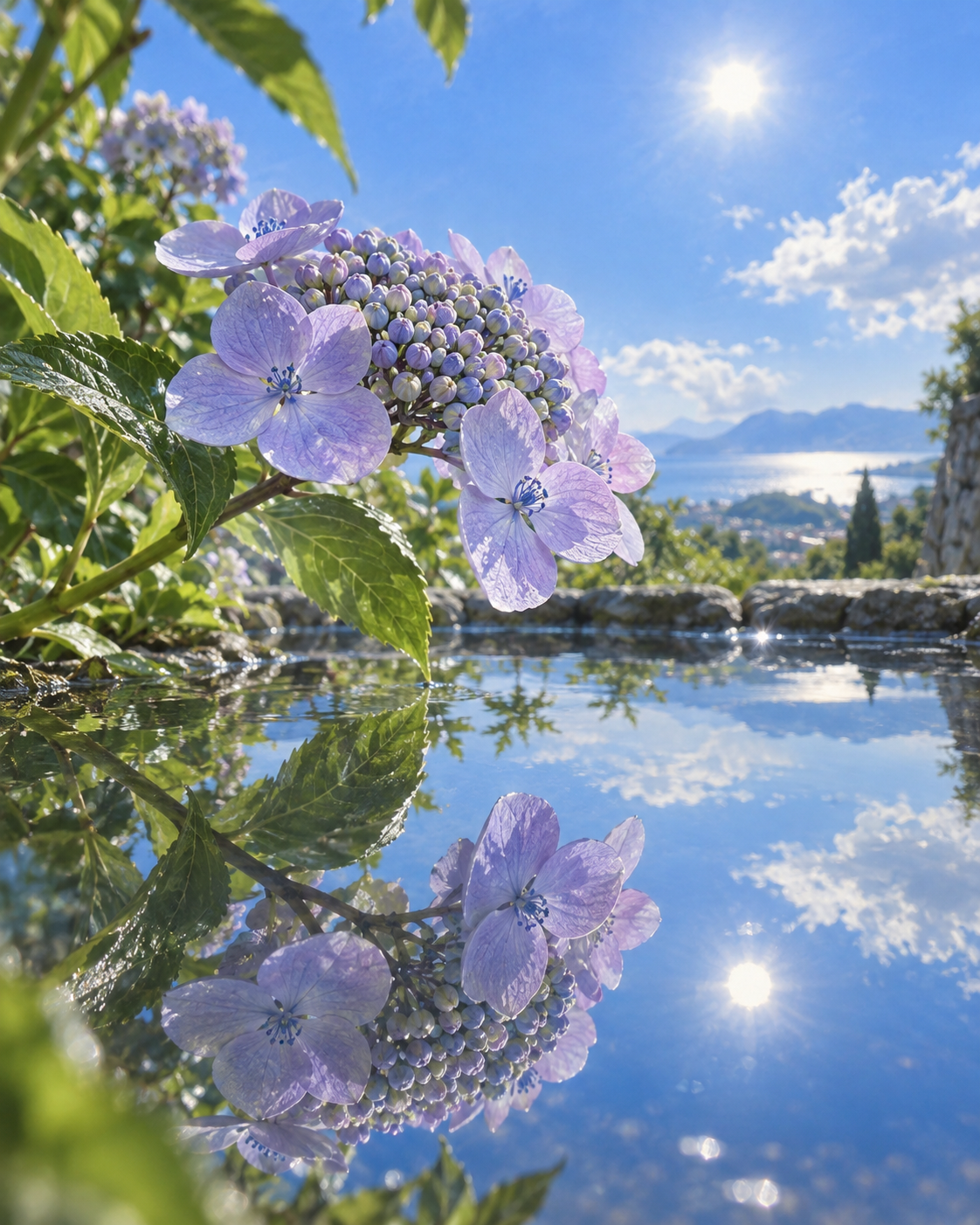
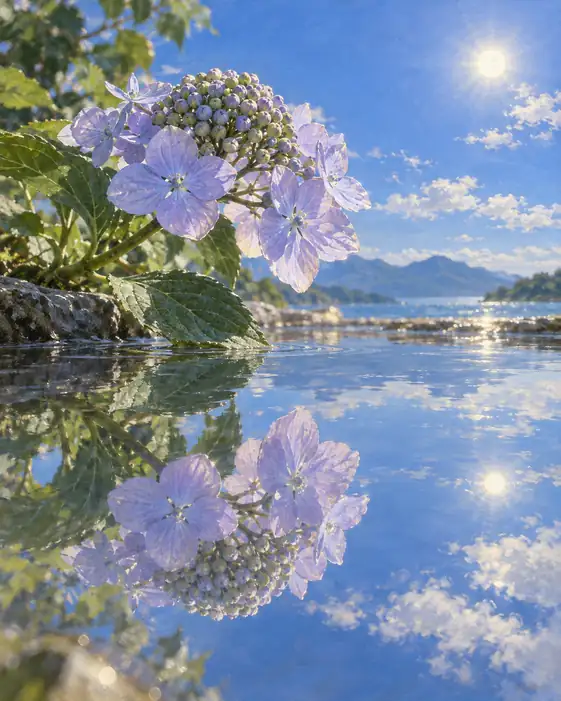
Mirrored Horizons, Hydrangea by the Stone Basin
Critique
1. Introduction This brilliant daytime image suspends a lavender hydrangea above a shallow reflecting pool. The low viewpoint divides attention between the tangible flower and its inverted double, while a distant lake and mountains extend the intimate mirror into open landscape. 2. Description The flower head enters from the upper left with broad pale sepals surrounding green-violet buds. Serrated leaves and branching stems frame it. Still water occupies the lower half, reflecting the hydrangea, blue sky, white clouds, and a second image of the sun. A rough stone edge separates the pool from a distant bright lake, wooded slopes, and hazy mountains. The actual sun shines high at upper right. 3. Analysis The waterline hinges object and reflection. Flower and double descend opposite paired suns. The high real blossom leaves a large blue field below, emphasizing atmosphere over mass. Lavender and green remain delicate against saturated sky. Ripples soften lower contours, while veins and buds define the upper plant. Stone-rim sparkles mark the transition from pool to distant water. 4. Interpretation and Evaluation The image distinguishes measurable distance toward mountains from illusory depth beneath water. The reflected flower appears reachable yet lacks substance. Central buds introduce growth into optical stillness. Strong sun could flatten form, but leaf shadows and darker water preserve volume. The narrow stone boundary effectively makes a modest basin continuous with the broad lake beyond. 5. Conclusion By elevating the flower and opening a generous mirror beneath it, the work makes reflection the principal landscape. Its clear geometry and subtle distortions celebrate visual doubling while preserving the material differences between plant, water, and sky.
Same Subcategory
Similar Artworks
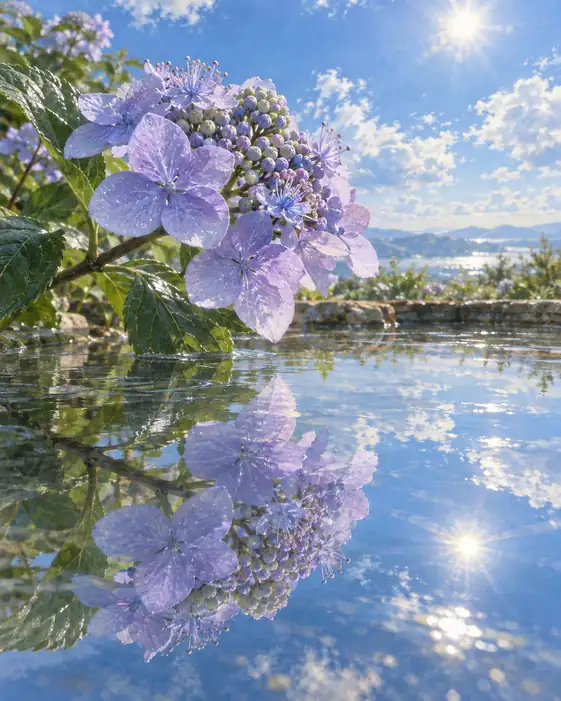 Ripples of Light, Hydrangeas Mirrored in Summer
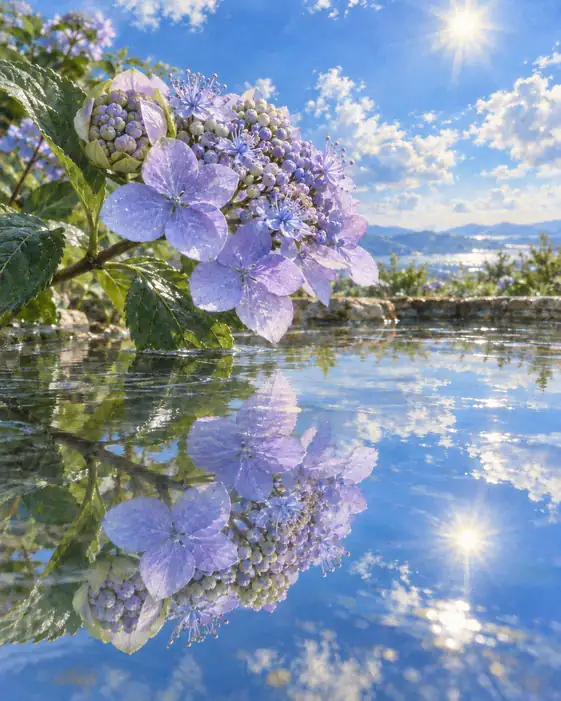 Ripples of Sunlight, Hydrangeas Mirrored in Blue
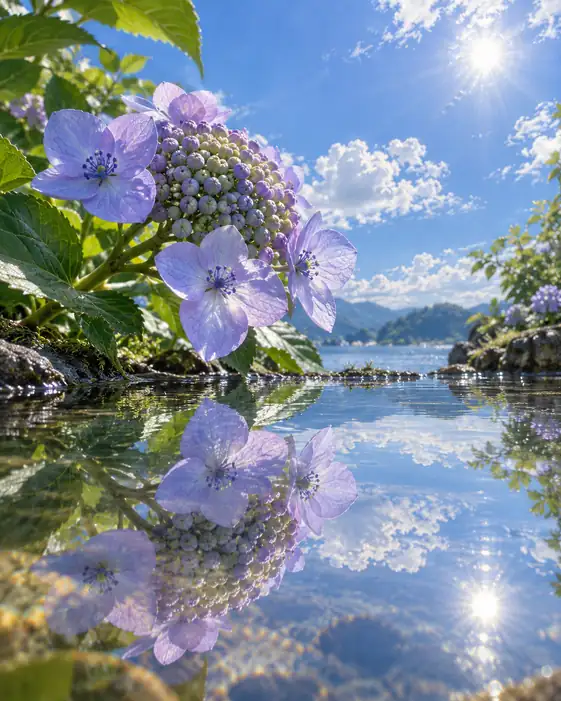 Mirrored Skies and Blooming Hydrangeas
 Flower Reflected in Azure Waters
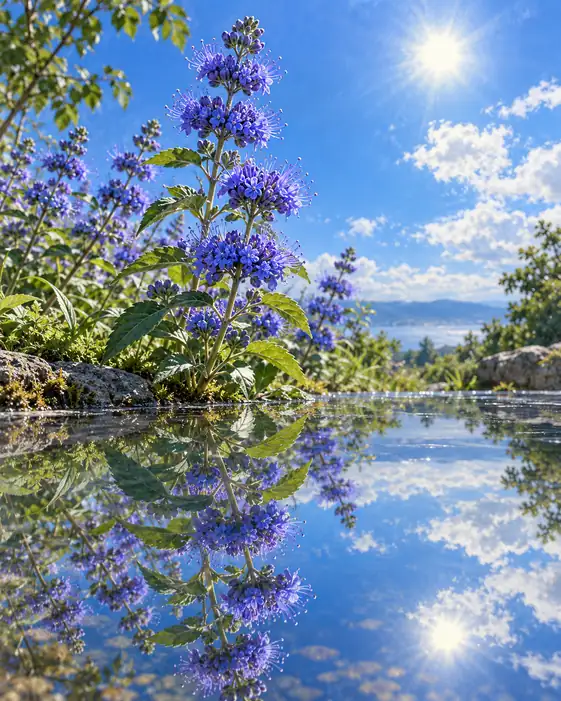 Caryopteris Reflected in the Sky Mirror
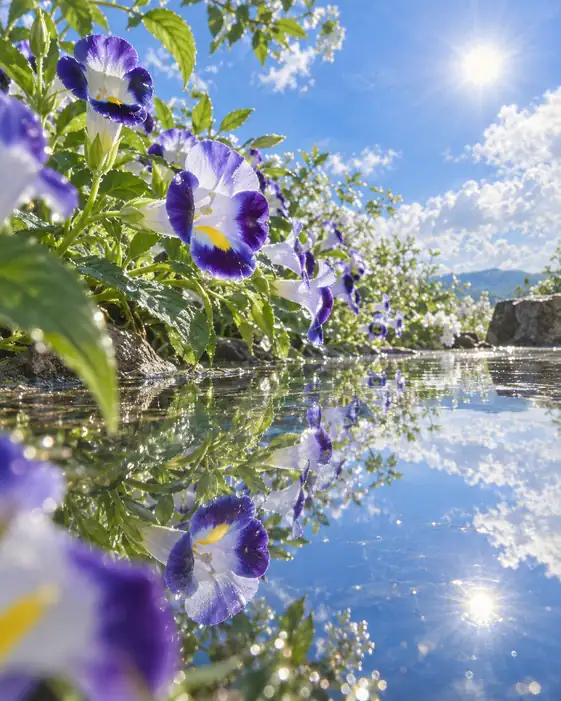 Summer Violets in the Water Mirror
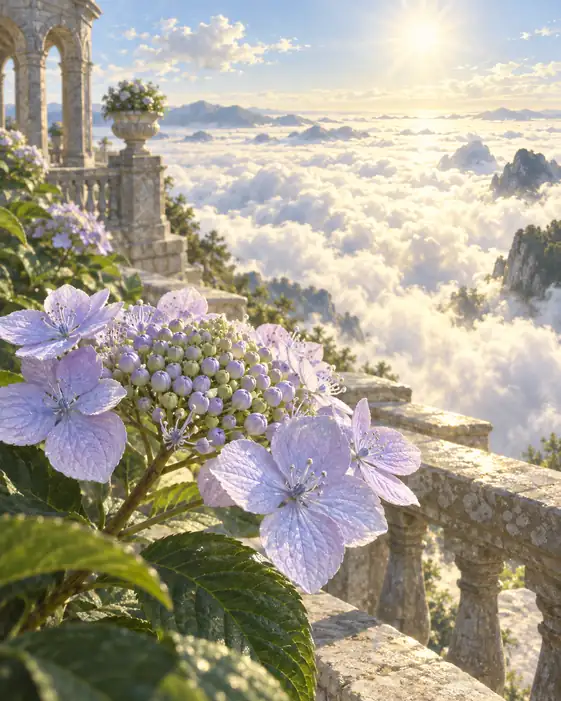 Corridor in the Clouds, Hydrangeas in the Morning Sun
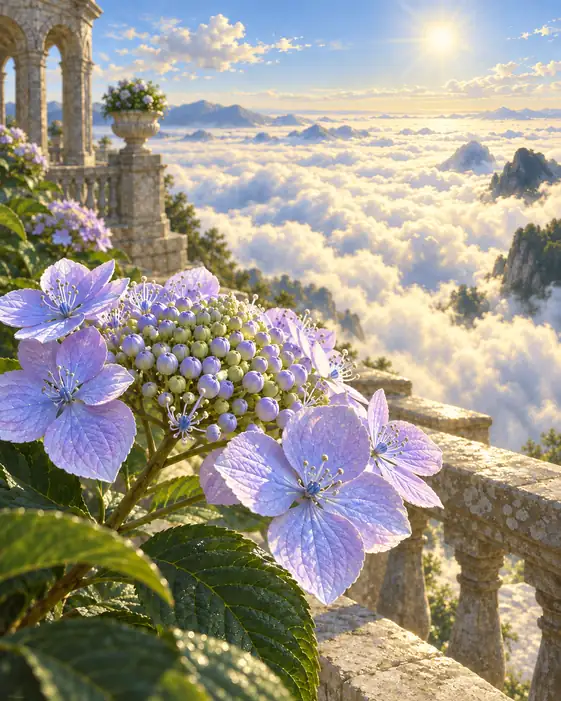 Terrace Above the Clouds, Morning Sun and Hydrangeas
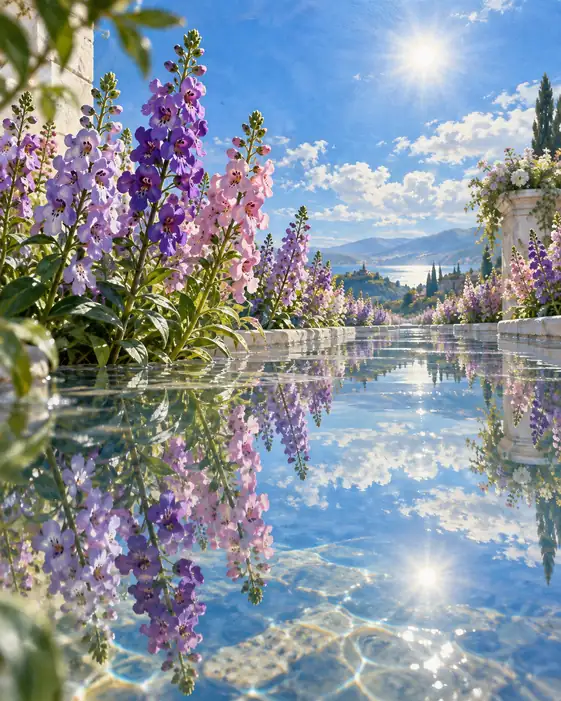 Caustics of a Clear Horizon
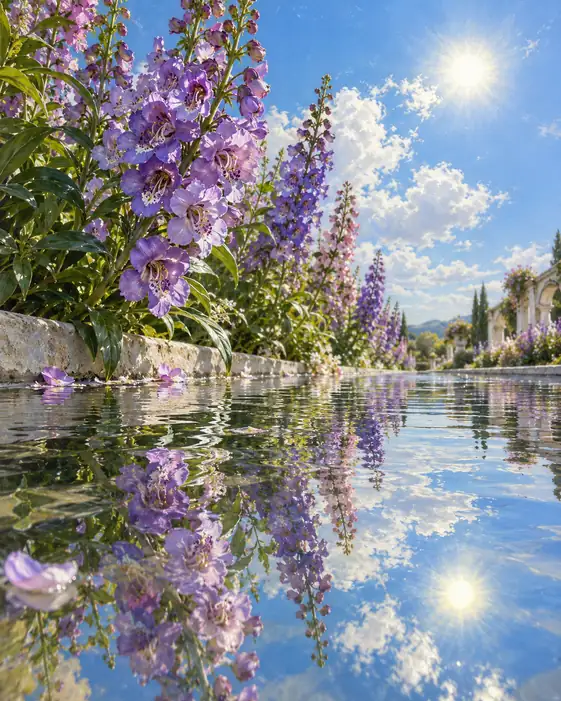 Where Sunbeams Plunge into the Pool