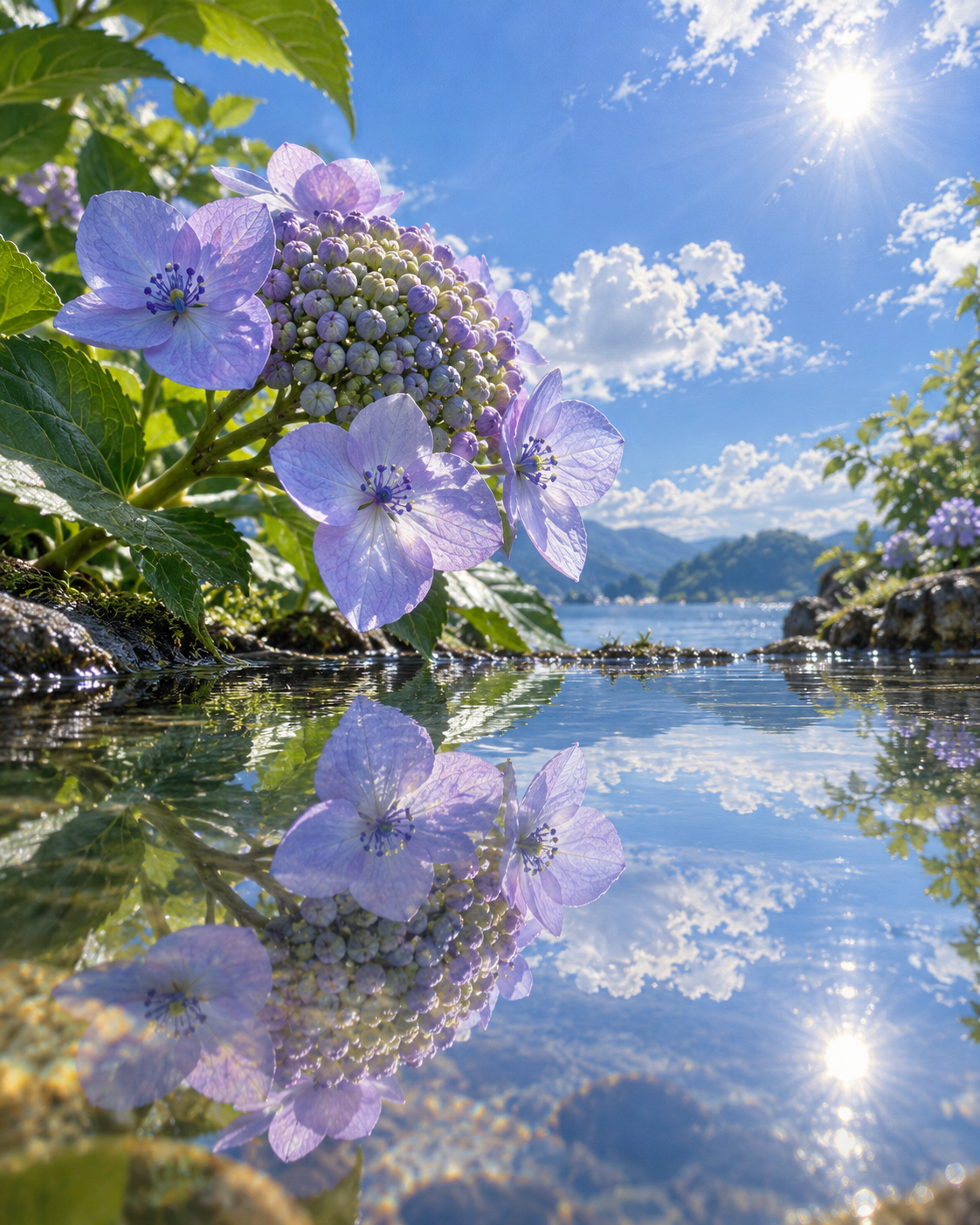
Mirrored Skies and Blooming Hydrangeas
Critique
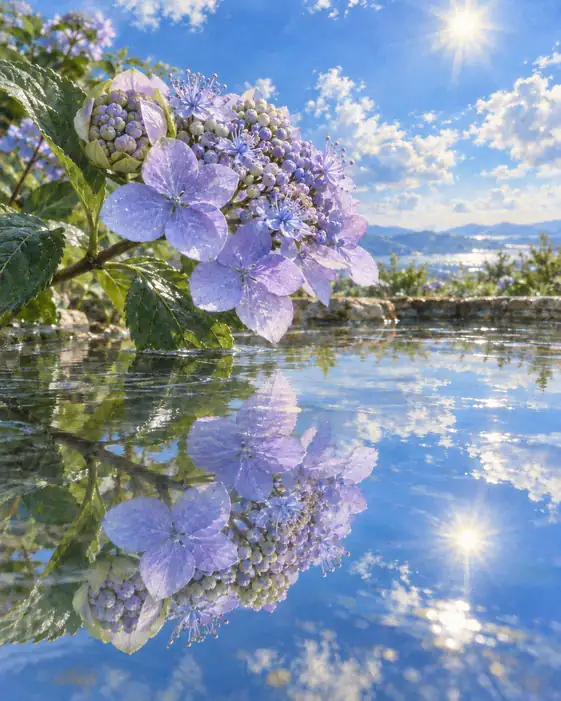
1. Introduction This low waterside view places a lacecap hydrangea above its nearly complete reflection. Bright sun, blue sky, and distant mountains make the small pool function as a second world, turning close botanical observation into an inquiry about image and reality. 2. Description A lavender flower head leans from the upper left, with broad veined sepals surrounding tightly packed green and violet buds. Large serrated leaves frame it. Calm water divides the composition near the middle and mirrors the flower, clouds, foliage, and brilliant sun. Beyond the pool lies a larger blue lake bordered by wooded mountains. Rocks and moss mark the immediate shore. 3. Analysis The waterline creates two stacked fields, crossed by the flower's reflection. Sun and reflected sun balance paired flower heads diagonally. Lavender, green, and blue recur above and below, but darkening and ripples distinguish the mirror. Low perspective enlarges the plant and compresses the distant lake. Crisp veins and buds contrast with clouds. Waterline sparkles stitch both halves together. 4. Interpretation and Evaluation Reflection doubles abundance imperfectly. The flower above has weight and directional growth; its counterpart is inverted, liquid, and dependent on stillness. This contrast shows how images preserve appearance while changing material conditions. Unopened buds introduce future change into a suspended moment. Strong daylight might seem merely cheerful, but the unstable mirror adds tension. Submerged stones and surface movement reveal the medium. 5. Conclusion By giving a modest pool the scale of a sky-bearing mirror, the work joins intimate plant life to a broad landscape. Its balanced doubles celebrate clarity while acknowledging that every reflection is both faithful and transformed.
Same Subcategory
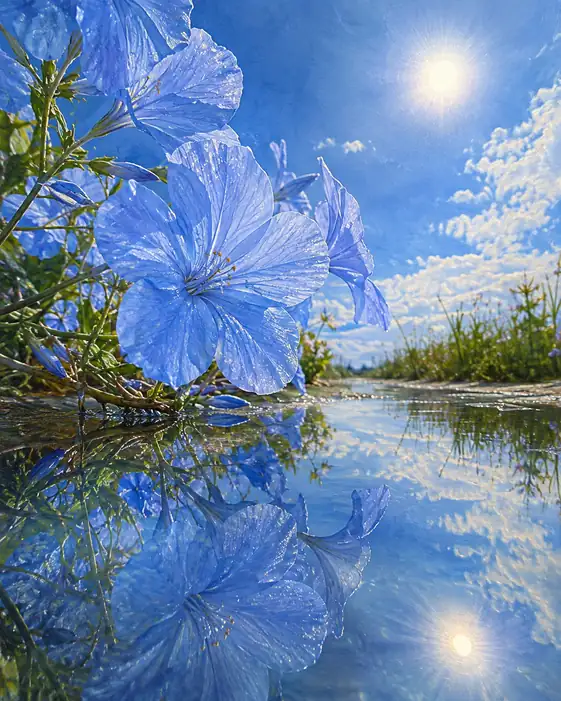 Azure Reflections in the Water Mirror
Similar Artworks
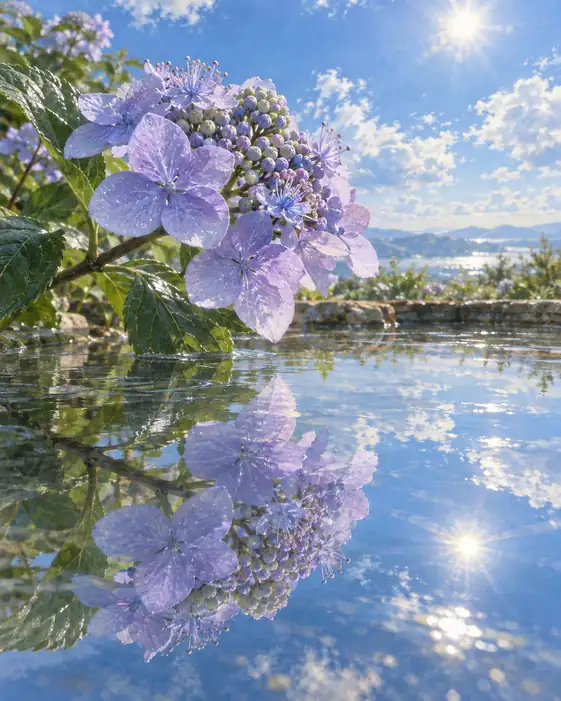 Ripples of Light, Hydrangeas Mirrored in Summer
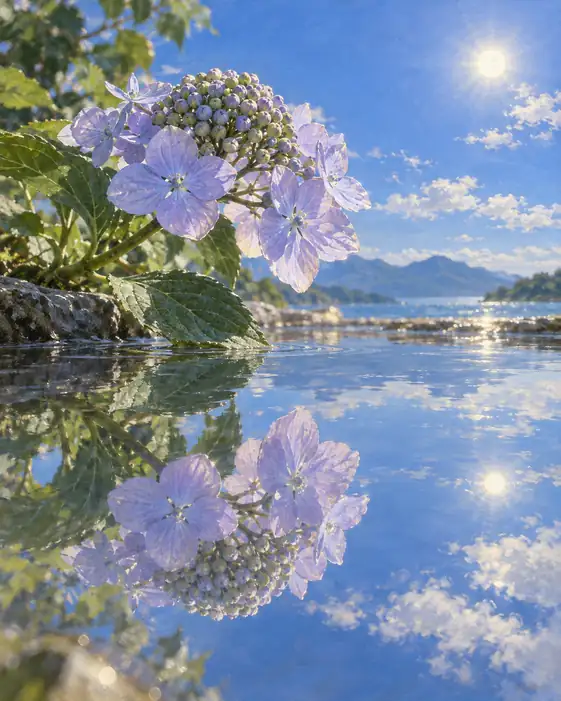 Flower Reflected in Azure Waters
 Ripples of Sunlight, Hydrangeas Mirrored in Blue
 Mirrored Horizons, Hydrangea by the Stone Basin
 Caryopteris Reflected in the Sky Mirror
 Summer Violets in the Water Mirror
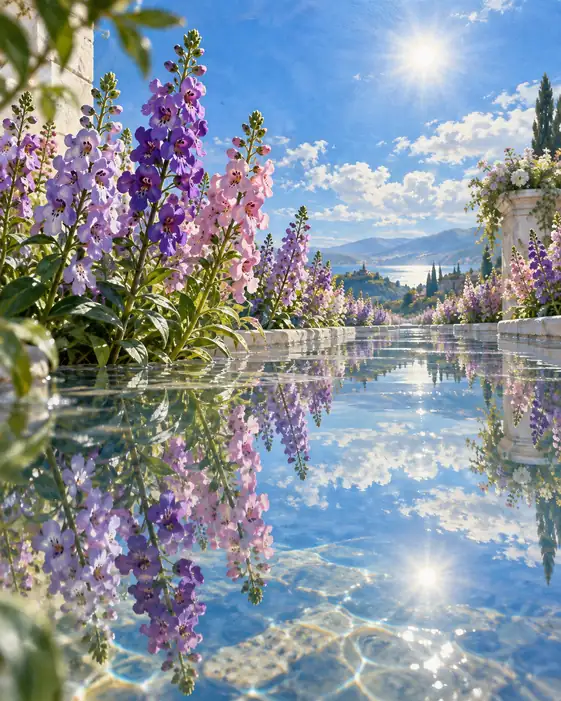 Caustics of a Clear Horizon
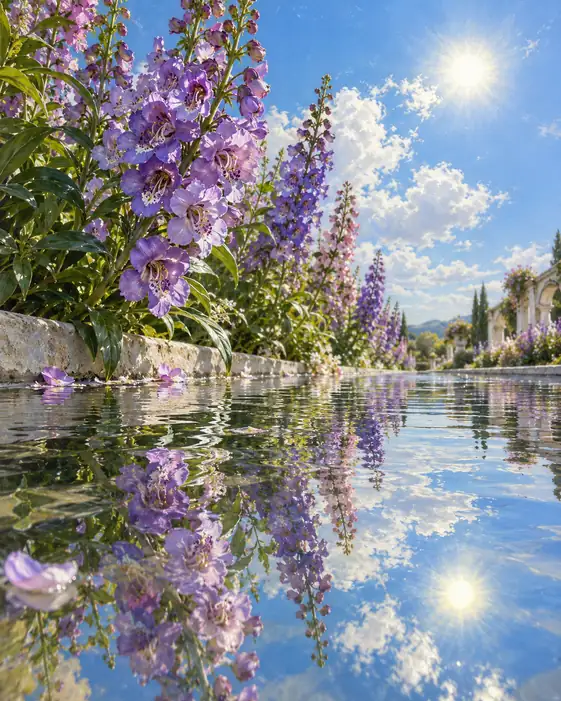 Where Sunbeams Plunge into the Pool
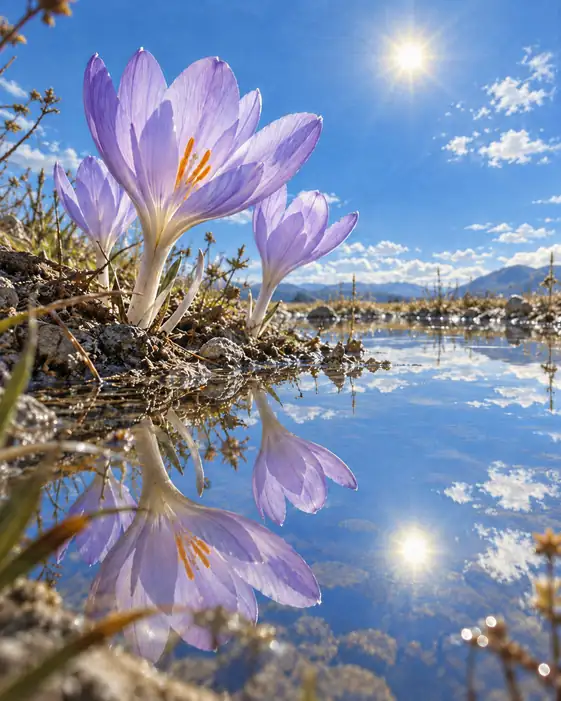 Reflection of Crocus and Sun
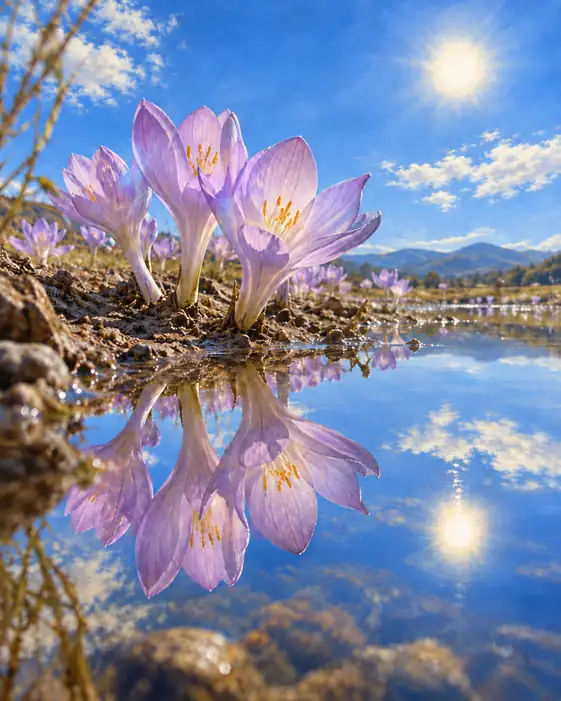 Crocuses in the Alpine Water Mirror