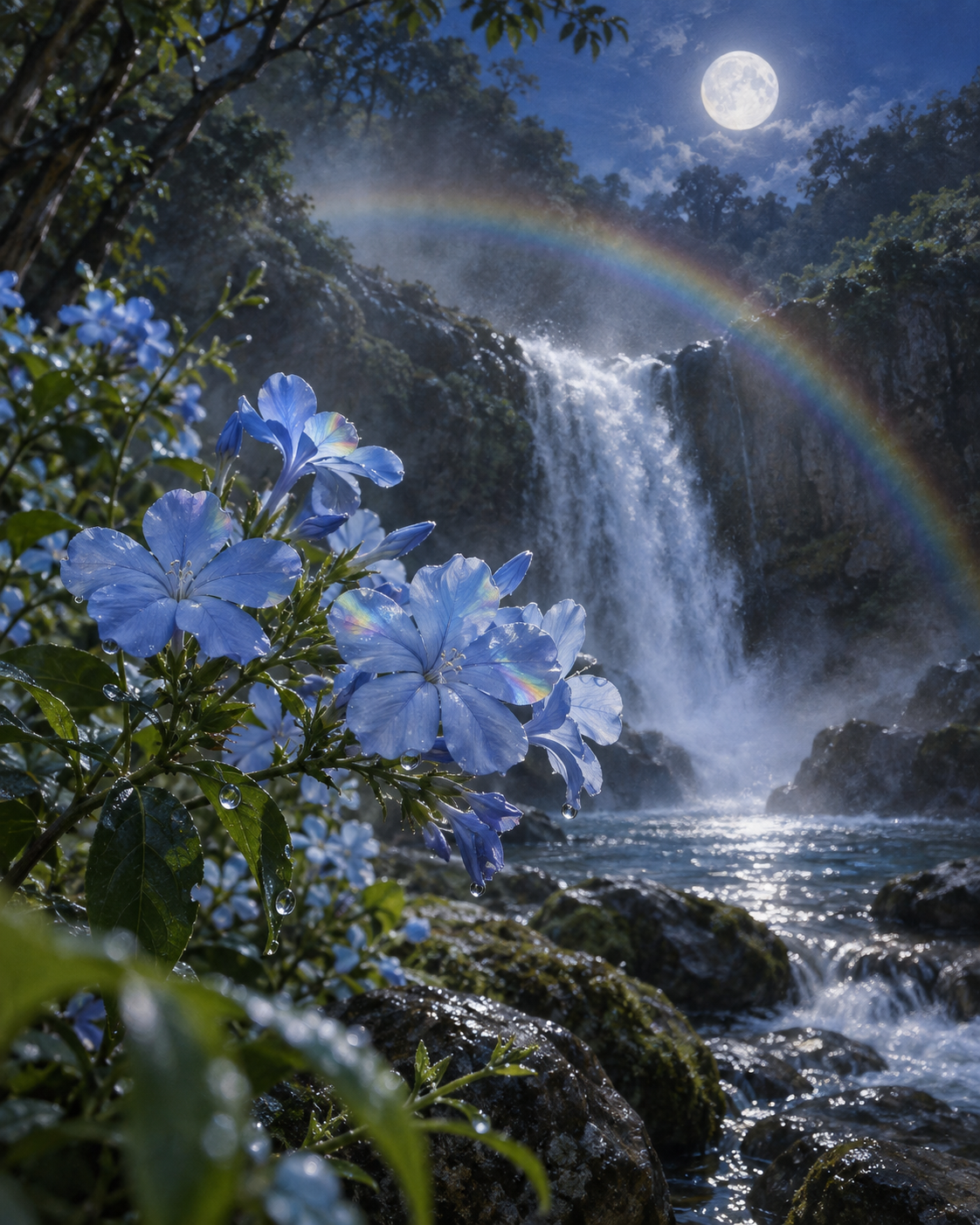
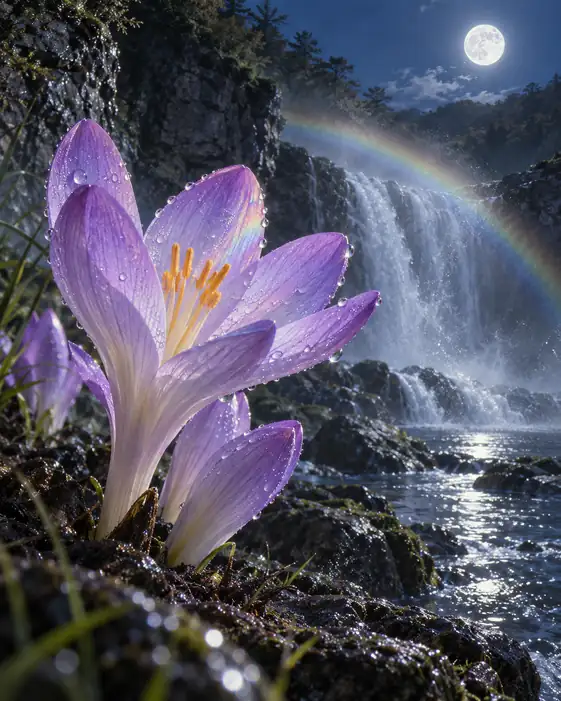
Moonbow Over the Falling Mist
Critique
1. Introduction This nocturnal waterfall scene brings together blue flowers, a full moon, and a rainbow suspended in spray. The unlikely convergence of night and prismatic color creates a vision of nature revealing hidden radiance under pressure and motion. 2. Description Wet blue blossoms occupy the left foreground, with clear droplets hanging from petals and leaves. Behind them, a broad waterfall drops between dark wooded cliffs into a rocky stream. Mist rises around the falling water. A rainbow curves across the cascade, and patches of the same colors appear on nearby petals. High above, a bright full moon emerges from broken clouds. 3. Analysis The rainbow crosses diagonal flower stems and the waterfall's vertical descent, stabilizing competing motions. Cool blues and greens dominate, making spectral color precious rather than loud. Moonlight catches droplets, foam, and ripples as silver points. Crisp foreground edges yield to spray-softened cliffs, building depth. The largest blossoms counterbalance the moon in a dialogue between earthly and celestial circles. 4. Interpretation and Evaluation The image reimagines a rainbow as color latent within darkness. Water appears as beads, mist, falling mass, and stream, supporting continuity through change. Rainbow stains suggest flowers receiving the waterfall's dispersed light. Though improbable, every colored effect follows moisture and feels internally persuasive. Its strongest achievement is serene abundance: marvels accumulate without destroying night's quiet. 5. Conclusion By linking moonlight, spray, droplets, and petals, the work presents illumination as a property shared across the landscape. Its disciplined palette and layered water textures turn a dramatic cascade into a contemplative image of change carrying color through darkness.
Same Subcategory
Similar Artworks
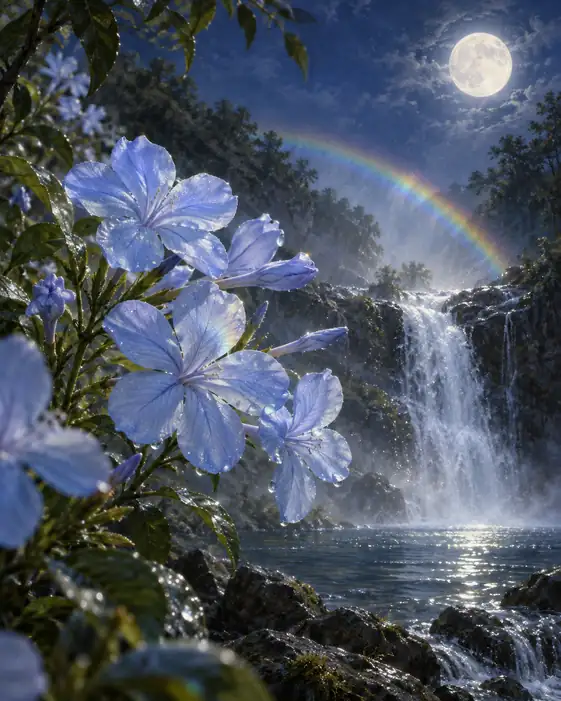 Dewdrops Under the Moonbow
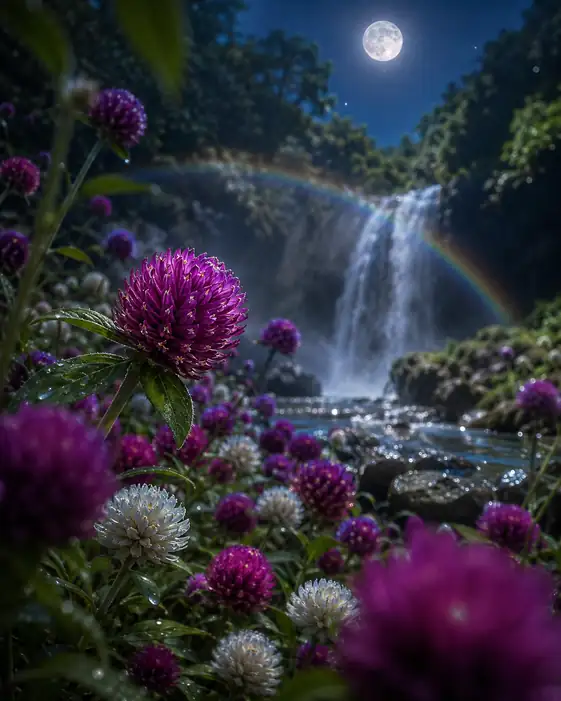 Nocturne in Lunar Prisms
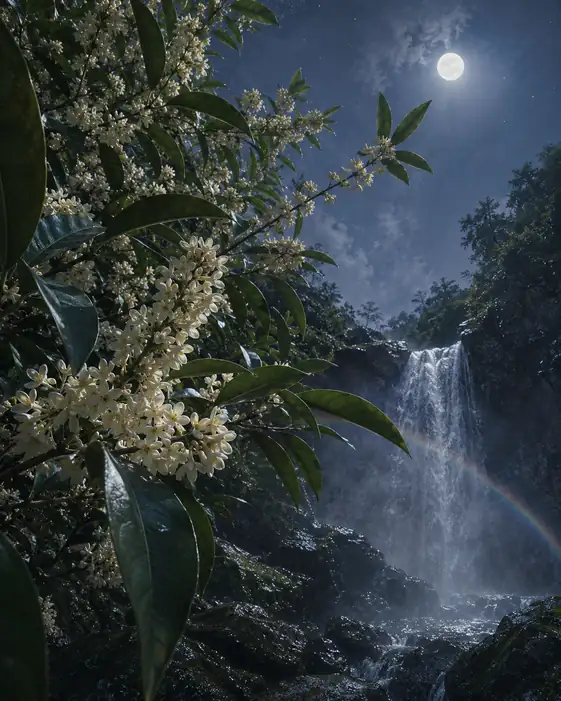 Lunar Arc Across the Midnight Falls
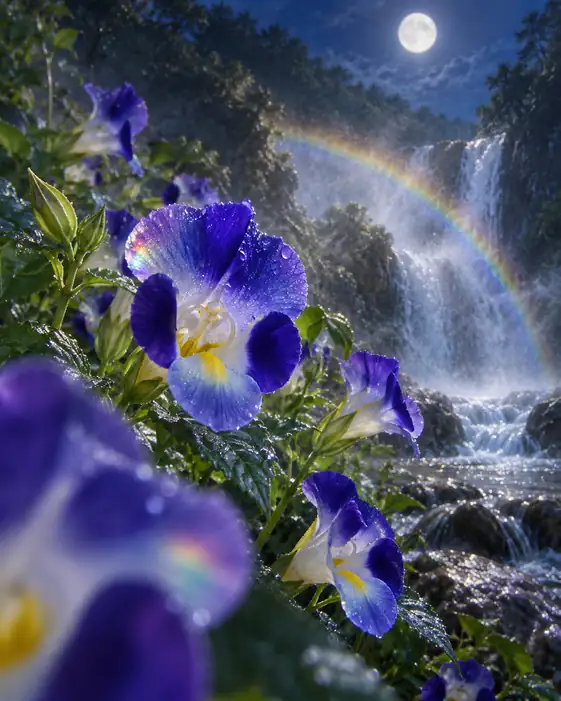 Moonbow Over the Midnight Falls
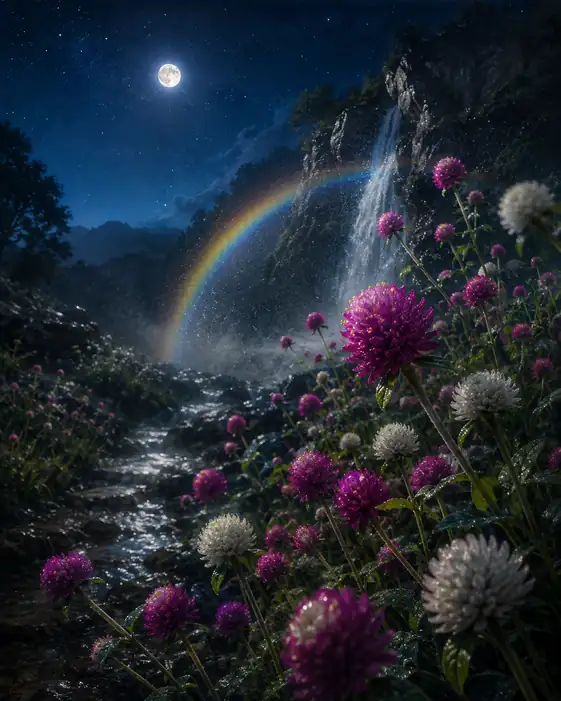 Moonbow Over the Falls and Wild Amaranth
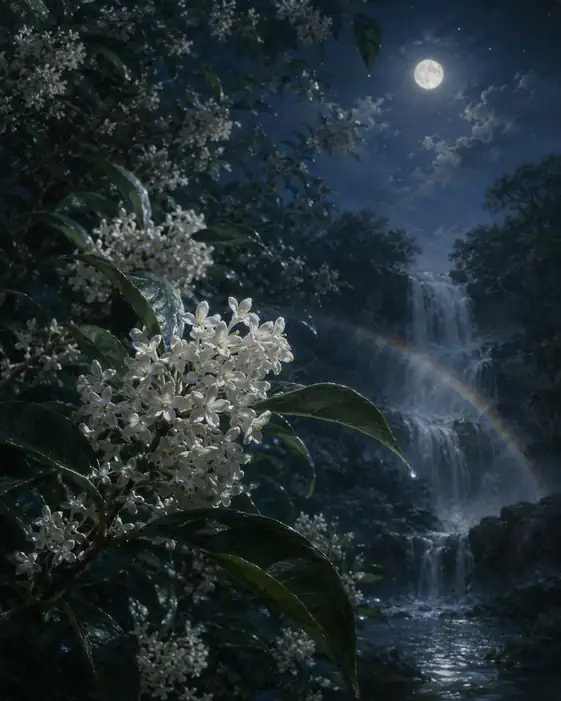 Dewdrop Beneath the Lunar Arc
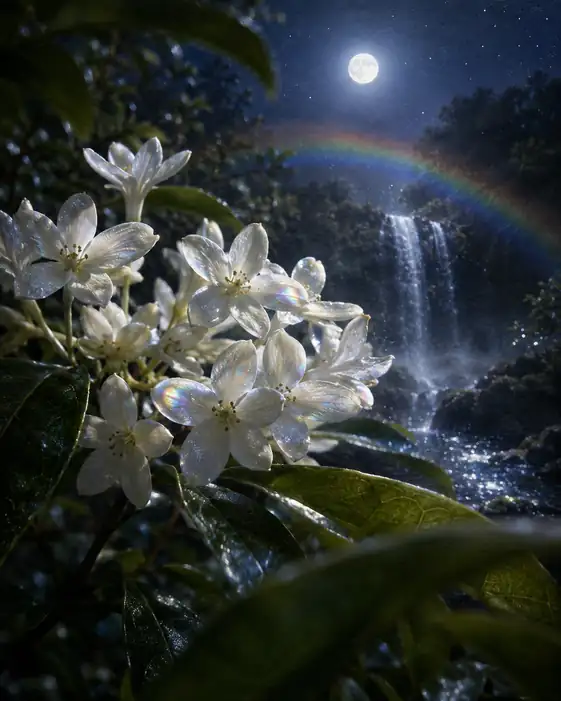 Lunar Rainbow and the Iridescent Petals
 Moonbow over the Waterfall and Crocus
 Moonlit Promenade of Azure Blooms
 Rainbow in the Thunderous Mist