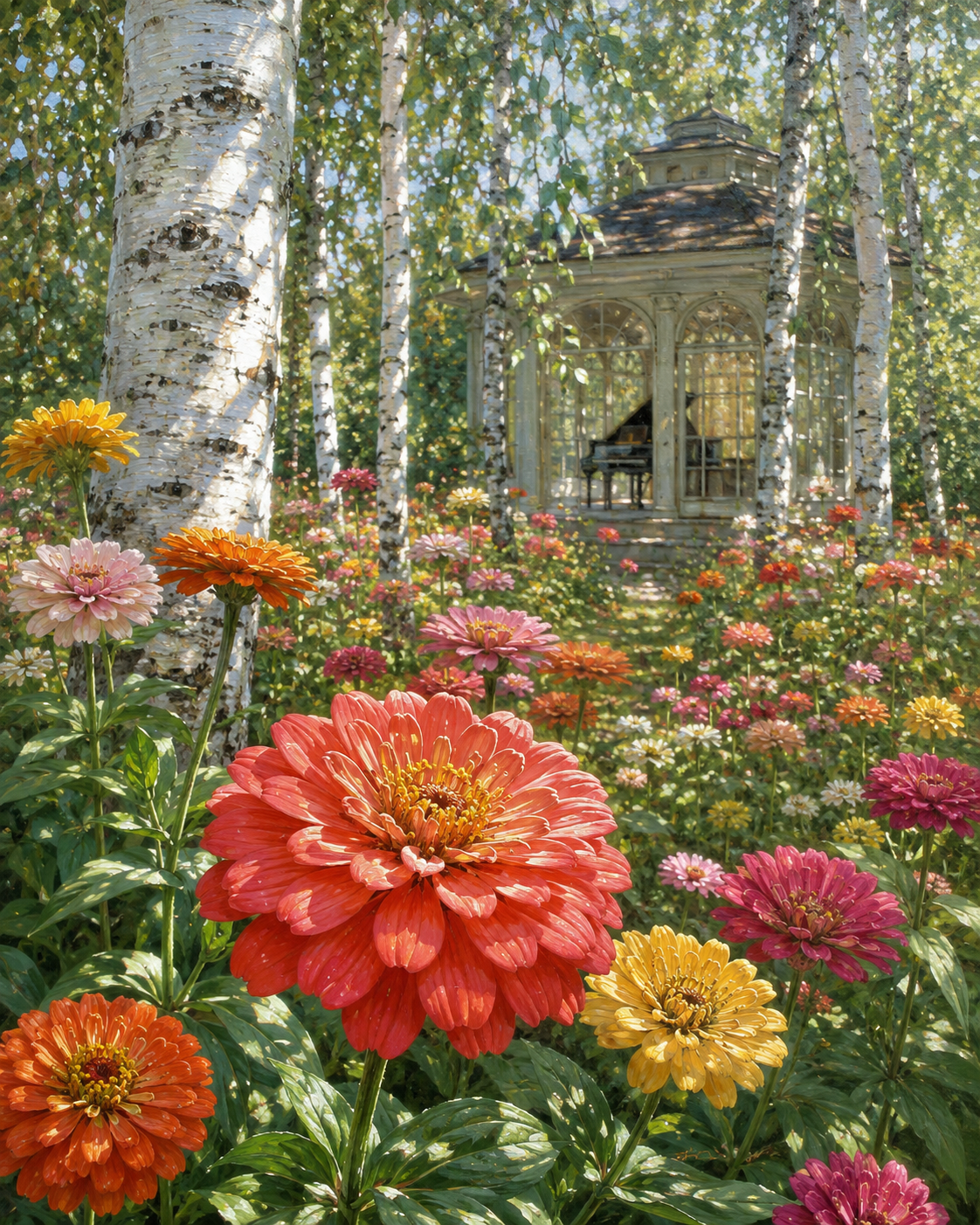
Melody in the Birch Grove
Critique
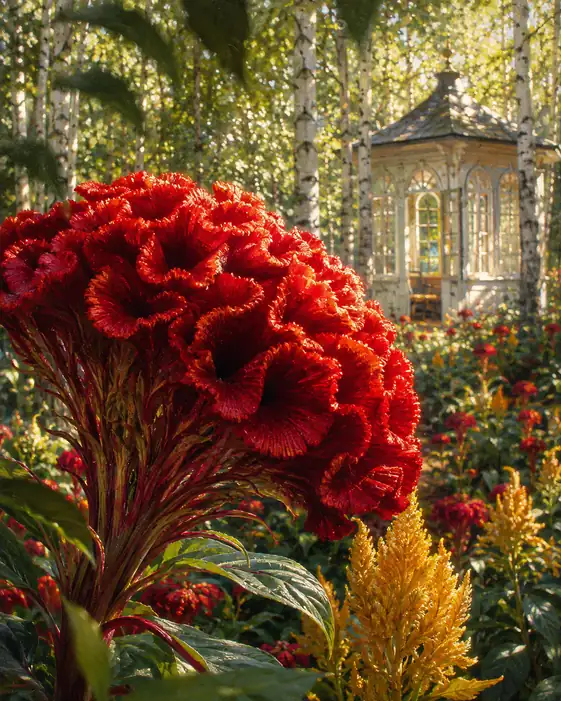
1. Introduction This sunlit birch grove places a large coral flower before a pale garden pavilion containing a black piano. The bloom dominates the lower center, while the glazed octagonal shelter stands at upper right. A field of smaller pink, orange, yellow, and white flowers connects foreground abundance to the secluded musical space. 2. Description The main flower consists of many rounded salmon petals around a dense yellow center. Other tall blooms rise among broad leaves and white birch trunks marked by dark scars. The pavilion has a layered roof, arched window frames, and shallow steps. Through its transparent walls, the angled lid and keyboard body of a grand piano are visible. 3. Analysis The large flower balances the pavilion across a diagonal, while the massive birch trunk at left stabilizes the scene. Repeated petals and small leaves create a mottled rhythm echoed by sunlight on bark and glass. Vertical trunks establish depth; flower stems vary their intervals. Coral and yellow warm the dominant green-white palette without overwhelming it. 4. Interpretation and Evaluation The pavilion offers a protected place for music within a garden already organized by natural rhythm. The silent piano and open flowers suggest two forms of unfolding expression. The asymmetrical composition, dappled light, layered botanical detail, birch texture, and transparent architecture are technically accomplished. Keeping the instrument partly obscured makes discovery central to the image. 5. Conclusion At first the coral bloom appears to be the complete subject, but the piano gradually changes the grove into a space of anticipated sound. The work moves from floral portrait to a dialogue between seasonal growth and cultivated art. Through clear depth and restrained warmth, it creates a generous yet ordered scene.
Same Subcategory
Similar Artworks
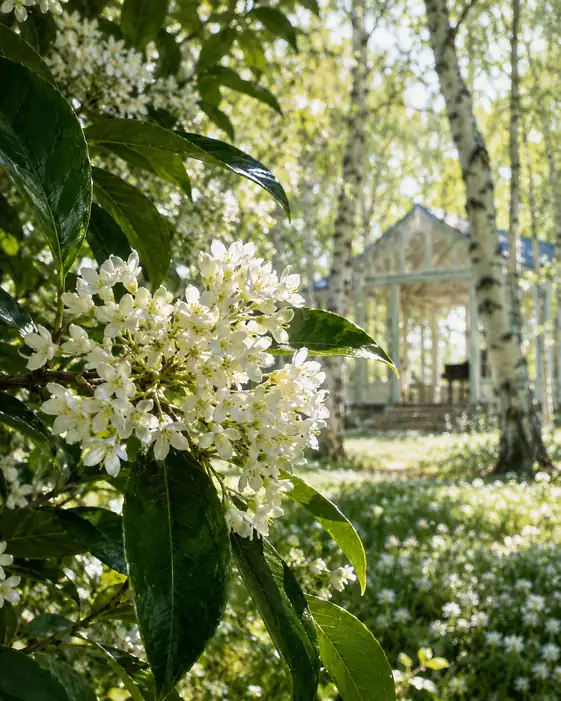 Glass Pavilion in the Birch Clearing
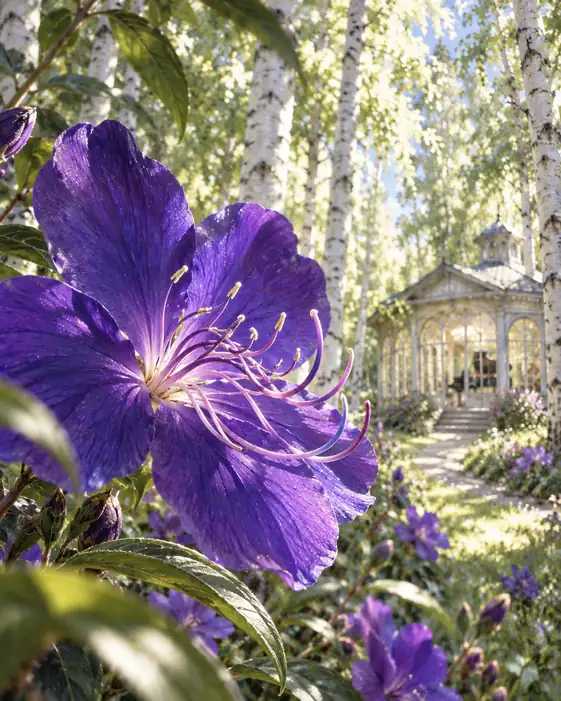 Nocturne in the Birchwood Glade
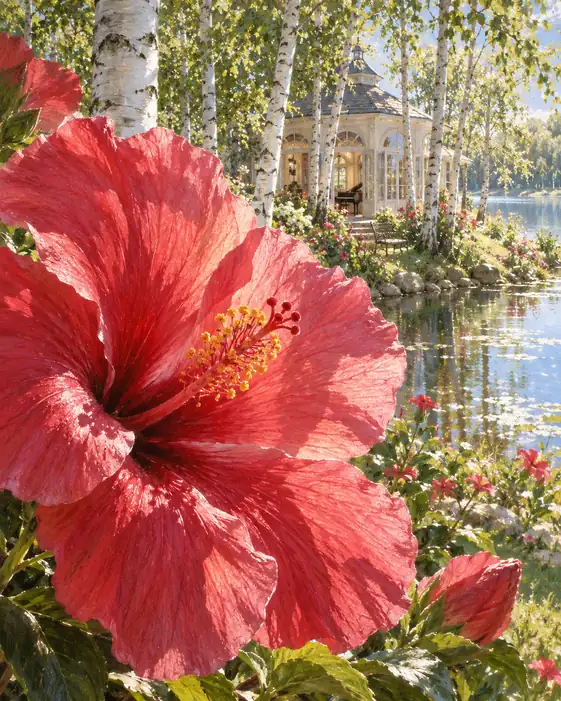 Lakeside Birch Pavilion and Hibiscus
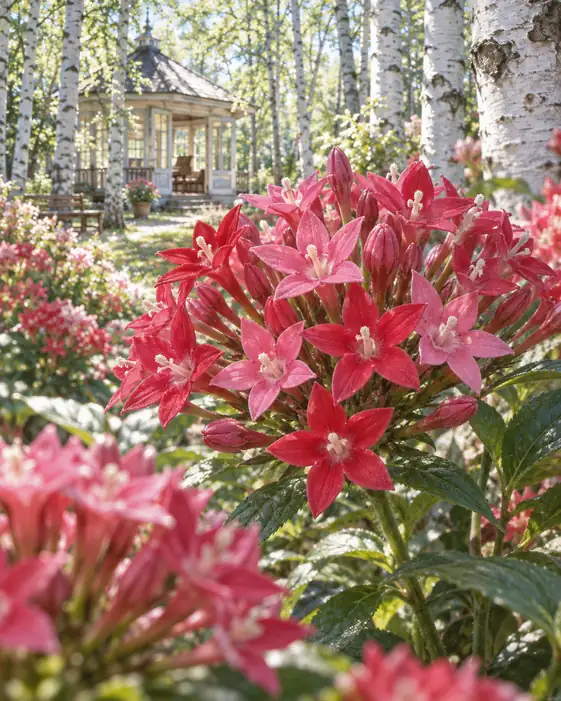 Pavilions Among the Birches
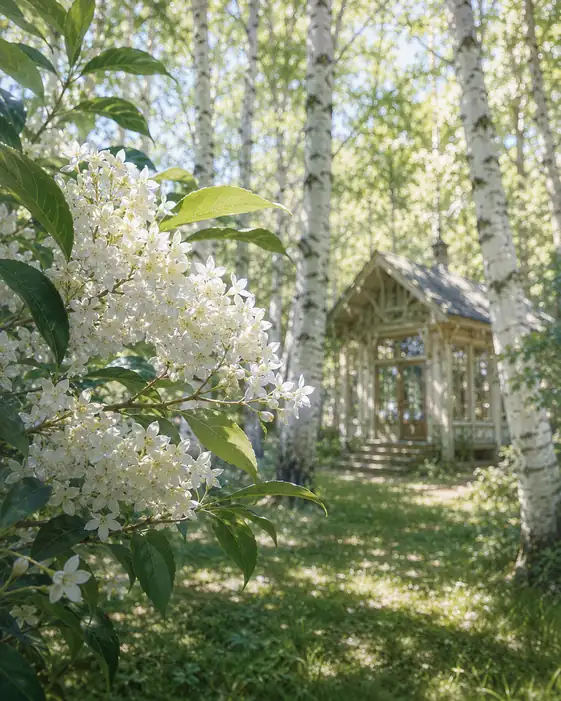 The Birch Gazebo and the White Canopy
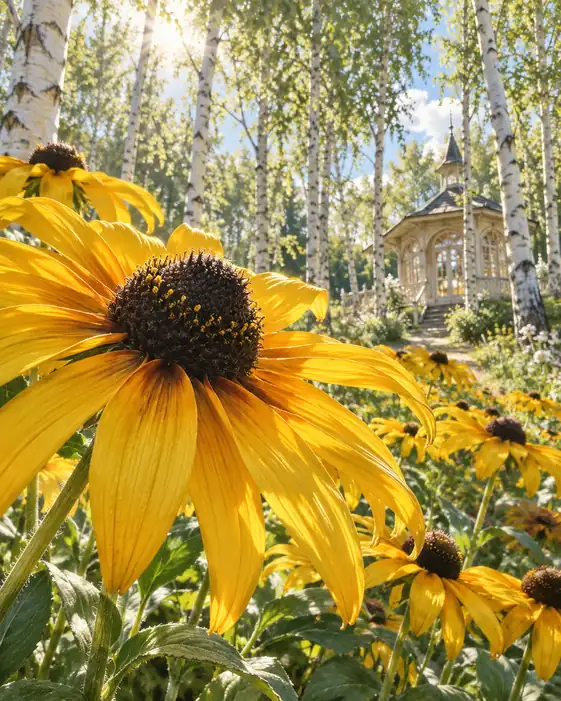 Rudbeckia Path by the Birch Pavilion
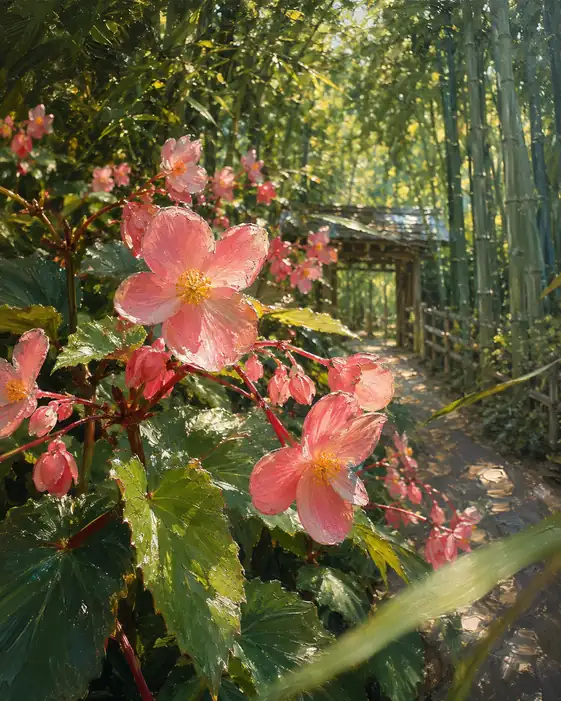 Threshold of the Sunlit Bamboo Gate
 Whispers of the White Forest
 Morning’s Golden Promise
 Velvet Crest in the Birch Garden