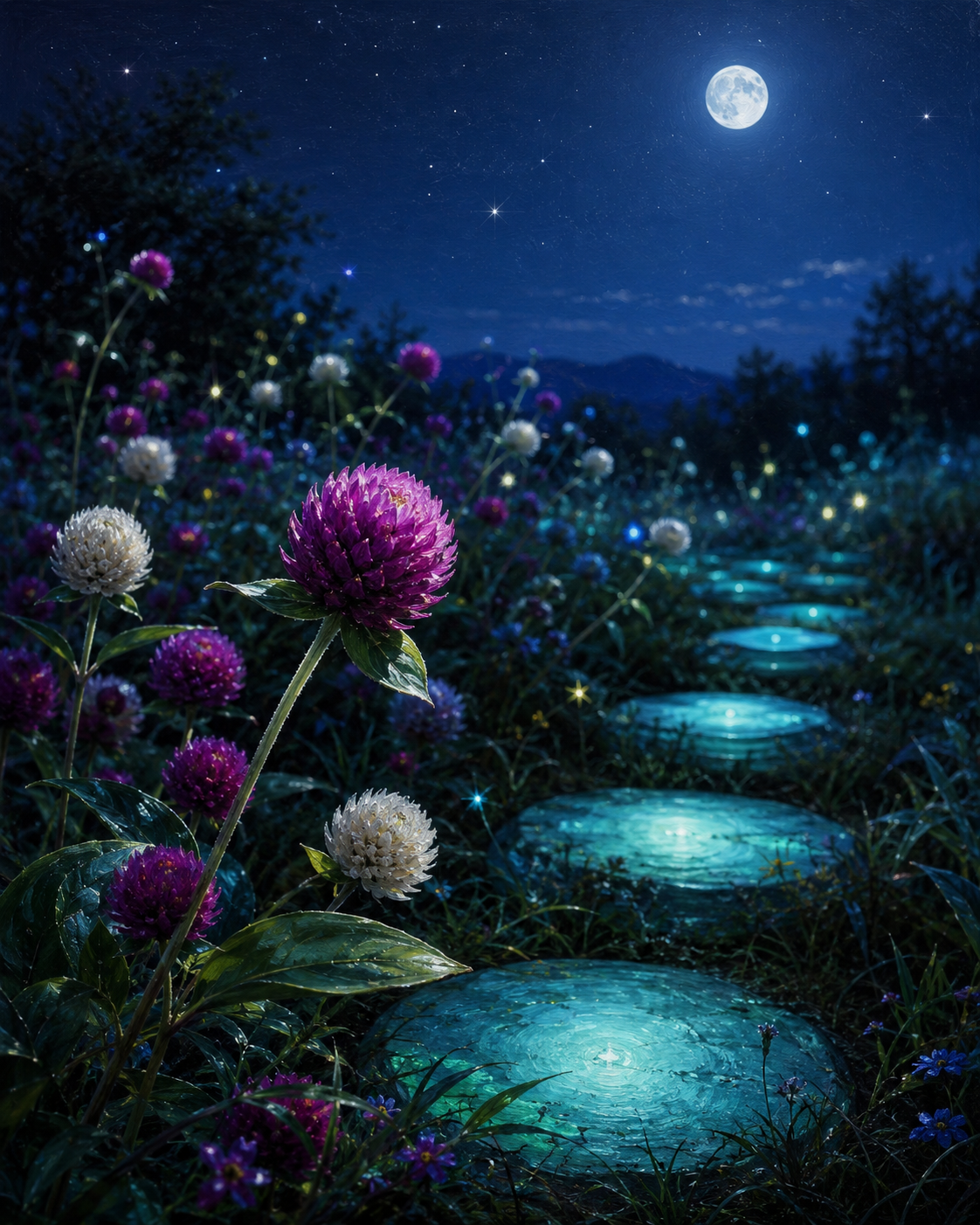
Luminous Path and the Midnight Blooms
Critique
1. Introduction This moonlit garden scene places purple and white globe flowers beside a path of glowing turquoise stepping stones. The nearest violet bloom rises left of center, while the stones curve from the lower right toward distant trees. A full moon anchors the upper sky, linking small garden lights with celestial illumination. 2. Description Round flower heads on slender stems fill the left and middle ground, their wet leaves catching blue highlights. Several large circular stones glow through grass and decrease in size along a winding route. Tiny yellow, blue, and white lights scatter among the plants. A dark mountain ridge and tree silhouettes lie beneath the moon and sparse stars. 3. Analysis The stepping stones establish a strong diagonal recession, balanced by the main flower’s opposing lean. Circular forms repeat in stones, blossoms, small lights, and moon, but varied scale prevents monotony. Deep blue unifies the night, while violet petals and turquoise disks supply distinct cool accents. Sharp foreground leaves yield gradually to softened flowers and hills. 4. Interpretation and Evaluation The garden appears to offer guidance through many modest signals rather than one dominant lamp. Flowers stand beside the route like living markers, while the moon provides a distant point of orientation. The composition, color hierarchy, wet textures, layered focus, and convincing luminous stone surfaces are technically controlled. The imaginative glow remains coherent within the natural setting. 5. Conclusion At first the purple flower commands attention, but the curved sequence of stones gradually redirects the gaze toward the hidden distance. The image becomes a reflection on finding a path through partial illumination. Through repeated circles, measured depth, and restrained sparkle, the work creates mystery without sacrificing clarity or the tactile specificity of its garden plants.
Same Subcategory
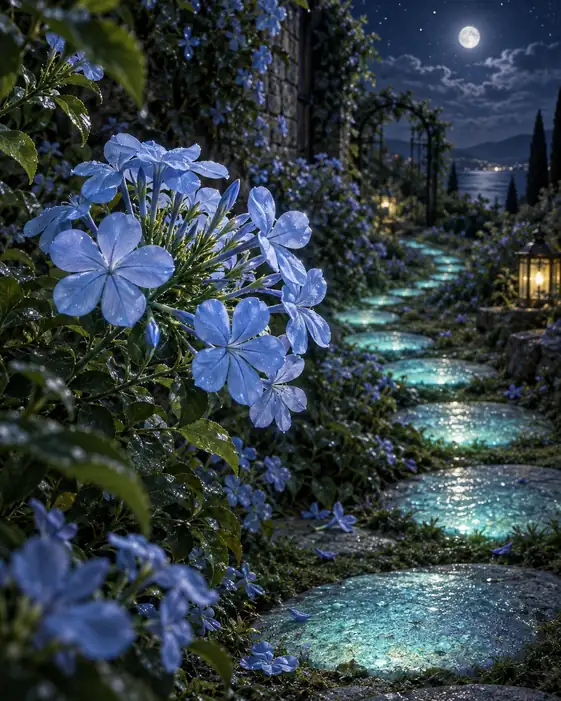 Luminous Steps in the Night Garden
Similar Artworks
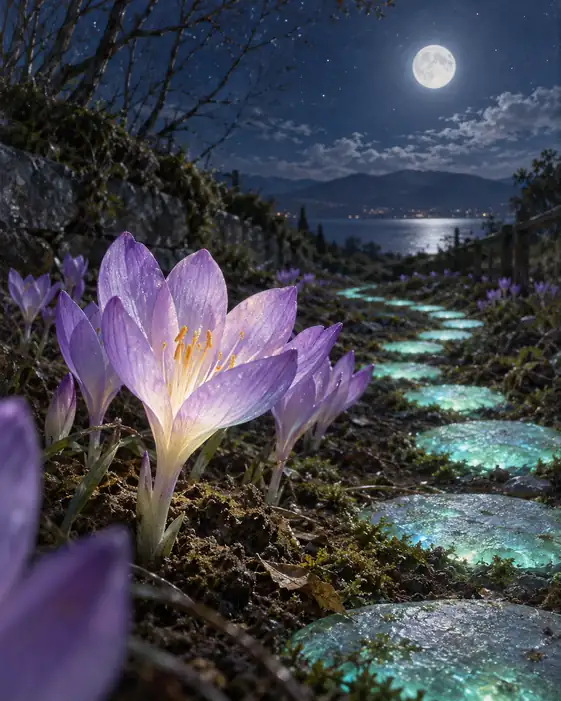 Moonlit Path of Glowing Stepping Stones
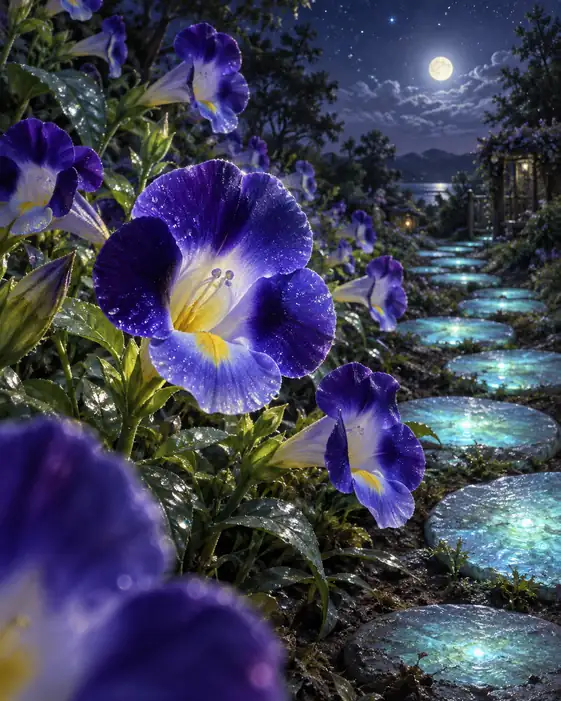 Luminescent Stepping Stones
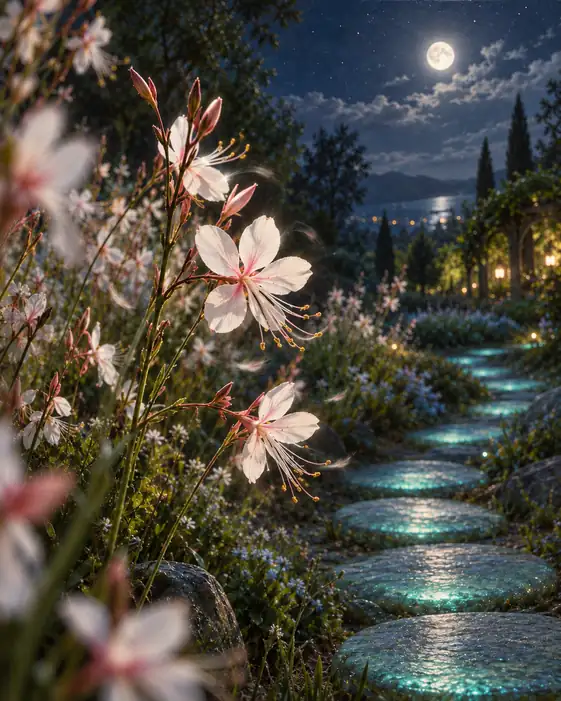 Sanctuary Along the Moonlit Path
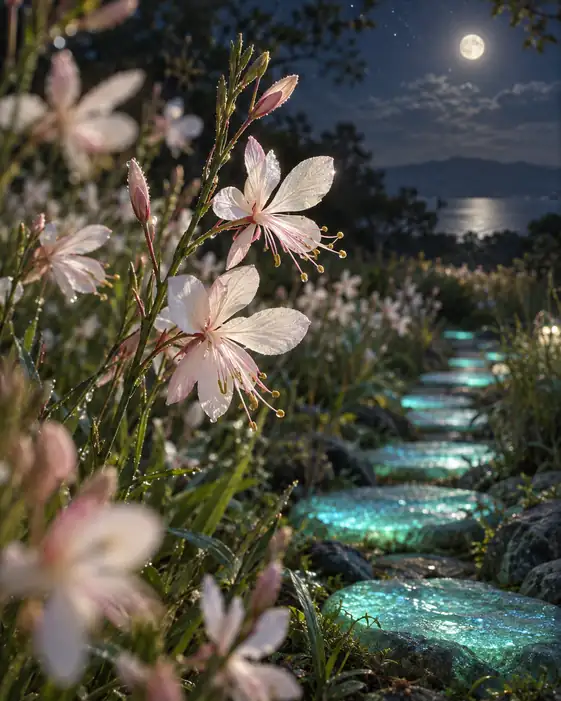 Luminescence in the Dewlit Quiet
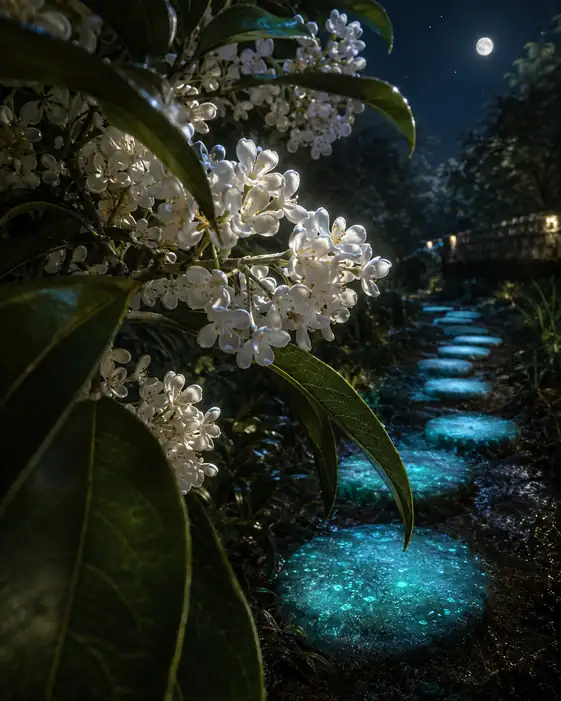 Stepping Stones of Cyan Fire
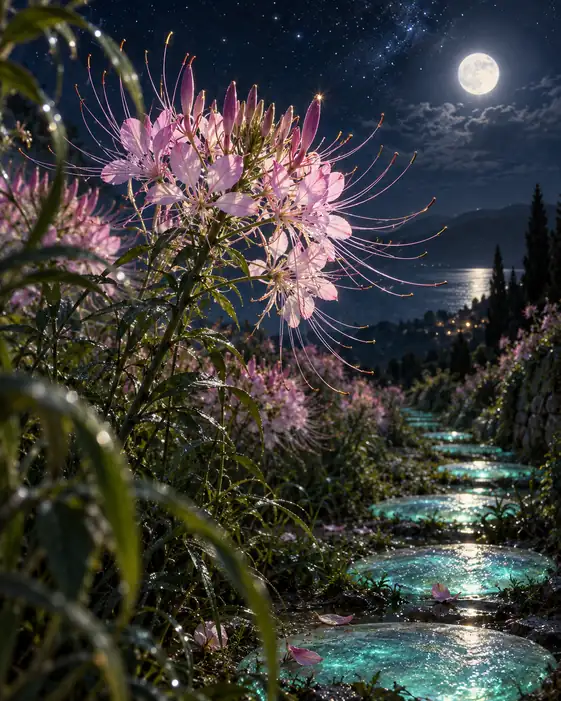 Moonlit Trail of Emerald Stones
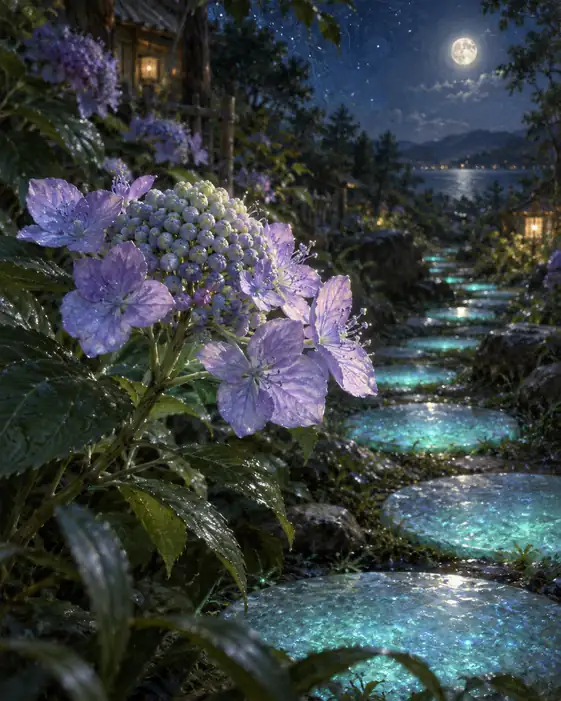 Moonlit Garden, Aquamarine Stones and Hydrangeas
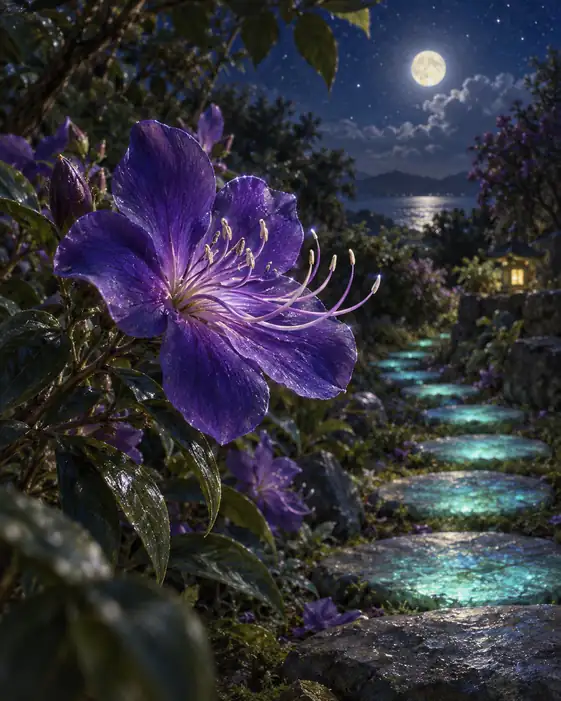 Night Blooming Princess Flower, Path of Glowing Stones
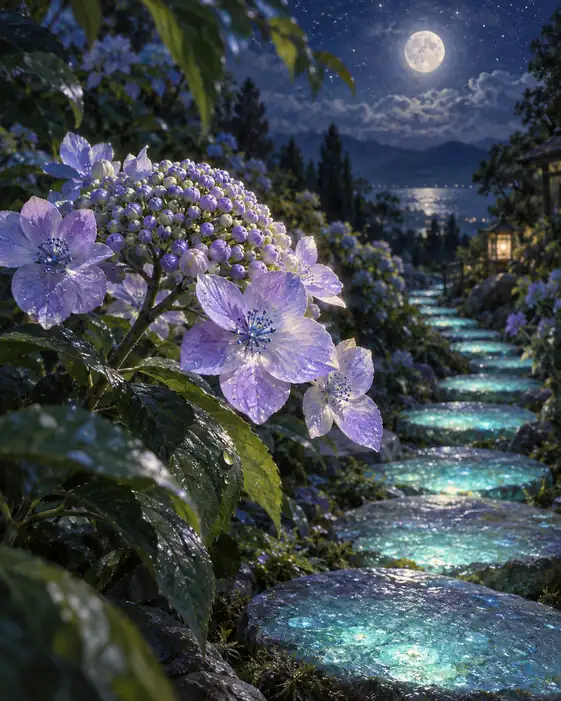 Moonlit Path of Glowing Stones and Hydrangeas
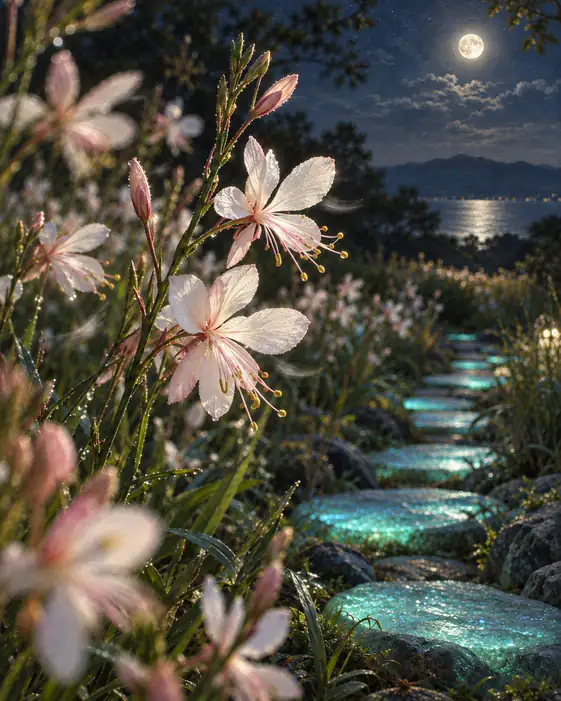 Moonlit Stepping Stones to the Deep