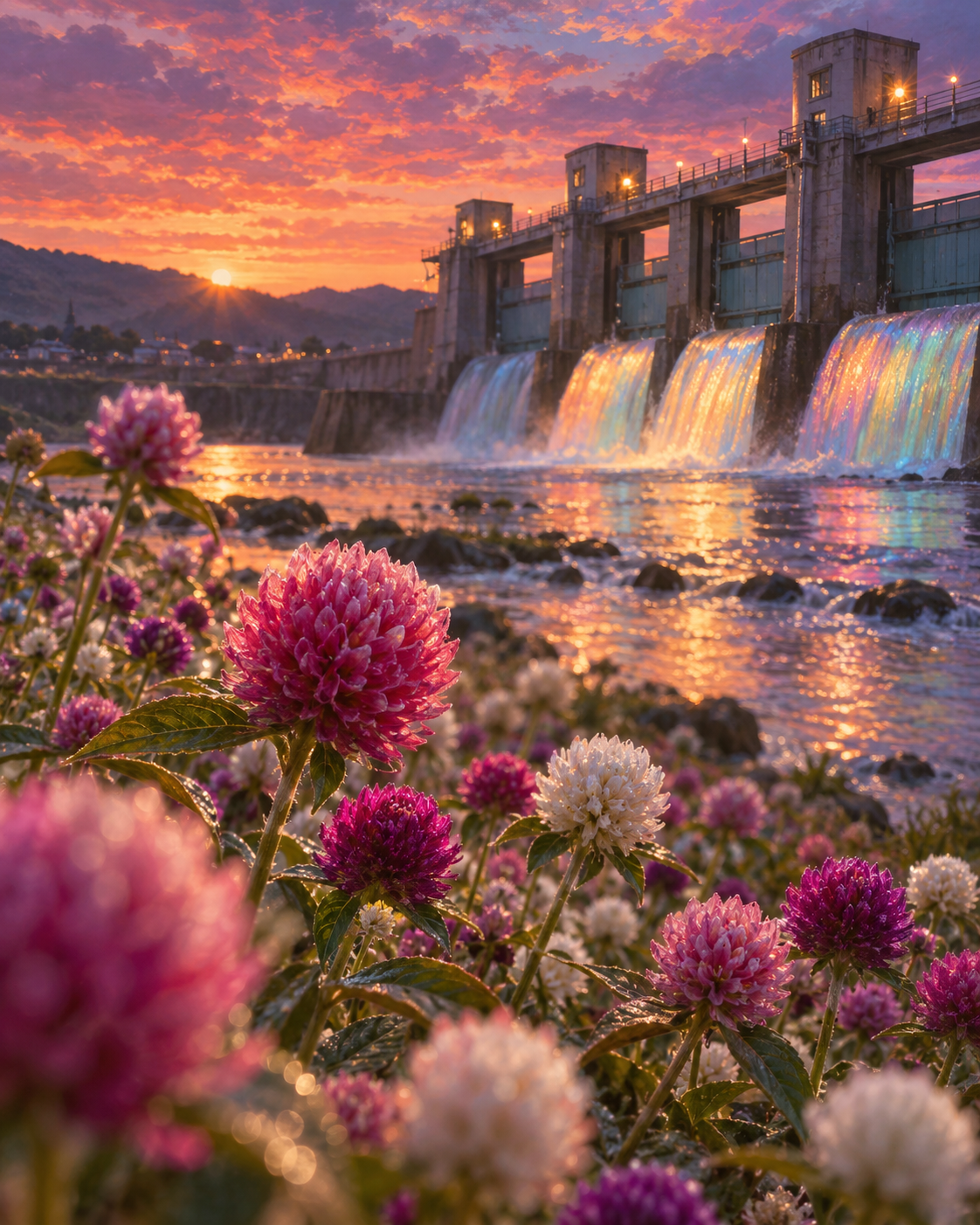
Rainbow Spillway and the Riverside Blooms
Critique
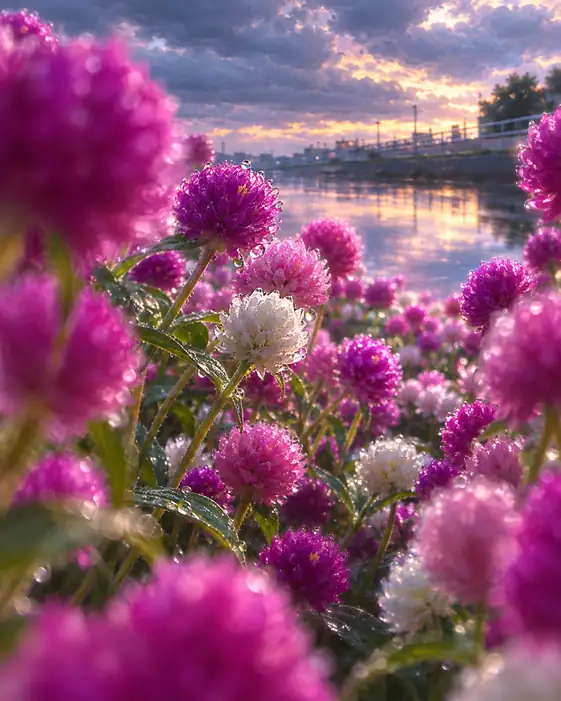
1. Introduction This sunset riverscape places purple and white globe flowers before a large concrete dam releasing several luminous cascades. The main pink bloom rises left of center, while gates and towers extend across the upper right. Natural growth, engineered water control, and evening light share a densely layered but readable composition. 2. Description Round flowers at varied heights fill the rocky foreground, their wet leaves catching warm edges. Beyond them, shallow water flows around dark stones toward the viewer. Four broad falls descend from blue-green gates beneath concrete towers and railings. Their surfaces carry pink, gold, and blue reflections, while the sun sinks behind a mountain ridge at left. 3. Analysis Foreground stems create vertical accents that echo the dam towers, while rounded blooms contrast with rectangular gates. The main flower and setting sun form a diagonal across the river. Repeated cascades organize the architecture and distribute prismatic color; reflected gold unifies moving water at several distances. Blurred flowers along the bottom establish immediate depth before the sharp middle cluster. 4. Interpretation and Evaluation The scene compares spontaneous growth with the measured release of a powerful natural resource. Flowers soften the massive structure without concealing its weight, and rainbow water lends the engineering an unexpected delicacy. Perspective, color integration, wet botanical texture, concrete surfaces, and fluid motion are technically assured. The juxtaposition is bold yet visually coherent. 5. Conclusion At first the flowering bank appears to frame a dramatic dam, but repeated vertical forms gradually reveal a more reciprocal relationship. The image becomes a study of nature shaped and answered by construction. Through layered scale, controlled sunset color, and precise reflections, the work holds seasonal fragility beside durable infrastructure without reducing either to a simple symbol.
Same Subcategory
Similar Artworks
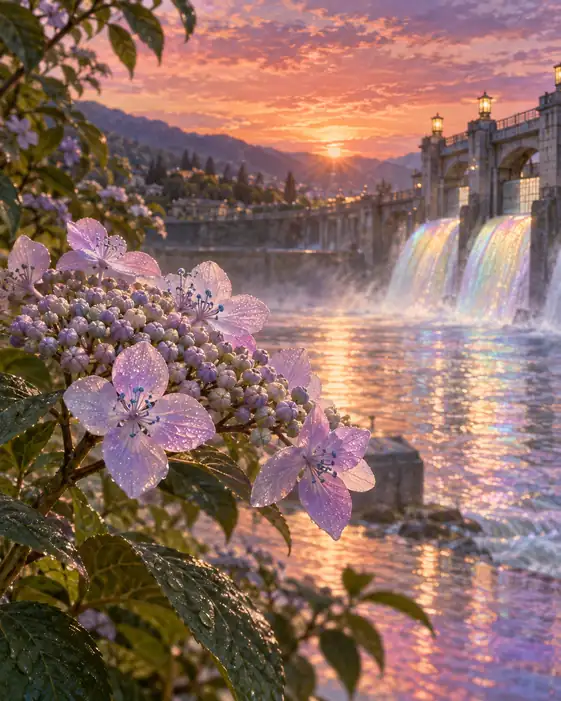 Sluice Gate in the Evening Glow, Prismatic Waters and Hydrangeas
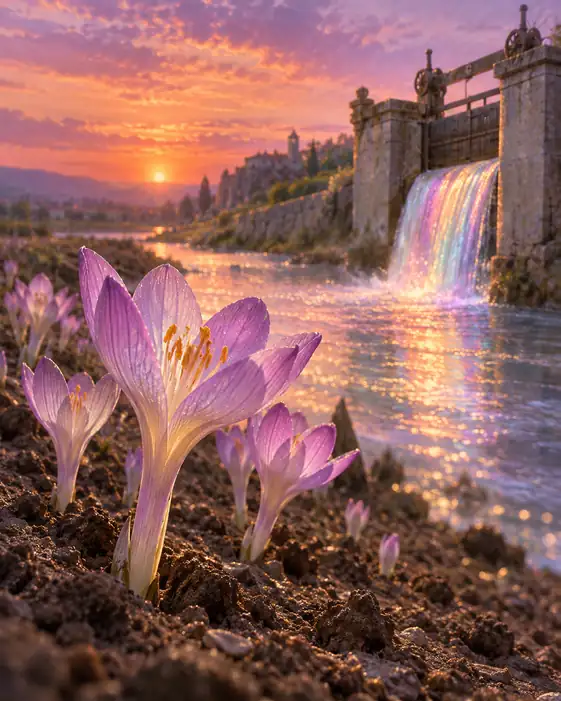 Canal Sluice in Sunset Glow
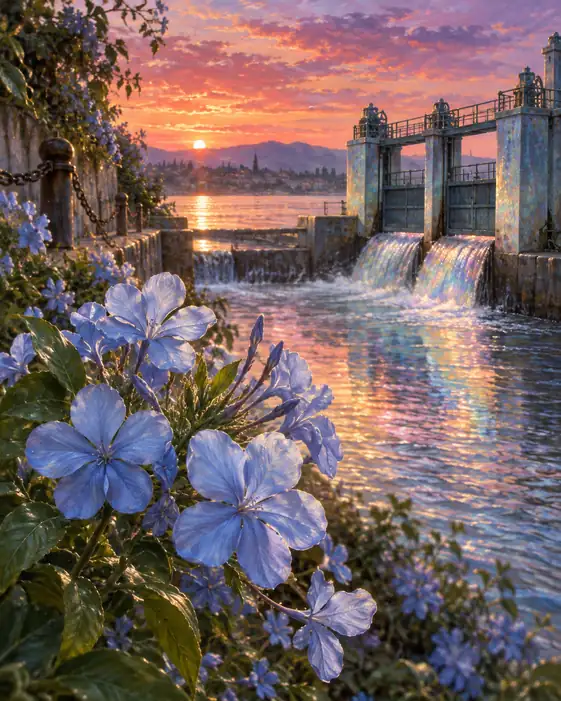 Prelude at the Water Gate
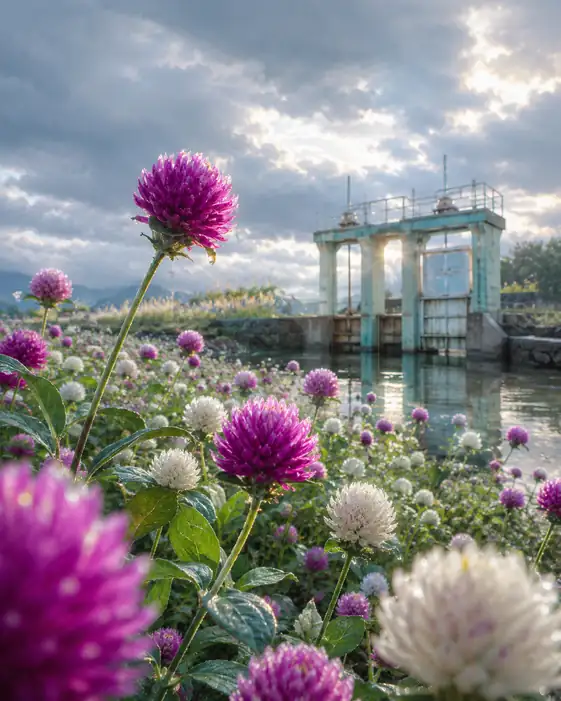 Light Across the Sluice Gate
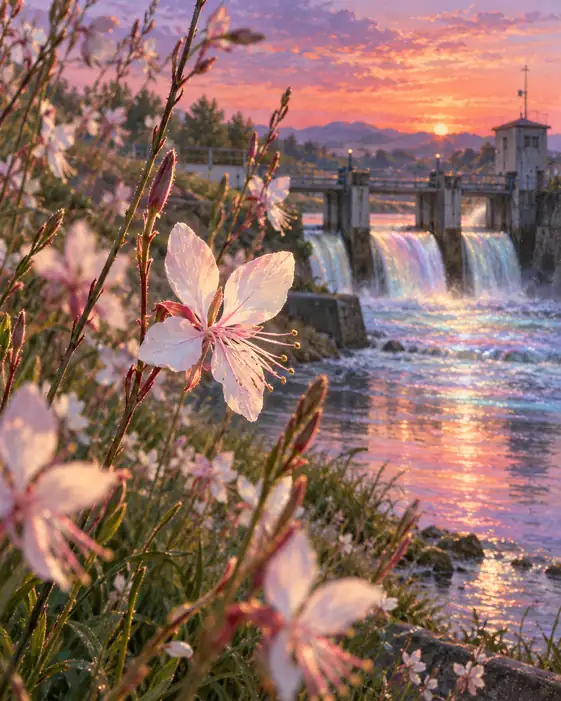 Rainbow Mist at the Sunset Weir
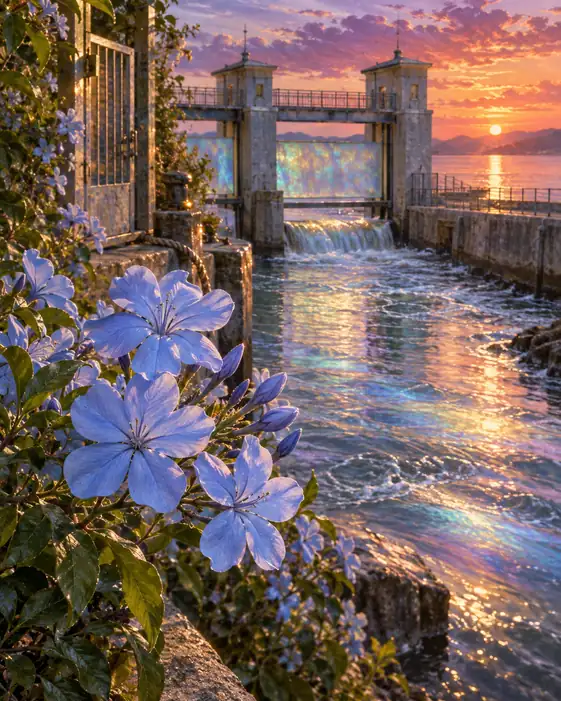 Sluice Gate in the Evening Glow
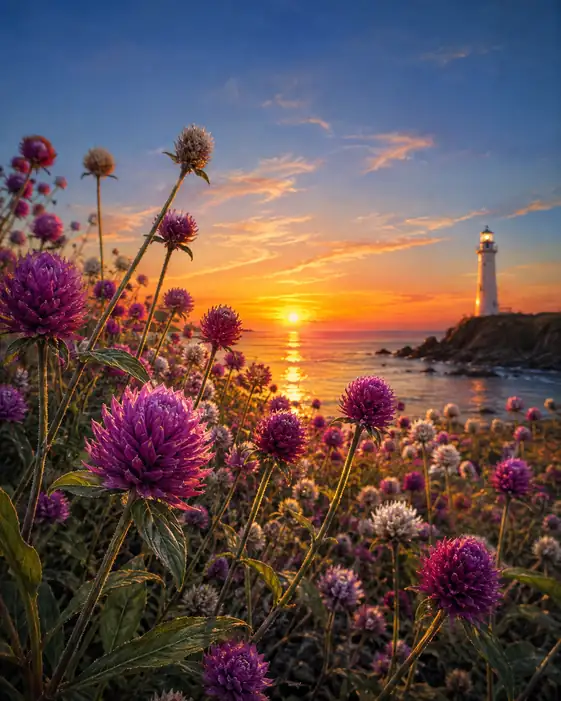 Sunset Beacon and the Amaranth Slope
 The Morning Crimson Wishes Met White Prayers
 The Beacon and the Amaranth Meadow
 Melody of Autumn Cosmos in Golden Light