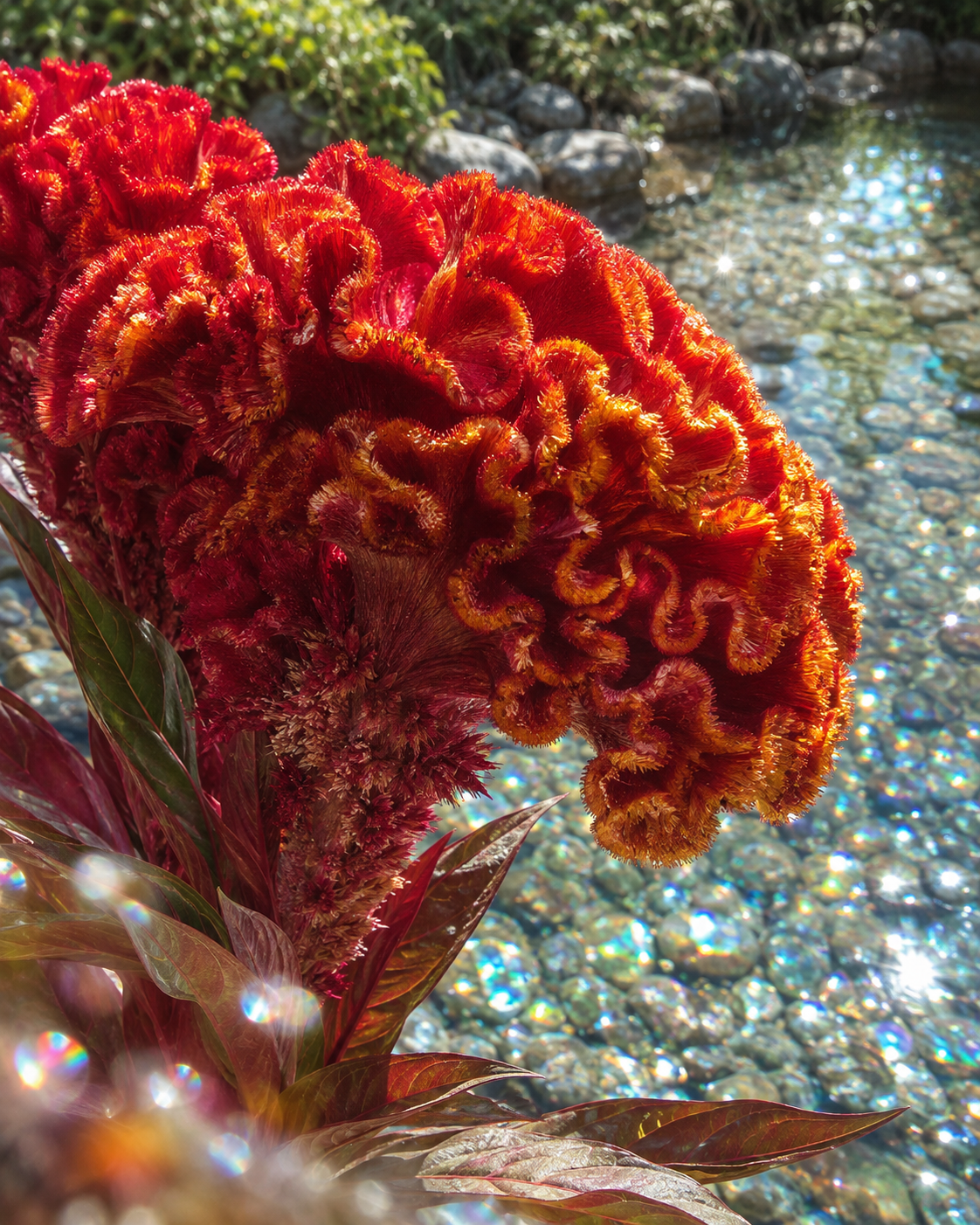
Crimson Ruffles Over the Shallows
Critique
1. Introduction This close garden view places a massive red cockscomb flower beside a clear, sunlit pool. The curling crest fills most of the left and central field, while transparent water and rounded stones extend across the right. Extreme proximity turns the comparison between velvety plant tissue and glittering water into the work’s principal subject. 2. Description The flower forms a broad, folded crown with deep burgundy cavities and orange-gold rims. Its thick stem and narrow reddish leaves rise from the lower left. Behind it, pale pebbles remain visible through shallow water covered by white starbursts and small rainbow refractions. Smooth gray rocks and soft green foliage border the far edge. 3. Analysis The crest’s compact, irregular mass contrasts with the open granular field of water. Dense parallel fibers curve around each fold, catching light along their edges, while the pool breaks illumination into separate points. Red leaves project diagonally into the blue-green water and link the two areas. Shallow focus emphasizes surface difference more than conventional landscape depth. 4. Interpretation and Evaluation The work compares two kinds of abundance: accumulated organic folds and dispersed optical flashes. Both depend on sunlight, yet the flower absorbs warmth while water scatters it spectrally. The cropped composition is bold, the red tonal range is rich, and the handling of fibrous petals, translucent water, submerged stones, and glare is technically convincing. Familiar materials become nearly abstract without losing identity. 5. Conclusion At first the flower’s scale overwhelms the pool, but repeated glints gradually claim equal attention across the right side. The image becomes a study of concentration and dispersal. Through decisive cropping, tactile description, and restrained rainbow accents, it transforms a simple waterside bloom into a balanced examination of light acting on contrasting surfaces.
Same Subcategory
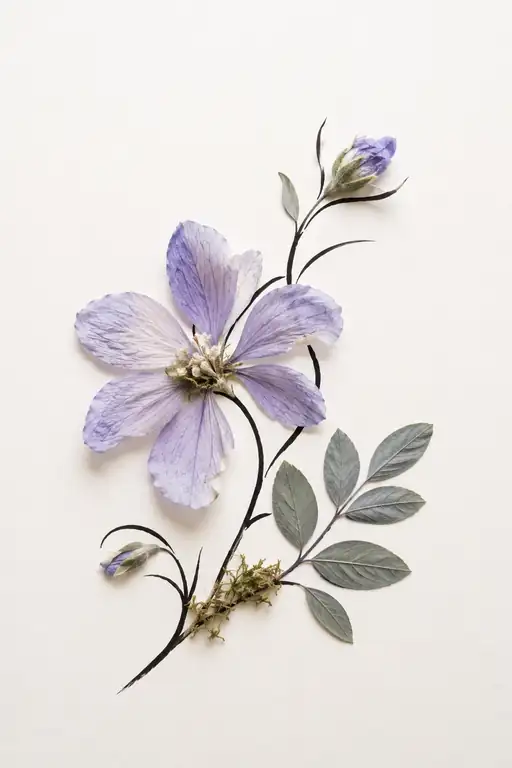 Grace in Solitary Bloom
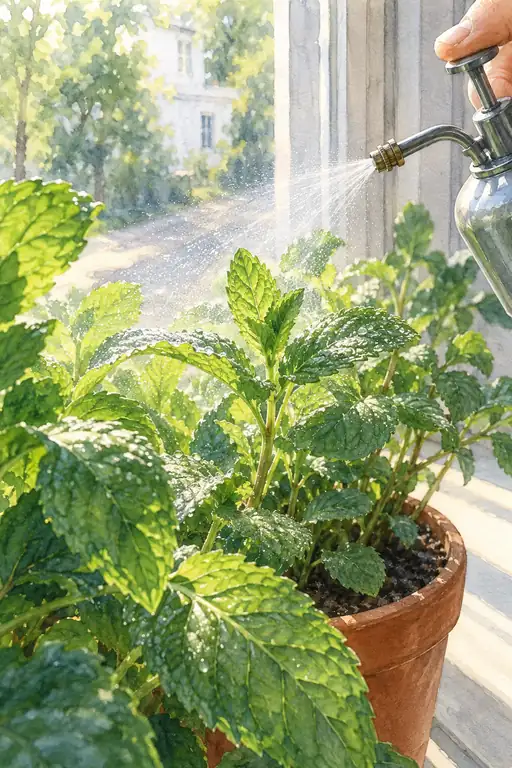 Morning Mist on Green Mint
Similar Artworks
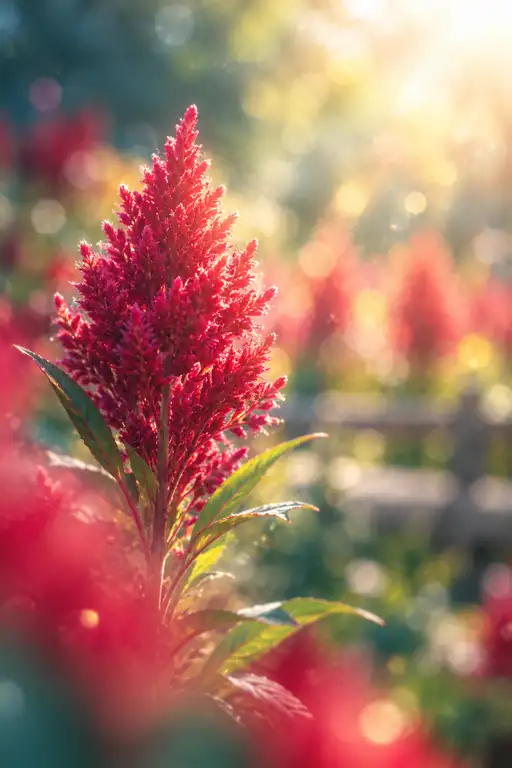 Plume of Crimson Sunfire
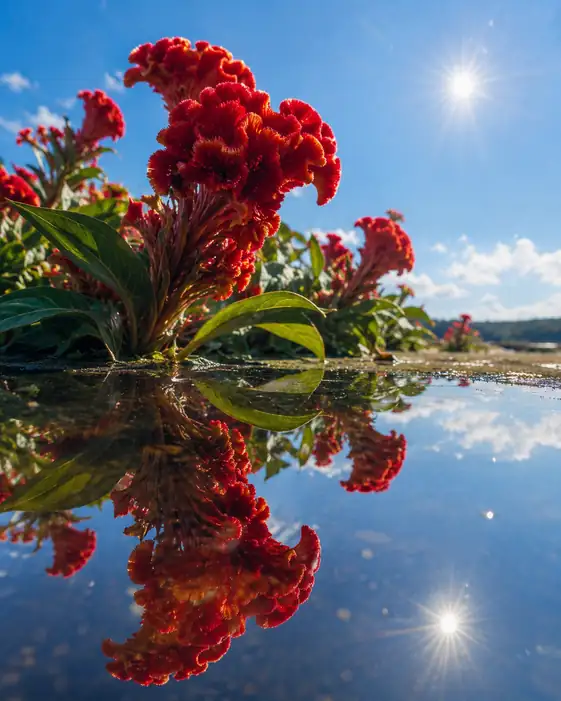 Symmetry in the Crimson Pool
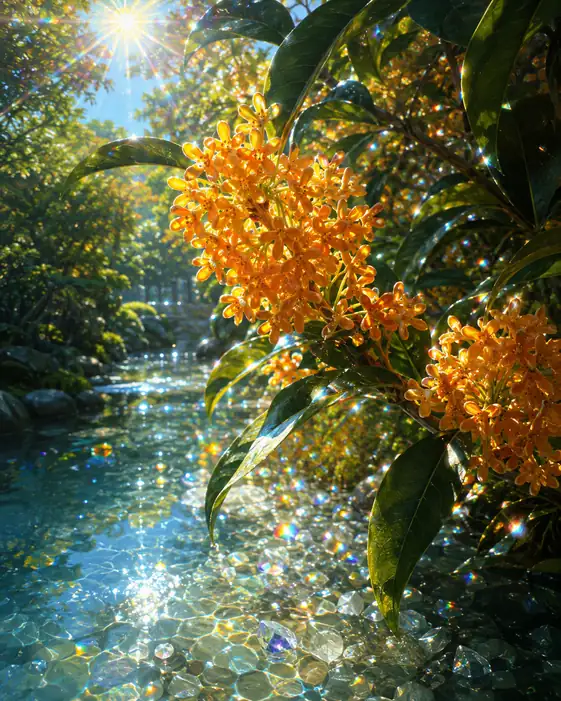 Where Sunlight Becomes Crystal
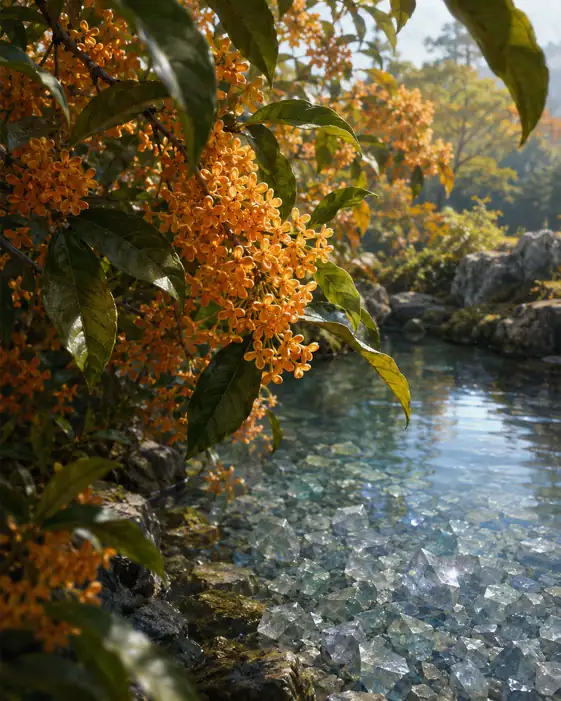 Where Fragrance Meets the Crystal Stream
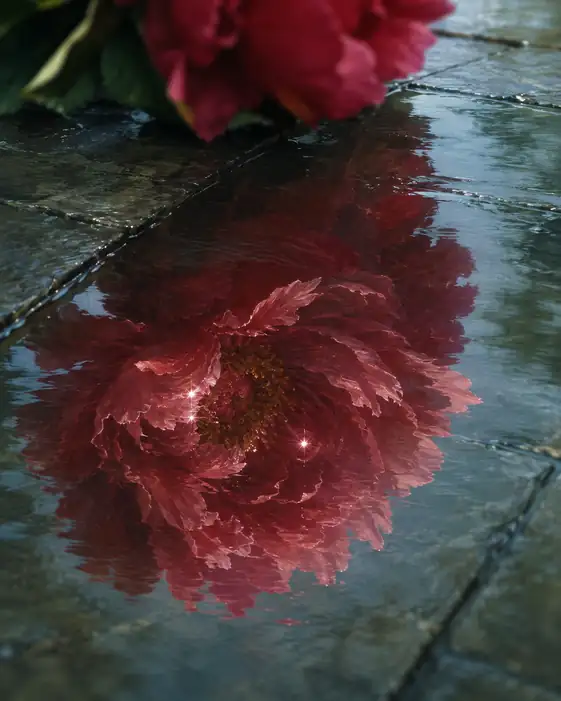 Crimson Peony Reflected in Cobblestone Puddle
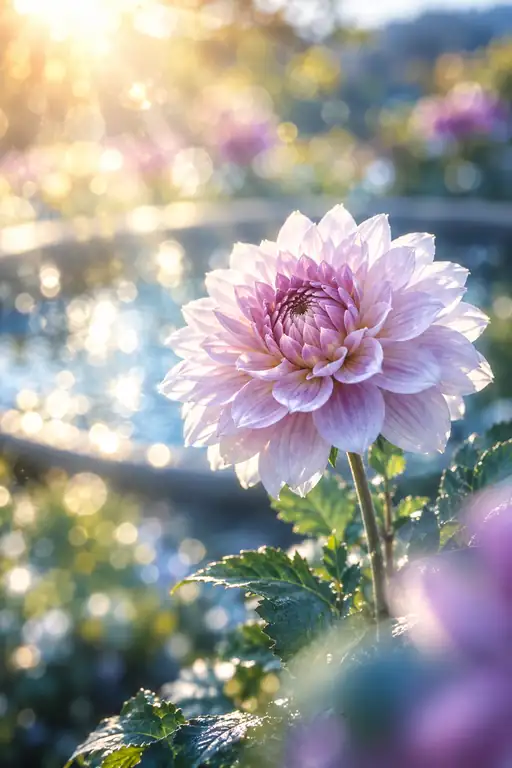 Halo of Lilac by the Fountain Pool
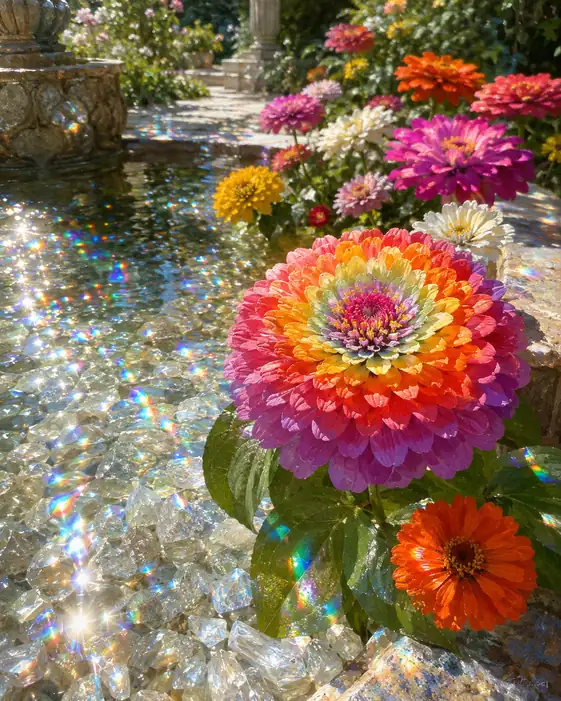 Prisms Across the Crystal Fountain
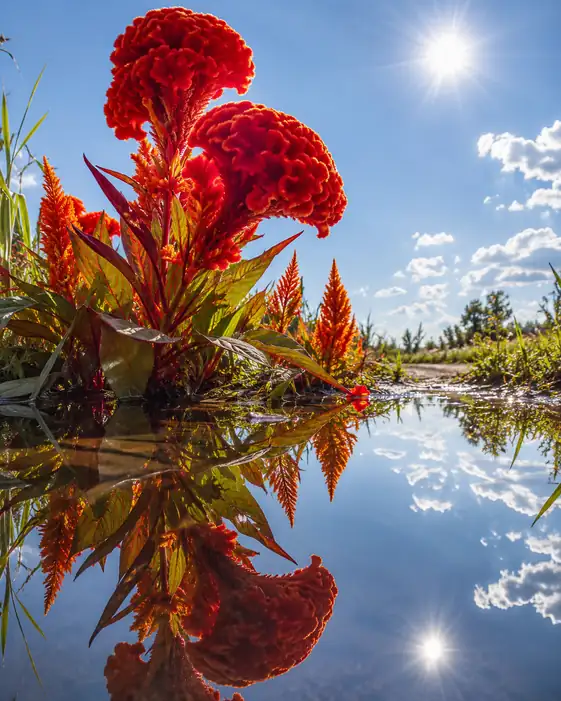 Two Suns in the Crimson Puddle
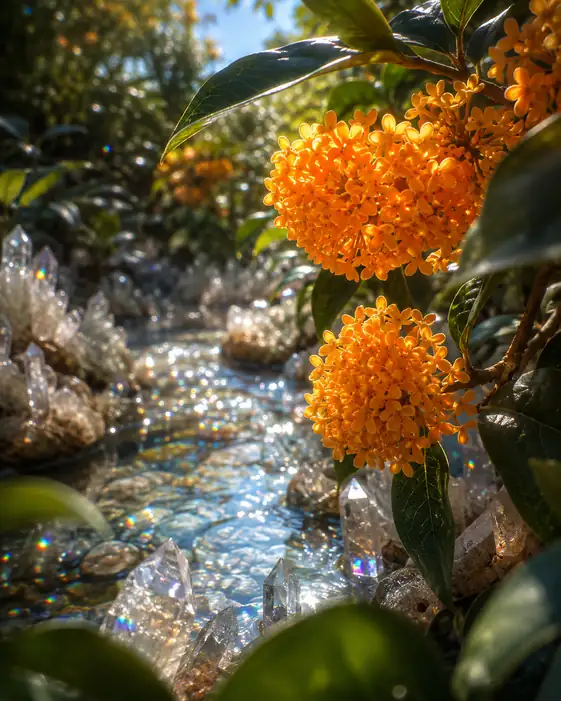 Twin Blooms Above the Crystal Brook
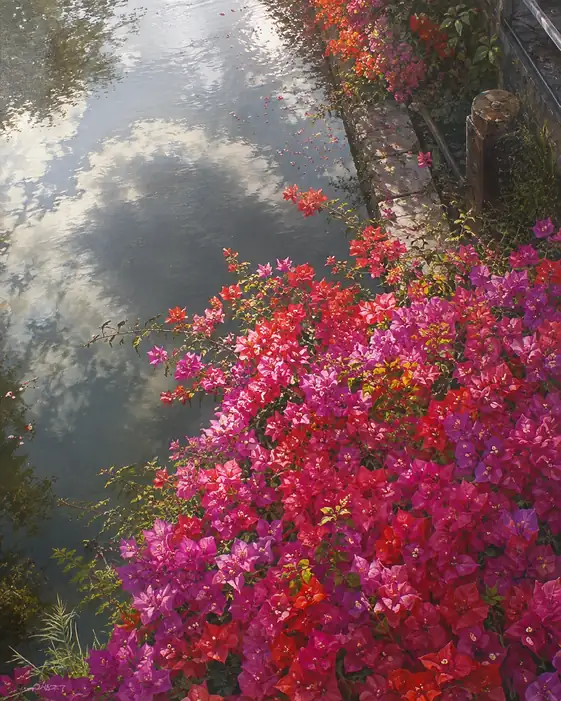 Cascading Bougainvillea over the Sky-Reflecting Canal