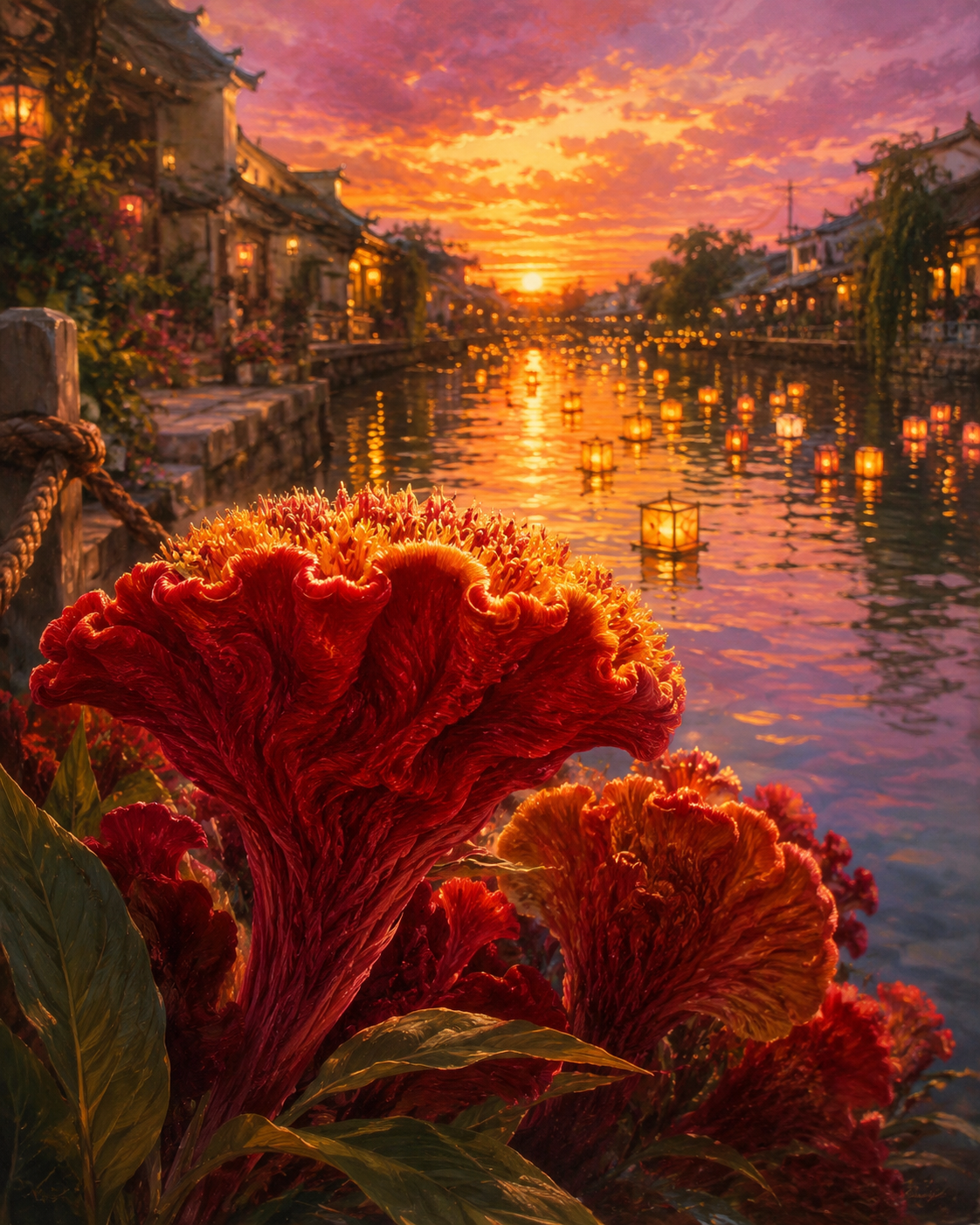
River of Lanterns and the Crimson Crest
Critique
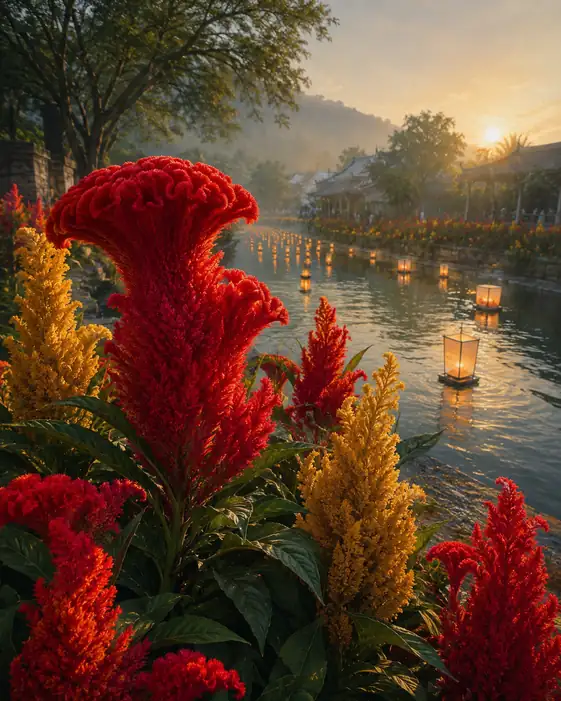
1. Introduction This sunset canal scene places towering crimson cockscomb flowers before an old waterside town filled with floating lanterns. The blooms dominate the lower-left foreground, while the canal runs centrally toward the setting sun. The work links floral intensity, communal illumination, and the directional force of water. 2. Description Large folded red crests rise from purple stems among broad green leaves; a second orange-red bloom stands lower right. Stone embankments and traditional rooflines border both sides of the canal. Numerous square lanterns float on violet and amber water, and hanging lights mark the buildings. Orange clouds gather around the low solar disk. 3. Analysis The crest’s fan-shaped edge repeats the irregular cloud band, connecting foreground and sky. Canal banks and rows of lights establish perspective toward the sun, while the flowers interrupt that recession with dense vertical weight. Crimson, orange, and gold remain distinct through deep purple shadows. Reflections fragment the central brightness and lead attention around rather than directly through the scene. 4. Interpretation and Evaluation The flowers appear as natural counterparts to the lantern procession, both holding concentrated warmth against approaching night. Their monumental scale transforms private botanical observation into participation in a broader ritual atmosphere. The composition, saturated color control, folded petal rendering, and watery reflections are accomplished. Rich detail remains legible because the canal provides a stable spatial axis. 5. Conclusion At first the immense crest seems to block the town, but the line of lanterns gradually draws the gaze beyond it. The image becomes a layered account of solitary closeness and shared evening life. Through strong depth, rhythmic lights, and tactile flower surfaces, it creates a coherent celebration of temporary brightness.
Same Subcategory
Similar Artworks
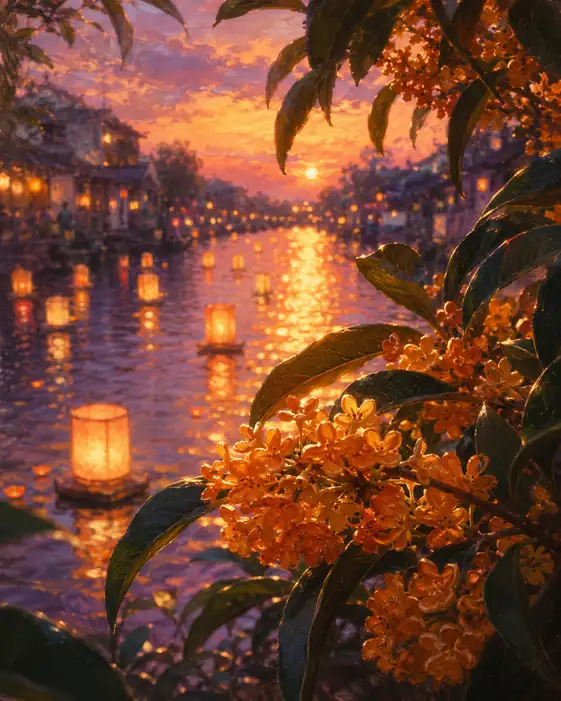 Twilight Glow and Floating Lanterns
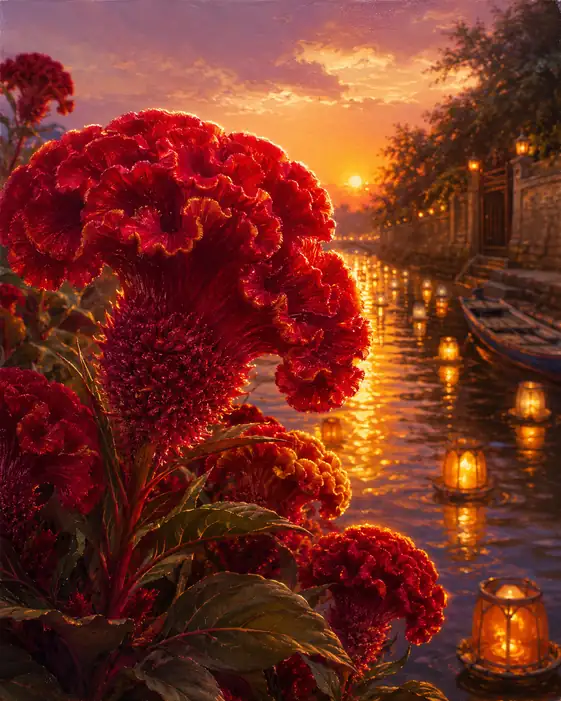 Canal of Drifting Lanterns and Cockscomb
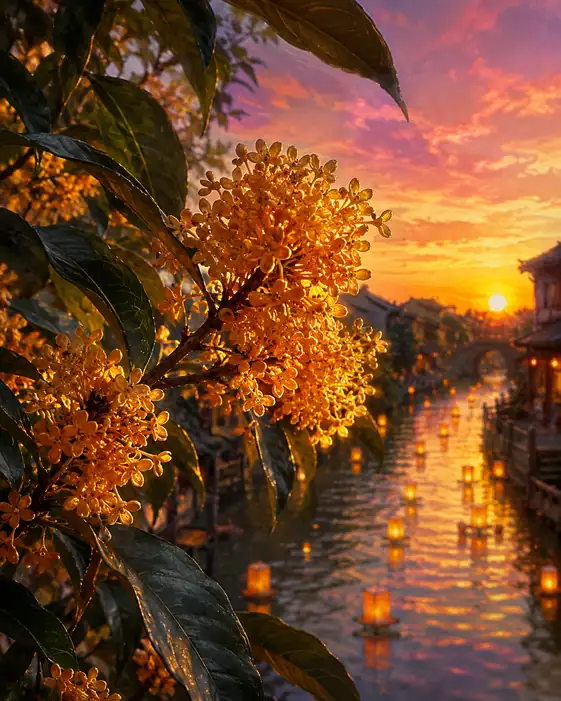 Floating Lanterns and the Amber Bower
 Prayers upon the Evening Stream
 Floating Lanterns on the Sunset Canal
 Floating Lanterns on the Twilight Canal
 Lantern Canal in Twilight Bloom
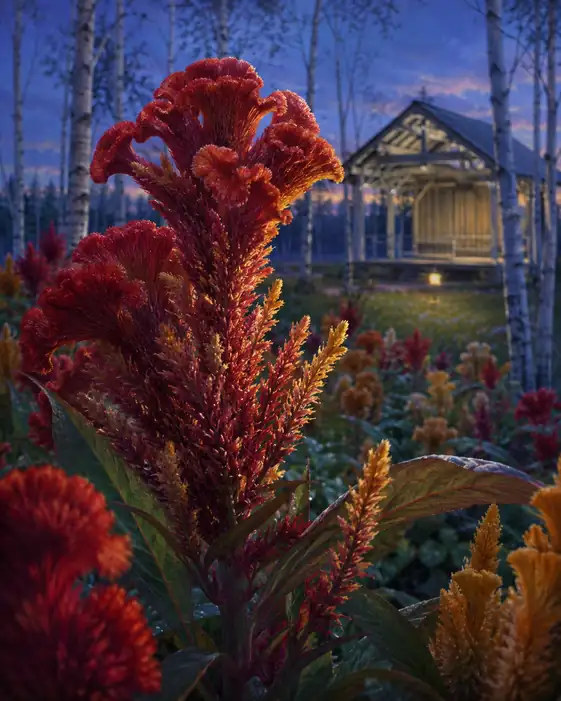 Crest of Fire in the Birch Grove
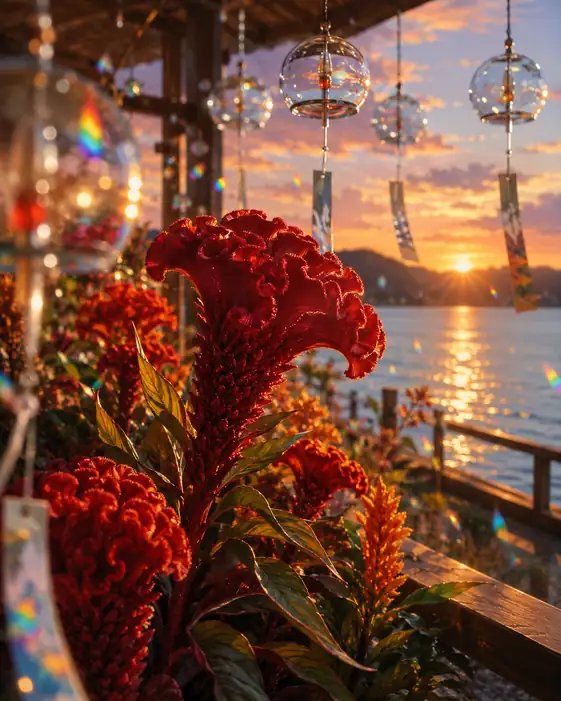 Glass Chimes and the Sunset Crest
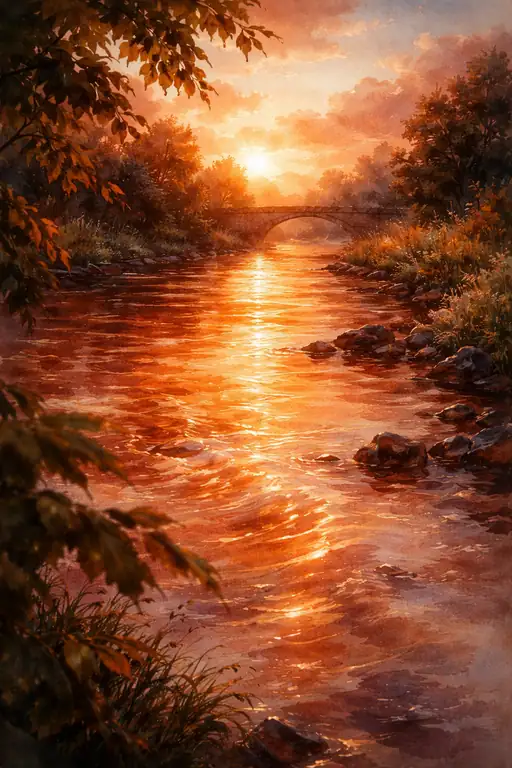 A Serene Farewell in Sunset's Embrace