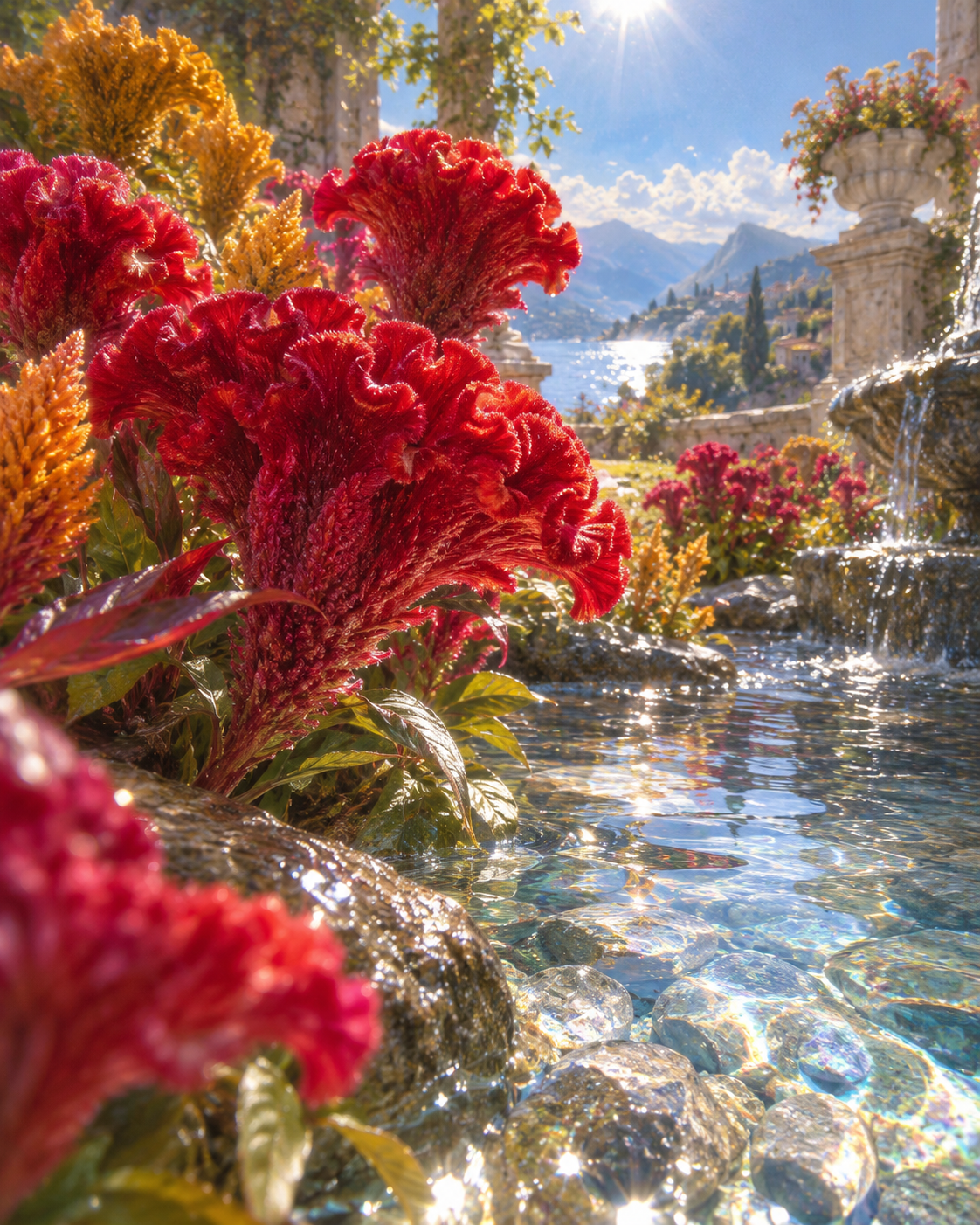
Fountain Basin and the Crimson Crest
Critique
1. Introduction This brilliant garden landscape places immense red cockscomb flowers beside a clear fountain pool overlooking a mountain lake. The largest blooms occupy the left foreground, while falling water, a stone urn, and distant slopes open the right side. Strong daylight unites botanical texture, moving water, and expansive geography. 2. Description Crimson crests rise in folded fans among gold plumes and glossy leaves. At right, water spills from a carved stone basin into a shallow pool filled with transparent rounded stones. A flower-filled urn crowns a pale column, and beyond the garden wall a blue lake winds between steep green mountains. The high sun creates star-like reflections. 3. Analysis The red flower mass anchors the crowded foreground, while the lake’s narrow light provides a distant counterfocus. Repeated vertical forms—crests, gold plumes, cypresses, columns, and mountains—carry the eye upward. Water introduces horizontal ripples and falling diagonals, loosening this structure. Complementary red and green are moderated by gold, stone, and cool blue, sustaining clarity across great depth. 4. Interpretation and Evaluation The garden appears as a cultivated concentration of the larger landscape’s energy. Folded petals resemble mountain ridges, while the fountain repeats the distant lake in miniature and motion. The handling of wet stone, transparent water, velvety flowers, and atmospheric recession is technically assured. Its compressed richness is bold, but focal separation prevents excess from becoming confusion. 5. Conclusion At first the crimson flowers overwhelm the view, yet the fountain and lake gradually extend their energy outward. The work shifts from close botanical spectacle to an integrated account of garden and terrain. Through vivid color, layered scale, and exact reflections, it presents abundance as an ordered circulation of sunlight and water.
Same Subcategory
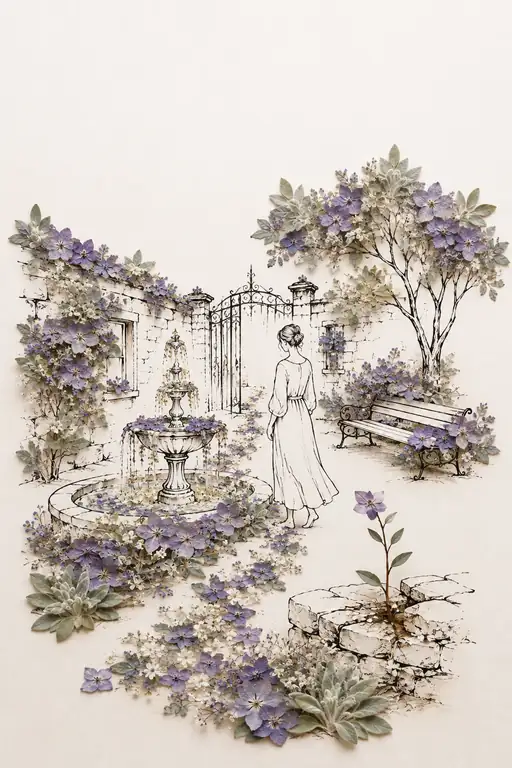 Life Breaking Through the Stone
Similar Artworks
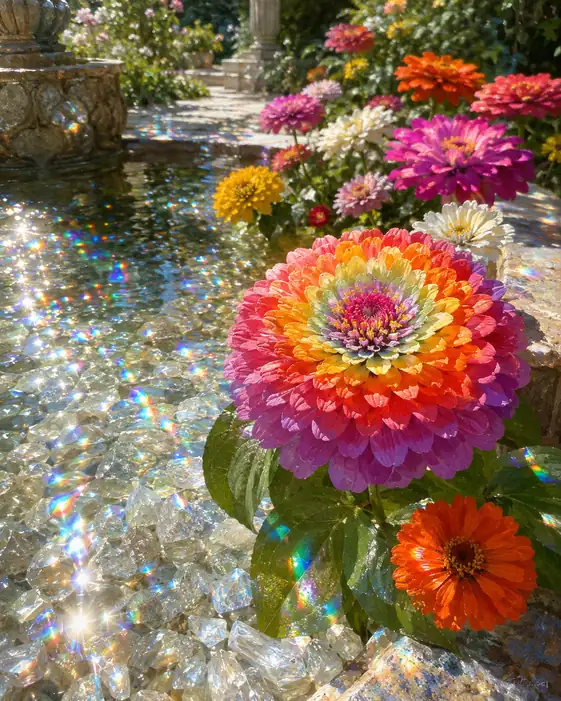 Prisms Across the Crystal Fountain
 The Mountain Dreamed Itself in Flowers
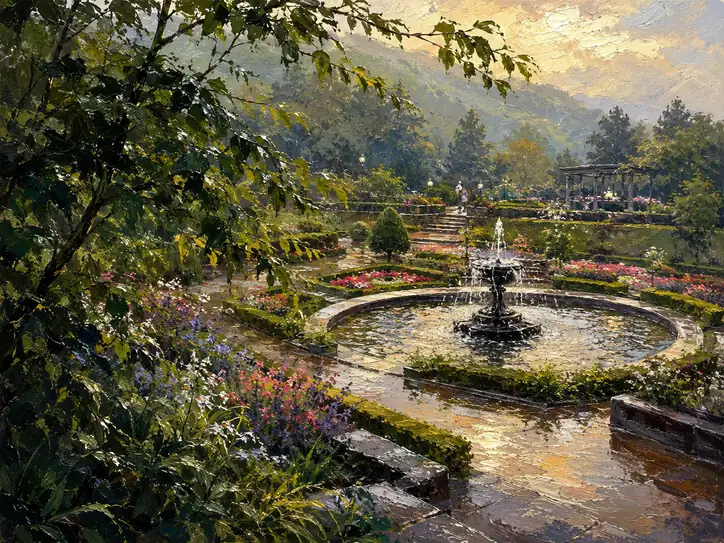 The Fountain's Golden Song
 A Floral Symphony by the Alpine Lake
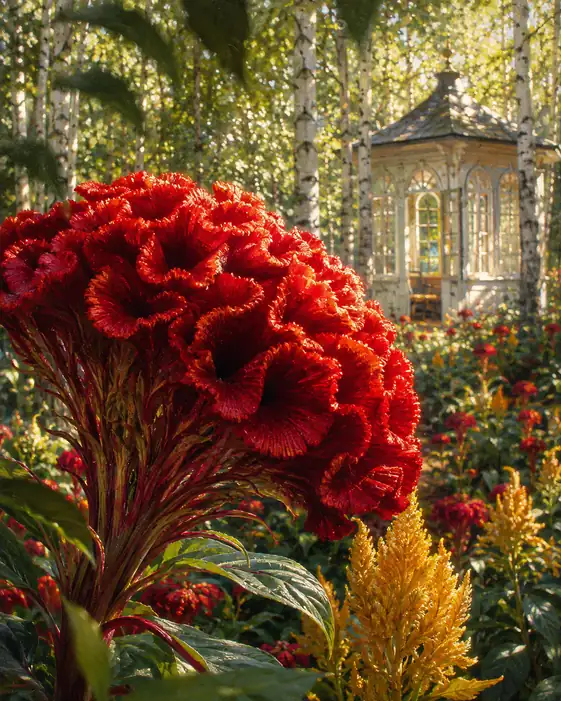 Velvet Crest in the Birch Garden
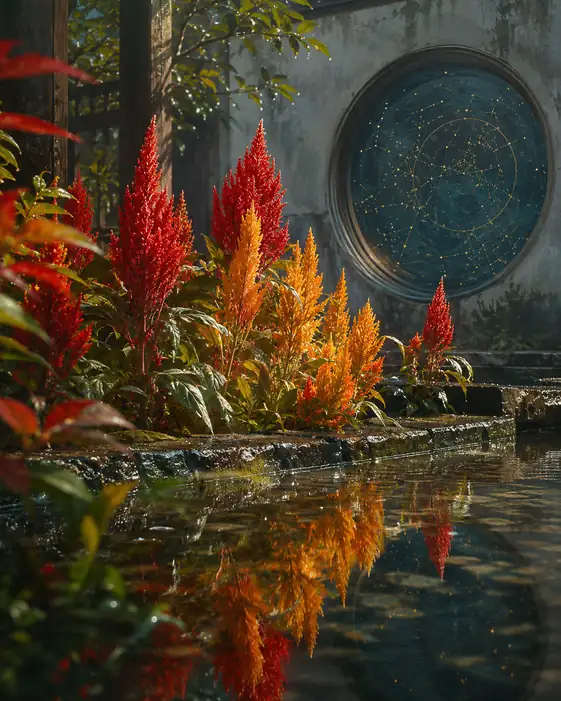 Where Stars and Embers Meet
 Where the Garden Learns the Sky
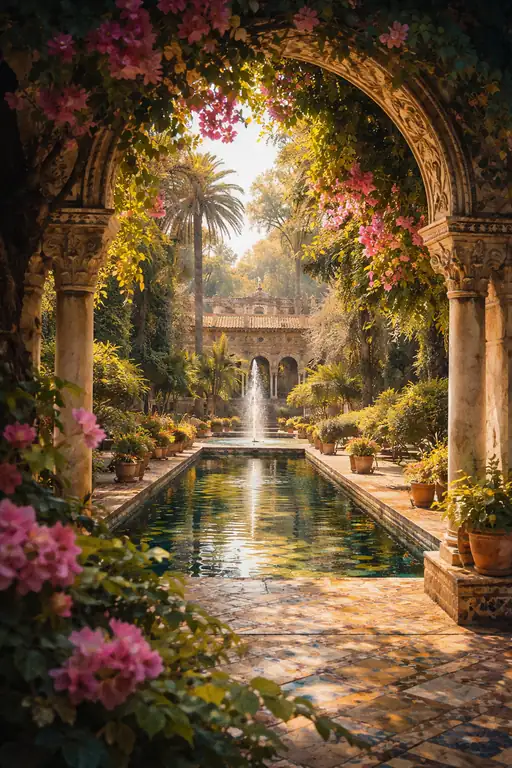 Sanctuary of Whispering Palms and Sunlit Waters
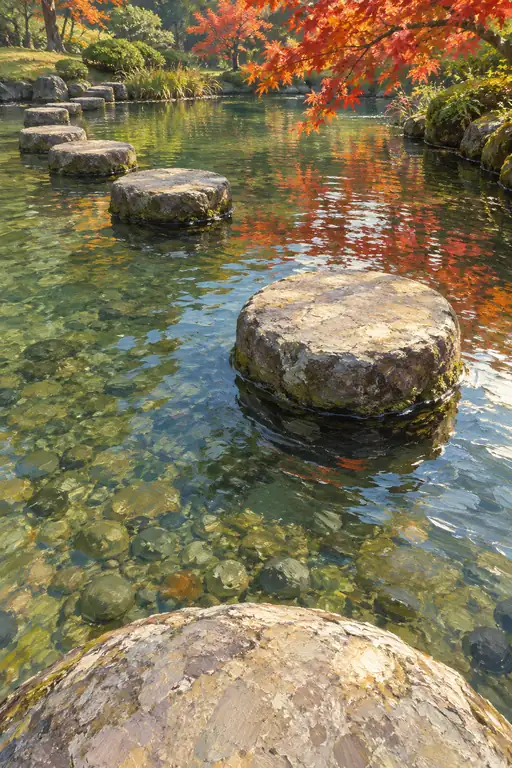 Steps Across the Amber Current
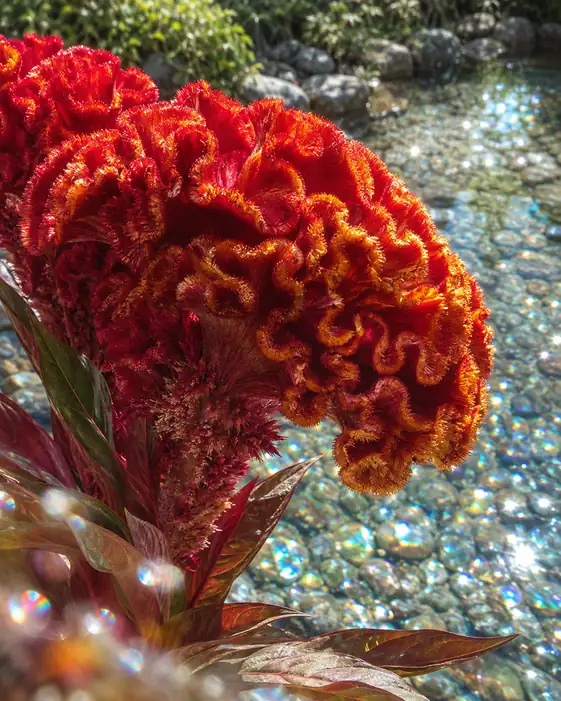 Crimson Ruffles Over the Shallows