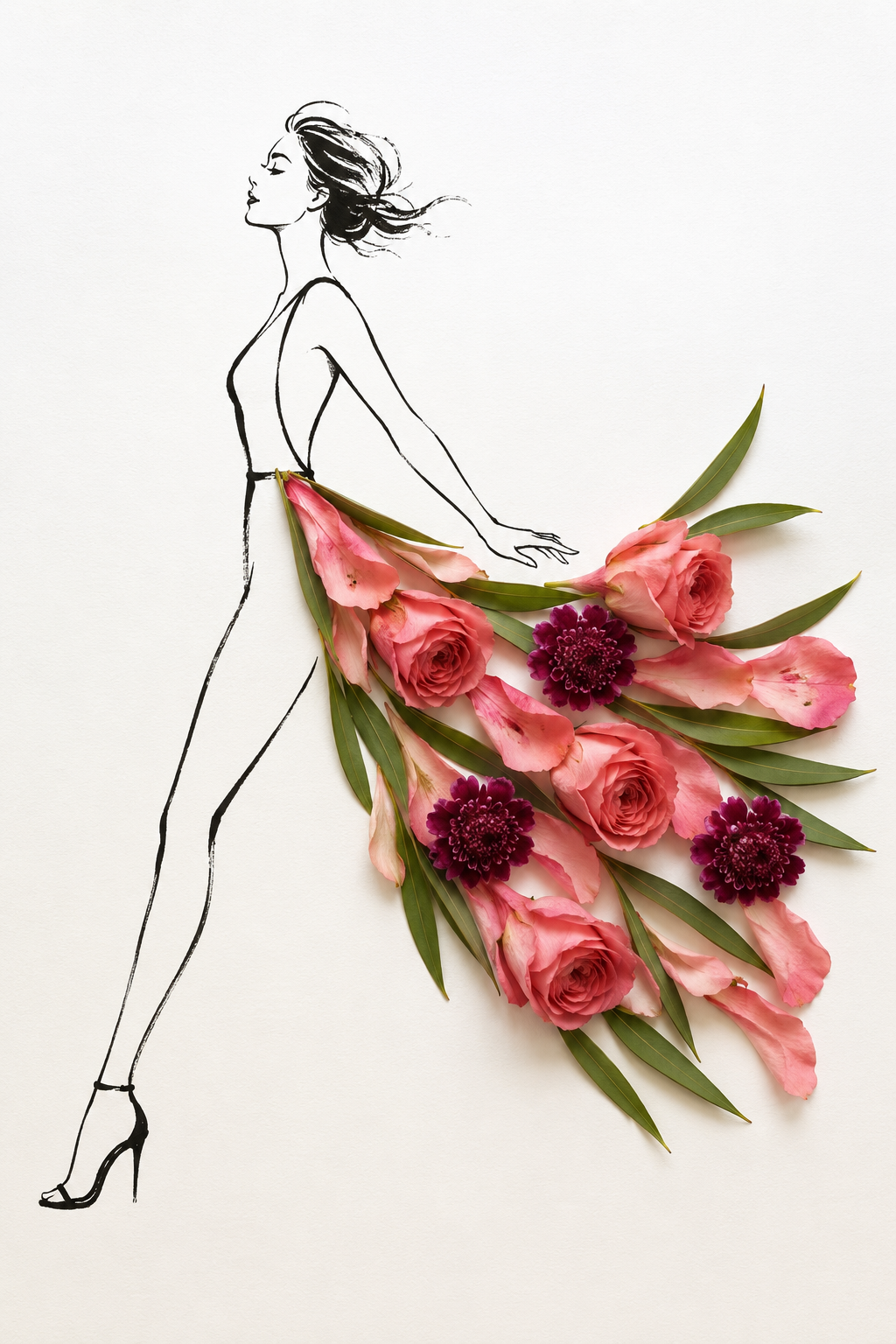
Fluttering Train of Roses and Leaves
Critique
1. Introduction This fashion collage combines a spare drawing of a striding woman with a windblown train made from pink roses, loose petals, burgundy flowers, and narrow leaves. The figure advances left while the floral garment expands right. Ample white space makes the opposing directions and material contrasts immediately legible. 2. Description The woman is drawn in profile with lifted chin, swept-back hair, extended arm, long legs, and high heels. Floral material begins at her waist and fans diagonally downward. Coral roses alternate with dark wine-colored round blooms; detached pink petals and olive leaves stretch between them, each casting a slight shadow. 3. Analysis Long black contours emphasize forward stride, while layered botanical elements produce backward drag and weight. The waist serves as a narrow hinge from which the train expands into a broad triangular field. Dark flowers create three rhythmic anchors among the roses, and pointed leaves repeat the directional thrust of hair, arm, and legs. Relief distinguishes the train from the paper ground. 4. Interpretation and Evaluation The work visualizes motion as the tension between purposeful bodily advance and a history that trails behind. Roses retain their recognizable centers, while scattered petals suggest gradual dispersal rather than a fixed textile. The line drawing is confident, color hierarchy is clear, and the transformation of bouquet structure into apparel is inventive. Shadows and overlaps sustain material credibility. 5. Conclusion At first the flower train reads as an extravagant fashion gesture, but its contrary pull gradually becomes the image’s expressive core. The figure appears propelled and burdened at once. Through disciplined emptiness, decisive diagonals, and varied floral scale, the work converts decorative materials into a precise account of momentum, attachment, and change.
Same Subcategory
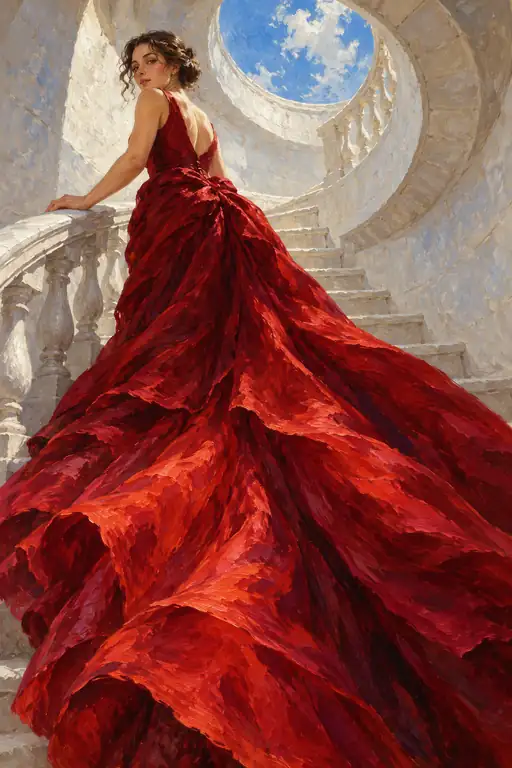 Ascent in Crimson
Similar Artworks
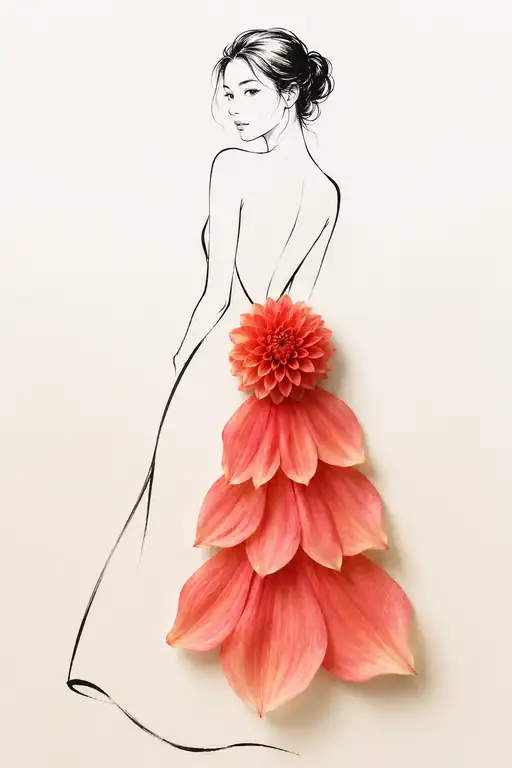 Cascade of Coral Dahlia
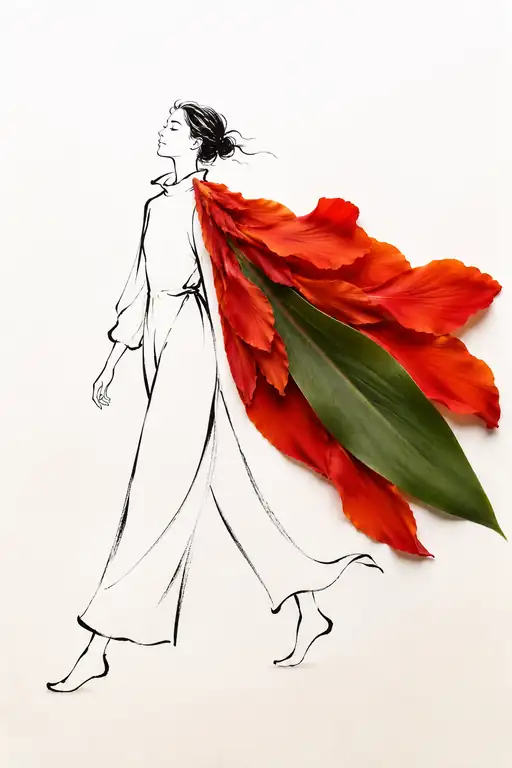 Stride of the Crimson Plumage
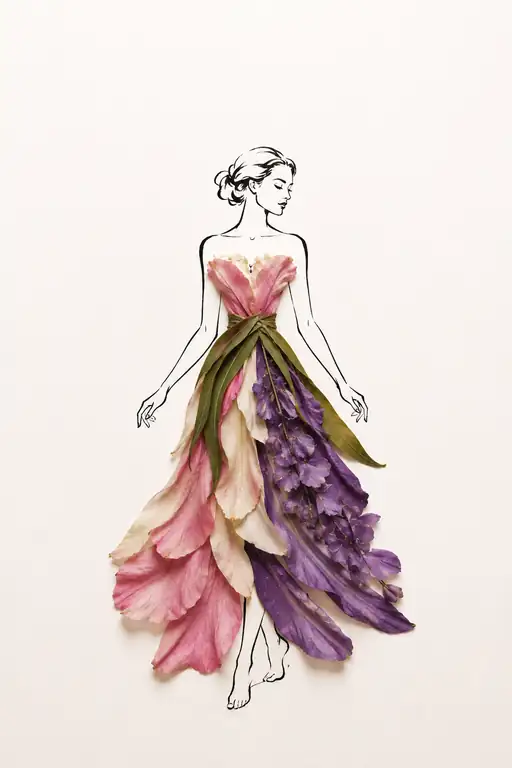 Lady in a Gown of Pink and Violet Petals
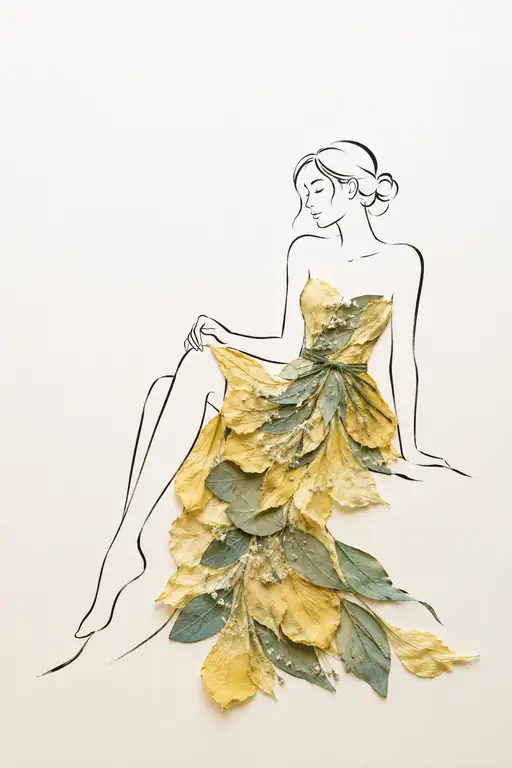 Golden Gown and the Serene Pose
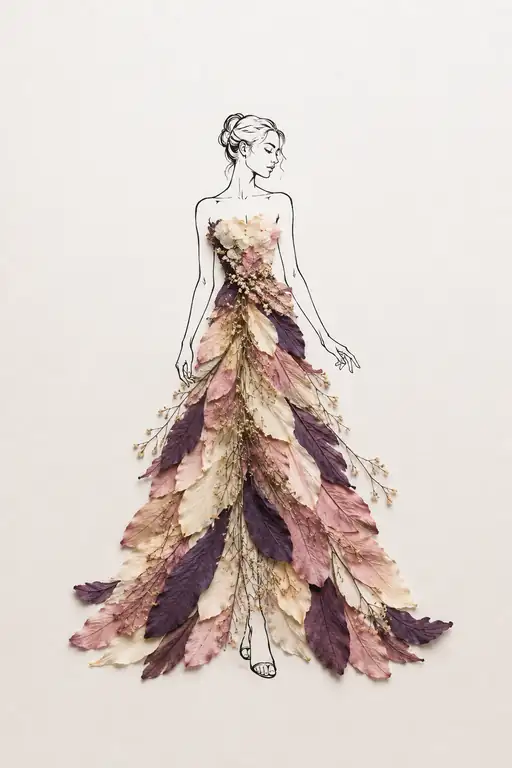 Gown of Layered Dusk
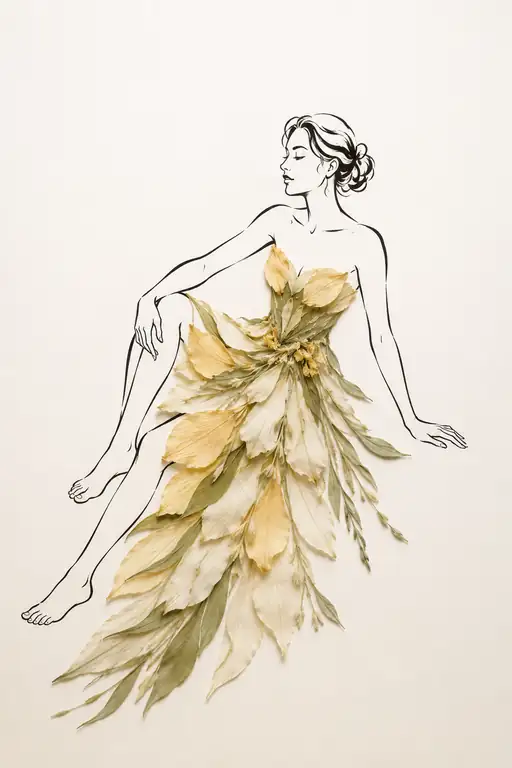 Sunlit Silhouette in Repose
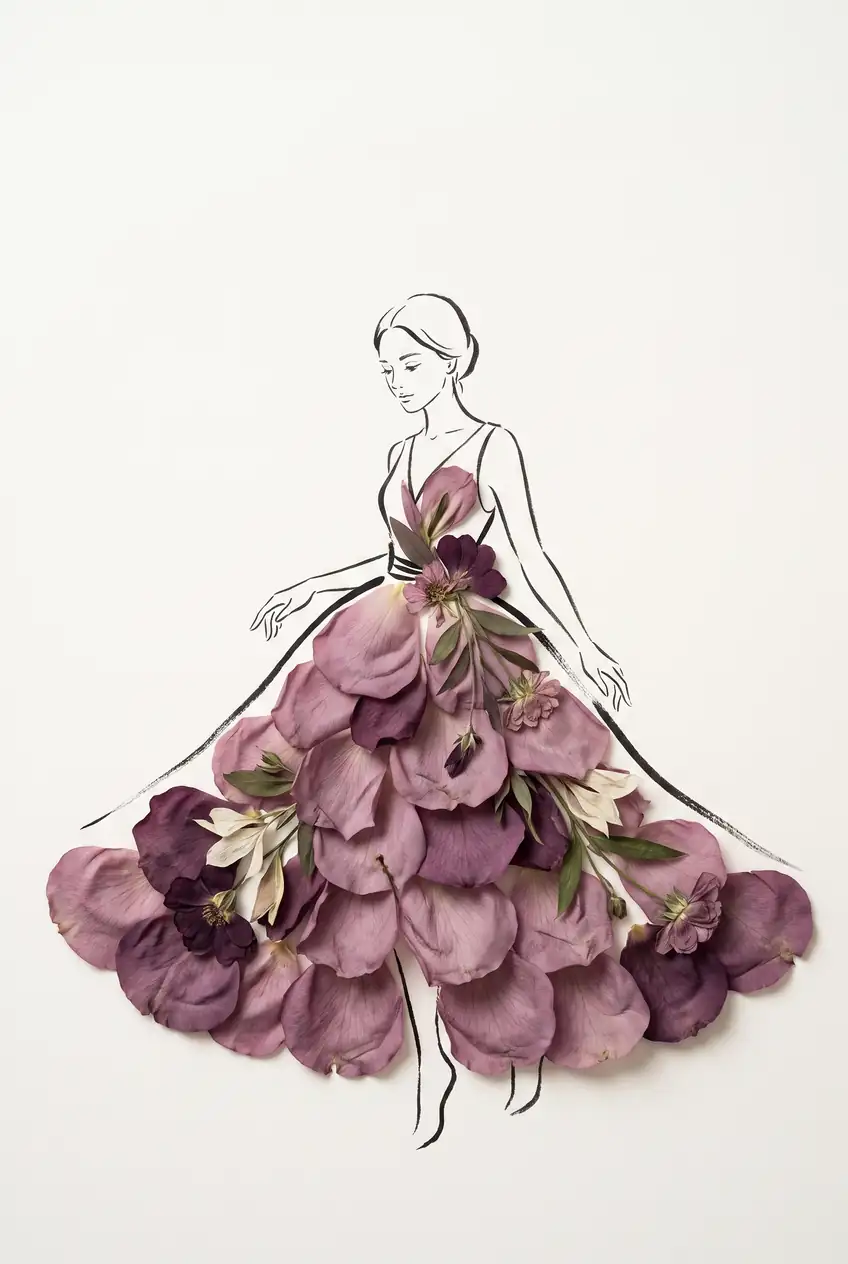 Silhouette Draped in Velvet Petals
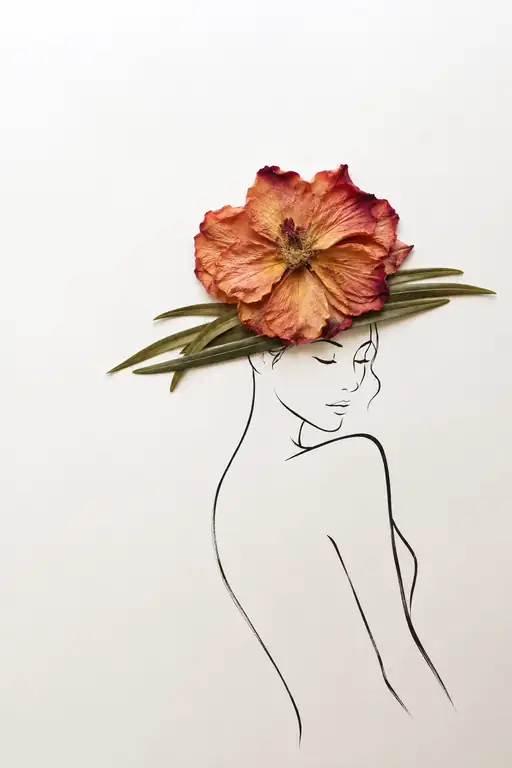 Lady in Profile Adorned with a Scarlet Blossom Hat
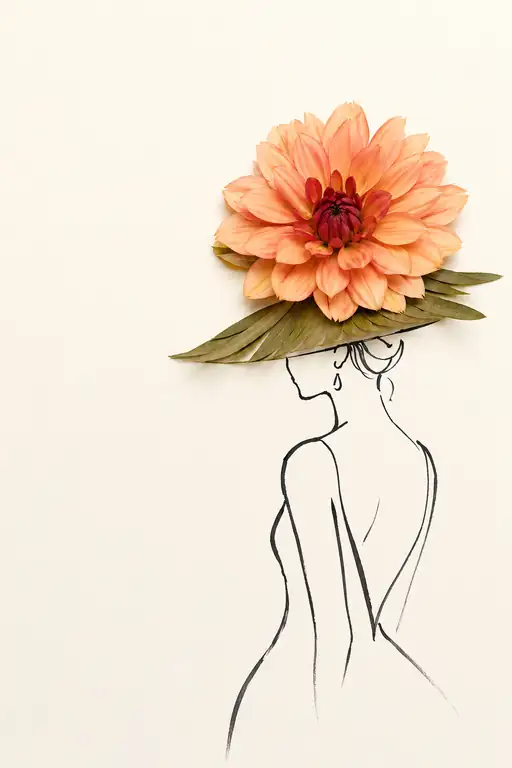 Elegance of a Lady Adorned with a Dahlia Hat
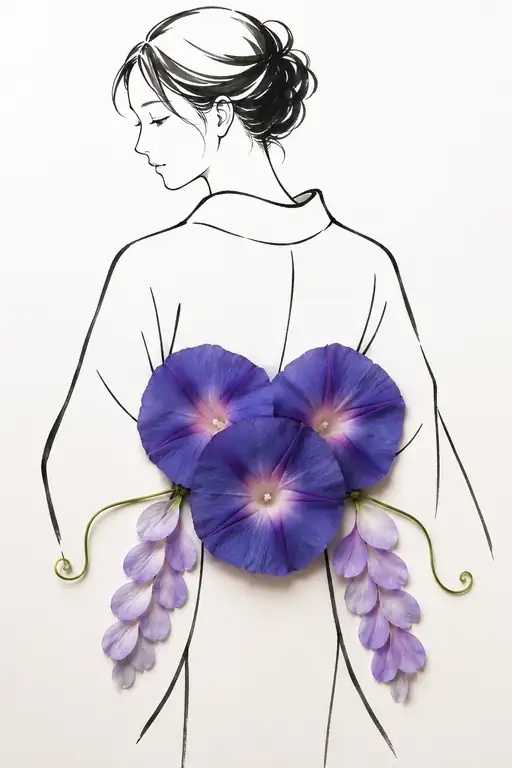 The Morning Glory Obi and Downcast Eyes